Cutting Board That Doesn’t Harbor Bacteria
Last updated: July 29, 2026
Quick Answer: The best cutting board that doesn’t harbor bacteria is one made from a non-porous, easy-to-sanitize material, with dense hardwoods like sugar maple and food-grade titanium leading the field. Research confirms that properly maintained hardwood boards reduce bacterial counts by 98% or more over time, while non-porous titanium offers zero surface absorption. The right choice depends on your cooking habits, cleaning routine, and budget.
Key Takeaways
- Dense hardwoods like sugar maple have natural antibacterial properties, bacteria applied to their surface drop to near-undetectable levels within hours, even without cleaning [2]
- Plastic cutting boards, despite being easier to bleach, tend to harbor more bacteria in knife scars over time than wood [10]
- Non-porous materials (titanium, glass, high-density polyethylene that is regularly replaced) offer the least surface area for bacteria to colonize
- Deep knife grooves on any board, wood, plastic, or bamboo, are the single biggest driver of bacterial buildup
- Sanitizing a cutting board after every raw meat session is non-negotiable; hot soapy water alone is not sufficient for deep grooves
- Bamboo boards are harder than most woods but are not inherently antibacterial; they require the same care as hardwood
- Titanium cutting boards are non-reactive, non-porous, and dishwasher-safe, making them a strong long-term investment for food safety
- The material matters less than the maintenance routine, a scratched, unwashed board of any material will harbor bacteria
- Separate boards for raw meat and produce remain the single most effective cross-contamination prevention strategy
- Self-sanitizing and copper/silver-infused boards show promise but lack broad independent verification for home kitchen use
What Makes a Cutting Board Resistant to Bacteria
A cutting board that doesn’t harbor bacteria shares three core traits: a non-porous or naturally antimicrobial surface, minimal knife scarring, and a design that allows thorough cleaning and drying. When any of these three factors is compromised, bacterial growth becomes likely regardless of the material.
Here is what the science points to:
- Surface porosity: Porous materials absorb moisture and organic matter, giving bacteria a protected environment to survive and multiply. Non-porous surfaces (titanium, glass, smooth HDPE) deny bacteria that shelter.
- Natural antimicrobial compounds: Certain hardwoods contain tannins and other organic compounds that actively suppress bacterial survival. Sugar maple is the most studied example [2].
- Surface integrity: A board with deep knife scars, regardless of material, creates micro-channels where bacteria hide from cleaning agents and drying air [10].
- Moisture management: Bacteria need water to survive. Boards that dry quickly (thin hardwood, titanium) are inherently less hospitable than thick plastic boards that stay damp in the center.
Decision rule: If you cook daily and handle raw proteins, prioritize a non-porous material with a flat, well-maintained surface. If you prefer wood for its feel and knife friendliness, choose a dense hardwood like maple or walnut and replace it when deep grooves appear.
Best Cutting Board Materials to Prevent Bacterial Growth
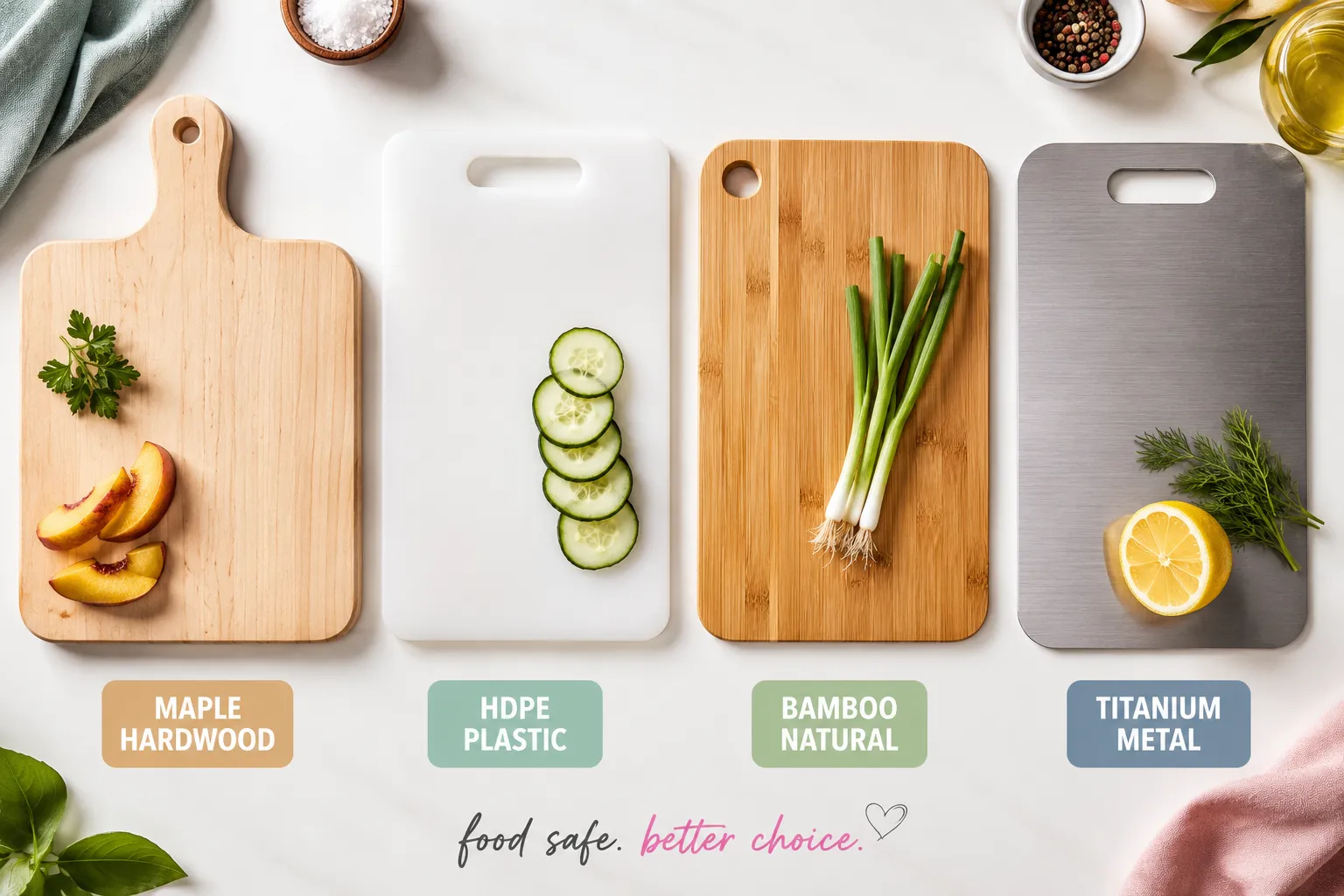
The top materials for a cutting board that doesn’t harbor bacteria are dense hardwood (particularly sugar maple), food-grade titanium, and new HDPE plastic that is replaced regularly. Each has a distinct profile.
| Material | Porosity | Natural Antibacterial | Knife Friendly | Dishwasher Safe | Lifespan |
|---|---|---|---|---|---|
| Sugar Maple | Low-medium | Yes (tannins) | Excellent | No | 5-15 years |
| Titanium | None | Surface-level | Good | Yes | Decades |
| HDPE Plastic | Low (when new) | No | Moderate | Yes | 1-3 years |
| Bamboo | Low-medium | Mild (bamboo kun) | Moderate | No | 3-8 years |
| Glass | None | No | Poor | Yes | Long (fragile) |
Sugar maple stands out in published research. A 2025 hygienic evaluation found that maple boards inoculated with approximately 4.7 log CFU/cm² of E. coli reduced bacterial counts to the detection limit within two hours, without any cleaning [2]. That is a reduction of more than 99% driven purely by the wood’s natural properties.
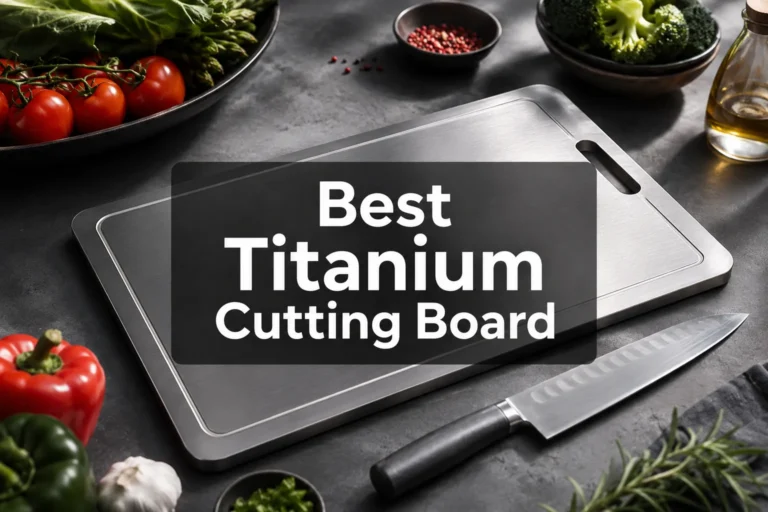
Titanium is non-porous by nature, biocompatible (the same grade used in surgical implants), and non-reactive with acidic or salty foods. Products like the Katori Titanium Cutting Board represent the premium end of this category, offering a surface that bacteria simply cannot penetrate.
HDPE plastic is acceptable when new and well-maintained, but it degrades with use. Knife scars accumulate quickly, and bacteria thrive in those channels [10].
Do Plastic or Wood Cutting Boards Harbor More Bacteria
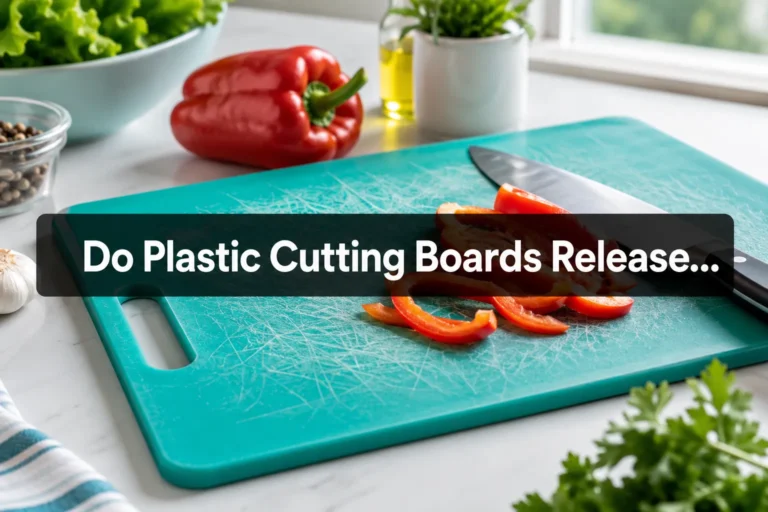
Contrary to what many people assume, plastic cutting boards tend to harbor more bacteria than wood under real-world conditions. This finding, first established in the early 1990s by microbiologist Dean Cliver at the University of Wisconsin and consistently supported since, surprises most home cooks [8][9].
Here is why plastic loses the hygiene comparison over time:
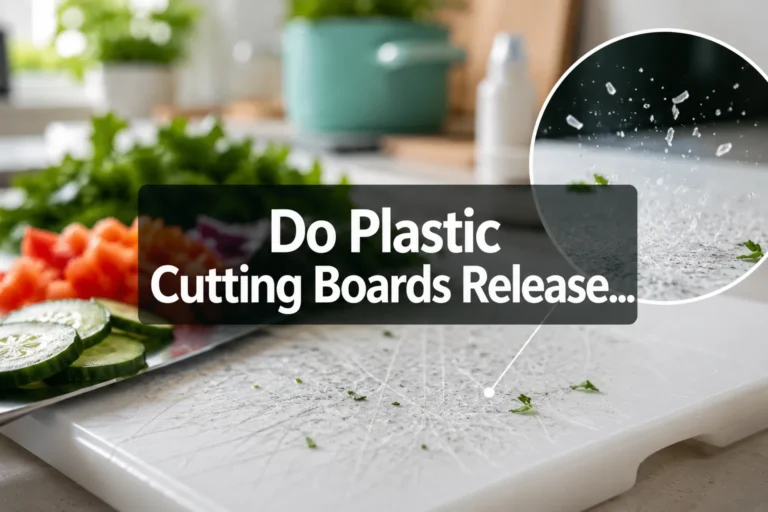
- Knife scars on plastic are permanent. Once a plastic board is scored, those grooves trap bacteria that survive washing and can multiply overnight in warm, humid conditions [10].
- Wood has self-limiting properties. On hardwood boards, bacterial counts fell by 98% to more than 99.9% over time in controlled studies. At contamination levels similar to raw meat juices, bacteria absorbed into wood were generally not recoverable from the surface [9][10].
- Plastic can be bleached back to safety, but only when it is new and relatively unscarred. An old, heavily used plastic board is harder to sanitize than a well-maintained hardwood board [6].
A 2025 microbiological assessment of boards used in real-world settings found E. coli on 6% of wooden boards and 4% of plastic boards, and Listeria monocytogenes on 2% of wooden boards versus 4% of plastic boards [1]. The difference was not statistically significant, which underscores a key point: the cleaning routine matters as much as the material.
Common mistake: Keeping a plastic board for years because it “looks clean.” Surface appearance does not reflect bacterial load inside knife grooves.
Can Bacteria Grow Inside Deep Grooves on Cutting Boards
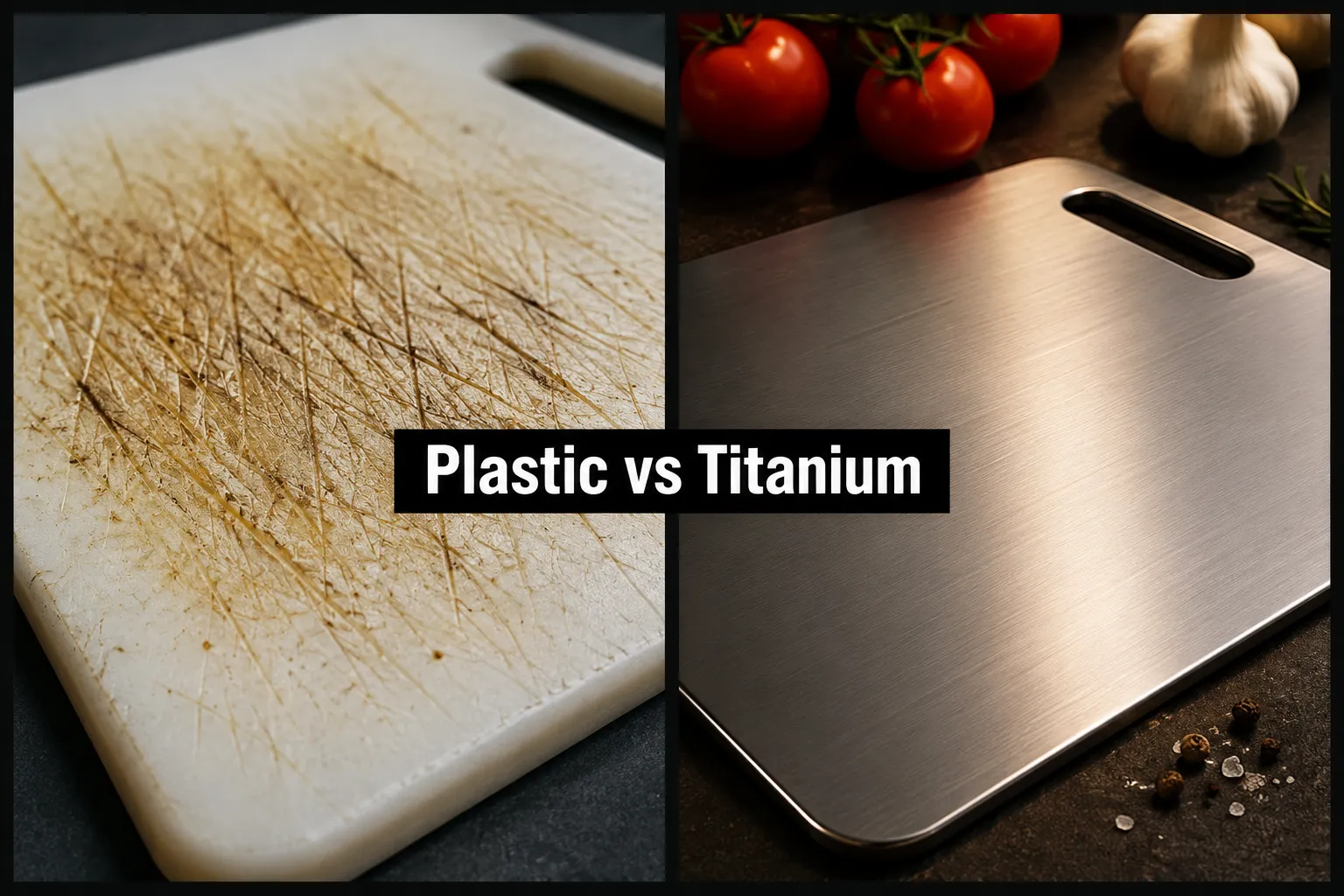
Yes, and this is one of the most underappreciated food safety risks in home kitchens. Deep grooves on any cutting board, wood, plastic, or bamboo, create protected micro-environments where bacteria survive washing, resist sanitizers, and can multiply when moisture and organic matter are present [10].
Research on plastic boards specifically found that bacteria in knife scars could multiply overnight under warm, humid conditions, even after the board appeared clean on the surface [6][8]. The grooves act as physical shields against scrubbing and chemical contact.
What to do about it:
- Inspect your board regularly. Run a fingernail across the surface. If you feel deep channels, it is time to replace or resurface the board.
- Sand hardwood boards with fine-grit sandpaper (120-220 grit) to remove the top layer and restore a smooth surface.
- Replace plastic boards when knife marks become deep and numerous, typically every one to three years with regular use.
- Consider switching to a non-porous material like titanium if you handle raw meat frequently. The absence of surface grooves eliminates this risk category entirely.
Edge case: Even a brand-new board can develop deep grooves quickly if you use a heavy cleaver or rock a large chef’s knife aggressively. Technique matters as much as material choice.
Do Plastic or Wood Cutting Boards Harbor More Bacteria: The Role of Maintenance
Maintenance is the variable that determines whether any board becomes a bacterial hazard. A well-oiled maple board that is washed promptly after each use will outperform a neglected plastic board in every hygiene metric [1][3].
Core maintenance rules for any board:
- Wash with hot soapy water immediately after use, do not let raw meat juices sit.
- Rinse thoroughly to remove soap residue, which can trap organic matter.
- Air-dry vertically, not flat on a counter. Flat drying traps moisture underneath.
- For hardwood boards, apply food-grade mineral oil monthly to maintain surface integrity and slow groove formation.
- Sanitize with a diluted white vinegar solution or 3% hydrogen peroxide after handling raw poultry or fish.
- Replace or resurface when deep grooves appear.
How Often Should You Sanitize a Cutting Board
You should sanitize a cutting board after every session involving raw meat, poultry, fish, or eggs, not just wash it. For produce-only use, thorough washing with hot soapy water after each session is sufficient, with a full sanitization at least once a week.
“Washing” and “sanitizing” are not the same thing. Washing removes visible debris and reduces bacterial load. Sanitizing kills the bacteria that remain after washing.
Effective sanitizing methods:
- White vinegar (undiluted): Pour over the surface, let sit for 5 minutes, rinse. Effective against E. coli and Salmonella.
- 3% hydrogen peroxide: Apply after vinegar for a two-step approach that research supports as more effective than either alone.
- Diluted bleach solution: 1 tablespoon of unscented liquid chlorine bleach per gallon of water. Apply, let sit 2 minutes, rinse thoroughly. Works well for plastic boards.
- Boiling water: Pouring boiling water over a board kills most surface bacteria immediately. Suitable for titanium and glass; avoid for wood (causes warping).
- Dishwasher: Appropriate for plastic, titanium, and glass boards. The high heat cycle (typically above 60°C / 140°F) is effective. Never put hardwood or bamboo boards in a dishwasher.
Decision rule: If you cook raw proteins more than three times per week, invest in a board material that is dishwasher-safe, it removes the friction from the sanitizing step and makes compliance automatic.
Can You Get Food Poisoning from a Dirty Cutting Board
Yes. A contaminated cutting board is a well-documented vector for foodborne illness, particularly from pathogens like Salmonella, E. coli O157:H7, Listeria monocytogenes, and Campylobacter. These bacteria transfer from raw meat or poultry to the board surface, survive in grooves or porous areas, and then cross-contaminate ready-to-eat foods prepared on the same surface [1][5].
The risk is highest when:
- Raw meat is cut on a board and then vegetables or fruit are prepared on the same unwashed surface
- The board has deep knife scars that trap bacteria beyond the reach of normal washing
- The board is stored flat and damp, allowing bacterial multiplication between uses
- A single board is used for all food types without a dedicated raw-meat board
The good news is that this risk is almost entirely preventable. Using a cutting board that doesn’t harbor bacteria, one with a non-porous or naturally antimicrobial surface, combined with a consistent sanitizing routine, reduces the risk to near zero for most home cooking scenarios.
Just as maintaining good gut health through foods that naturally boost gut bacteria diversity supports your body’s defenses, maintaining clean kitchen surfaces supports your first line of defense against foodborne pathogens.
What Is the Difference Between Antimicrobial and Antibacterial Cutting Boards
“Antibacterial” refers specifically to action against bacteria. “Antimicrobial” is broader, it includes action against bacteria, fungi, viruses, and other microorganisms. In the context of cutting boards, the terms are often used interchangeably in marketing, but the distinction matters when evaluating claims.
- Antibacterial boards (e.g., boards treated with triclosan or silver ions) are designed to kill or inhibit bacteria on the surface.
- Antimicrobial boards may also resist mold and yeast, which is relevant for boards stored in humid environments.
- Naturally antimicrobial materials like hardwood maple work through passive mechanisms, tannins, low moisture absorption, and surface pH, rather than added chemicals.
What to look for on a label:
- Is the antimicrobial claim backed by independent lab testing (e.g., ISO 22196 or JIS Z 2801 standards)?
- Is the treatment surface-only, or is it embedded in the material?
- Does the claim specify which organisms are targeted and at what reduction rate?
Many boards marketed as “antibacterial” use silver-ion or copper-infused coatings that wear off with repeated washing. A board made from an inherently non-porous or naturally antimicrobial material provides more durable protection than a surface treatment.
Are Bamboo Cutting Boards Sanitary and Safe
Bamboo cutting boards are sanitary when properly maintained, but they are not inherently more antibacterial than hardwood. Bamboo contains a natural bio-agent called “bamboo kun” that provides mild antimicrobial properties, but the effect is less studied and less pronounced than the properties of dense hardwoods like maple [7].
Bamboo board considerations:
- Bamboo is harder than most woods (Janka hardness of approximately 1,380 lbf), which means it resists deep knife grooves better than softer woods, a genuine hygiene advantage.
- However, bamboo is a grass, not a wood, and its laminated construction (boards are glued from strips) can create seams where moisture and bacteria accumulate if the glue breaks down.
- Bamboo boards should not go in the dishwasher, high heat and prolonged moisture exposure cause splitting and delamination, which worsens bacterial risk.
- Many bamboo boards are finished with formaldehyde-based adhesives. Look for boards that specify food-safe, formaldehyde-free glue.
Bottom line on bamboo: A good-quality bamboo board from a reputable manufacturer is a reasonable choice for produce and bread. For raw meat and fish, a denser hardwood or non-porous material is a safer option.
How to Properly Clean a Cutting Board to Kill Bacteria
Proper cleaning of a cutting board involves three stages: immediate rinsing, thorough washing, and sanitizing. Skipping any stage leaves bacteria behind.
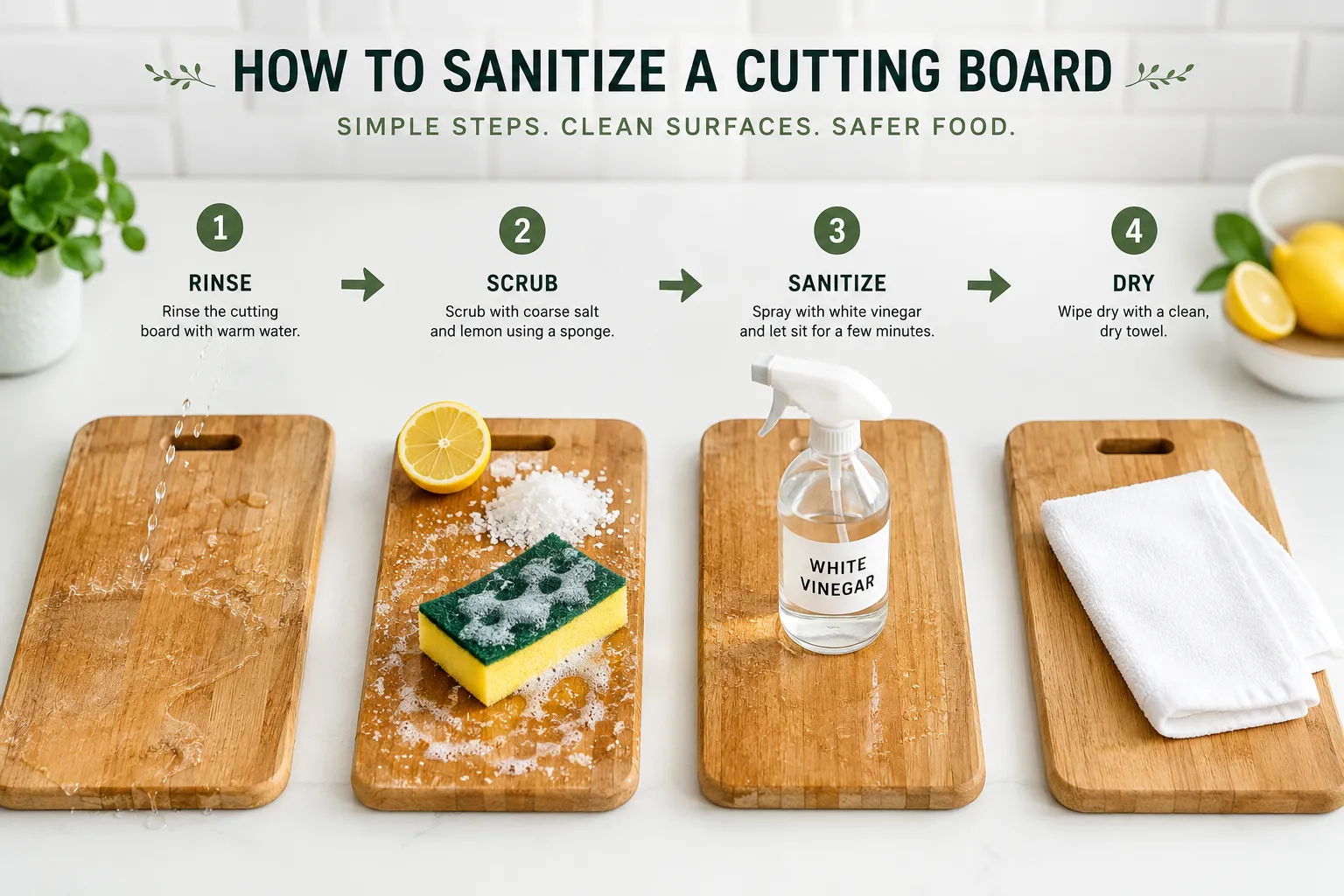
Step-by-step cleaning process:
- Rinse immediately after use with cold water first (hot water can cook proteins into the surface, making them harder to remove), then warm water.
- Scrub with hot soapy water using a stiff brush or non-scratch pad. Work in the direction of any grain on wood boards. Spend at least 20 seconds scrubbing.
- Rinse thoroughly under running water to remove all soap.
- Sanitize using one of the methods listed in the sanitizing section above. For daily use after raw meat, white vinegar or diluted bleach is practical and effective.
- Dry completely, stand the board upright or prop it at an angle to allow airflow on both sides. Never lay it flat on a wet counter.
- Oil hardwood boards monthly with food-grade mineral oil to maintain surface integrity.
Quick deodorizing tip: Sprinkle coarse salt on the board, rub with a halved lemon, let sit for 5 minutes, then rinse. This removes odors from garlic, onion, and fish without chemicals, and the citric acid provides mild antibacterial action.
Understanding how gut bacteria interact with what we eat is also part of the broader food safety picture. For more on that, see this guide on gut bacteria versus digestive enzymes.
Do Glass Cutting Boards Prevent Bacteria Better Than Wood
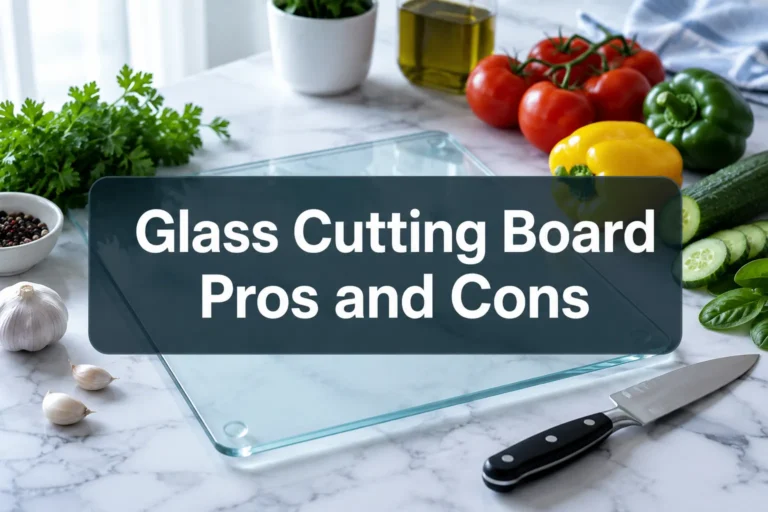
Glass cutting boards are non-porous and therefore offer no surface absorption for bacteria, a genuine hygiene advantage over wood and plastic. However, glass is widely considered the worst choice for knife maintenance, and its hardness causes knife edges to dull rapidly with each use.
Glass board hygiene profile:
- Non-porous surface: bacteria cannot penetrate the material
- Dishwasher-safe: high-heat cycles fully sanitize the surface
- No knife grooves: glass is harder than most knife steel, so blades glide rather than cut into the surface
Glass board drawbacks:
- Dulls knives faster than any other board material
- Heavy and fragile, prone to cracking if dropped
- Slippery surface can cause food and knives to slide, creating a safety hazard
- Loud and unpleasant to cut on
Verdict: Glass is technically among the most hygienic surfaces, but the practical trade-offs make it a poor daily-use choice for most cooks. Titanium offers a similar non-porous hygiene profile with far better knife compatibility and durability.
What Cutting Board Is Best for Raw Meat and Fish
For raw meat and fish, the best cutting board is one that is non-porous, easy to fully sanitize, and dedicated exclusively to that purpose. Non-porous materials, titanium, new HDPE plastic, or glass, are the top choices because bacteria from raw proteins cannot penetrate the surface.
Specific recommendations by use case:
- Daily home cooking with raw chicken or beef: A dedicated white HDPE plastic board (the food industry standard color-coding system uses white for general meat) that is replaced every 12-18 months, or a titanium board that can be dishwasher-sanitized after every use.
- Fish and shellfish: Titanium or glass are ideal because they do not absorb odors. Hardwood boards can retain fish smells even after thorough cleaning.
- Professional or high-volume cooking: Commercial-grade HDPE boards in the NSF-approved color-coding system (yellow for poultry, red for raw beef, blue for fish) combined with a strict replacement schedule.
The most important rule: Never use the same board for raw meat and ready-to-eat foods like salad vegetables or bread without a full sanitization cycle in between. Cross-contamination from a single lapse is enough to cause foodborne illness [5].
Is a Self-Sanitizing Cutting Board Worth the Money
Self-sanitizing cutting boards, typically UV-C light-equipped boards or boards with built-in silver-ion surfaces, are an emerging category with genuine promise but limited independent verification for home use. They are worth considering for high-risk users (immunocompromised individuals, households with infants) but are not necessary for most home kitchens.
UV-C self-sanitizing boards:
- UV-C light at 254 nm wavelength is an established disinfection technology used in hospitals and water treatment
- Consumer boards with built-in UV-C lamps can reduce surface bacterial counts significantly, but effectiveness depends on exposure time and whether the light reaches all surface areas (grooves are a problem)
- Price range: typically $80,$200 for consumer models
Silver-ion and copper-infused boards:
- Silver ions are a recognized antimicrobial agent; copper surfaces have demonstrated contact-killing of pathogens in clinical settings
- The challenge is durability: surface treatments wear with washing, and the antimicrobial effect diminishes over time
- Independent peer-reviewed data on consumer-grade silver or copper cutting boards specifically is limited
Bottom line: For most home cooks, a non-porous board (titanium or new HDPE) combined with a consistent sanitizing routine achieves equivalent or better results than a self-sanitizing board at a lower cost. Self-sanitizing boards add value in specific high-risk contexts.
Do Copper or Silver-Infused Cutting Boards Actually Work
Copper and silver have genuine antimicrobial properties supported by scientific evidence, but the effectiveness of consumer cutting boards infused with these materials depends heavily on how the infusion is done and how the board is maintained. The science is real; the marketing claims often outpace the evidence.
- Copper: Studies on solid copper surfaces show that common pathogens including MRSA, E. coli, and influenza A are killed within minutes of contact. However, a cutting board is not a solid copper surface, most “copper-infused” boards have a coating or composite that provides far less contact exposure.
- Silver ions: Silver-ion technology is used in medical devices and food packaging with documented efficacy. In cutting boards, silver is typically embedded in the plastic matrix. The antimicrobial effect is real but diminishes as the surface wears.
- Practical concern: Both copper and silver treatments are most effective on smooth, intact surfaces. Once knife grooves develop, the treated surface is disrupted and bacteria can colonize the unprotected channels.
Recommendation: Treat copper and silver infusion as a supplementary feature, not a replacement for proper cleaning. A non-infused titanium board that is properly sanitized after each use will outperform a silver-infused plastic board that is rarely cleaned.
What Size Cutting Board Do You Need for Different Foods
The right cutting board size reduces cross-contamination risk by giving you enough room to keep raw and ready-to-eat foods physically separated during prep. A board that is too small forces you to work in cramped conditions where juices from raw meat can reach produce.
General size guidelines:
- Small board (8″ x 10″ to 10″ x 14″): Suitable for cutting fruit, cheese, bread, herbs, and small vegetables. Not appropriate for raw meat.
- Medium board (12″ x 18″): The most versatile size for home cooking. Handles most vegetables, boneless cuts of meat, and fish fillets.
- Large board (18″ x 24″ or larger): Ideal for whole chickens, large roasts, watermelons, and batch cooking. Recommended as a dedicated raw-meat board.
- Thickness: For hardwood boards, 1.5 to 2 inches provides stability and longevity. Titanium boards at 2 mm are significantly lighter while maintaining structural integrity.
Practical tip: Own at least two boards, one large, dedicated to raw proteins, and one medium for everything else. Color-coding (red for raw meat, green for produce) is a simple system that prevents confusion and reduces cross-contamination risk.
The Katori Titanium Cutting Board: A Closer Look at a Non-Porous Option
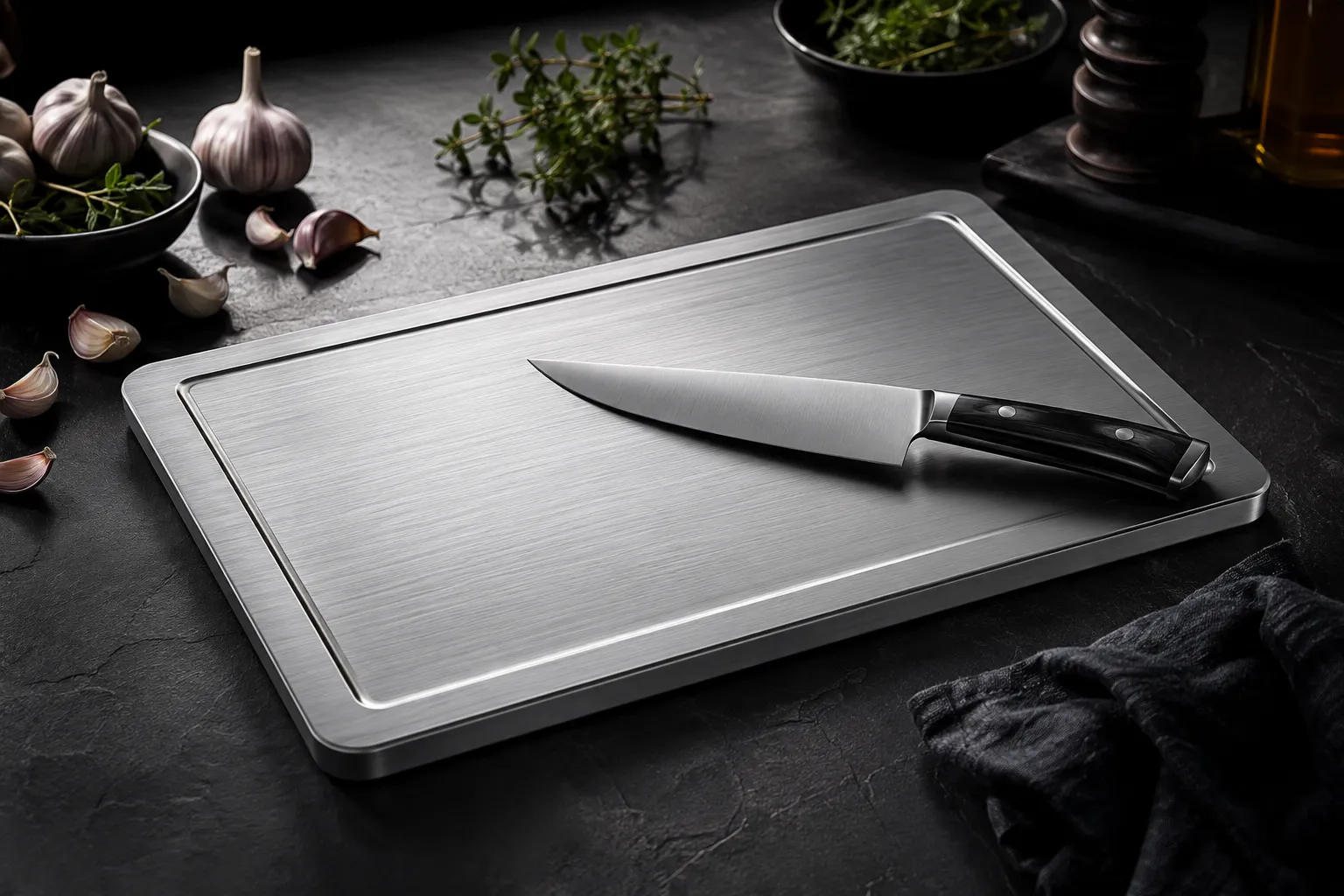
Among the growing category of non-porous cutting boards, the Katori Titanium Cutting Board has attracted significant attention in 2026 as a premium option for cooks who want a cutting board that doesn’t harbor bacteria without compromising on durability or knife compatibility.
Key features as advertised:
- 100% food-grade titanium surface (Grade 1, comparable to medical-grade applications)
- Non-porous construction: no surface absorption for bacteria, odors, or moisture
- Non-reactive with acidic foods (citrus, tomatoes, vinegar-based marinades), no metallic leaching
- Dishwasher-safe for full high-heat sanitization after every use
- Matte brushed finish that reduces glare and improves food visibility during prep
- Rounded edges for handling safety
- Approximately 2 mm thickness, lightweight at roughly 40% less weight than an equivalent steel surface
On knife compatibility: Titanium is harder than most kitchen knife steel, which raises a legitimate question about edge wear. The Katori board’s brushed matte finish is softer than polished titanium and harder than hardwood, placing it in a middle range for knife friendliness, better than glass or ceramic, comparable to a dense hardwood. Users report that knives glide rather than dig in, which is consistent with titanium’s surface properties.
Real user feedback highlights:
- Zero odor transfer between sessions (garlic, fish, onion)
- Easy to sanitize, a single dishwasher cycle or boiling water rinse
- Premium feel and appearance
- Some users note a metallic sound during chopping, which is a matter of personal preference
- The upfront cost ($89,$179 depending on size) is the most common objection, though the decades-long lifespan makes the cost-per-use very low
For a detailed breakdown of the Katori board including complaints and comparisons, see the Katori Titanium Cutting Board review.
Pros and cons summary:
| Pros | Non-porous, dishwasher-safe, non-reactive, odor-free, rust-proof, long lifespan |
| Cons | Premium price, metallic chopping sound, requires non-slip mat, limited style options |
Buy it if: You cook raw proteins frequently, want a board you will never need to replace, and value a fully sanitizable surface above all else.
Skip it if: You are on a tight budget, prefer the tactile feel of wood, or primarily prepare produce and bread.
Key Takeaways Before You Decide
- Dense hardwood (sugar maple, walnut) reduces bacteria passively through natural compounds and low moisture retention [2][9]
- Plastic boards harbor more bacteria than wood in real-world conditions, particularly in knife scars [10]
- Titanium and glass are the most hygienic surface materials by porosity, with titanium winning on practicality
- Bamboo is a reasonable mid-range option but requires the same care as hardwood
- No material compensates for a poor cleaning routine, sanitize after every raw protein session
- Board size matters for cross-contamination prevention; own at least two boards of different sizes
- Self-sanitizing and copper/silver-infused boards are useful supplements, not replacements for good hygiene habits
Frequently Asked Questions
Q: Is titanium safe for food preparation?
Yes. Food-grade titanium (Grade 1) is biocompatible and non-reactive. It does not leach metals into food, even with acidic ingredients like citrus or vinegar. The same material is used in surgical implants and dental devices.
Q: Does a hardwood cutting board really kill bacteria on its own?
Research supports this for dense hardwoods like sugar maple. Studies found bacterial counts dropped to near-detection limits within two hours on maple boards without any cleaning, driven by the wood’s natural tannins and low moisture retention [2]. This does not mean you should skip cleaning, it means hardwood has a passive safety advantage over plastic.
Q: How do I know when to replace my cutting board?
Replace a plastic board when knife grooves become deep and numerous, typically every one to three years with regular use. Sand and re-oil a hardwood board when grooves appear; replace it when the surface cannot be restored by sanding. A titanium board does not need replacement under normal use.
Q: Can I use the same cutting board for raw chicken and vegetables if I wash it between uses?
Technically yes, if you fully sanitize (not just wash) between uses. In practice, the risk of incomplete sanitization is high enough that food safety authorities recommend dedicated boards for raw proteins and ready-to-eat foods.
Q: Is a bamboo cutting board better than plastic?
Bamboo is harder than most woods, which slows groove formation and reduces bacterial harborage over time. It is a better choice than a heavily scarred plastic board, but not clearly superior to a well-maintained hardwood or non-porous board.
Q: What is the safest cutting board for someone with a compromised immune system?
A non-porous, dishwasher-safe board, titanium or new HDPE, combined with dishwasher sanitization after every use with raw proteins. This combination provides the most reliable bacterial elimination with the least room for human error.
Q: Does the color of a plastic cutting board matter for hygiene?
Color itself does not affect hygiene, but color-coding systems (red for raw meat, green for produce, yellow for poultry, blue for fish) are a practical way to prevent cross-contamination by ensuring the wrong board is never used for the wrong food.
Q: Can I sanitize a cutting board with rubbing alcohol?
Isopropyl alcohol (70%) is effective against most bacteria and viruses on hard surfaces. It is safe for titanium and glass boards. For wood boards, use it sparingly, repeated alcohol application can dry out the wood and accelerate cracking, which worsens bacterial risk over time.
Q: How long do bacteria survive on a cutting board surface?
On plastic boards with knife scars, bacteria can survive for hours and multiply overnight under warm, humid conditions [10]. On hardwood surfaces, bacterial counts typically fall by 98-99.9% within a few hours [9]. On non-porous surfaces like titanium, bacteria have no substrate to anchor to and die off quickly once the surface dries.
Q: Are there cutting boards with built-in juice grooves that are still hygienic?
Juice grooves are a practical feature for carving meat, but they are also a bacterial harborage point. If you use a board with juice grooves, clean those channels with a stiff brush and sanitize thoroughly after every use. A non-porous material (titanium) with juice grooves is more hygienic than a wood board with the same feature.
Conclusion: Your Action Plan for a Bacteria-Resistant Kitchen
The evidence is clear: the best cutting board that doesn’t harbor bacteria combines a non-porous or naturally antimicrobial surface with consistent, thorough sanitation. No single material is a magic solution, but some materials make the job significantly easier.
Your practical next steps:
- Audit your current boards. Run your fingers across the surface. Deep grooves mean it is time to replace or resurface.
- Match material to use case. Use a non-porous board (titanium or new HDPE) for raw proteins. A well-maintained hardwood board is excellent for produce, bread, and cooked foods.
- Own at least two boards. Dedicate one to raw meat and one to everything else. Color-code them if that helps.
- Upgrade your sanitizing routine. Hot soapy water is not enough after raw protein contact. Add a vinegar rinse, diluted bleach solution, or dishwasher cycle.
- Dry boards vertically. This single habit change reduces bacterial multiplication between uses more than most people realize.
- Consider titanium if you want a long-term investment. The upfront cost is real, but a non-porous, dishwasher-safe board that lasts decades eliminates the recurring cost and hygiene risk of replacing plastic boards every year or two.
For anyone serious about kitchen hygiene, the Katori Titanium Cutting Board is worth examining as a benchmark for what a non-porous, bacteria-resistant surface looks like in practice. And if you are thinking about food safety from a whole-health perspective, supporting your gut’s natural defenses with the best supplement for gut health is a complementary step worth exploring.
A clean cutting board is one of the simplest, most impactful things you can do for food safety at home. The science is on your side, act on it.
References
[1] S0023643825002907 – https://www.sciencedirect.com/science/article/pii/S0023643825002907
[2] pubmed.ncbi.nlm.nih.gov – https://pubmed.ncbi.nlm.nih.gov/40609863/
[3] Wood Vs Plastic Which Cutting Board Is A Bacteria Magnet – https://nutricost.com/blogs/articles/wood-vs-plastic-which-cutting-board-is-a-bacteria-magnet
[5] Wood Vs Plastic Cutting Boards Which One Is Cleaner And Healthier – https://www.discovermagazine.com/wood-vs-plastic-cutting-boards-which-one-is-cleaner-and-healthier-47405
[6] Breaking Your Plastic Cutting Board Habit – https://www.linkedin.com/posts/drmnegm_breaking-your-plastic-cutting-board-is-activity-7358473855260049410-cXuJ
[7] Wooden Vs Plastic Chopping Boards Bacteria – https://www.deerandoak.co.uk/blogs/news/wooden-vs-plastic-chopping-boards-bacteria
[8] Wood Or Plastic Which Is The Best Cutting Board – https://www.newhampshirebowlandboard.com/blogs/blog/13613289-wood-or-plastic-which-is-the-best-cuting-board
[9] Studies From The Early 1990s Led By Microbiologist Dean Cliver – https://www.linkedin.com/posts/scienceacumen_studies-from-the-early-1990s-led-by-microbiologist-activity-7428494094848389120-baRT
[10] Wood Vs Plastic Cutting Boards Hygiene Study – https://boazstore.com/wood-vs-plastic-cutting-boards-hygiene-study/
Tags: cutting board bacteria, antibacterial cutting board, titanium cutting board, wood vs plastic cutting board, food safety kitchen, cutting board hygiene, best cutting board for raw meat, bamboo cutting board safety, how to sanitize cutting board, non-porous cutting board, Katori titanium board, kitchen food safety 2026

With over 13 years of experience in holistic health blogging, I aim to help you navigate your wellness journey with honest insights, expert-backed advice, and a sprinkle of real-world practicality.
Certified Wellness Writer | Herbal Nutrition Advocate | Wellness Research Enthusiast