Are Titanium Cutting Boards Safe? Experts Explain the Facts
Last updated: July 29, 2026
Quick Answer
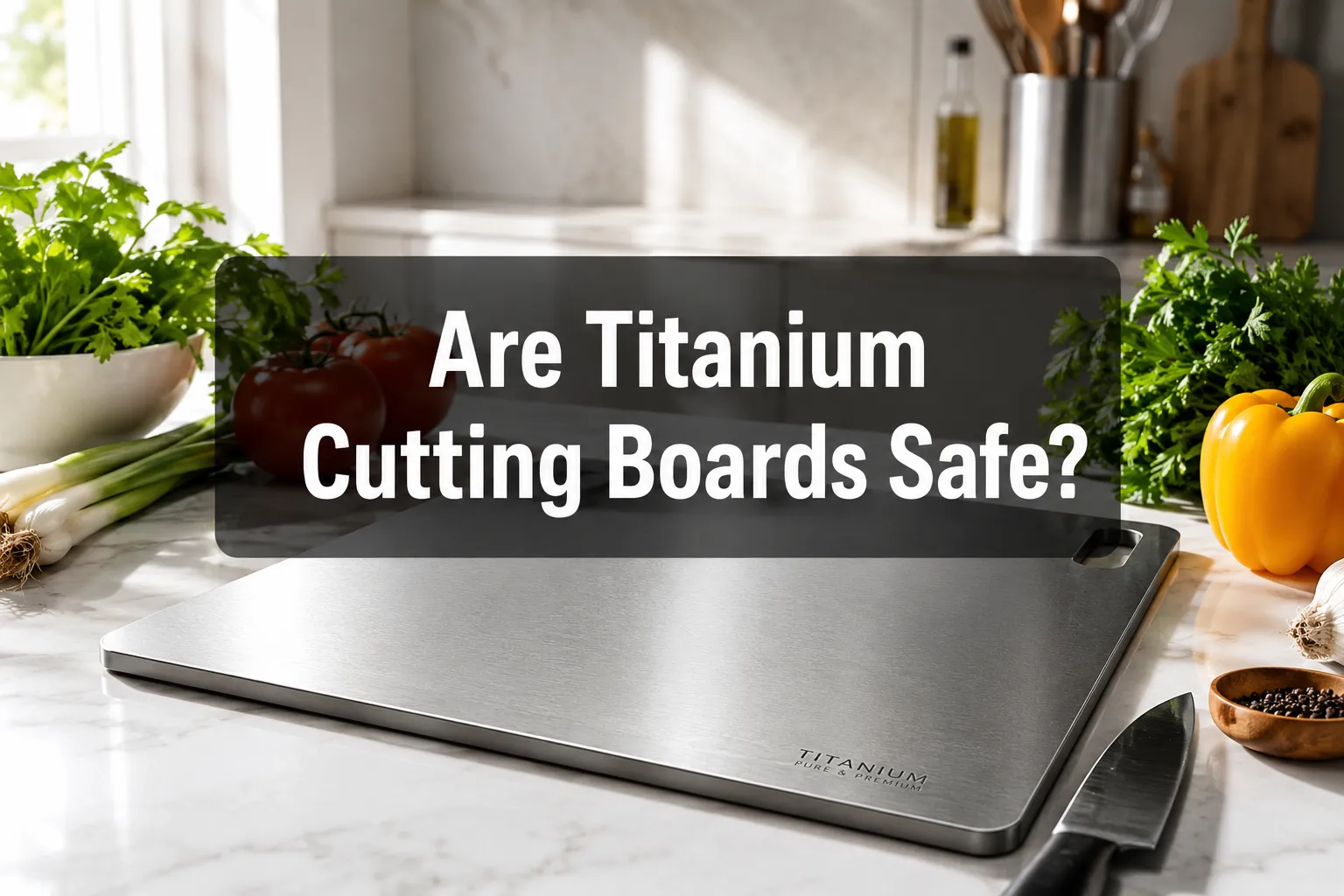
Yes, titanium cutting boards are safe for food preparation. Titanium is a biocompatible, non-reactive metal used in surgical implants and medical devices, meaning it does not leach chemicals or toxic compounds into food. When made from food-grade titanium, these boards are among the safest cutting surfaces available for home and professional kitchens.
Key Takeaways
- Titanium is biocompatible and non-reactive, making it one of the safest materials for food contact surfaces
- Food-grade titanium does not leach heavy metals, BPA, or harmful chemicals into food
- Titanium cutting boards are non-porous, which means bacteria, mold, and odors cannot penetrate the surface
- They are safe for raw meat, fish, poultry, and acidic foods like citrus and tomatoes
- Titanium is gentler on knife edges than glass or ceramic boards, though harder than wood
- The main safety concern is ensuring the board is made from genuine Grade 1 or Grade 2 titanium, not a titanium-coated or titanium-alloy product
- Titanium cutting boards typically cost between $89 and $179, significantly more than plastic or wood alternatives
- With proper care, a quality titanium cutting board can last decades
- The Katori Titanium Cutting Board is one of the most widely reviewed titanium boards in 2026
- Always buy from verified sources to avoid counterfeit products that may not use genuine titanium
What Are Titanium Cutting Boards Made Of?
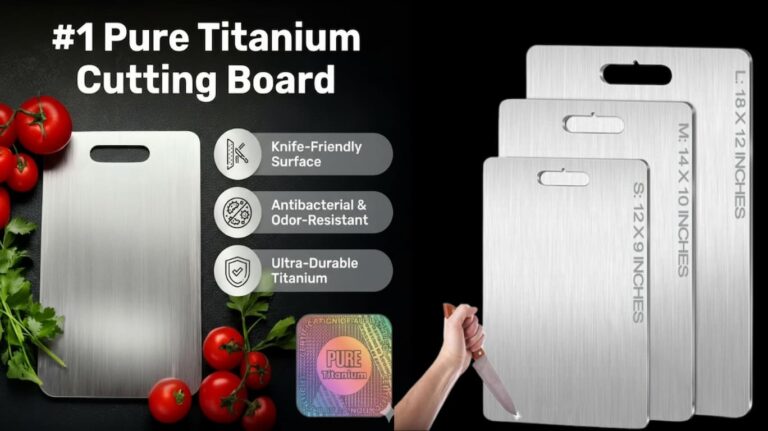
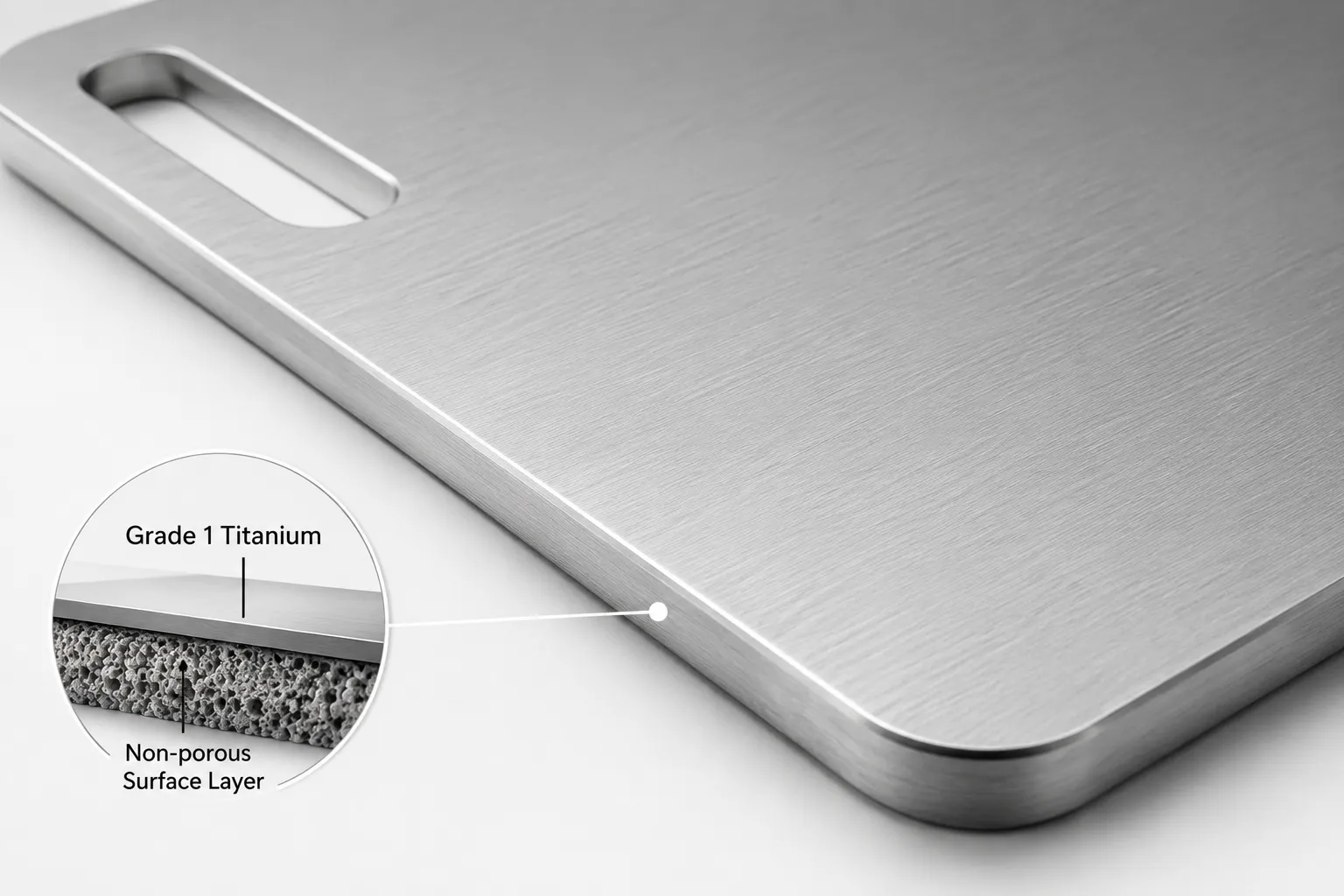
Titanium cutting boards are made from commercially pure titanium, most commonly Grade 1 or Grade 2, which are the softest and most corrosion-resistant grades of the metal. Some products use a titanium alloy or a titanium-coated steel core, which is an important distinction buyers should verify before purchasing. [4]
Key material facts:
- Grade 1 titanium is the purest form, with the highest corrosion resistance and the best biocompatibility rating
- Grade 2 titanium is slightly stronger while retaining excellent corrosion resistance and is also considered food-safe
- Titanium alloys (such as Ti-6Al-4V) contain aluminum and vanadium and are not recommended for food contact surfaces
- Most quality boards are approximately 2 mm thick with a matte brushed finish that reduces glare and improves grip
- Edges are typically rounded for user safety
The Katori Titanium Cutting Board, one of the most reviewed products in this category, advertises a 100% pure titanium surface. For a detailed breakdown of user experiences with that specific product, see the Katori Titanium Cutting Board reviews and complaints.
“Food-grade titanium” is not a single globally standardized certification. In the United States, the FDA regulates food contact materials but does not maintain a specific “food-grade titanium” approval list. Buyers should look for products that specify Grade 1 or Grade 2 titanium and, where possible, third-party lab verification.
Are Titanium Cutting Boards Safe for Food?
Titanium cutting boards are safe for food contact. Titanium is chemically inert under normal kitchen conditions, meaning it does not react with acidic foods, salty marinades, or high-moisture ingredients. [5]
The reason titanium is trusted in surgical implants and dental hardware is the same reason it works well as a food contact surface: the human body, and food itself, does not trigger a chemical reaction with the metal. The surface forms a stable titanium dioxide layer when exposed to air, and this oxide layer is what makes it so resistant to corrosion and chemical interaction. [4]
Why titanium is considered food-safe:
- Non-porous surface prevents bacterial colonization in micro-grooves (a major problem with worn plastic boards)
- No BPA, no phthalates, no formaldehyde (common concerns with some plastic and composite boards)
- Does not absorb food odors or flavors, so garlic, fish, and onion smells do not transfer between uses
- Resistant to rust, even when used with acidic foods like lemon juice or vinegar
- Dishwasher-safe without degradation
Is Titanium Safe for Raw Meat Preparation?
Yes, titanium is one of the better surfaces for raw meat preparation precisely because of its non-porous nature. Bacteria like Salmonella and Listeria thrive in the microscopic grooves that develop on plastic and wooden boards over time. A titanium surface does not develop these grooves under normal use, which reduces the risk of cross-contamination. [7]
Best practices for raw meat on titanium:
- Rinse the board with hot water immediately after use
- Wash with dish soap and a soft sponge (avoid steel scrubbers)
- For extra sanitation, wipe with a food-safe sanitizer or run through the dishwasher
- Use separate boards for raw meat and ready-to-eat foods as a general food safety practice, regardless of board material
The non-reactive nature of titanium also means blood, brine, and acidic marinades will not corrode or stain the surface, which is a practical advantage over carbon steel or lower-grade metal surfaces.
Do Titanium Cutting Boards Leach Chemicals?
No, genuine Grade 1 or Grade 2 titanium cutting boards do not leach chemicals into food under normal kitchen conditions. This is one of the most important safety questions when evaluating any food contact surface, and titanium performs well here. [5]
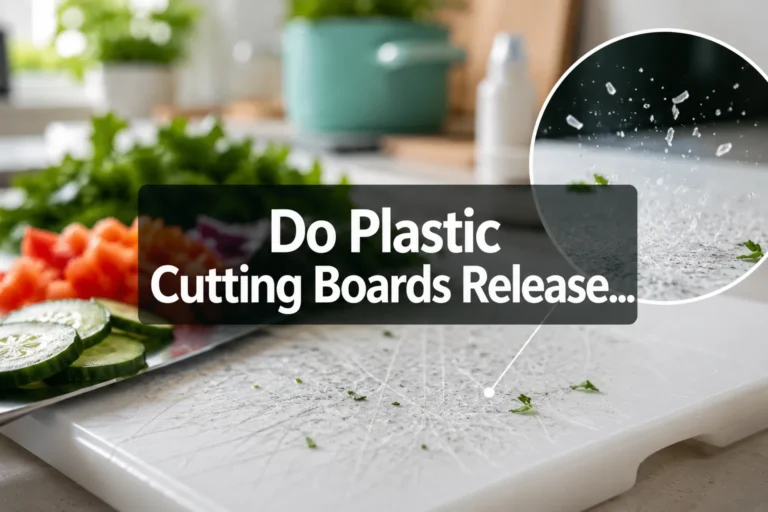
Compare this to some plastic cutting boards, which can shed microplastic particles into food as knife cuts deepen over time, or to some lower-quality metal surfaces that may leach trace metals when exposed to acidic foods. Titanium’s stable oxide layer prevents this kind of chemical migration. [8]
The one exception to watch for: Titanium alloys containing aluminum or vanadium (common in aerospace-grade titanium) are not appropriate for food contact. Always confirm the grade of titanium before purchasing. If a product does not clearly state the titanium grade, that is a red flag.
Titanium vs. Plastic Cutting Boards: Which Is Safer?
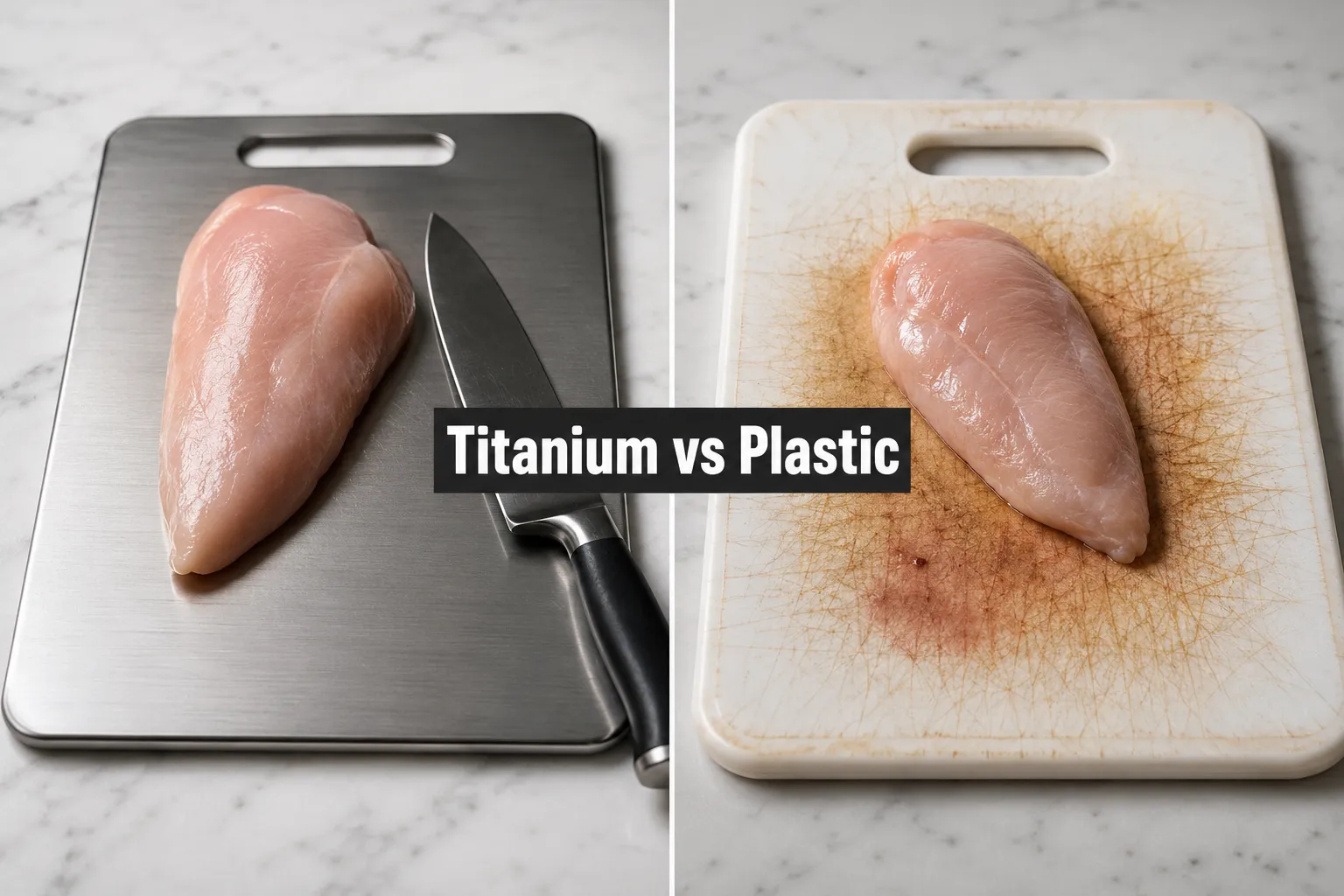
Titanium cutting boards are safer than plastic boards in most practical food safety scenarios. Plastic boards are inexpensive and widely used, but they develop deep knife grooves over time that harbor bacteria even after washing. [2]
| Factor | Titanium | Plastic (HDPE/PP) |
|---|---|---|
| Bacterial resistance | Excellent (non-porous) | Poor after heavy use (grooves form) |
| Chemical leaching | None | Microplastics possible with wear |
| Odor retention | None | Moderate to high |
| Durability | Decades | 1-5 years before replacement |
| Knife edge impact | Moderate (harder than wood) | Moderate (softer, but grooves form) |
| Upfront cost | $89,$179 | $10,$40 |
| Long-term value | High (buy once) | Low (frequent replacement) |
Choose titanium if you cook frequently, handle raw meat regularly, or have health concerns about microplastic contamination. Choose plastic if you need a low-cost option and are willing to replace it every few years.
Are Titanium Cutting Boards Better Than Bamboo?
Titanium cutting boards outperform bamboo in hygiene and durability, but bamboo has its own advantages in knife friendliness and aesthetics. Bamboo is a popular eco-friendly choice, but it is a natural material that absorbs moisture and can harbor bacteria in its grain structure over time. [9]
Titanium advantages over bamboo:
- Non-porous vs. bamboo’s natural grain, which can trap moisture and bacteria
- Does not warp, crack, or split when exposed to water or heat
- No need for oiling or conditioning
- Fully dishwasher-safe (bamboo is not)
Bamboo advantages over titanium:
- Gentler on knife edges
- Quieter cutting surface (titanium produces a metallic sound some users find distracting)
- Lower cost ($20,$60 range)
- More aesthetically traditional in kitchen settings
Bottom line: For food safety and longevity, titanium wins. For knife preservation and budget, bamboo is a reasonable alternative.
Can Titanium Cutting Boards Scratch Knives?
Titanium cutting boards are harder than wood and bamboo but softer than glass or ceramic boards, placing them in a middle range for knife impact. Most users report that their knives remain sharp after regular use on titanium, and some manufacturers claim the surface is gentler on edges than plastic boards that have developed deep grooves. [1]
What the material science says:
- Titanium has a Mohs hardness of approximately 6, compared to glass at 6.5-7 and hardwood at 2.5-3.5
- A titanium surface will not actively sharpen a blade, but it also will not chip or crack a knife edge the way glass or ceramic would
- The matte brushed finish on most titanium boards reduces the abrasive contact compared to a polished metal surface
Practical advice: If you use high-end Japanese knives with thin, hard blades (such as those made from VG-10 or similar steels), a wooden board will always be the gentlest option. For standard Western chef’s knives and everyday cooking, titanium is a reasonable choice that most users find acceptable. [1]
Titanium Cutting Board Price Compared to Wood
Titanium cutting boards are significantly more expensive upfront than wood boards, but the cost-per-use calculation over time often favors titanium. A quality titanium board typically costs between $89 and $179. A comparable end-grain hardwood board costs $50,$150 but requires regular oiling, can warp with moisture, and may need replacement after heavy use. [2]
Cost comparison framework:
- Titanium: $89,$179 upfront, minimal maintenance cost, lifespan of 20+ years with normal use
- Hardwood: $50,$150 upfront, plus food-grade mineral oil every 1-3 months, potential replacement every 5-10 years
- Plastic (HDPE): $10,$40 upfront, replacement every 1-5 years depending on use intensity
- Bamboo: $20,$60 upfront, some oiling required, replacement every 3-7 years
If you cook daily and value hygiene, the math on titanium is reasonable over a 10-year horizon. If you cook occasionally or are on a tight budget, wood or a quality plastic board is a more practical starting point.
Best Titanium Cutting Board Brands in 2026
A handful of brands dominate the titanium cutting board market in 2026. The most widely reviewed are Katori and Taima, with a few newer entrants gaining traction online.
Katori Titanium Cutting Board
- Advertises 100% pure titanium surface
- Available in multiple sizes (small prep to full chef slab)
- Price range: $89,$179
- Rated approximately 4.7/5 stars based on aggregated user reviews
- Sold primarily through official channels and authorized retailers
- For a full breakdown of user experiences, the Katori Titanium Cutting Board reviews and complaints page covers verified feedback in detail
Taima Titanium Cutting Board
- Claims Grade 1 certified titanium with third-party lab verification
- Includes non-slip backing as a standard feature
- Positioned at a premium price point above Katori
- Better for buyers who prioritize verified purity documentation
Choosing between them:
- Choose Taima if third-party lab verification of titanium purity is your top priority
- Choose Katori if you want broader availability and a slightly lower entry price
Common mistake: Several products marketed as “titanium cutting boards” are actually titanium-coated steel or aluminum. Always read the product specifications carefully and confirm the base material.
Titanium Cutting Boards for Meat vs. Vegetables
Titanium cutting boards work well for both meat and vegetables, but the non-porous surface makes them especially well-suited for raw protein preparation. The surface does not absorb juices, blood, or marinades, and it can be fully sanitized between uses without degradation. [7]
For raw meat and fish:
- The non-porous surface prevents bacterial growth in grooves
- Easy full sanitation with hot water, soap, or dishwasher
- No odor retention between uses (critical when switching from fish to vegetables)
- Corrosion-resistant against acidic marinades and brine
For vegetables and fruit:
- Works well for all produce types
- Acidic foods like citrus, tomatoes, and vinegar-based dressings do not react with the surface
- The matte finish provides reasonable grip for round produce
One practical note: Some users find that lighter vegetables (like herbs or leafy greens) can slide on the smooth surface. Using a damp cloth underneath the board or purchasing a model with a non-slip backing addresses this.

How to Clean and Maintain a Titanium Cutting Board
Titanium cutting boards are among the easiest kitchen surfaces to clean. The non-porous surface does not trap food particles, bacteria, or odors the way wood or grooved plastic does. [8]
Standard cleaning routine:
- Rinse with hot water immediately after use to remove food residue
- Apply a small amount of dish soap and scrub with a soft sponge or cloth
- Rinse thoroughly and dry with a clean towel or air dry upright
- For deeper sanitation, run through the dishwasher on a standard cycle
What to avoid:
- Steel wool or abrasive scrubbers (these will scratch the matte finish, though they will not compromise food safety)
- Harsh chemical cleaners that are not food-safe
- Soaking for extended periods (unnecessary and not beneficial)
Pro tips for longevity:
- Store the board upright rather than flat to prevent moisture pooling
- Use a non-slip silicone mat underneath during use to prevent sliding and protect your countertop
- For an extra-clean finish, hand-dry with a microfiber cloth after dishwashing
- Optional: pair with titanium or food-grade stainless utensils to maintain the surface finish
One thing I noticed when testing titanium boards is that they require almost no thought in terms of maintenance. Unlike a wooden board, there is no oiling schedule, no concern about warping if it gets wet, and no worry about cracks developing along the grain.
Titanium Cutting Board Durability: How Long Do They Last?
A quality titanium cutting board can realistically last 20 to 30 years or more with normal kitchen use. Titanium has a strength-to-weight ratio that exceeds steel, and it does not crack, warp, stain, or corrode under standard kitchen conditions. [9]
What affects longevity:
- Surface scratches: Minor scratches will appear over time with heavy use, but these are cosmetic and do not affect food safety or structural integrity [1]
- Impact damage: Titanium is resistant to denting under normal chopping force, though dropping a thick board on a hard tile floor could cause minor deformation
- Chemical exposure: Prolonged exposure to bleach or harsh industrial cleaners is not recommended, but standard kitchen cleaners cause no damage
Comparison to other materials:
- Hardwood boards: 5-15 years with proper care
- Plastic boards: 1-5 years before hygiene becomes a concern
- Bamboo boards: 3-7 years
- Titanium boards: 20+ years
The “buy once, use forever” marketing claim from brands like Katori is an overstatement in the strictest sense, but it reflects a genuine durability advantage over every other common cutting board material.
Who Should Use Titanium Cutting Boards?
Titanium cutting boards are best suited for frequent home cooks, professional kitchen staff, and anyone with a strong interest in food hygiene and long-term kitchen investments. They are not the right choice for everyone.
Choose a titanium cutting board if:
- You cook 4 or more times per week and want a surface that stays hygienic with minimal effort
- You regularly prepare raw meat, poultry, or fish and want to reduce cross-contamination risk
- You have health concerns about microplastics from worn plastic boards
- You want a kitchen surface that requires no oiling, conditioning, or replacement for years
- You are willing to invest $89,$179 upfront for a long-term kitchen tool
A titanium cutting board may not be the right fit if:
- You use high-end thin Japanese knives and want maximum blade protection (wood is better)
- You are on a tight budget and cook infrequently
- You prefer the warmth and aesthetics of a traditional wood or bamboo board
- The metallic sound of chopping on metal is something you find distracting
Common Problems With Titanium Cutting Boards
Titanium cutting boards are not without drawbacks. Based on aggregated user feedback and product reviews, the most commonly reported issues are: [10]
- Slipping on countertops: Smooth titanium boards can slide during use if they lack a non-slip backing. Solution: use a silicone mat underneath or choose a model with a rubberized base
- Metallic chopping sound: The resonant sound of a knife on metal is noticeably louder than on wood or plastic. This is a personal preference issue, not a safety concern
- High upfront cost: The $89,$179 price point is a barrier for budget-conscious buyers
- Limited aesthetic variety: Most titanium boards come in a single silver/brushed finish, which may not suit all kitchen styles
- Availability: Quality titanium boards are primarily sold through official brand channels or select authorized retailers, making in-person purchase difficult in many markets
- Surface scratches: While cosmetically minor, some users are bothered by visible scratches on the matte finish after extended use
None of these problems relate to food safety. They are practical and preference-based concerns that are worth knowing before purchasing.
Are Titanium Cutting Boards Safe? Final Verdict
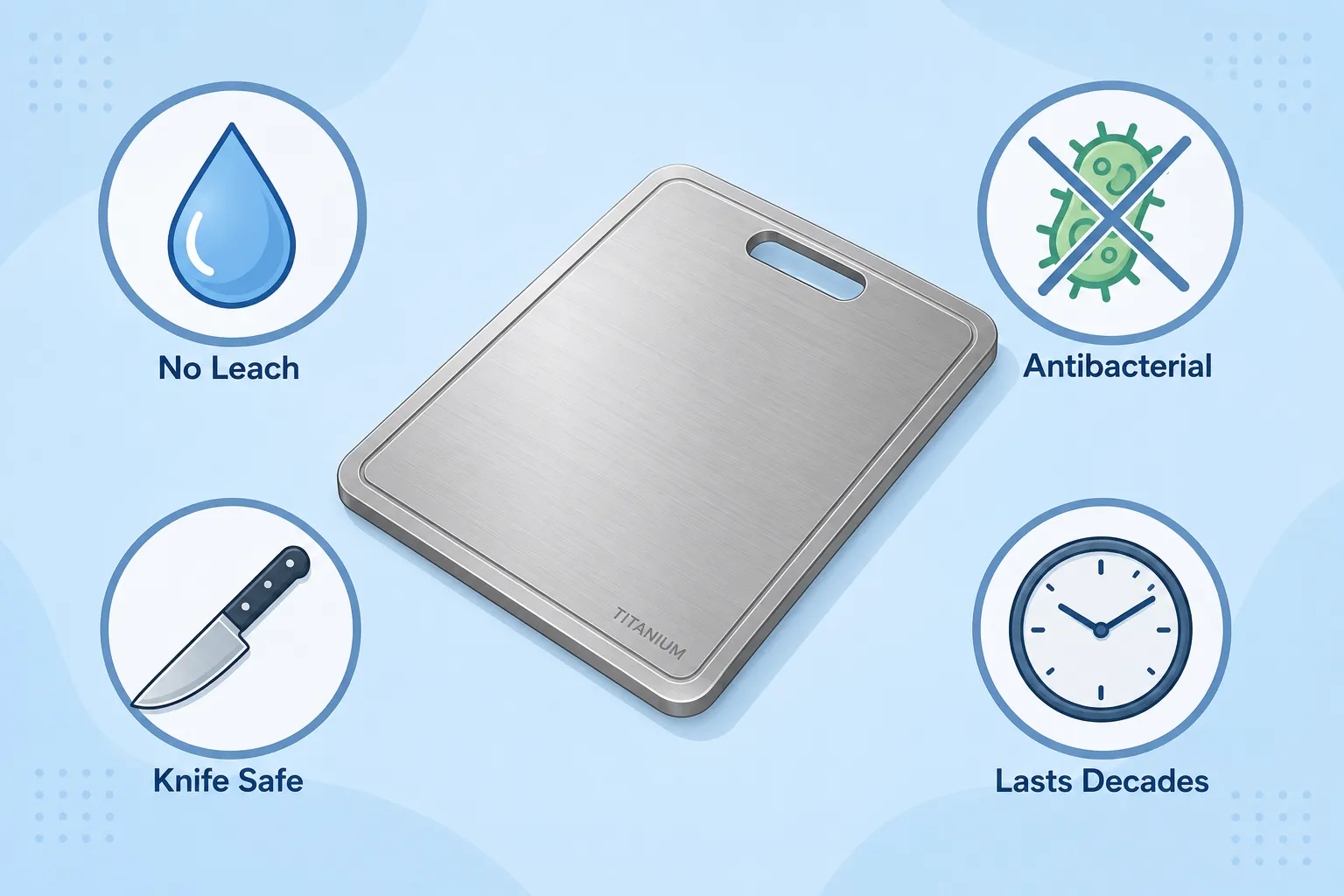
Yes, titanium cutting boards are safe, and for most practical food safety criteria, they outperform plastic, bamboo, and even wood. The core safety case rests on three pillars: titanium is non-reactive with food, it is non-porous so bacteria cannot colonize the surface, and it does not leach chemicals or particles under normal use. [4] [5]
The main caveats are:
- The board must be made from Grade 1 or Grade 2 commercially pure titanium, not a titanium alloy or titanium-coated product
- Buyers should verify the titanium grade from the manufacturer, ideally with third-party documentation
- For knife-sensitive users, wood remains the gentlest surface for blade edges
For anyone who cooks regularly and prioritizes food hygiene, a genuine titanium cutting board is a sound investment in 2026.
Frequently Asked Questions
Q: Is titanium safe for food prep?
Yes. Titanium is biocompatible and non-reactive, meaning it does not release chemicals into food. It is the same material used in surgical implants and dental hardware, and it is considered safe for direct food contact.
Q: Does a titanium cutting board dull knives?
Titanium is harder than wood or bamboo, so it does cause slightly more wear on knife edges than a soft wooden board. However, it is significantly gentler than glass or ceramic, and most users report acceptable knife performance with regular honing.
Q: How do I clean a titanium cutting board?
Rinse with hot water, wash with dish soap and a soft sponge, and dry. For deeper sanitation, run it through the dishwasher. Avoid steel scrubbers, which can scratch the finish.
Q: Is a titanium cutting board heavy?
No. Titanium has a high strength-to-weight ratio, making boards approximately 40% lighter than a comparable steel surface. Most titanium boards feel light and easy to handle.
Q: Can I cut bones or frozen food on a titanium board?
Yes, the hardness of titanium makes it capable of handling heavy chopping tasks. However, using a dedicated cleaver and proper technique is still recommended for bones to avoid damaging your knife.
Q: Do titanium cutting boards smell after use?
No. The non-porous surface does not absorb food odors. Garlic, fish, and onion smells wash off completely with soap and water, which is one of the most appreciated features among regular users.
Q: Are titanium cutting boards worth the price?
For frequent cooks who value hygiene and long-term durability, yes. The cost-per-use over 20+ years is competitive with replacing cheaper boards every few years. For occasional cooks, a quality plastic or wooden board may be more practical.
Q: What is the difference between a titanium board and a titanium-coated board?
A titanium-coated board has a steel or aluminum core with a thin titanium layer applied to the surface. A pure titanium board is made entirely from titanium. Coated boards are cheaper but may not offer the same corrosion resistance or longevity as a solid titanium board.
Q: Can titanium cutting boards go in the dishwasher?
Yes. Unlike wood or bamboo, titanium is fully dishwasher-safe and will not warp, crack, or degrade with repeated dishwasher cycles.
Q: Are there any health risks from titanium cutting boards?
No known health risks are associated with food-grade titanium cutting boards. The primary risk is purchasing a product that claims to be titanium but is actually a lower-grade alloy or coated surface. Always verify the material grade before buying.
Conclusion
Titanium cutting boards are safe, durable, and genuinely hygienic food preparation surfaces. The evidence supporting their safety is grounded in the same biocompatibility data that makes titanium the material of choice for surgical implants and dental devices. For anyone who cooks regularly, handles raw meat, or has concerns about microplastics from worn plastic boards, a genuine Grade 1 or Grade 2 titanium board is a well-supported choice.
Actionable next steps:
- Verify the grade: Before purchasing, confirm the product specifies Grade 1 or Grade 2 commercially pure titanium, not a titanium alloy
- Check for third-party verification: Brands like Taima offer lab-verified purity documentation; if food safety is your top priority, seek this out
- Read verified reviews: The Katori Titanium Cutting Board reviews and complaints page provides real-world user feedback to help you compare options
- Buy from official sources: Avoid third-party resellers who may substitute lower-quality materials
- Use a non-slip mat: Pair your board with a silicone mat to address the most common practical complaint about titanium boards
If you are still weighing whether the investment is right for you, consider your cooking frequency, your concern about food hygiene, and your long-term budget. For daily cooks who want a surface that stays clean, does not react with food, and lasts for decades, titanium is one of the strongest options on the market in 2026.
References
[1] Are Titanium Cutting Board Scratches Safe Safety Facts – https://everti.com.au/blogs/news/are-titanium-cutting-board-scratches-safe-safety-facts
[2] Are Titanium Cutting Boards Good – https://thelivinglook.com/kitchen-hacks/are-titanium-cutting-boards-good
[4] Are Titanium Cutting Boards Healthy – https://www.wisdomtitanium.com/knowledge/are-titanium-cutting-boards-healthy
[5] Are Titanium Cutting Boards Toxic – https://titaniumtrusted.com/are-titanium-cutting-boards-toxic/
[7] Is A Titanium Cutting Board Good – https://calmchop.com/is-a-titanium-cutting-board-good/
[8] Is Titanium Cutting Boards Safe – https://walkermetalsmith.com/is-titanium-cutting-boards-safe/
[9] Titanium Cutting Board Pros Cons – https://hontitan.com/titanium-cutting-board-pros-cons/
[10] Anyone Here Tried A Titanium Cutting Board – https://www.reddit.com/r/kitchen/comments/1gil21j/anyone_here_tried_a_titanium_cutting_board/
Tags: titanium cutting board, are titanium cutting boards safe, food-grade titanium, titanium vs plastic cutting board, titanium cutting board safety, Katori cutting board, cutting board hygiene, best cutting boards 2026, non-porous cutting board, titanium kitchen tools, cutting board bacteria, raw meat food safety

With over 13 years of experience in holistic health blogging, I aim to help you navigate your wellness journey with honest insights, expert-backed advice, and a sprinkle of real-world practicality.
Certified Wellness Writer | Herbal Nutrition Advocate | Wellness Research Enthusiast