Best Non-Toxic Cutting Boards (2026): Safe & BPA-Free Picks
Last updated: July 29, 2026
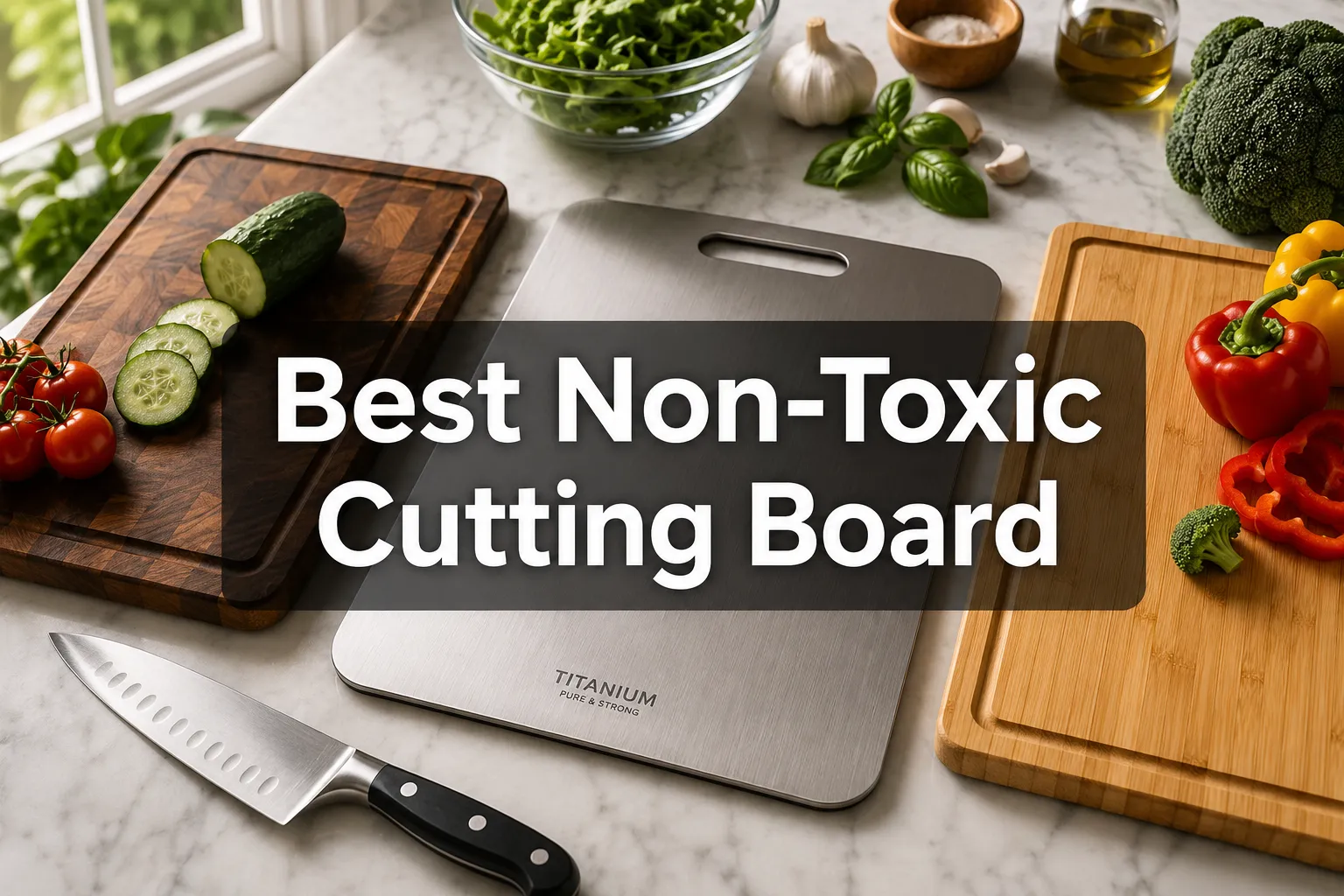
Quick Answer: The best non-toxic cutting board is made from food-grade materials that do not leach chemicals, harbor bacteria, or react with food. Top choices in 2026 include food-grade titanium, solid hardwood (such as maple or teak), and organic bamboo. Titanium boards lead the category for hygiene and longevity, while hardwood remains the gold standard for knife-friendliness among traditional materials.
Key Takeaways
- A non-toxic cutting board must be made from materials that do not leach chemicals, absorb bacteria, or react with acidic foods.
- Food-grade titanium, solid hardwood, and organic bamboo are the three safest material categories available in 2026.
- Plastic cutting boards, especially older or deeply scored ones, can shed microplastics and harbor bacteria in knife grooves.
- Glass and ceramic boards are technically non-toxic but destroy knife edges quickly and are not recommended for regular use.
- Titanium boards such as the Katori are non-porous, rustproof, dishwasher-safe, and biocompatible, making them the top pick for health-conscious cooks.
- Hardwood boards require regular oiling but offer a forgiving, knife-friendly surface with natural antimicrobial properties.
- Budget-friendly non-toxic options start around $30 for bamboo and hardwood; premium titanium boards range from $89 to $179.
- Proper maintenance, including regular cleaning and drying, extends the life of any non-toxic board significantly.
- Avoid boards with synthetic coatings, BPA-containing plastics, or unknown composite materials.
- A separate board for raw meat and one for produce is the single most effective food safety habit you can adopt.
What Makes a Cutting Board Non-Toxic
A cutting board is non-toxic when its material does not release harmful substances into food during normal use. This means no chemical leaching, no microplastic shedding, no heavy metal migration, and no synthetic coatings that degrade over time.
Three specific criteria define a genuinely non-toxic cutting board:
- Material purity: The board is made from a single, food-safe material with no added fillers, adhesives, or synthetic coatings that can break down.
- Non-porosity or natural antimicrobial properties: The surface either does not absorb bacteria (titanium, glass) or has natural properties that resist bacterial growth (hardwood, bamboo).
- Chemical inertness: The material does not react with acidic foods like citrus, tomatoes, or vinegar, which can trigger leaching in reactive materials.
Plastic boards fail the first criterion when they age. Knife grooves create micro-channels where bacteria thrive, and repeated cutting can cause plastic particles to migrate into food. A 2023 study published in Environmental Science and Technology estimated that a single plastic cutting board could shed millions of microplastic particles annually, though the long-term health impact of ingesting those particles is still being studied.
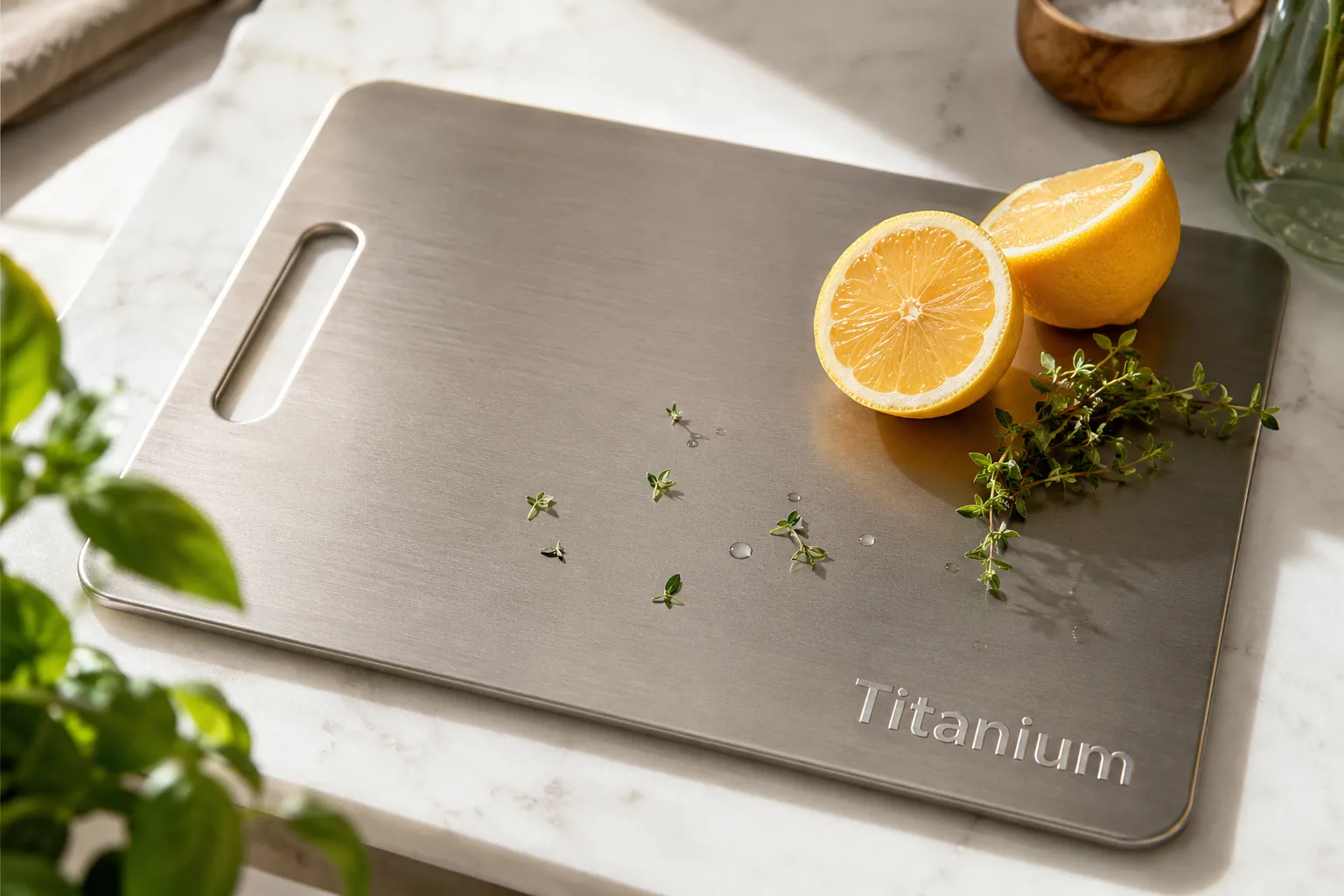
Titanium, by contrast, is biocompatible. It is the same material used in surgical implants and dental prosthetics. It does not react with food acids, does not rust, and has no surface coating to chip or peel.
Best Non-Toxic Cutting Board Materials
The best non-toxic cutting board materials are food-grade titanium, solid hardwood, and organic bamboo. Each has distinct strengths depending on your cooking style, budget, and maintenance preferences.
Food-Grade Titanium
Titanium is the highest-performing non-toxic cutting board material available today. It is non-porous, meaning bacteria and odors cannot penetrate the surface. It is also biocompatible (used in medical implants), completely rustproof, and dishwasher-safe. The Katori Titanium Cutting Board, for example, uses Grade 1 pure titanium with a matte brushed finish approximately 2 mm thick. You can read a detailed breakdown of its features in this Katori Titanium Cutting Board review.
Titanium is harder than wood but softer than ceramic, which means it is less likely to dull knives than glass while still being more hygienic than plastic or bamboo.
Solid Hardwood
Maple, walnut, and teak are the most popular hardwood choices. These woods have a tight grain structure that naturally resists bacterial penetration. Hardwood is gentle on knife edges and has been used safely in kitchens for centuries. The main drawback is maintenance: hardwood boards need regular oiling (food-grade mineral oil or beeswax) to prevent cracking and warping.
Organic Bamboo
Bamboo is technically a grass, not a wood, but it performs similarly to hardwood in the kitchen. It is harder than most woods, which makes it more resistant to knife marks, but that hardness also means it can dull knives faster than softer hardwoods. Look for boards labeled “organic bamboo” with no formaldehyde-based glues, as some budget bamboo boards use adhesives that are not food-safe.
What to Avoid
- Polypropylene (PP) and polyethylene (PE) plastic boards: safe when new but degrade over time
- Boards with unknown composite materials or synthetic surface coatings
- Cheap bamboo boards bonded with urea-formaldehyde adhesives
Bamboo vs. Wood vs. Plastic Cutting Boards: Safety Compared
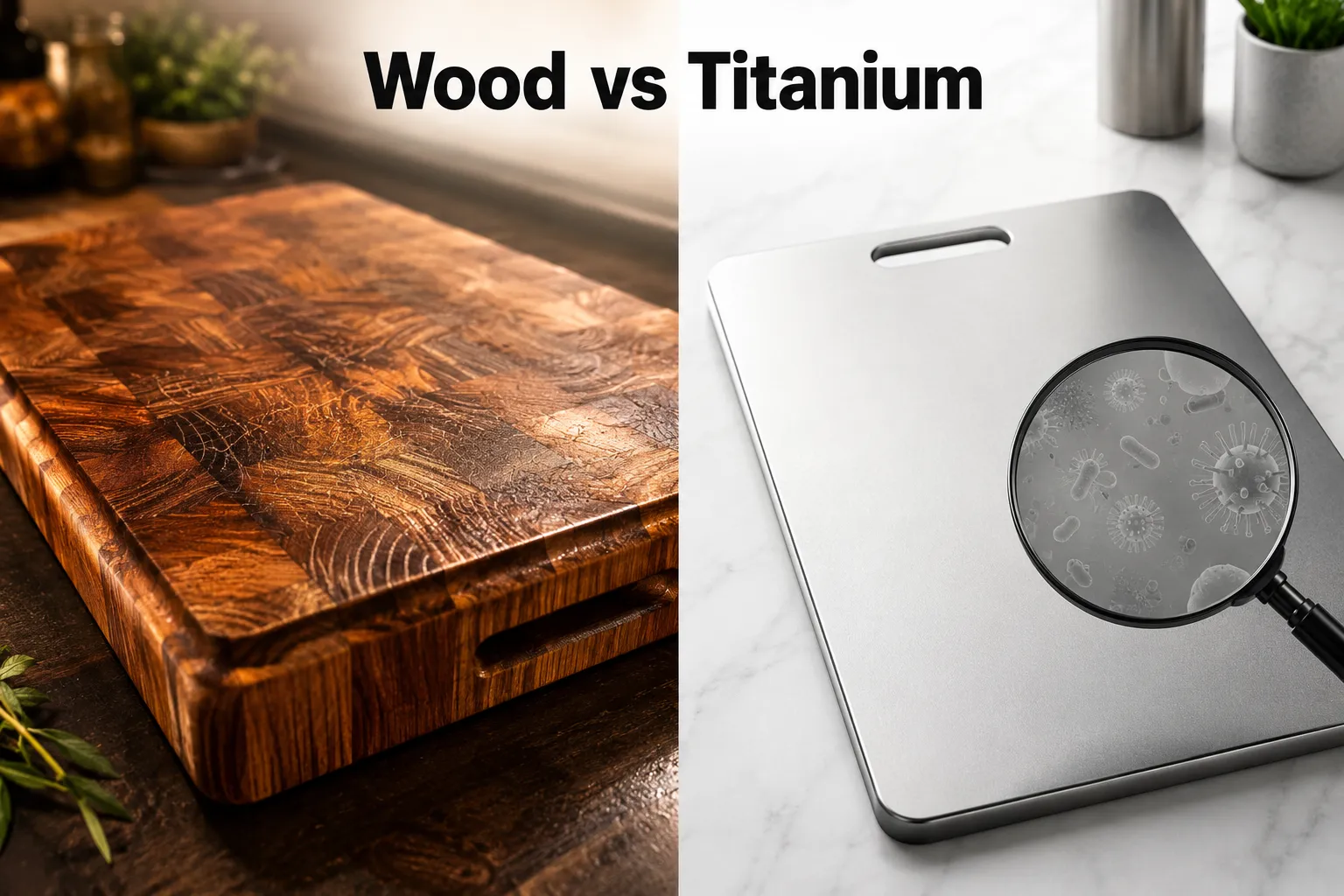
For food safety, hardwood and titanium outperform plastic, and organic bamboo sits in the middle. Plastic boards are convenient but carry the highest long-term risk due to microplastic shedding and bacterial accumulation in knife grooves.
Here is a direct comparison across the factors that matter most:
| Factor | Hardwood | Bamboo | Plastic | Titanium |
|---|---|---|---|---|
| Bacteria resistance | Good (natural) | Moderate | Poor (grooves) | Excellent (non-porous) |
| Knife friendliness | Excellent | Moderate | Good | Good |
| Chemical safety | Excellent | Good (if glue-free) | Moderate (microplastics) | Excellent |
| Durability | Good (with oiling) | Good | Moderate | Excellent |
| Dishwasher-safe | No | No | Yes | Yes |
| Price range | $30,$120 | $15,$60 | $10,$40 | $89,$179 |
Decision rule: Choose hardwood if you cook daily and prioritize knife longevity. Choose titanium if hygiene and zero maintenance are your top priorities. Choose bamboo if you want an affordable, eco-friendly option and verify it uses food-safe adhesives. Avoid plastic as a primary board, especially for raw meat.
What Cutting Boards Should I Avoid
Avoid cutting boards made from standard plastic (especially when heavily scored), glass, ceramic, and low-quality bamboo bonded with formaldehyde-based adhesives. These materials either damage knives, harbor bacteria, or introduce chemicals into food.
Specific boards to avoid:
- Heavily used plastic boards: Once knife grooves form, bacteria embed in the channels and are nearly impossible to fully remove even with bleach. Research from the University of California Davis found that bacteria in plastic board grooves can survive sanitizing attempts that would eliminate surface bacteria.
- Glass and ceramic boards: Technically non-toxic, but they destroy knife edges rapidly and are unnecessarily harsh on joints during extended prep work.
- Cheap composite boards: Some boards marketed as “eco-friendly” use compressed wood fibers bonded with synthetic resins. Unless the adhesive is confirmed food-safe, these boards can leach chemicals.
- Boards with rubber or silicone coatings of unknown origin: Some boards have non-slip surfaces made from materials that are not food-grade certified.
- Boards with decorative surface prints or dyes: Inks and dyes on the cutting surface can transfer to food.
Are Glass Cutting Boards Non-Toxic
Glass cutting boards are non-toxic in the sense that glass does not leach chemicals into food. However, they are not recommended for regular use because they are extremely hard on knife edges and create a harsh cutting surface that fatigues the wrist and hand during extended prep sessions.
Glass is non-porous and easy to sanitize, which gives it a hygiene advantage over plastic. But the knife damage it causes is significant enough that most professional chefs and culinary organizations advise against glass as a primary cutting surface. If you need a non-toxic surface for tasks like rolling pastry dough (where no knife contact occurs), a glass or marble slab works well. For actual cutting, stick to titanium, hardwood, or quality bamboo.
Non-Toxic Cutting Board Brands Worth Knowing in 2026
Several brands have established strong reputations for producing genuinely non-toxic cutting boards. The best non-toxic cutting board brands prioritize material transparency, food-safety certifications, and honest marketing.
Top brands by material category:
- Titanium: Katori, Taima. Both offer food-grade titanium boards. Katori positions itself as a value-accessible premium option ($89,$179), while Taima targets buyers who want third-party lab-verified purity at a higher price point. Katori wins on availability and price; Taima wins if verified purity documentation is your top concern.
- Hardwood: Boos (John Boos & Co.), BoardSmith, and Teakhaus are well-regarded for solid hardwood boards with food-safe finishes.
- Bamboo: Totally Bamboo and Lipper International offer organic bamboo boards. Always verify the adhesive used before purchasing.
What to look for when evaluating a brand:
- Clear material disclosure (grade of wood, titanium purity, adhesive type)
- Food-safety certifications (FDA-compliant materials, LFGB in Europe)
- Warranty terms
- Transparent manufacturing origin
How Much Do Non-Toxic Cutting Boards Cost
Non-toxic cutting boards range from about $15 for entry-level bamboo to $179 or more for premium titanium. The price reflects material quality, size, and longevity, not just brand prestige.
Price breakdown by category:
- Bamboo (organic, glue-free): $15,$60
- Solid hardwood (maple, walnut, teak): $30,$120 for standard sizes; $150+ for large end-grain boards
- Titanium (food-grade): $89,$179; some specialty sizes exceed $200
Cost-per-use perspective: A $30 plastic board replaced every two years costs more over a decade than a $150 hardwood board oiled regularly and used for 10+ years. A titanium board at $120 that lasts 20+ years has a lower lifetime cost than almost any alternative.
Pro tip: Watch for official promotions on titanium boards. The Katori brand, for example, periodically offers bundle discounts (such as “Buy 2 Get 1 Free”) through its official website. Purchasing through authorized channels also ensures you receive a genuine product with a valid warranty.
Do Non-Toxic Cutting Boards Last Longer
Yes, non-toxic cutting boards generally last longer than conventional plastic boards because they are made from more durable materials that do not degrade in the same ways. Titanium boards in particular are marketed as “buy once, use forever” products, and that claim has material science behind it.
Why non-toxic materials outlast plastic:
- Titanium has a strength-to-weight ratio roughly twice that of steel at half the weight, making it highly resistant to warping, cracking, and staining.
- Solid hardwood, when properly maintained with food-grade mineral oil, resists cracking and can be sanded and refinished if the surface becomes too scored.
- Bamboo is harder than most woods and resists surface wear well, though it is more susceptible to moisture damage than titanium.
- Plastic boards develop deep knife grooves within months of regular use, creating a surface that is both unhygienic and structurally weakened.
Realistic lifespan estimates:
- Plastic: 1-3 years of heavy use before replacement is advisable
- Bamboo: 3-7 years with proper care
- Hardwood: 10-20+ years with regular oiling
- Titanium: 20+ years; potentially lifetime use
Can Non-Toxic Cutting Boards Go in the Dishwasher
It depends on the material. Titanium cutting boards are fully dishwasher-safe. Plastic boards can go in the dishwasher but the high heat and harsh detergents accelerate degradation. Hardwood and bamboo boards should never go in the dishwasher, as the heat and moisture cause warping, cracking, and splitting.
Dishwasher compatibility by material:
- Titanium: Yes, fully dishwasher-safe. Hand-drying after the cycle prevents water spots.
- Plastic: Technically yes, but not recommended for boards that are already heavily scored.
- Hardwood: No. Dishwasher use will warp and crack a hardwood board within a few cycles.
- Bamboo: No. Same reason as hardwood.
For hardwood and bamboo boards, hand-washing with warm soapy water followed by immediate drying is the correct approach. Sanitizing with a diluted white vinegar solution or a food-safe hydrogen peroxide spray is effective for both materials.
Best Non-Toxic Cutting Board for Meat
The best non-toxic cutting board for raw meat is a food-grade titanium board. Its non-porous surface prevents bacteria from embedding in the material, and it can be fully sanitized in a dishwasher or with boiling water without degrading.
When I first started paying attention to cross-contamination risks in my own kitchen, I realized I had been using the same plastic board for raw chicken and vegetables for years. The grooves in that board were essentially a bacterial reservoir. Switching to a dedicated non-porous board for meat changed how confident I felt about kitchen hygiene.
Why titanium wins for meat prep:
- No micro-grooves where Salmonella or E. coli can hide
- Withstands boiling water and alcohol sanitization without damage
- Odors from raw fish, poultry, and red meat do not cling to the surface
- Dishwasher-safe for thorough cleaning after every use
If titanium is outside your budget: A white polypropylene board designated specifically for raw meat, replaced every 12-18 months, is the next best option. The color-coding system (white for meat, green for vegetables) used in commercial kitchens is worth adopting at home.
Non-Toxic Cutting Board for Vegetables and Kids
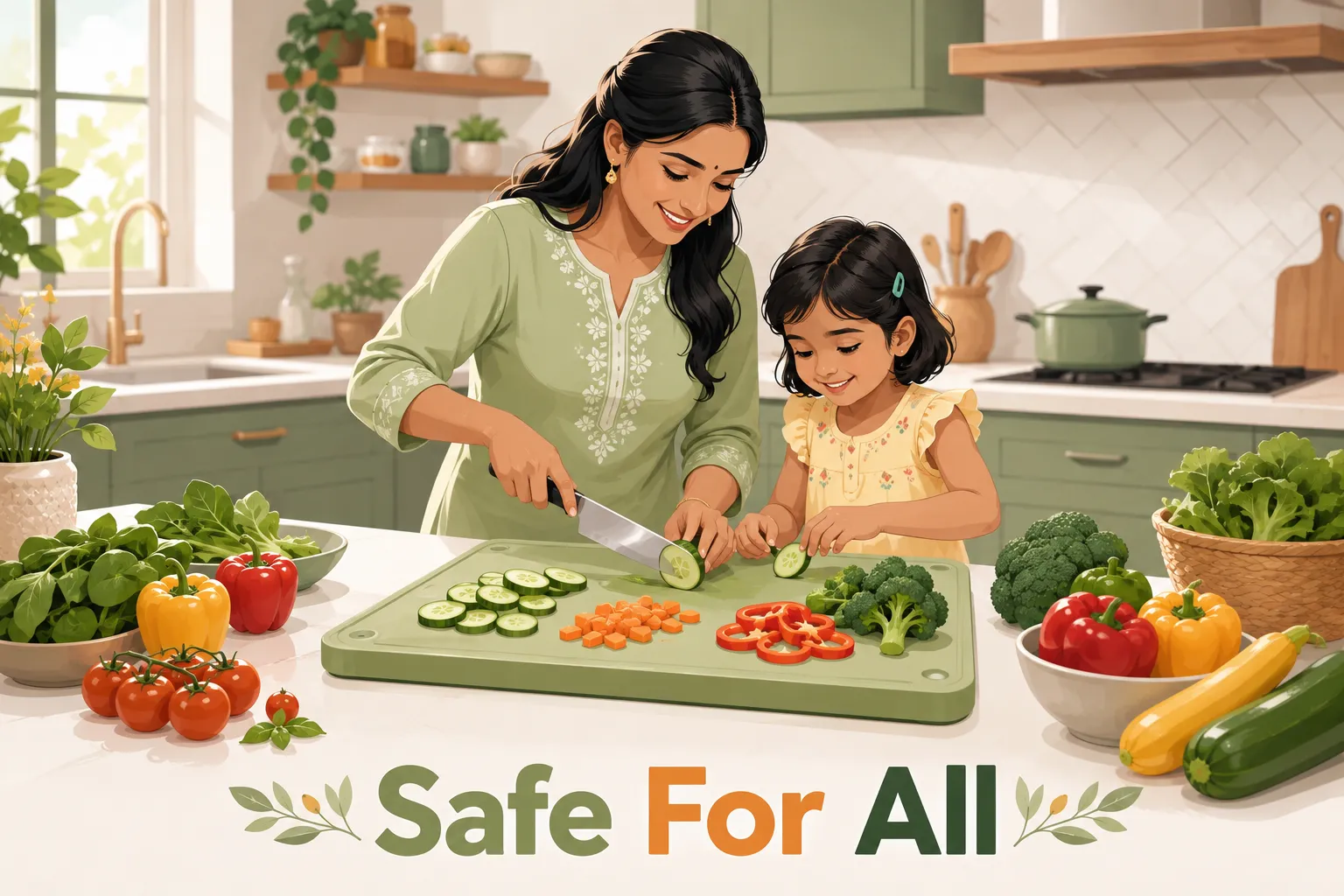
For vegetables, any of the three main non-toxic materials work well. For households with children, the best non-toxic cutting board for kids is one that is lightweight, easy to grip, and free from any chemical risk if a child touches the surface.
For vegetable prep specifically:
- Hardwood boards are ideal because they are gentle on knife edges and easy to keep clean with basic washing.
- Bamboo works well for light vegetable prep but can dull knives faster than hardwood.
- Titanium is excellent for vegetables and has the added benefit of not absorbing odors from strong-smelling produce like garlic or onions.
For kids’ use:
- Lightweight titanium boards (approximately 40% lighter than steel at the same size) are manageable for older children learning to cook.
- Hardwood boards with rubber feet offer stability, which is important for safety when a child is learning knife skills.
- Avoid boards with sharp edges or heavy weight that could cause injury if dropped.
Maintaining good kitchen hygiene is closely connected to overall health. Just as you would invest in quality supplements to support your body, investing in a safe food preparation surface is a foundational health decision. For those interested in broader health and wellness, our coverage of the best supplements for gut health and best liver health supplements explores how daily habits compound over time.
Do Non-Toxic Cutting Boards Stain Easily
Titanium cutting boards do not stain. Hardwood boards can develop surface discoloration from beets, turmeric, and berries, but this is cosmetic and does not affect food safety. Bamboo stains more easily than hardwood but less than plastic.
Stain resistance by material:
- Titanium: Essentially stain-proof. Pigments from foods like turmeric and beet juice wipe off cleanly.
- Hardwood: Moderate staining from deeply pigmented foods. Surface sanding removes most stains. Regular oiling creates a barrier that reduces staining.
- Bamboo: More porous than hardwood; stains more readily. Lemon juice and salt scrub can lighten surface stains.
- Plastic: Stains easily and permanently. White plastic boards turn yellow-brown with use and are nearly impossible to restore.
Practical note: If stain resistance matters to you, titanium is the clear winner. If you prefer wood and want to minimize staining, apply a thin coat of food-grade mineral oil before first use and re-apply monthly. This fills the surface pores and creates a barrier against pigmented foods.
Non-Toxic Cutting Board Maintenance Tips
Proper maintenance extends the life of any non-toxic cutting board and keeps it hygienic. The specific routine depends on the material, but a few principles apply across the board (no pun intended).
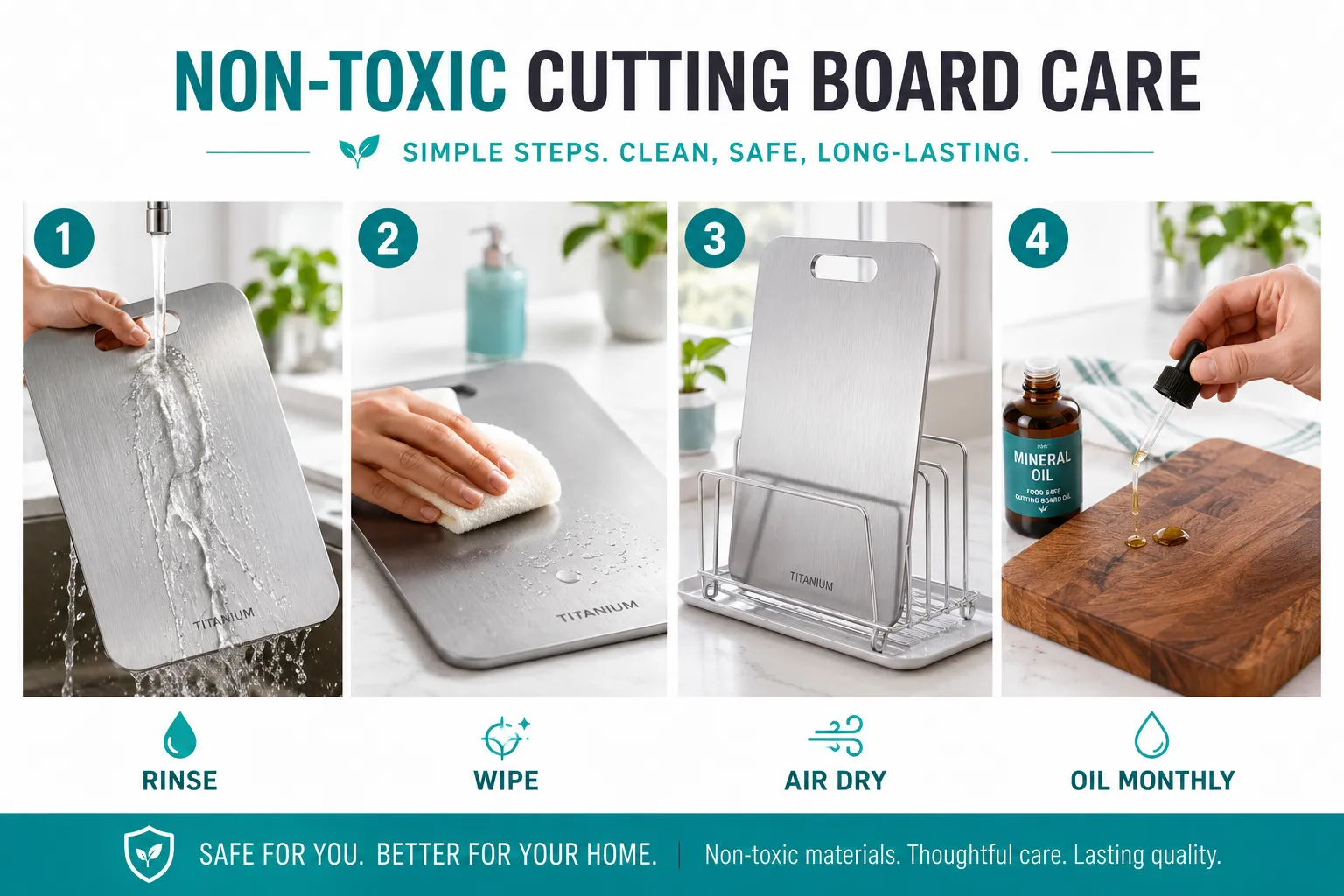
Titanium Board Maintenance
- Rinse with warm water and dish soap after each use.
- Dishwasher-safe, but hand-drying after the cycle prevents water spots.
- Sanitize with boiling water or a food-safe alcohol solution after raw meat use.
- Use a soft sponge or cloth; avoid steel wool or abrasive scrubbers that can scratch the matte finish.
- Place a non-slip silicone mat underneath to prevent sliding on smooth counters.
- Store upright in a drying rack to allow air circulation.
Hardwood Board Maintenance
- Hand-wash only with warm soapy water; never soak or submerge.
- Dry immediately and thoroughly after washing; do not leave flat on a wet surface.
- Apply food-grade mineral oil or a beeswax board cream monthly (or whenever the wood looks dry).
- Sand lightly with fine-grit sandpaper if deep knife grooves develop, then re-oil.
- Sanitize with a diluted white vinegar spray (1:1 with water) or a 3% hydrogen peroxide solution.
Bamboo Board Maintenance
- Hand-wash with mild soap and warm water.
- Dry immediately; bamboo is more susceptible to moisture damage than hardwood.
- Oil occasionally with food-grade mineral oil, though less frequently than hardwood.
- Replace when deep grooves develop, as bamboo is harder to sand and refinish than hardwood.
Common mistake: Leaving any cutting board (including titanium) in standing water or in a dishwasher for extended periods without drying. Even titanium can develop water spots, and prolonged moisture accelerates wear on wooden boards.
Key Takeaways (Summary)
Before the conclusion, here is a quick recap of the most actionable points from this guide:
- Titanium is the best overall non-toxic cutting board material for hygiene, longevity, and zero maintenance.
- Hardwood is the best choice for knife-friendliness and traditional kitchen feel, with proper oiling.
- Avoid plastic boards for raw meat; replace any plastic board that has visible deep grooves.
- Glass is non-toxic but destroys knives; use it only for non-cutting tasks.
- A dedicated board for raw meat and a separate one for produce is the single most impactful food safety habit.
- Budget-conscious buyers can start with a quality bamboo board (verified glue-free) at $15,$60.
- Premium titanium boards ($89,$179) offer the lowest cost-per-use over a 20-year horizon.
Frequently Asked Questions
Is titanium safe for food preparation?
Yes. Titanium is biocompatible and used in surgical implants and dental prosthetics. It does not react with food acids, does not leach metals, and is approved for food contact use. It is one of the safest materials available for cutting board construction.
Does the Katori Titanium Cutting Board dull knives?
No, not significantly. Titanium is harder than wood but softer than glass or ceramic. Users report that knives glide well on the surface, and the board minimizes edge wear compared to glass or heavily grooved plastic. For maximum knife longevity, hardwood remains the softest landing for a blade.
How do I clean a non-toxic cutting board after cutting raw meat?
For titanium: run it through the dishwasher or sanitize with boiling water or a food-safe alcohol solution. For hardwood: wash with hot soapy water, then spray with a 3% hydrogen peroxide solution and let sit for two minutes before rinsing. Never use the same board for raw meat and ready-to-eat foods without sanitizing between uses.
Are bamboo cutting boards truly non-toxic?
Organic bamboo boards with food-safe adhesives are non-toxic. The risk comes from cheap bamboo boards that use urea-formaldehyde glue to bond the bamboo strips. Always check the product description for “formaldehyde-free” or “food-safe adhesive” labeling before purchasing.
Can I use a non-toxic cutting board for cutting bones or frozen food?
Titanium boards can handle heavy chopping, including bones and partially frozen foods, due to their material strength. Hardwood boards can handle moderate bone work but may crack under repeated heavy impact. Bamboo and plastic boards are not recommended for bone cutting.
How heavy is a titanium cutting board?
Titanium is approximately 40% lighter than steel at the same volume. A standard-size titanium cutting board (roughly 12 x 16 inches) weighs considerably less than a comparable hardwood board of the same size, making it easy to move, wash, and store.
What is the best non-toxic cutting board for someone with chemical sensitivities?
Food-grade titanium is the best choice for chemically sensitive individuals because it is completely inert, non-reactive, and has no coatings or adhesives that could off-gas or migrate into food. Solid hardwood finished with food-grade mineral oil is the best natural alternative.
Do non-toxic cutting boards need to be replaced?
Titanium boards essentially never need replacement under normal use. Hardwood boards can last 10-20+ years with proper maintenance and occasional resurfacing. Bamboo boards typically last 3-7 years. Even non-toxic plastic boards should be replaced every 1-3 years as grooves accumulate.
Where should I buy a Katori Titanium Cutting Board?
Purchase only through the official Katori website or authorized retailer channels to ensure you receive a genuine product with a valid warranty. Third-party sellers on secondary marketplaces may offer knockoffs that do not meet the same material standards. Look for a warranty card, care guide, and logo engraving as authenticity indicators.
Is a non-toxic cutting board worth the higher price?
For anyone who cooks regularly, yes. The cost-per-use of a $150 hardwood or titanium board over 15 years is lower than replacing $25 plastic boards every two years. Beyond economics, the reduction in microplastic exposure and bacterial contamination risk represents a genuine health benefit.
Conclusion: Choosing the Best Non-Toxic Cutting Board for Your Kitchen
The evidence points clearly in one direction: the material your cutting board is made from matters more than most people realize. Microplastic shedding from scored plastic boards, chemical leaching from low-quality composites, and bacterial accumulation in knife grooves are real and avoidable risks.
Your next steps:
- Audit your current board. If it is a plastic board with visible deep grooves, replace it now. This is the single fastest improvement you can make to your kitchen’s food safety.
- Choose your material based on your priorities. If hygiene and zero maintenance are paramount, invest in a food-grade titanium board like the Katori. If you prefer a natural surface and are willing to oil it monthly, a solid hardwood board is an excellent choice.
- Use a two-board system. Designate one board for raw meat and another for produce and ready-to-eat foods. Color-coding helps.
- Maintain what you buy. Even the best non-toxic cutting board becomes a hygiene risk without proper cleaning and drying habits.
The best non-toxic cutting board is not the most expensive one. It is the one made from a verified, food-safe material that you will actually maintain properly. For most home cooks in 2026, that means either a quality hardwood board in the $40,$100 range or a titanium board for those who want the highest hygiene standard with the least maintenance effort.
Investing in a safe food preparation surface is one of the most direct ways to protect your health at the source. For those who take a similarly thoughtful approach to overall wellness, exploring resources on blood sugar management and gut health support can round out a comprehensive approach to daily health.
Tags: non-toxic cutting board, best cutting board 2026, food-safe cutting board, titanium cutting board, bamboo cutting board safety, hardwood cutting board, Katori cutting board, cutting board materials, kitchen hygiene, microplastic-free cutting board, safe food preparation, cutting board maintenance

With over 13 years of experience in holistic health blogging, I aim to help you navigate your wellness journey with honest insights, expert-backed advice, and a sprinkle of real-world practicality.
Certified Wellness Writer | Herbal Nutrition Advocate | Wellness Research Enthusiast