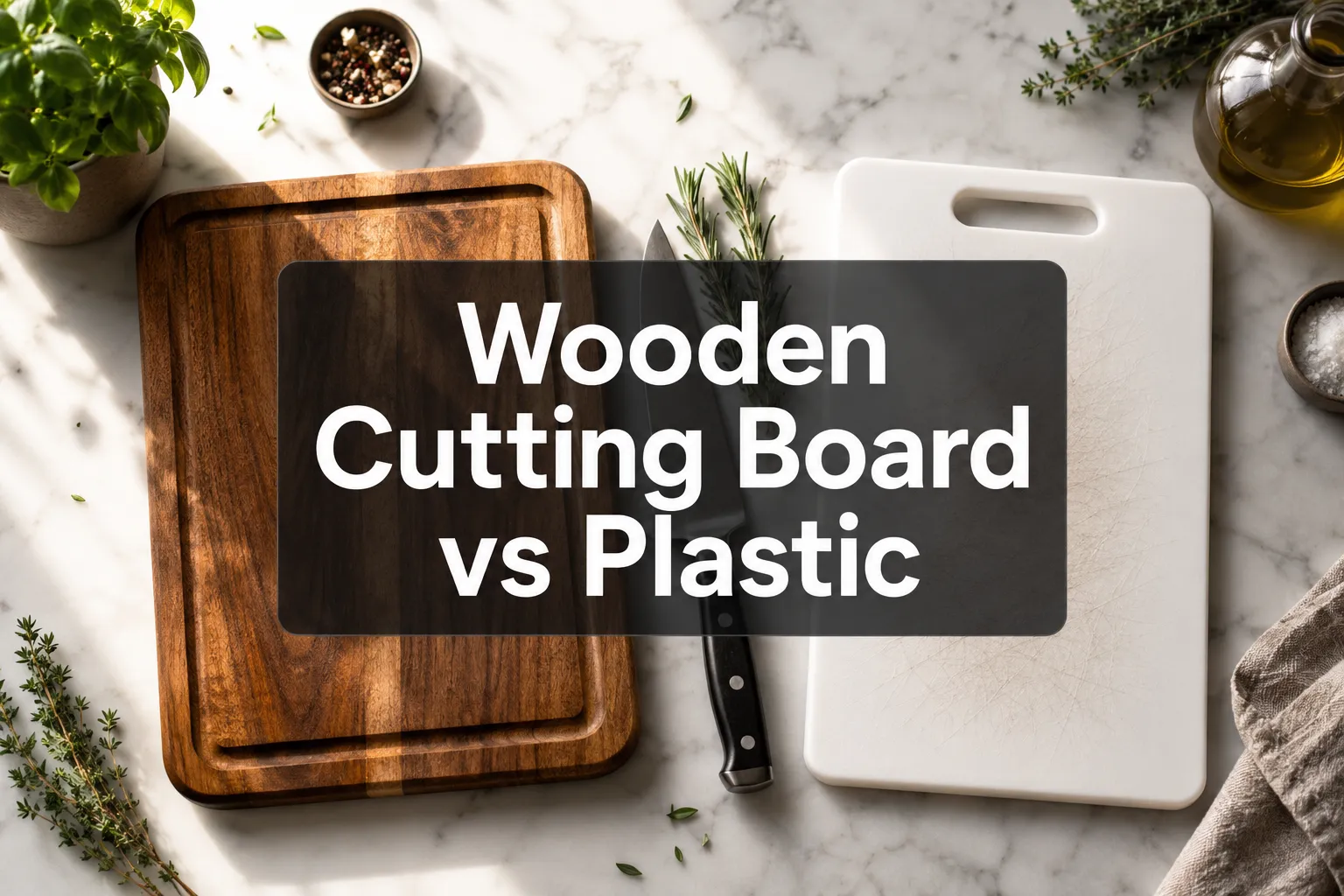
Wooden Cutting Board vs Plastic: Which Is Safer, Healthier & Better in 2026?
Last updated: July 29, 2026
Quick Answer
For most home cooks, a wooden cutting board is the better long-term choice: it is gentler on knife edges, naturally antimicrobial when properly maintained, and more durable over years of daily use. Plastic boards are cheaper upfront and dishwasher-safe, but they develop deep knife grooves that trap bacteria and typically need replacing every one to two years. Your best choice depends on what you cut, how you clean, and how much you want to spend over time.
Key Takeaways
- Wooden cutting boards are gentler on knives and have natural antimicrobial properties backed by UC Davis research from the 1990s that has held up to scrutiny.
- Plastic boards are cheaper upfront (often under $15) but harbor more bacteria once knife scars develop.
- Neither material is completely bacteria-free; proper cleaning habits matter more than the material alone.
- Wood requires regular oiling and hand-washing; plastic is dishwasher-safe but degrades faster.
- For raw meat, a dedicated plastic board that can be sanitized in a dishwasher is a practical choice, but replace it as soon as deep grooves appear.
- High-quality hardwood boards (maple, walnut, teak) can last 10 to 20 years with proper care.
- Budget plastic boards start around $8 to $15; quality hardwood boards range from $30 to $150 or more.
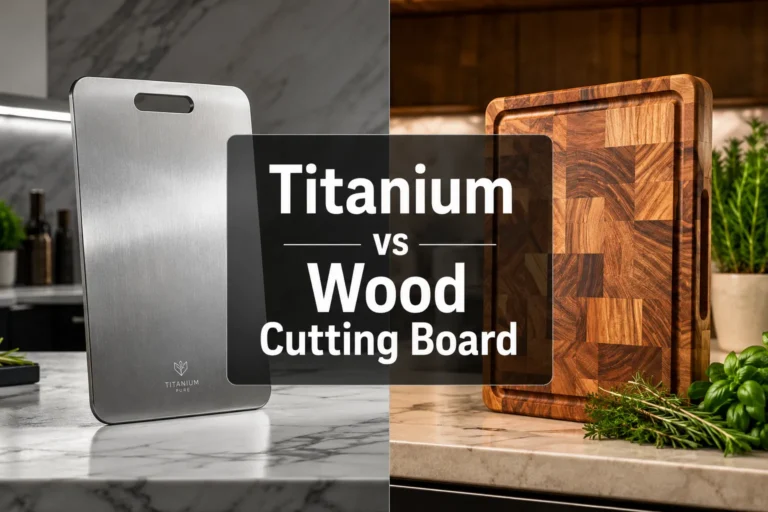
- Emerging alternatives like titanium boards (such as the Katori Titanium Cutting Board) offer non-porous, knife-friendly surfaces for health-conscious cooks willing to invest more.
- The wooden cutting board vs plastic debate has no single winner, context, food type, and cleaning routine all shape the right answer.
What Is the Difference Between Wooden and Plastic Cutting Boards?
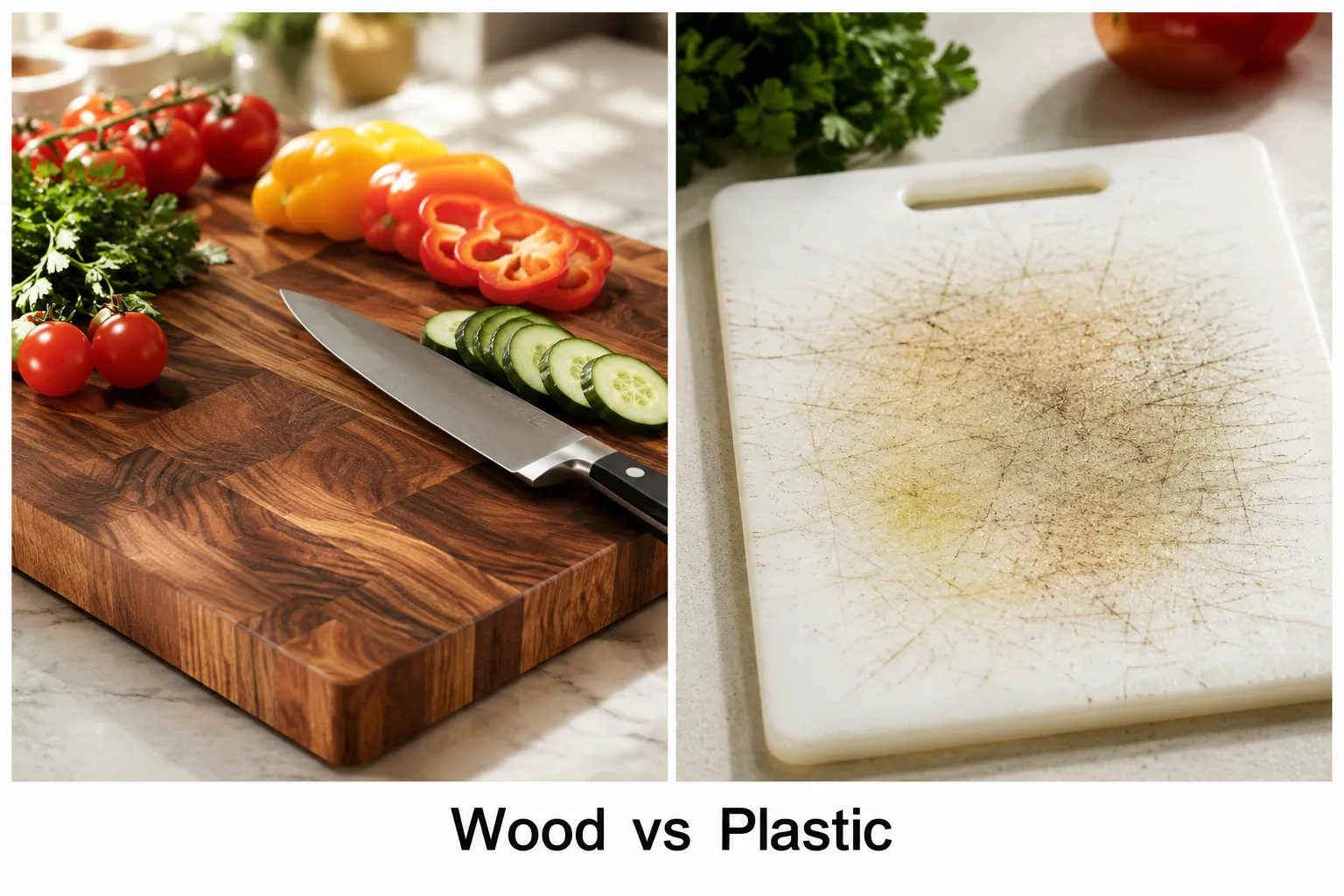
The core difference is material porosity and surface hardness. Wood is a natural, slightly porous material with a self-healing surface that can close around shallow knife cuts. Plastic (usually polyethylene or polypropylene) is non-porous when new, but it develops permanent grooves from knife use that become bacterial hiding spots.
Wood boards:
- Made from hardwoods like maple, walnut, teak, or cherry, or from bamboo (technically a grass)
- Surface “gives” slightly under a knife, reducing edge wear
- Require hand-washing and periodic oiling with food-safe mineral oil
- Naturally contain tannins and compounds that inhibit some bacterial growth
Plastic boards:
- Made from high-density polyethylene (HDPE) or polypropylene
- Dishwasher-safe and easy to sanitize when new and smooth
- Develop knife scars quickly, especially with softer plastic grades
- Color-coded options (red for meat, green for vegetables) help prevent cross-contamination
The wooden cutting board vs plastic choice also comes down to aesthetics and kitchen culture. Wood boards double as serving platters and look at home on any countertop. Plastic boards are purely functional.
Is a Wooden Cutting Board Better Than Plastic?
For most everyday cooking tasks, yes, a quality hardwood board outperforms plastic on knife care, longevity, and bacterial resistance over time. However, plastic wins on initial cost and dishwasher convenience, especially for raw meat handling.
A landmark study by Dean O. Cliver and Nese O. Ak at UC Davis (published in the early 1990s) found that bacteria introduced onto wooden cutting board surfaces were not recoverable after several minutes, while bacteria on plastic boards survived and multiplied in knife grooves. This research was controversial at the time but has since been cited widely in food science literature.
Choose wood if you:
- Cook frequently and want a board that lasts a decade or more
- Care about knife longevity
- Prefer a natural, aesthetic kitchen surface
- Are willing to hand-wash and oil the board monthly
Choose plastic if you:
- Want the lowest upfront cost
- Need a board you can run through the dishwasher daily
- Handle raw poultry or fish and want a board you can replace cheaply and often
- Need color-coded boards for a professional or allergy-sensitive kitchen
Wooden Cutting Board Pros and Cons
Wooden boards offer a strong combination of knife-friendliness and natural durability, but they do require more maintenance than plastic.
Pros:
- Gentle on knife edges, the slight surface give preserves blade sharpness longer
- Natural antimicrobial properties (especially hardwoods like maple and walnut)
- Extremely durable, a well-maintained hardwood board can last 15 to 20 years
- Attractive enough to serve food directly on the board
- Resists odors better than plastic when properly oiled
- Sustainable if sourced from responsibly managed forests
Cons:
- Cannot go in the dishwasher, heat and prolonged water exposure cause cracking and warping
- Requires monthly oiling with food-grade mineral oil to prevent drying and splitting
- Heavier than plastic, especially thick end-grain boards
- Higher upfront cost for quality hardwood ($30 to $150+)
- Can absorb strong odors (garlic, fish) if not cleaned promptly
- Not suitable for prolonged exposure to standing water
Plastic Cutting Board Pros and Cons
Plastic boards are the default choice in most commercial kitchens and budget households, and for good reason, they are cheap, light, and dishwasher-safe. But they have a shorter useful life than most people realize.
Pros:
- Very affordable, basic boards start at $8 to $15
- Dishwasher-safe for easy high-temperature sanitizing
- Lightweight and easy to handle
- Available in color-coded sets for allergen and cross-contamination control
- Non-porous when new, making initial cleaning straightforward
Cons:
- Knife grooves develop quickly, especially on softer plastic grades
- Bacteria colonize those grooves and are difficult to remove even with dishwashing
- Microplastic fragments can transfer to food from heavily scarred boards (a concern raised in multiple food safety studies in recent years)
- Warps or discolors at high dishwasher temperatures over time
- Most boards need replacing every 1 to 2 years with regular use
- Not environmentally friendly, most plastic boards end up in landfill
Common mistake: People keep plastic boards far too long. Once a board has deep, visible knife scars that feel rough to the touch, it should be replaced regardless of how often it is washed.

Which Cutting Board Is Easier to Clean?
Plastic boards are easier to clean in the short term because they are dishwasher-safe. However, once knife grooves develop, no amount of dishwashing fully sanitizes a plastic board. Wood boards require hand-washing but maintain a cleaner surface longer when properly maintained.
Cleaning a wooden cutting board:
- Rinse immediately after use with hot water.
- Scrub with a stiff brush and dish soap, contrary to old advice, mild dish soap is safe for wood.
- Rinse thoroughly and stand upright to air-dry (never lay flat while wet).
- Once a month, rub the dry board with food-grade mineral oil and let it soak in overnight.
- For deep sanitizing, rub with coarse salt and half a lemon, then rinse.
Cleaning a plastic cutting board:
- Rinse and scrub with hot soapy water after each use.
- Run through the dishwasher on a hot cycle when possible.
- For heavy sanitizing, soak in a dilute bleach solution (1 tablespoon bleach per gallon of water) for two minutes, then rinse.
- Inspect regularly for deep grooves, replace when grooves are visible and rough.
Do Wooden Cutting Boards Harbor Bacteria?
This is the most common concern about wooden boards, and the science is more nuanced than the simple answer suggests. New wooden boards do not harbor bacteria more than plastic boards, and research suggests they may actually be safer over time.
The UC Davis research mentioned earlier found that bacteria drawn into wood fibers were killed and not recoverable, while bacteria in plastic grooves survived and multiplied. The proposed mechanism involves wood’s natural antibacterial compounds and the capillary action that pulls bacteria away from the surface.
Important caveats:
- This effect is stronger in hardwoods (maple, walnut) than softwoods (pine, cedar)
- A cracked or deeply gouged wooden board can harbor bacteria just like a scarred plastic board
- Proper cleaning and drying remain essential regardless of material
- A wooden board that is never oiled will dry, crack, and become genuinely unsanitary
Bottom line: A well-maintained hardwood board is not a bacterial hazard. A neglected, cracked wooden board is. The same logic applies to plastic, a smooth, new board is safe; a heavily scarred one is not.
Can You Use a Wooden Cutting Board for Raw Meat?
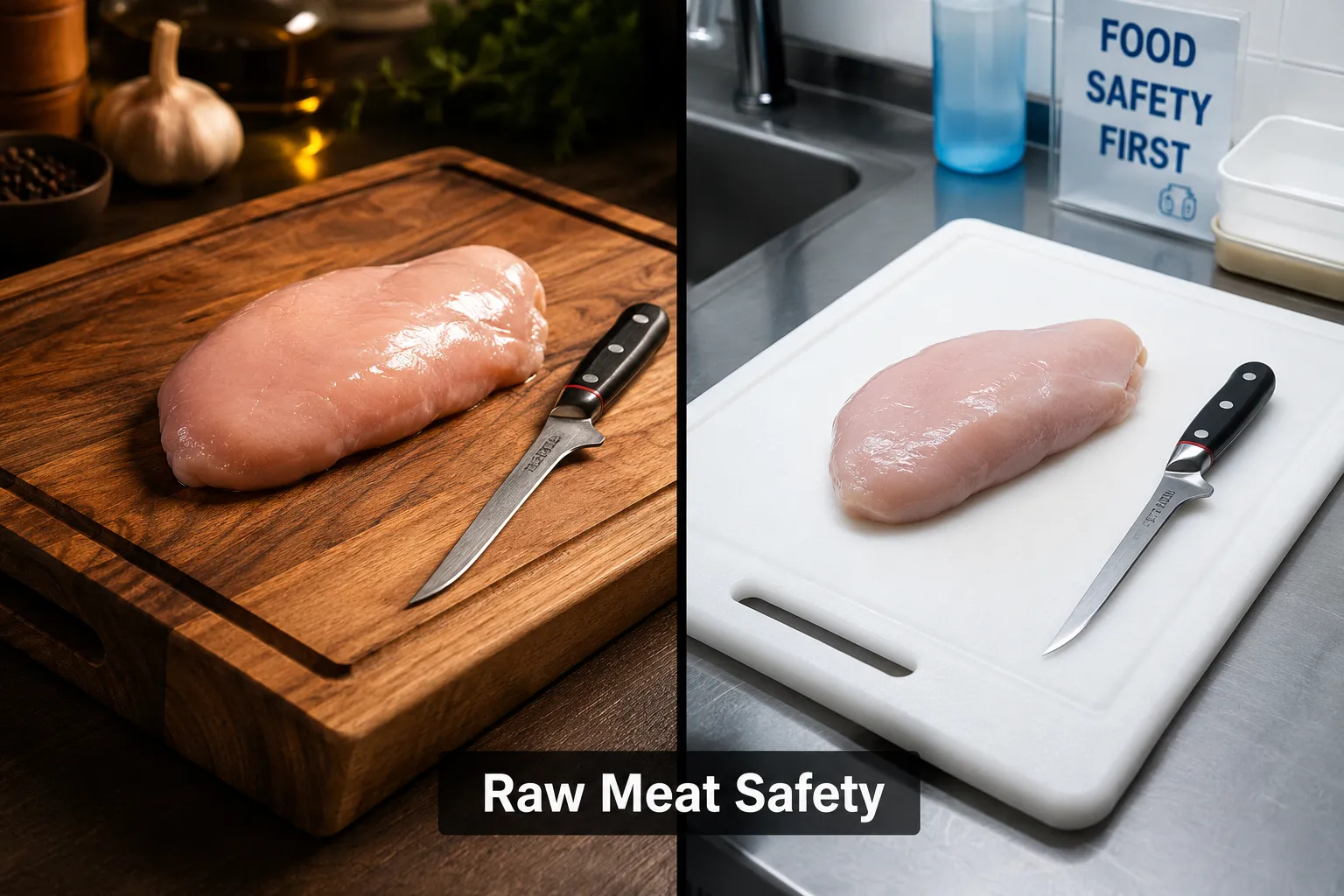
Yes, you can use a wooden cutting board for raw meat, but with important precautions. Many professional chefs use hardwood boards for all cutting tasks, including meat, and rely on thorough cleaning protocols. However, keeping a separate dedicated board for raw poultry is a sensible food safety practice for home cooks.
Best practices for raw meat on wood:
- Clean the board immediately after use, do not let meat juices sit
- Scrub vigorously with hot water and dish soap
- Use the salt-and-lemon method for additional sanitizing
- Consider a separate, clearly marked board for raw poultry specifically (chicken carries the highest cross-contamination risk)
- Never use a cracked or deeply grooved wooden board for raw meat
For households that handle large quantities of raw poultry or have immunocompromised members, a dedicated plastic board for raw meat, replaced regularly, is the safer practical choice. Good overall digestive health also plays a role in how your body handles any incidental food contamination; for related reading, see this overview of whether digestive enzymes can be harmful.
How Long Do Wooden Cutting Boards Last?
A quality hardwood cutting board, properly maintained, lasts 10 to 20 years. Some heirloom-quality end-grain maple boards last even longer with regular oiling and occasional resurfacing. Plastic boards, by contrast, typically need replacing every 1 to 2 years with regular daily use.
Factors that extend a wooden board’s life:
- Monthly oiling with food-grade mineral oil
- Hand-washing only (no dishwasher)
- Drying upright, not flat
- Avoiding prolonged soaking in water
- Occasional light sanding to remove surface stains or shallow grooves
Signs a wooden board needs replacing:
- Deep cracks that cannot be sanded out
- Persistent mold or black staining that does not respond to cleaning
- Warping so severe the board rocks on the counter
Signs a plastic board needs replacing:
- Visible deep knife grooves that feel rough
- Persistent discoloration or staining
- Warping or brittleness from dishwasher heat
Wooden Cutting Board vs Plastic for Different Foods
Different foods call for different surfaces. The wooden cutting board vs plastic decision is not always one-size-fits-all, the food you are cutting matters.
| Food Type | Best Board | Reason |
|---|---|---|
| Vegetables and fruit | Wood | Gentle on knives, easy cleanup, no contamination risk |
| Bread and cheese | Wood | Attractive for serving; crumbs clean easily |
| Cooked meat | Wood or plastic | Either works; wood looks better for carving at the table |
| Raw poultry | Dedicated plastic | Dishwasher sanitizing reduces cross-contamination risk; replace often |
| Raw fish | Plastic or teak | Teak’s natural oils resist fish odors; plastic is easy to sanitize |
| Garlic and onions | Plastic | Strong odors can linger in wood; plastic cleans more completely |
| Herbs and delicate produce | Wood | Knife-friendly surface preserves fine blade edges |
Best Wooden Cutting Board Brands and Prices
Quality hardwood boards vary widely in price and construction. Here are the most consistently well-reviewed options in 2026, organized by budget tier.
Budget tier ($15 to $40):
- Totally Bamboo boards, lightweight, affordable, widely available
- OXO Good Grips boards, practical edge-grain maple with rubber feet
Mid-range ($40 to $90):
- Teakhaus boards, dense teak with excellent oil content, great for fish prep
- John Boos maple edge-grain boards, American-made, professional quality
Premium ($90 to $200+):
- Boos end-grain maple or walnut boards, the gold standard for home cooks; extremely durable
- Virginia Boys Kitchens walnut boards, American black walnut, beautiful grain
Emerging premium alternatives:
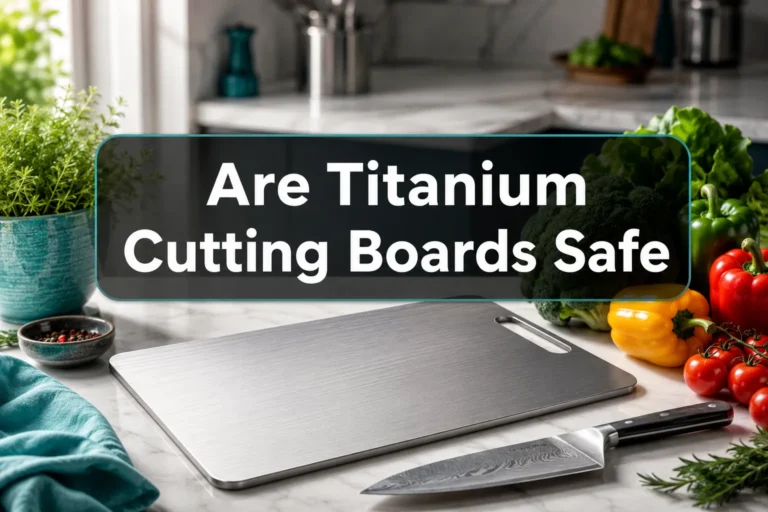
For cooks who want to move beyond wood and plastic entirely, titanium boards like the Katori Titanium Cutting Board offer a non-porous, knife-friendly surface at a higher price point ($89 to $179). These boards are rustproof, dishwasher-safe, and non-reactive with acidic foods, a genuine upgrade for health-conscious kitchens.
Cheapest Cutting Board Options
The cheapest functional cutting boards are basic HDPE plastic boards, available for $8 to $15 at most grocery or home goods stores. These are adequate for light use but need replacing frequently.
Budget-friendly options that still perform:
- A basic Winco or Rubbermaid commercial HDPE board ($10 to $20) is the standard choice for budget-conscious buyers
- A simple bamboo board from a discount store ($12 to $18) offers better longevity than cheap plastic
- Restaurant supply stores often sell commercial-grade plastic boards at lower prices than retail kitchen stores
Cost-per-use perspective: A $15 plastic board replaced every 18 months costs roughly $10 per year. A $90 hardwood board lasting 15 years costs $6 per year. The math favors wood for anyone who cooks regularly.
Wooden Cutting Board Maintenance and Care
Consistent maintenance is what separates a wooden board that lasts 20 years from one that cracks after 18 months. The routine is simple and takes about five minutes once a month.
Monthly oiling routine:
- Make sure the board is completely dry (wait 24 hours after last use if needed).
- Apply a generous coat of food-grade mineral oil using a clean cloth or paper towel.
- Rub the oil into all surfaces, top, bottom, and all four sides.
- Let the oil soak in for at least 6 hours, ideally overnight.
- Wipe off any excess oil with a clean cloth.
- Repeat monthly, or whenever the wood looks dry or lighter in color.
Additional care tips:
- Use a beeswax-based board cream (often called “board butter”) two to three times per year for extra protection
- Sand lightly with 220-grit sandpaper if shallow stains or surface roughness develop, then re-oil
- Never soak the board in water or leave it sitting in a wet sink
- Store upright or flat on a dry surface, not leaning against a wall where air cannot circulate
When Should You Replace a Plastic Cutting Board?
Replace a plastic cutting board as soon as it develops deep, rough knife grooves that cannot be cleaned smooth, or when it shows persistent discoloration that does not respond to bleach sanitizing.
Specific replacement triggers:
- Grooves deep enough to trap food debris after washing
- Visible black or dark staining in knife marks (bacterial biofilm)
- Warping that causes the board to rock on the counter
- Brittleness or cracking at the edges
- A rough, “hairy” surface texture from repeated cutting
As a general rule, a plastic board used daily for a family of four should be replaced every 12 to 18 months. A board used only occasionally may last two to three years. Do not keep a plastic board “just because it still works”, a heavily scarred board is a food safety liability.
Are Wooden Cutting Boards Worth the Money?
Yes, for most home cooks who prepare meals regularly, a quality hardwood board is worth the higher upfront cost. The combination of longevity, knife-friendliness, and natural antimicrobial properties makes hardwood a better long-term investment than repeatedly buying cheap plastic boards.
A $90 John Boos maple board bought in 2026 and properly maintained will likely still be in service in 2041. That same $90 spent on $15 plastic boards means replacing them roughly six times over the same period, with more waste and more bacterial risk from worn surfaces.
The exception is households on a tight budget or those who specifically need dishwasher-safe boards for raw meat handling. In those cases, a mid-grade plastic board used carefully and replaced regularly is a perfectly reasonable choice.
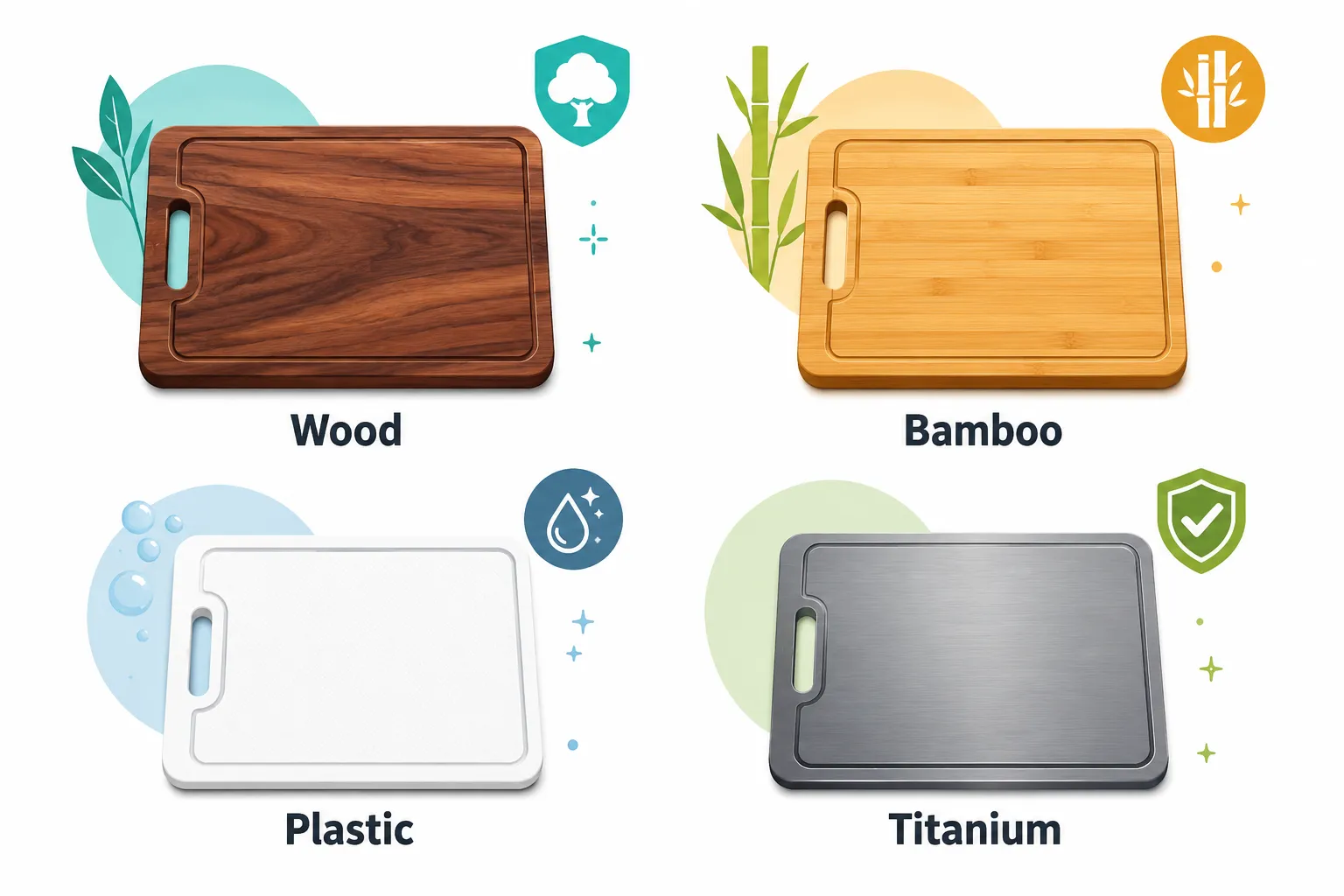
Wooden Cutting Board vs Plastic: A Head-to-Head Comparison
Here is a direct comparison across the factors that matter most for everyday kitchen use.
| Factor | Wooden Board | Plastic Board |
|---|---|---|
| Knife friendliness | Excellent, surface gives slightly | Fair, harder grades dull knives faster |
| Bacterial resistance | Good when maintained; natural antimicrobials | Good when new; poor once grooves develop |
| Cleaning ease | Hand-wash only; more effort | Dishwasher-safe; very easy |
| Durability | 10 to 20 years with care | 1 to 3 years typical |
| Upfront cost | $30 to $150+ | $8 to $30 |
| Long-term cost | Lower (one purchase) | Higher (frequent replacement) |
| Maintenance required | Monthly oiling | Minimal; just replace when worn |
| Environmental impact | Lower (biodegradable, long life) | Higher (plastic waste, frequent disposal) |
| Aesthetics | Excellent, doubles as serving board | Purely functional |
Key Takeaways
- Wood wins on knife care, longevity, and long-term value for most home cooks.
- Plastic wins on upfront cost and dishwasher convenience, especially for raw poultry.
- Replace plastic boards as soon as deep grooves appear, do not wait until they look obviously dirty.
- A simple monthly oiling routine is all that separates a 20-year wooden board from a cracked one.
- The wooden cutting board vs plastic debate is settled differently for every kitchen based on cooking habits, budget, and food types.
- Titanium boards are a legitimate third option for cooks who want non-porous, knife-friendly, and dishwasher-safe in one surface.
Conclusion
The wooden cutting board vs plastic debate does not have a single correct answer for every kitchen, but the evidence leans toward wood for most home cooks who prepare meals regularly. A quality hardwood board is gentler on knives, more durable, and, when maintained properly, at least as hygienic as plastic over the long term.
Actionable next steps:
- If you currently use a plastic board with visible knife grooves, replace it now. Do not wait.
- If you cook four or more times per week, invest in a mid-range hardwood board ($40 to $90). The John Boos maple edge-grain or a Teakhaus teak board are both solid starting points.
- Keep one dedicated plastic board for raw poultry, run it through the dishwasher after every use, and replace it every 12 to 18 months.
- Start a monthly oiling routine for any wooden board you own. It takes five minutes and extends the board’s life by years.
- If you want to explore a premium, non-porous alternative, review the Katori Titanium Cutting Board, it addresses the limitations of both wood and plastic with a food-grade titanium surface.
Good kitchen hygiene extends beyond your cutting board. If you are thinking about overall food safety and digestive health, it is worth reading about the benefits of enzyme-rich foods and whether digestive enzymes can be harmful to get a fuller picture of how food preparation choices connect to gut health.
The right cutting board is the one you will actually maintain. Buy the best quality you can afford, treat it well, and replace it when it is worn. That simple habit does more for kitchen safety than any brand name or material claim.
Frequently Asked Questions
Q: Is a wooden cutting board more sanitary than plastic?
A wooden cutting board is generally more sanitary than a plastic board over time. Research from UC Davis found that bacteria introduced to wooden surfaces were not recoverable, while bacteria survived and multiplied in plastic knife grooves. However, a cracked or neglected wooden board is not sanitary, maintenance matters most.
Q: Can I put a wooden cutting board in the dishwasher?
No. Dishwasher heat and prolonged water exposure cause wooden boards to crack, warp, and split. Always hand-wash wooden boards with hot soapy water and dry them upright immediately after washing.
Q: How often should I oil a wooden cutting board?
Oil a wooden cutting board once a month with food-grade mineral oil, or whenever the wood looks dry or lighter in color than usual. New boards should be oiled three to four times in the first month before regular use.
Q: What type of wood is best for a cutting board?
Hard maple is the gold standard, dense, tight-grained, and widely available. Walnut is slightly softer and easier on knife edges. Teak is naturally oily and water-resistant, making it excellent for fish prep. Avoid softwoods like pine, which scar too easily.
Q: Are plastic cutting boards bad for your health?
Heavily scarred plastic boards can harbor bacteria that resist cleaning. There is also growing concern in food science literature about microplastic fragments transferring to food from worn plastic surfaces. Replacing plastic boards regularly and retiring them when grooved reduces both risks.
Q: What is the best cutting board for raw chicken?
A dedicated plastic board that can be run through the dishwasher on a hot cycle is the most practical choice for raw chicken. Keep it separate from other boards, sanitize it after every use, and replace it every 12 to 18 months.
Q: How do I remove stains from a wooden cutting board?
Sprinkle coarse salt over the stained area, rub with half a lemon, let it sit for five minutes, then rinse with hot water. For deeper stains, lightly sand the surface with 220-grit sandpaper and re-oil the board.
Q: Is bamboo better than wood for cutting boards?
Bamboo is harder than most hardwoods, which makes it more durable but also tougher on knife edges. It requires less oiling than wood but can splinter if it dries out. It is a reasonable middle-ground option, though most professional cooks prefer maple or walnut.
Q: Can I use the same cutting board for meat and vegetables?
You can use the same board if you clean it thoroughly between uses, but food safety guidelines recommend using separate boards for raw meat and ready-to-eat produce to eliminate cross-contamination risk.
Q: How do I know when to replace a wooden cutting board?
Replace a wooden board when it develops deep cracks that cannot be sanded out, shows persistent black mold staining, or warps so severely it rocks on the counter. Surface scratches and minor stains are normal and do not require replacement.
Q: Are there alternatives to both wood and plastic?
Yes. Glass boards are non-porous and easy to sanitize but are very hard on knife edges. Composite boards (like Epicurean) are dishwasher-safe and knife-friendly. Titanium boards, such as the Katori Titanium Cutting Board, are non-porous, non-reactive, and knife-friendly, though they come at a higher price point.
Q: Does the thickness of a cutting board matter?
Yes. Thicker boards (1.5 inches or more) are more stable and last longer because they can be sanded and resurfaced multiple times. Thin boards warp more easily and have less material to work with over their lifespan.
Tags: wooden cutting board vs plastic, cutting board hygiene, best cutting board 2026, plastic cutting board bacteria, wooden board care, cutting board for raw meat, hardwood cutting board, kitchen food safety, cutting board maintenance, bamboo vs wood cutting board, best cutting board brands, titanium cutting board

With over 13 years of experience in holistic health blogging, I aim to help you navigate your wellness journey with honest insights, expert-backed advice, and a sprinkle of real-world practicality.
Certified Wellness Writer | Herbal Nutrition Advocate | Wellness Research Enthusiast