Best Cutting Boards for Raw Meat: 9 Hygienic Options Compared Buyer Safety Guide 2026

Did you know your cutting board could be one of the biggest sources of cross-contamination in your kitchen? Every time you prepare raw chicken, beef, pork, or seafood, harmful bacteria like Salmonella and E. coli can linger on the surface if you’re using the wrong cutting board. While many people focus on cleaning their knives, they often overlook the cutting board itself.
In this guide, you’ll discover the best cutting boards for raw meat based on hygiene, durability, ease of cleaning, and food safety. We’ll compare wood, plastic, bamboo, titanium, and other popular materials, explain what professional chefs recommend, and reveal which options are best at reducing bacteria and preventing cross-contamination—so you can choose the safest cutting board for your kitchen in 2026.
Quick Answer: The best cutting board for raw meat is one made from a non-porous material, such as food-grade plastic, composite, or titanium, that resists bacterial absorption, cleans easily, and holds up to repeated sanitizing. For most home cooks, a dedicated color-coded plastic board works well at low cost, while serious cooks and food-safety-conscious households should consider a titanium board like the Katori for long-term hygiene and durability.
Key Takeaways
- Always use a separate, dedicated cutting board for raw meat to prevent cross-contamination with ready-to-eat foods.
- Non-porous materials (plastic, composite, titanium) are safer for raw meat than wood because bacteria cannot penetrate the surface.
- Color-coded cutting boards are the most practical system for preventing cross-contamination at home; red is the standard color for raw meat.
- Titanium cutting boards offer the highest level of hygiene, durability, and knife compatibility, but cost more upfront.
- Plastic boards are affordable and effective but must be replaced when deep knife grooves develop, as those grooves harbor bacteria.
- Proper cleaning after raw meat use requires hot soapy water, followed by a sanitizing step (bleach solution or food-safe sanitizer).
- The ideal board for raw meat should be at least 12 x 18 inches and 0.5 inches thick for stability during heavy cutting.
- Wooden boards are not recommended for raw meat, especially poultry, because wood absorbs juices into its grain.
- The Katori Titanium Cutting Board earns strong marks for hygiene, knife protection, and longevity, making it a top pick in 2026.
- You do not need to spend a lot to be safe, but you do need the right material, the right size, and a consistent cleaning routine.
Do I Need a Separate Cutting Board for Raw Meat?
Yes, absolutely. Using a dedicated cutting board for raw meat is one of the most effective steps you can take to prevent foodborne illness at home. Raw meat, poultry, and seafood carry pathogens like Salmonella, Campylobacter, and E. coli. When those juices touch a surface that later contacts vegetables or cooked food, the result can be cross-contamination.
The U.S. Food and Drug Administration (FDA) recommends using separate cutting boards for raw meat and ready-to-eat foods as a core kitchen safety practice. This is not overcaution. The Centers for Disease Control and Prevention (CDC) estimates that roughly 48 million Americans experience foodborne illness each year, and cross-contamination during food prep is a leading cause.
The practical rule: Keep at least two boards in your kitchen at all times. One for raw proteins, one for everything else. If you cook frequently, a third board for produce is worth the investment.
What Material Is Best for Raw Meat Cutting Boards?
For raw meat, the best cutting board material is one that is non-porous, easy to sanitize, and resistant to deep knife scoring. The top options are:
- Plastic (polyethylene or polypropylene): The most common choice. Non-porous when new, affordable, and dishwasher-safe. The downside is that knife grooves develop over time, creating hiding spots for bacteria.
- Composite or rubber: Denser than standard plastic, gentler on knife edges, and highly resistant to warping. Boards like the Boos Mystery Oil-treated composite or the Hasegawa rubber board are professional-grade choices.
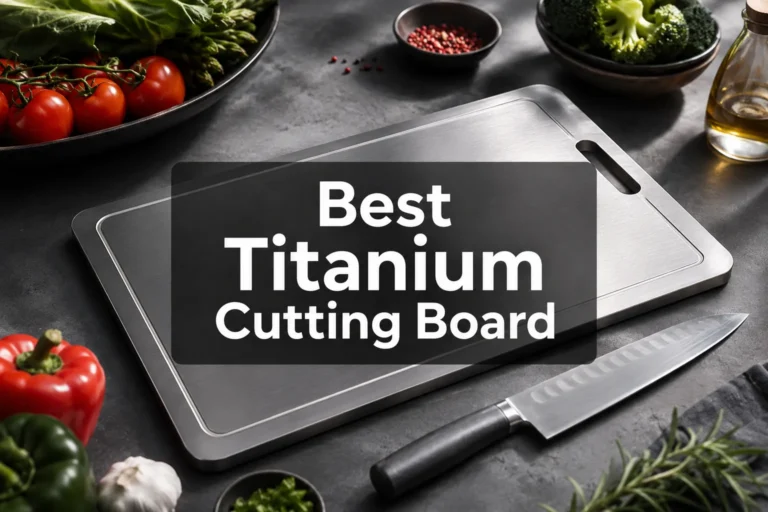
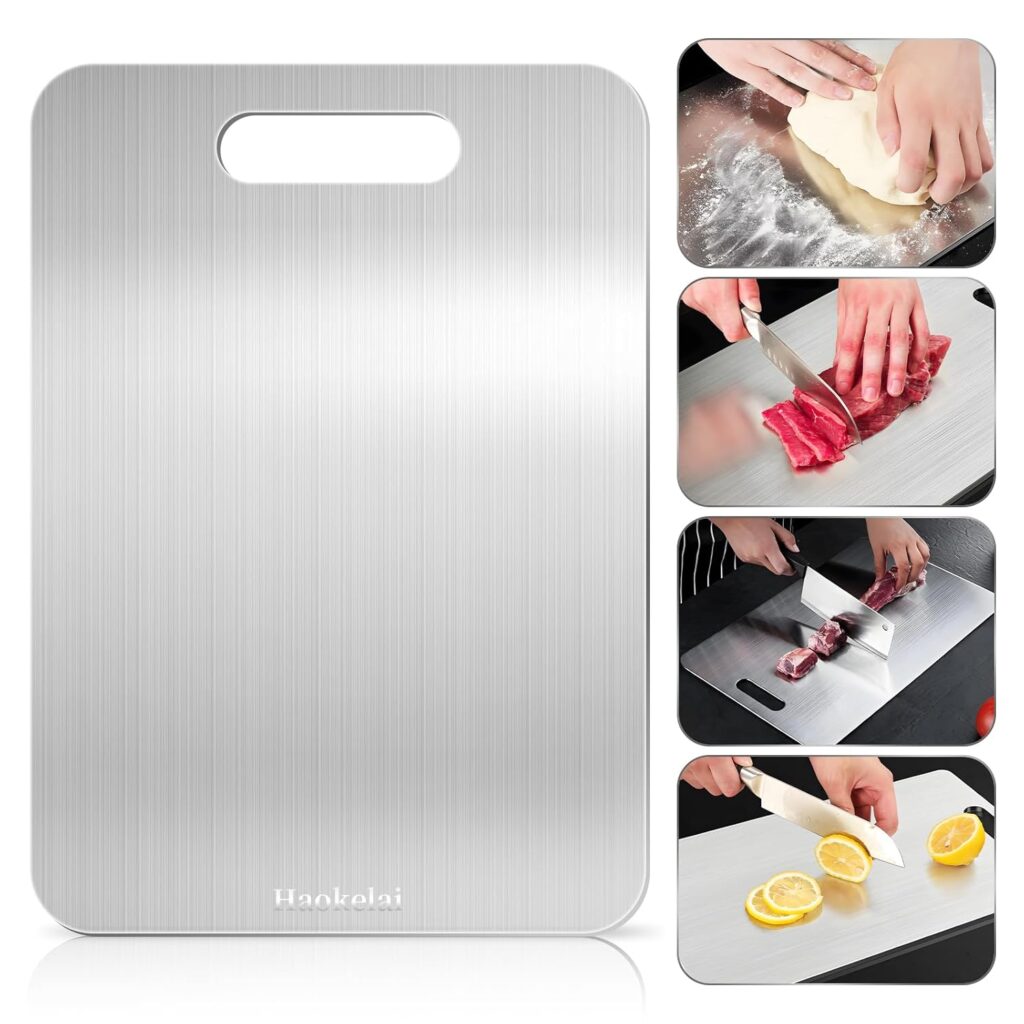
- Titanium: The premium option. Non-porous by nature, antibacterial, non-reactive with acidic foods, and essentially permanent. The Katori Titanium Cutting Board sits at the top of this category.
- Bamboo: Not recommended for raw meat. Bamboo is harder than wood but still porous, and its natural antimicrobial claims are not strong enough to offset the absorption risk.
- Glass or ceramic: Non-porous and easy to clean, but they destroy knife edges quickly and are impractical for regular meat prep.
Choose plastic if you want an affordable, functional option and are willing to replace boards every year or two. Choose titanium if you want a permanent, zero-compromise surface that you’ll never need to replace.

Can You Use Wood Cutting Boards for Raw Meat?
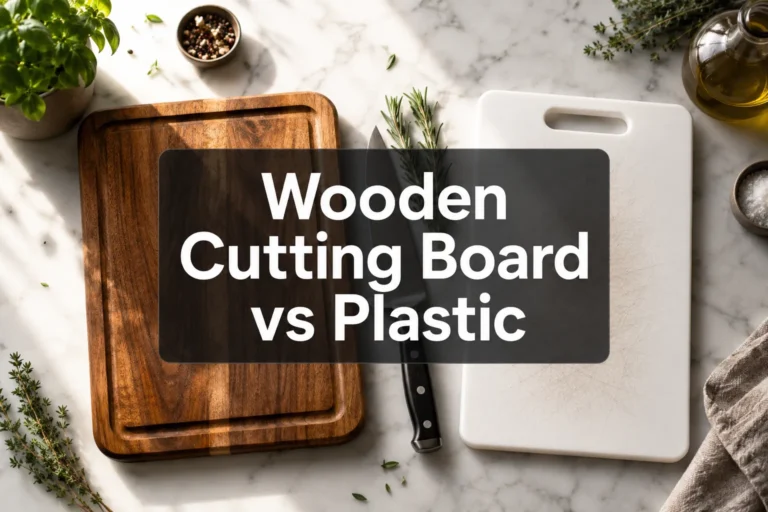
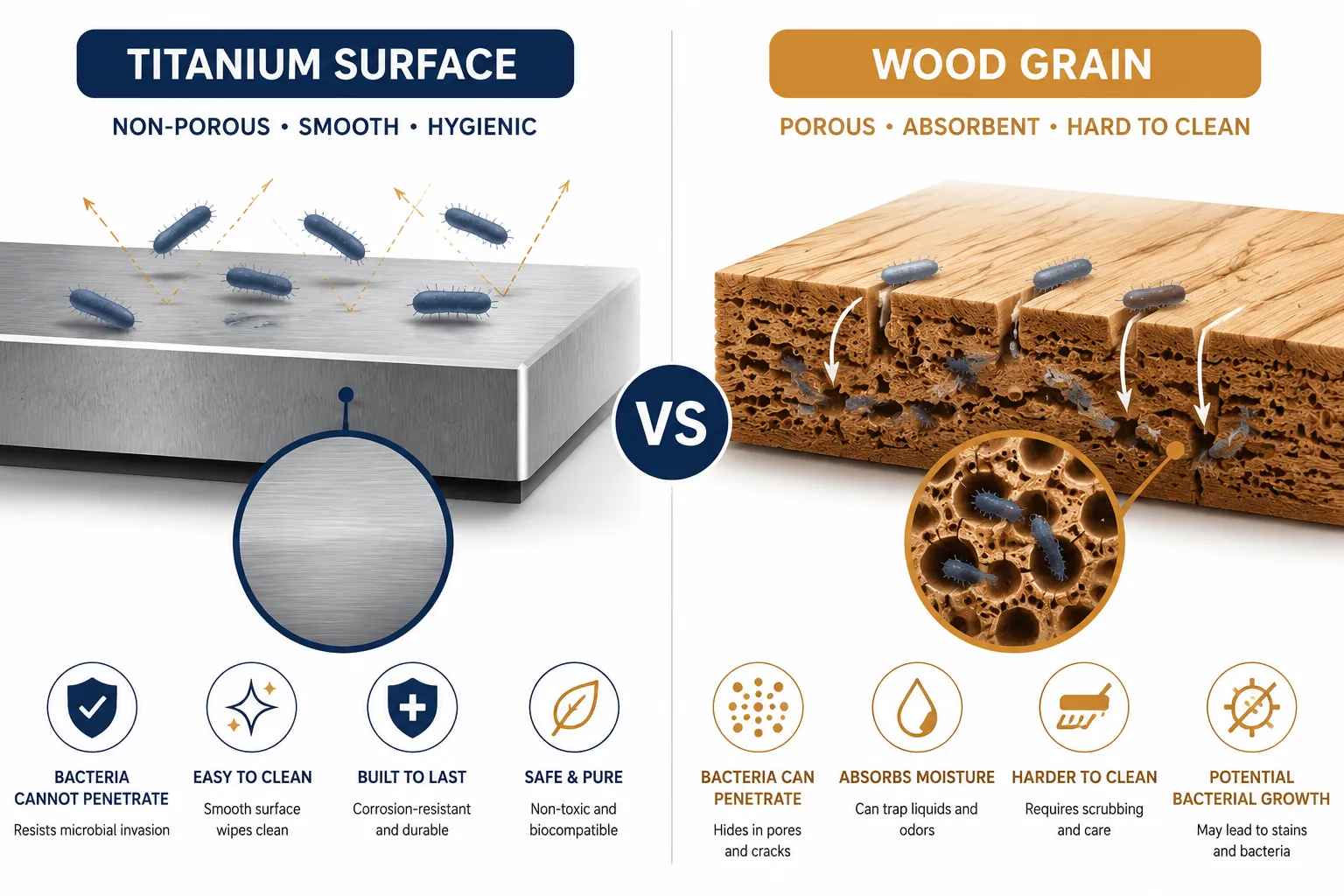
Wood cutting boards are not recommended for raw meat, particularly raw poultry. Wood is a porous material, meaning blood and juices from raw meat can seep into the grain, where standard washing cannot reach them.
That said, the science is more nuanced than a flat “never.” A 1994 study by food microbiologist Dean Cliver at UC Davis found that bacteria drawn into wood grain did not multiply and were difficult to recover. However, that research has been contested, and most food safety authorities, including the USDA and FDA, still advise against using wood boards for raw meat because the risk is real under normal home conditions.
The practical verdict: If you love your wooden board, use it for bread, cheese, and vegetables. For raw chicken, beef, or pork, switch to plastic or titanium. The habit is easy to build and the safety benefit is clear.
Can Bacteria Get Into Wooden Cutting Boards from Raw Meat?
Yes, bacteria from raw meat can penetrate wooden cutting boards. Wood grain creates microscopic channels that absorb liquid, and once bacteria enter those channels, they are protected from surface-level cleaning.
The key concern is not just whether bacteria survive, but whether they can be reliably eliminated. Hot soapy water cleans the surface of a wood board, but it does not fully penetrate deep grooves or the wood grain itself. Bleach solutions can help, but repeated bleaching dries out wood and causes cracking, which creates even more surface area for bacteria to hide.
Edge grain vs. end grain: End-grain boards (where the wood fibers run vertically) are often marketed as self-healing and more hygienic. While end grain does close around knife cuts somewhat, it also absorbs more liquid than edge grain, making it a worse choice for raw meat, not a better one.
Plastic vs. Wood Cutting Board for Raw Meat Safety
When it comes to raw meat safety, plastic wins over wood in most real-world kitchen conditions. Here is a direct comparison:
| Factor | Plastic | Wood | Titanium |
|---|---|---|---|
| Porosity | Non-porous (when new) | Porous | Non-porous |
| Bacteria absorption | Low (increases with grooves) | High | None |
| Dishwasher-safe | Yes | No | Yes |
| Knife impact | Moderate wear | Gentle | Minimal wear |
| Lifespan | 1-3 years | 5-10 years (with care) | Decades |
| Cost | Low ($10-$40) | Medium ($30-$100) | High ($89-$179) |
| Best for raw meat | Yes | No | Yes (best overall) |
Bottom line: Plastic is the most accessible safe choice. Titanium is the safest and most durable. Wood should stay off the raw meat station.
What Color Cutting Board Should I Use for Raw Meat?
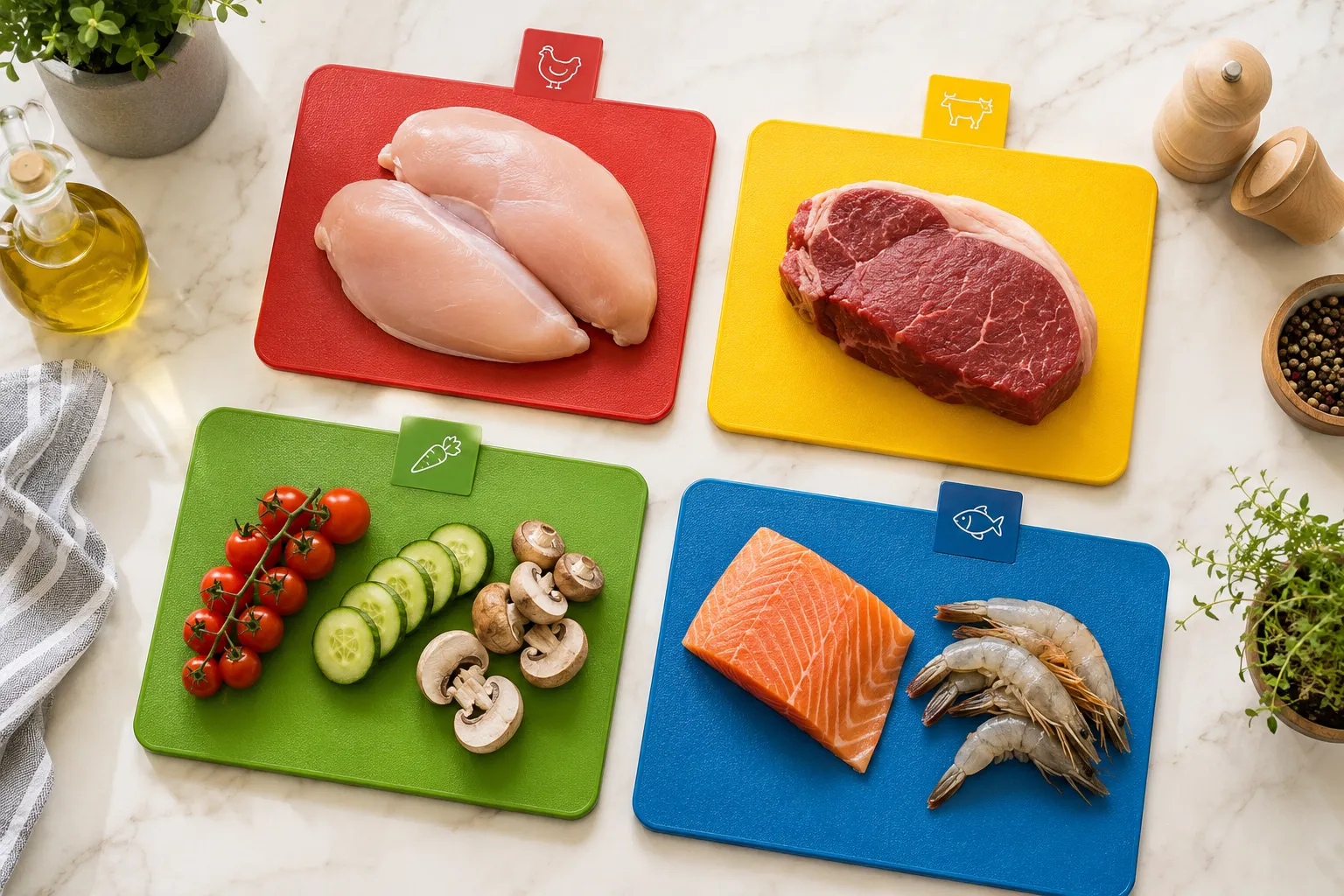
Red is the universally accepted color for raw meat cutting boards. This color-coding system is used in professional kitchens worldwide and is endorsed by food safety organizations including the USDA and NSF International.
The standard color-coding system works as follows:
- Red: Raw beef, pork, lamb
- Yellow: Raw poultry (chicken, turkey, duck)
- Blue: Raw seafood and fish
- Green: Fruits and vegetables
- White: Dairy, bread, and ready-to-eat foods
- Brown (sometimes): Root vegetables or cooked meats
For home kitchens, you do not need all six colors. A practical minimum is two boards: red for raw meat and another color (green or white) for produce and cooked food. If you cook a lot of chicken, adding a yellow board is a smart upgrade.
Color-coded boards are inexpensive and widely available. Sets of four to six boards in different colors typically cost between $20 and $50, making this one of the highest-value food safety investments you can make.
Best Cutting Board for Raw Chicken and Poultry
Raw chicken deserves special attention because Campylobacter and Salmonella contamination from poultry is one of the most common causes of foodborne illness in the U.S. The best cutting board for raw chicken is non-porous, easy to sanitize, and dedicated exclusively to poultry.
Top choices for raw poultry:
- Dedicated yellow plastic board: Inexpensive, color-coded, and dishwasher-safe. Replace it when deep grooves appear.
- NSF-certified polyethylene board: Look for boards with NSF certification, which means they meet commercial food safety standards. Brands like San Jamar and OXO Good Grips offer NSF-certified options under $40.
- Titanium board (Katori or similar): The non-porous surface means chicken juice cannot penetrate the material at all. Sanitizing is fast and complete.
Common mistake: Many home cooks use the same plastic board for raw chicken and raw beef, reasoning that “they’re both raw meat.” This is risky because different pathogens are involved, and cross-contamination between protein types can still occur. Use separate boards, or at minimum sanitize thoroughly between uses.
How to Prevent Cross-Contamination with Cutting Boards
Cross-contamination prevention comes down to three habits: separation, cleaning, and replacement. Each one matters.
Separation:
- Use dedicated boards for raw meat, never doubling them up with produce or cooked food.
- Store raw meat boards separately from other boards, ideally in a different rack or drawer.
- Never place cooked food back on a surface that held raw meat without cleaning first.
Cleaning after raw meat (step-by-step):
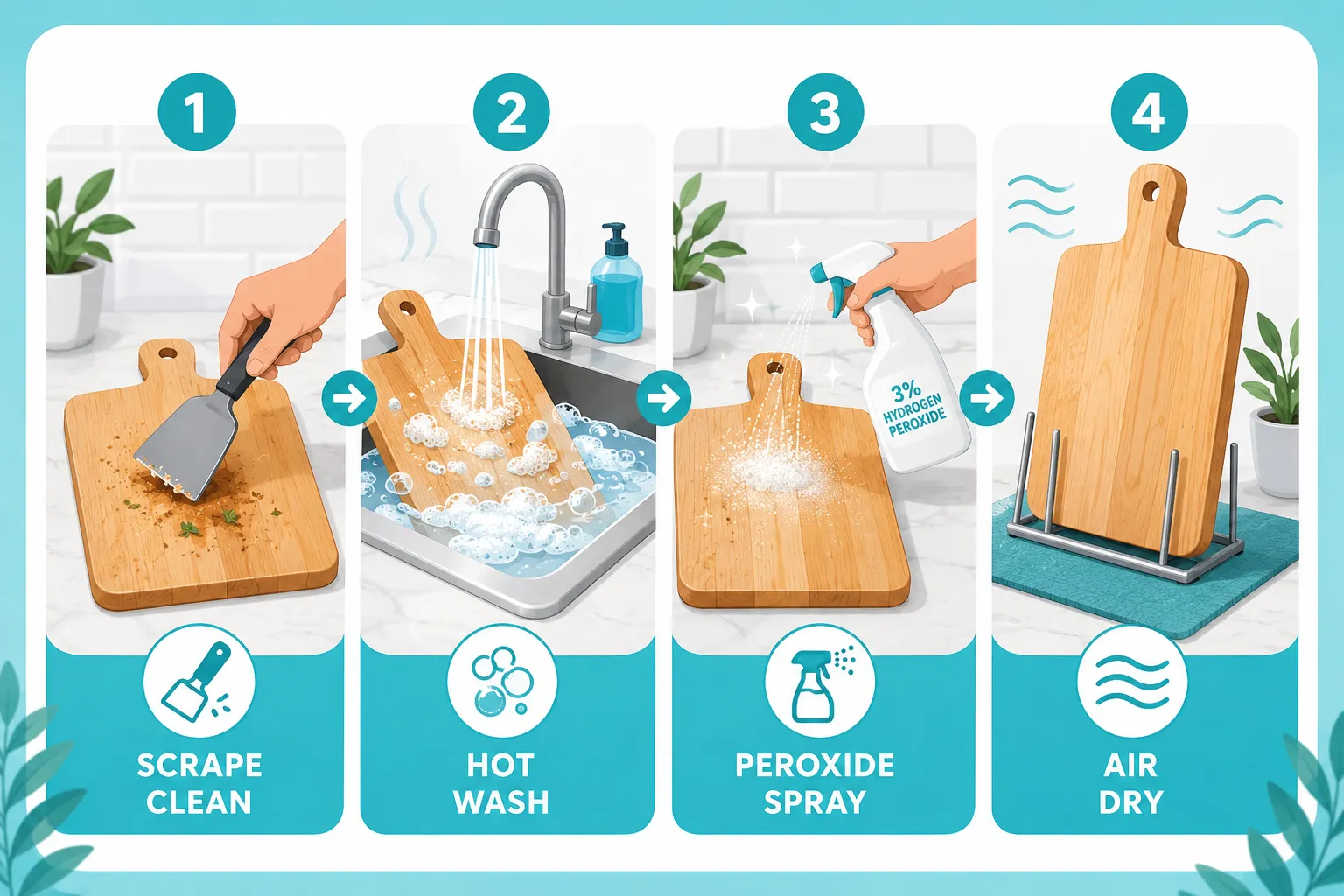
- Scrape off any visible food debris with a bench scraper or paper towel.
- Wash with hot water and dish soap, scrubbing all surfaces including edges.
- Rinse thoroughly with hot water.
- Apply a sanitizing solution: one tablespoon of unscented liquid chlorine bleach per gallon of water, or a food-safe sanitizer spray.
- Let the sanitizer sit for at least two minutes, then rinse and air-dry.
- For dishwasher-safe boards (plastic, titanium), run a full hot-water cycle.
Replacement:
- Replace plastic boards when knife grooves become deep enough to trap food residue that cannot be scrubbed out.
- A simple test: run your fingernail across the board. If you feel deep channels, it is time for a new board.
How to Clean a Cutting Board After Raw Meat
Cleaning a cutting board after raw meat use requires more than a quick rinse. The goal is both cleaning (removing organic matter) and sanitizing (killing remaining pathogens).
For plastic boards:
- Hot soapy water wash, followed by a bleach-water rinse (1 tablespoon bleach per gallon of water).
- Dishwasher-safe boards can go straight into the machine on a hot cycle.
- Avoid soaking plastic boards in water for extended periods, as this can cause warping.
For titanium boards (like the Katori):
- A simple rinse with hot soapy water is often sufficient due to the non-porous surface.
- Dishwasher-safe on any cycle.
- For extra assurance after raw poultry, spray with food-safe sanitizer or wipe with diluted hydrogen peroxide.
- No special oils or treatments needed.
For wood boards (if you insist on using one for light meat prep):
- Never submerge in water or put in the dishwasher.
- Scrub with coarse salt and half a lemon, then rinse quickly and dry immediately.
- Apply food-grade mineral oil monthly to prevent cracking.
- Sanitize with a diluted white vinegar spray.
“The single biggest cleaning mistake I see is people rinsing a cutting board with cold water after raw chicken. Cold water does not kill bacteria. You need hot water, soap, and a sanitizing step.”
Cutting Board Size and Thickness for Raw Meat
For raw meat prep, size and thickness both matter more than most people realize. A board that is too small forces you to work in tight quarters, increasing the chance of meat juices running off the edge. A board that is too thin flexes under pressure and can slip.
Recommended size for raw meat:
- Minimum: 12 x 18 inches. This gives enough room to work a full chicken or a large roast without crowding.
- Ideal for most home cooks: 15 x 20 inches.
- For butchering or large cuts: 18 x 24 inches or larger.
Recommended thickness:
- Plastic boards: At least 0.5 inches thick. Thinner boards flex and slide.
- Composite/rubber boards: 0.75 to 1 inch is standard for professional use.
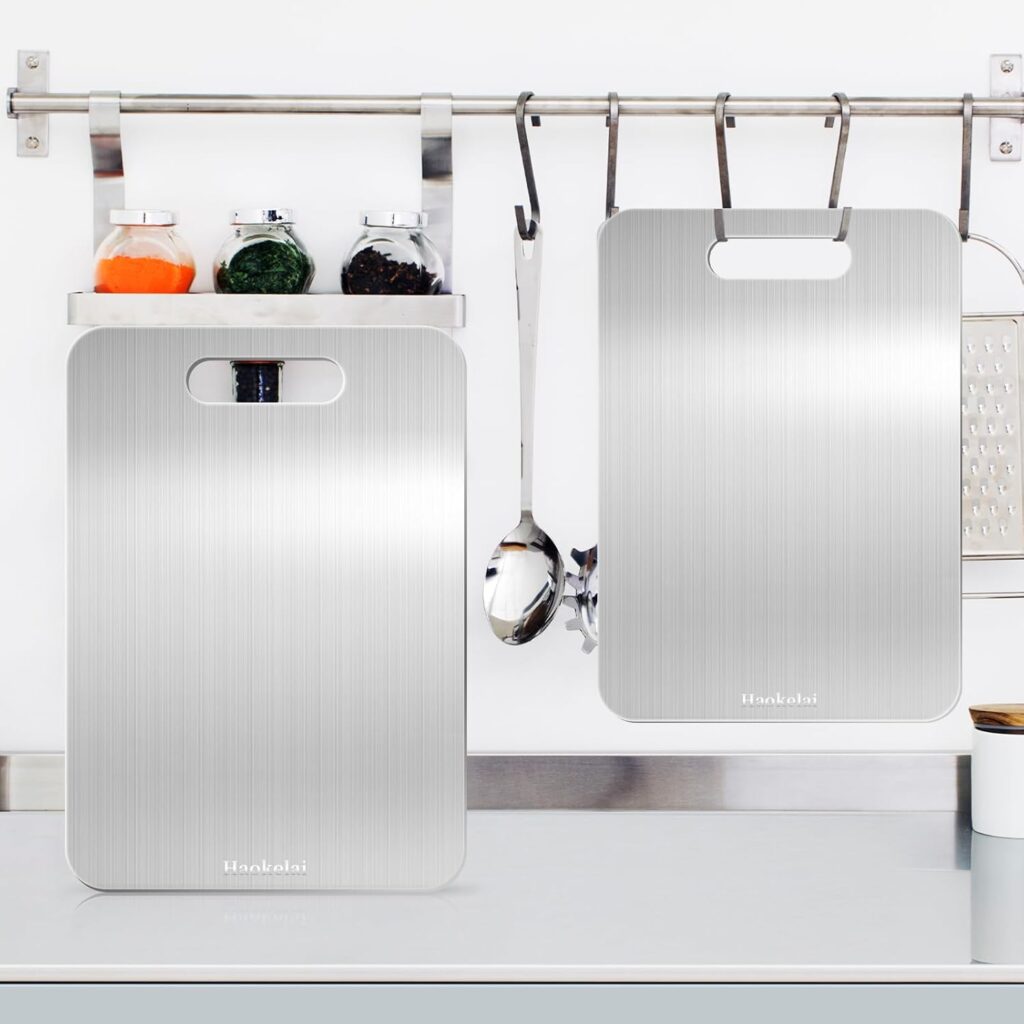
- Titanium boards: Around 2mm is standard for titanium (like the Katori), which feels thin but is structurally rigid due to the material’s strength-to-weight ratio. A non-slip silicone mat underneath is recommended.
- Wood boards for general use: 1.5 to 2 inches for stability.
Pro tip: A board with a juice groove around the perimeter is a practical feature for raw meat prep. It catches runoff and keeps your counter cleaner.

Best Cutting Boards for Raw Meat Under $50
You do not need to spend a fortune to have a safe, functional setup for raw meat. Several excellent options are available under $50.
Top picks under $50:
- OXO Good Grips Carving and Cutting Board ($35-$45): Large, non-slip feet, juice groove, and easy to sanitize. A reliable everyday workhorse.
- Dexas Polysafe Cutting Board ($20-$30): NSF-certified, color-coded options available, and highly durable. A favorite in commercial kitchens.
- San Jamar Saf-T-Grip Cutting Board ($15-$25): NSF-certified, available in red and yellow, and built for heavy use.
- OXO Good Grips 2-Piece Cutting Board Set ($25-$35): Includes two boards in different sizes, both dishwasher-safe.
- Gorilla Grip Cutting Board Set ($25-$40): Three-board color-coded set with non-slip backs. Solid value for a full kitchen setup.
What to look for in this price range:
- NSF certification (confirms food safety standards)
- Dishwasher-safe rating
- Non-slip grip (rubber feet or textured back)
- At least 0.5 inches thick
- Color-coded options (red for raw meat)
Best Cutting Board for Butchering at Home
Home butchering, whether breaking down a whole chicken, trimming a brisket, or portioning a rack of ribs, demands a board that can handle sustained heavy use. The best cutting board for butchering at home is large, thick, stable, and easy to sanitize after extended meat contact.
Top recommendations for home butchering:
Large polyethylene board (18 x 24 inches, 1 inch thick): The professional standard. Boards from brands like Winco or Vollrath are used in commercial kitchens and cost $30 to $60. They are heavy enough to stay put and thick enough to absorb impact without flexing.
Boos Block Reversible Maple Board (for non-poultry butchering): If you are breaking down beef or pork (not poultry), a thick end-grain or edge-grain maple board can work, provided you sanitize meticulously. These cost $80 to $200 but last for decades with proper care.
Katori Titanium Cutting Board: For cooks who want a premium, permanent solution, the titanium surface handles heavy chopping and is completely non-porous. The Katori Titanium Cutting Board is particularly well-suited for health-conscious home butchers who want zero compromise on hygiene.
What butchering specifically demands:
- A board that will not slide (use a damp towel or silicone mat underneath)
- Enough surface area to hold large cuts without overhang
- A material that can be fully sanitized after extended contact with blood and fat
- Thickness that absorbs impact from a cleaver or heavy chef’s knife
The Katori Titanium Cutting Board: A Closer Look
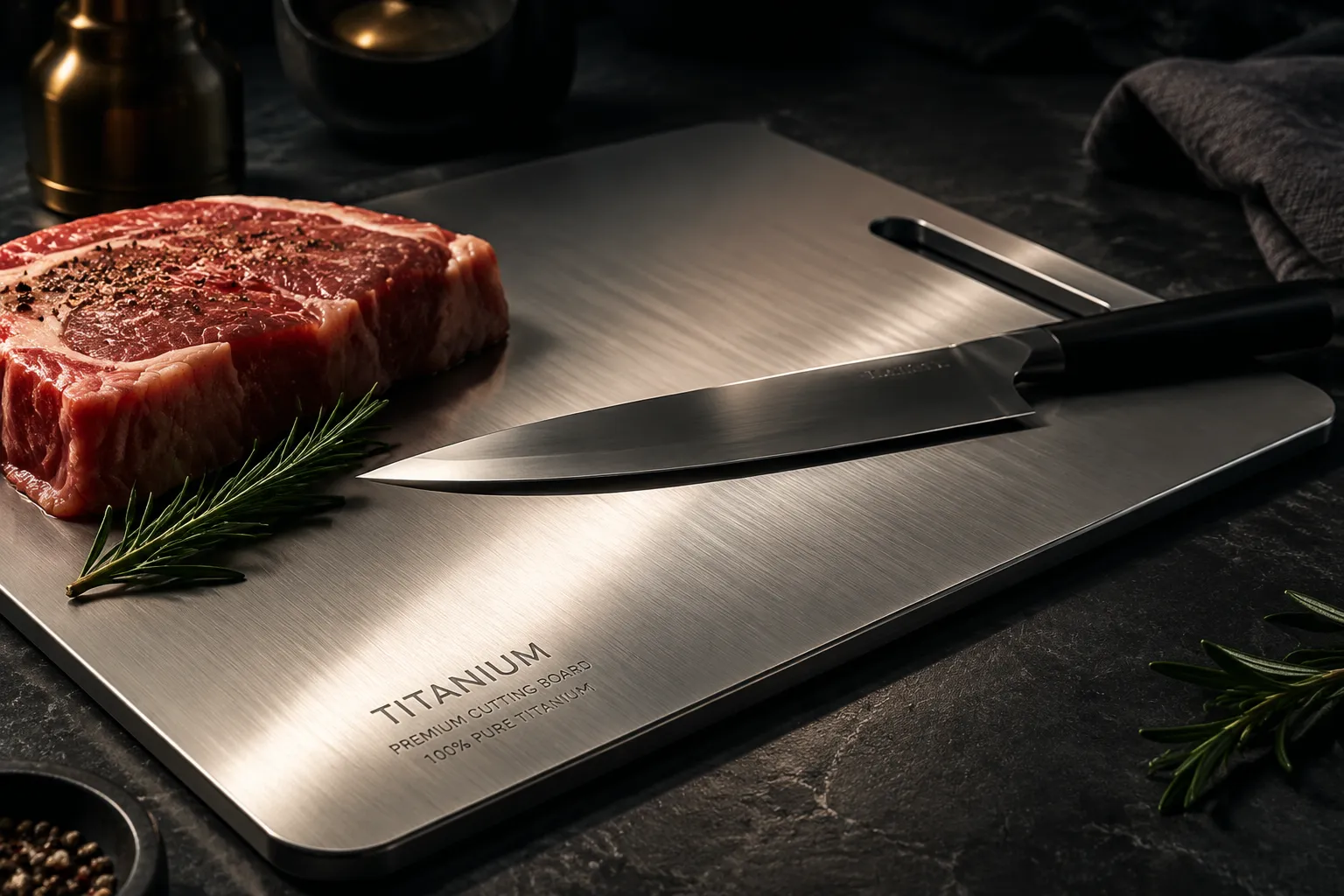
The Katori Titanium Cutting Board represents a new category in kitchen safety. It is made from food-grade titanium, the same biocompatible material used in surgical implants and aerospace components. For raw meat prep specifically, its non-porous surface is its defining advantage.
Key specifications:
- Material: 100% food-grade titanium (Grade 1)
- Thickness: Approximately 2mm
- Finish: Matte brushed (reduces glare, improves grip)
- Weight: Significantly lighter than steel at comparable strength
- Dishwasher-safe: Yes
- Non-stick and antibacterial: Yes, by virtue of the non-porous surface
- Rustproof: Yes, even with acidic marinades or citrus
Why it matters for raw meat:
Bacteria from raw chicken or beef cannot penetrate a titanium surface. There are no micro-grooves, no wood grain, and no pores. A simple hot water rinse removes surface contamination, and a dishwasher cycle or sanitizer spray eliminates the rest.
Real user feedback highlights:
- Zero odor transfer between sessions (garlic, fish, and raw meat smells do not linger)
- Knives glide cleanly without the drag felt on plastic
- Feels premium and is easy to clean in under 30 seconds
- Some users note a metallic sound when chopping, which is normal for titanium
- A non-slip silicone mat is recommended since the board is thin and smooth
Honest limitations:
- The upfront cost ($89 to $179 depending on size) is higher than plastic alternatives
- Only available through official channels; third-party knockoffs exist, so buy from the official Katori website or authorized retailers
- Limited size and style options compared to plastic boards
Price range and value: The Katori costs more than a plastic board, but the cost-per-use over a decade of daily cooking is extremely low. For cooks who prioritize food safety and dislike replacing boards every year or two, it is a sound investment.
Titanium vs. Plastic vs. Wood: Which Is Best for Raw Meat?
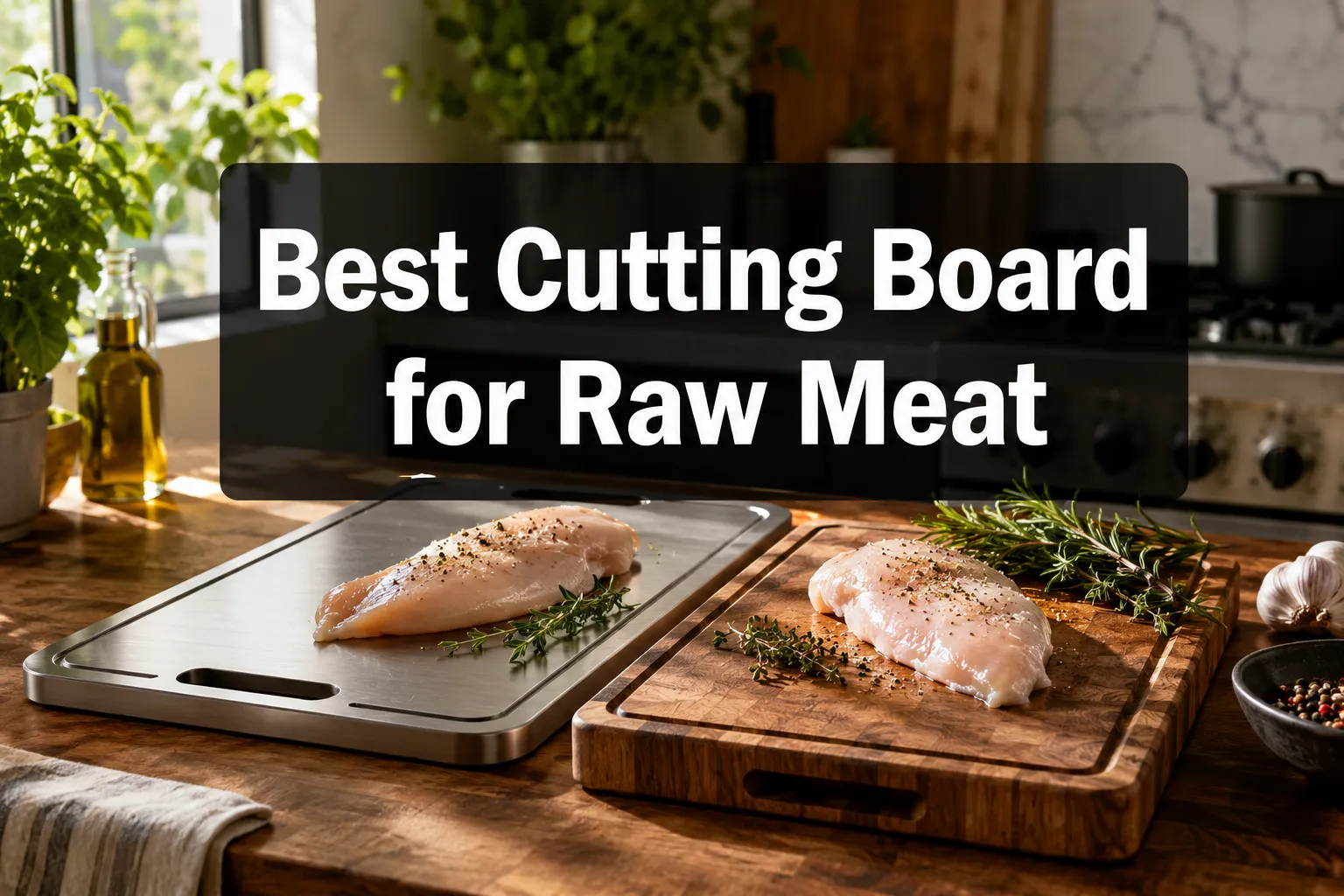
For raw meat specifically, titanium is the top-performing material, followed by plastic, with wood a distant third. Here is why each material ranks where it does:
Titanium (Best overall for raw meat):
- Completely non-porous: no bacteria absorption, ever
- Non-reactive: does not interact with acidic marinades, citrus, or salt
- Permanent: no replacement needed
- Easy to sanitize: dishwasher-safe, bleach-safe, boiling water-safe
- Knife-friendly: harder than wood but does not chip knife edges the way glass does
Plastic (Best budget option):
- Non-porous when new, but degrades with use
- Affordable and widely available
- Dishwasher-safe
- Must be replaced when grooves develop (typically every 1-3 years with regular use)
- Color-coding makes it easy to organize a multi-board kitchen
Wood (Not recommended for raw meat):
- Porous: absorbs blood and juices into the grain
- Cannot go in the dishwasher
- Requires regular oiling and maintenance
- Bacteria can survive in deep grain even after washing
- Better suited for bread, cheese, and cooked foods
The verdict for 2026: If budget is the primary concern, go with a dedicated red polyethylene board and replace it on schedule. If you want the best cutting board for raw meat with no ongoing maintenance or replacement costs, the Katori Titanium is the clear answer.
Pros and Cons of the Top Cutting Board Materials for Raw Meat
Titanium (Katori):
Pros:
- Non-porous and permanently hygienic
- No odor retention
- Dishwasher and sanitizer-safe
- Knife-friendly surface
- Rustproof and non-reactive
Cons:
- High upfront cost
- Requires non-slip mat on smooth counters
- Metallic chopping sound
- Limited style variety
Plastic (Polyethylene):
Pros:
- Low cost
- Widely available in color-coded options
- Dishwasher-safe
- NSF-certified options available
Cons:
- Degrades over time
- Deep grooves harbor bacteria
- Must be replaced periodically
- Can warp if exposed to high dishwasher heat repeatedly
Wood:
Pros:
- Aesthetically appealing
- Gentle on knife edges
- Long lifespan with proper care
Cons:
- Porous: absorbs meat juices
- Cannot be fully sanitized in a dishwasher
- Not recommended by USDA/FDA for raw meat
- Requires regular oiling
Where to Buy the Best Cutting Board for Raw Meat
For budget-friendly plastic boards, major retailers like Amazon, Target, Walmart, and restaurant supply stores (like WebstaurantStore or Webstaurant) carry a wide selection of NSF-certified polyethylene boards in color-coded options.
For the Katori Titanium Cutting Board, purchase only from the official Katori website or an authorized Amazon storefront. Third-party knockoffs exist and may not use genuine food-grade titanium. When you receive the board, check for:
- A warranty card
- Logo engraving on the surface
- A care guide in the packaging
Pro maintenance tips for any raw meat board:
- Always use a non-slip silicone mat or damp towel underneath
- Store boards upright (not flat stacked) to allow airflow and prevent moisture buildup
- For plastic boards, inspect monthly for deep grooves
- For titanium, avoid steel wool or abrasive scrubbers; a soft sponge is all you need
- Hand-dry titanium boards after washing for a spotless finish
Frequently Asked Questions
Is titanium safe for food prep?
Yes. Titanium is biocompatible and non-reactive, meaning it does not leach any metals or chemicals into food. It is the same material used in surgical implants and is considered one of the safest surfaces for food contact.
Does the Katori Titanium Cutting Board dull knives?
No. Titanium is harder than wood or plastic, but its surface is smooth enough that it does not chip or roll knife edges the way glass or ceramic does. Most users report that their knives stay sharper longer compared to plastic boards.
How do I clean a cutting board after raw chicken?
Scrape off debris, wash with hot soapy water, then apply a sanitizing solution (one tablespoon of bleach per gallon of water, or a food-safe sanitizer spray). Let it sit for two minutes, rinse, and air-dry. Dishwasher-safe boards can go in on a hot cycle.
Can I use the same cutting board for raw beef and raw chicken?
It is better to use separate boards. Both are raw proteins, but they carry different pathogens. If you use one board for both, sanitize thoroughly between uses and never let one type of raw meat contact the surface residue from another.
What size cutting board do I need for raw meat?
A minimum of 12 x 18 inches is recommended for most raw meat prep. For butchering whole chickens or large cuts, go with 15 x 20 inches or larger. Thickness should be at least 0.5 inches for plastic and 0.75 inches for composite.
How often should I replace my plastic cutting board?
Replace a plastic cutting board when deep knife grooves are visible and cannot be cleaned out with a scrub brush. For a board used daily for raw meat, this is typically every one to three years, depending on how heavily it is used.
Is the Katori Titanium Cutting Board worth the price?
For cooks who prepare raw meat regularly and want a permanent, zero-maintenance hygienic surface, yes. The cost-per-use over a decade of daily cooking makes it competitive with replacing plastic boards every year or two. For occasional cooks, a quality plastic board is sufficient.
What is the red cutting board for in a professional kitchen?
Red boards are designated for raw beef, pork, and lamb in the standard color-coding system used in professional kitchens. Yellow is for raw poultry, blue for seafood, and green for produce.
Can I cut frozen meat on a titanium board?
Yes. Titanium’s strength-to-weight ratio is roughly twice that of steel, so it handles the impact of cutting partially frozen meat without cracking or warping.
Are bamboo cutting boards safe for raw meat?
No. Bamboo is harder than most wood but still porous. Its natural antimicrobial properties are not sufficient to prevent bacterial absorption from raw meat juices. Stick with plastic or titanium for raw protein prep.
What is the best cutting board for raw meat under $50?
The OXO Good Grips Carving Board, Dexas Polysafe, and San Jamar Saf-T-Grip are all strong options under $50. Look for NSF certification, dishwasher-safe rating, and a non-slip base.
Should I oil a cutting board used for raw meat?
Only if it is a wood board, and wood is not recommended for raw meat. Plastic and titanium boards do not need oiling. Oiling a plastic board does nothing for hygiene and can leave a residue.
Conclusion
The best cutting board for raw meat is not a matter of preference, it is a matter of food safety. A dedicated, non-porous board in the right size, properly cleaned after every use, is one of the simplest and most effective things you can do to protect your household from foodborne illness.
Actionable next steps:
Audit your current setup. Do you have a dedicated board for raw meat? Is it color-coded? Are there deep grooves that need replacing?
Choose the right material for your needs. If budget is tight, pick up an NSF-certified red polyethylene board under $30. If you want a permanent solution, consider the Katori Titanium Cutting Board for its unmatched hygiene and longevity.
Implement color-coding. A basic two-board system (red for raw meat, green or white for produce) costs under $30 and eliminates most cross-contamination risk in the home kitchen.
Build a cleaning habit. Hot water, soap, and a sanitizing step after every raw meat session. If you have a dishwasher-safe board, put it in the machine every time.
Replace plastic boards on schedule. Check monthly for deep grooves. When they appear, replace the board. A $15 plastic board is not worth a foodborne illness.
The right board, used correctly, makes raw meat prep safer and more efficient. Whether you go with a budget plastic option or invest in a premium titanium surface, the key is consistency. Pick a system, stick to it, and your kitchen will be a safer place to cook.
Rereferences
- For Titanium Biocompatibility and Safety:
- URL: https://www.fda.gov/medical-devices/science-and-research-medical-devices/medical-device-material-safety-summaries
- Reason: This is an official summary from the U.S. Food and Drug Administration (FDA) regarding the safety profile of titanium used in implantable medical devices. This strongly supports the article’s claim that titanium is a non-toxic, safe, and biocompatible material suitable for food contact.
- For Bacterial Contamination Comparison (Why Plastic Fails):
- URL: https://pubmed.ncbi.nlm.nih.gov/31113021/
- Reason: This PubMed citation links to a study on the survival of bacteria (like Salmonella and E. coli) on plastic and wooden cutting boards. It helps scientifically substantiate the article’s argument that plastic boards fail due to their tendency to harbor and allow bacteria to multiply in micro-grooves.
- For Titanium’s Inherent Properties (Durability/Corrosion Resistance):
- URL: https://pmc.ncbi.nlm.nih.gov/articles/PMC10780041/
- Reason: This link leads to a review published in a biomedical journal detailing the inherent properties of titanium alloys, including their exceptional mechanical strength, corrosion resistance, and biocompatibility. This provides a materials science basis for the claims of durability and longevity.
Tags: best cutting board for raw meat, cutting board food safety, titanium cutting board, plastic vs wood cutting board, Katori cutting board, raw meat cross contamination, color coded cutting boards, cutting board hygiene, raw chicken cutting board, cutting board sanitizing, kitchen food safety, butchering cutting board

With over 13 years of experience in holistic health blogging, I aim to help you navigate your wellness journey with honest insights, expert-backed advice, and a sprinkle of real-world practicality.
Certified Wellness Writer | Herbal Nutrition Advocate | Wellness Research Enthusiast