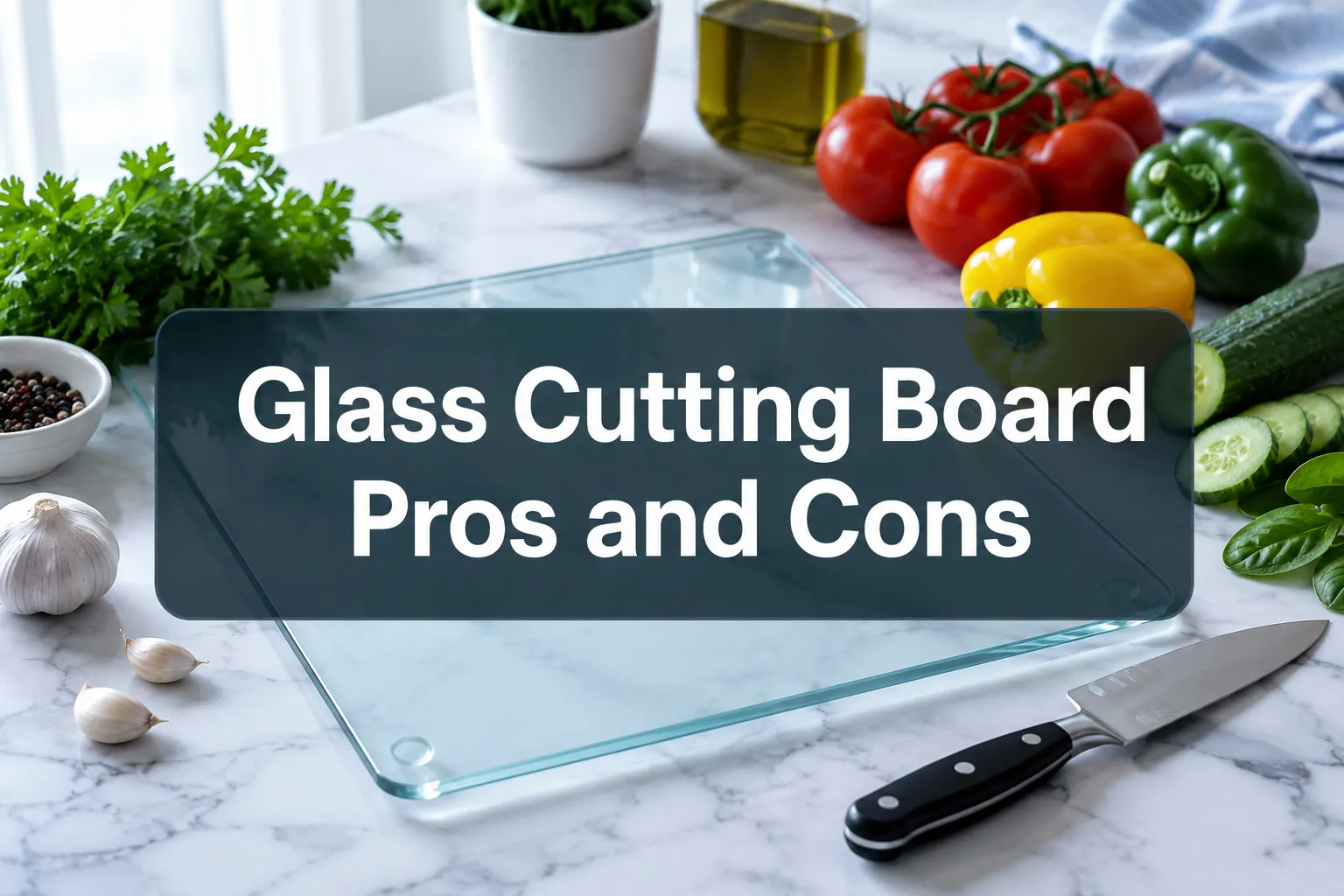
Glass Cutting Board Pros and Cons: Is It Worth Buying in 2026?
Last updated: July 29, 2026
Quick Answer: Glass cutting boards are hygienic, non-porous, and easy to clean, but they are notoriously hard on knife edges and can shatter if dropped. They work best as prep surfaces for tasks that don’t require heavy chopping, and they suit cooks who prioritize sanitation over knife longevity. Understanding the full glass cutting board pros and cons helps you decide whether this surface belongs in your kitchen.
Key Takeaways
- Glass cutting boards are non-porous, meaning bacteria and odors cannot penetrate the surface, a genuine hygiene advantage over wood and plastic.
- The biggest drawback is knife damage: glass is harder than most knife steel, which dulls blades significantly faster than wood or plastic boards.
- Glass boards are dishwasher-safe, stain-resistant, and non-reactive with acidic foods like citrus and tomatoes.
- They can break or shatter if dropped, especially on tile or stone floors, which is a real safety concern.
- Good glass cutting boards typically cost between $20 and $60, making them mid-range in price compared to quality wood or titanium options.
- They are best suited for light prep tasks: slicing bread, cheese, fruit, and cooked foods, not heavy butchering or daily high-volume chopping.
- Non-slip rubber feet or a damp towel underneath the board are essential to prevent sliding during use.
- Cooks who own high-quality knives should think carefully before switching to glass, as the damage to knife edges is measurable and cumulative.
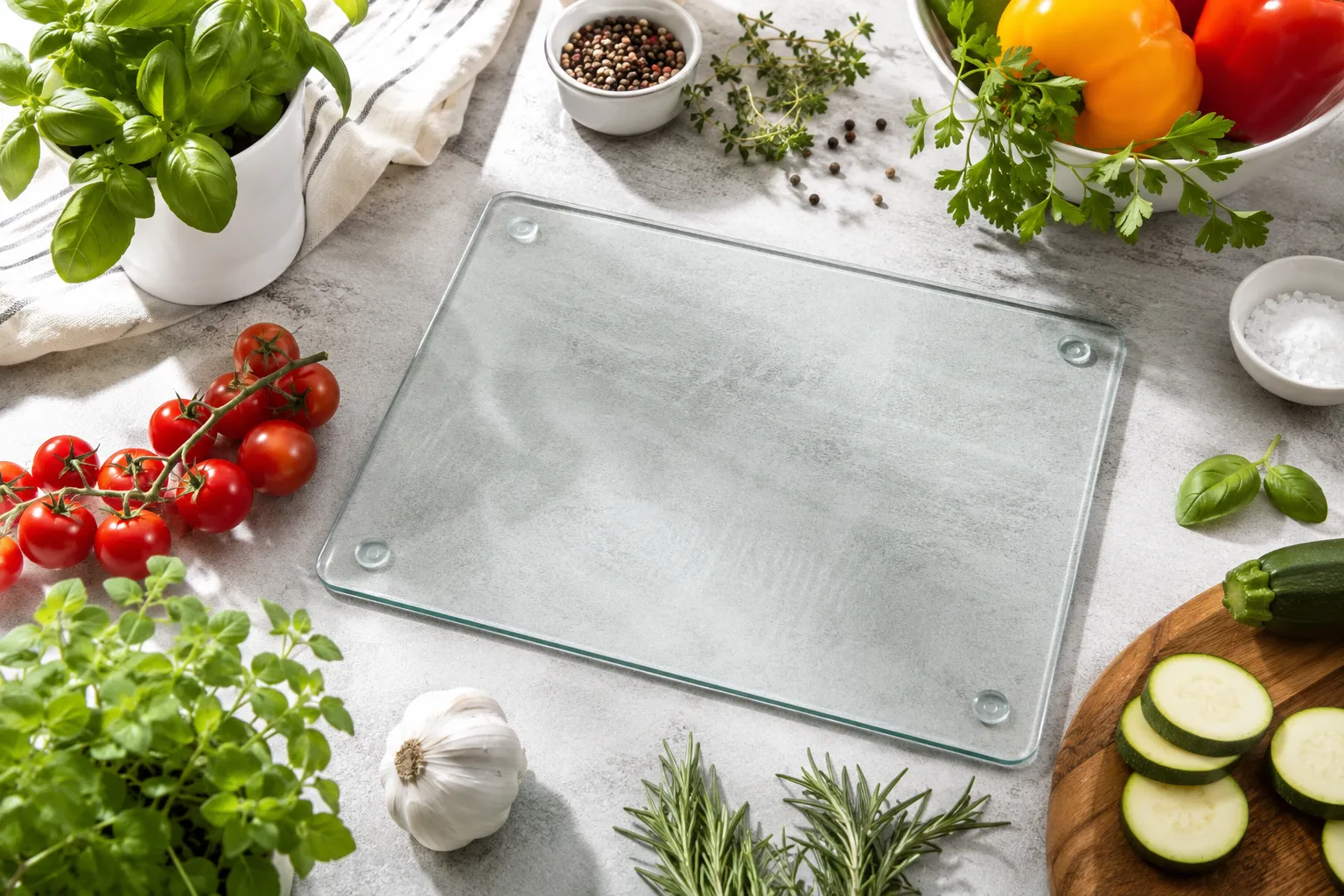
What Are the Main Benefits of Using a Glass Cutting Board
Glass cutting boards offer three core advantages: superior hygiene, easy maintenance, and long-term durability against staining and odors. These benefits make them a practical choice for specific kitchen tasks, even if they aren’t the right fit for every cook.
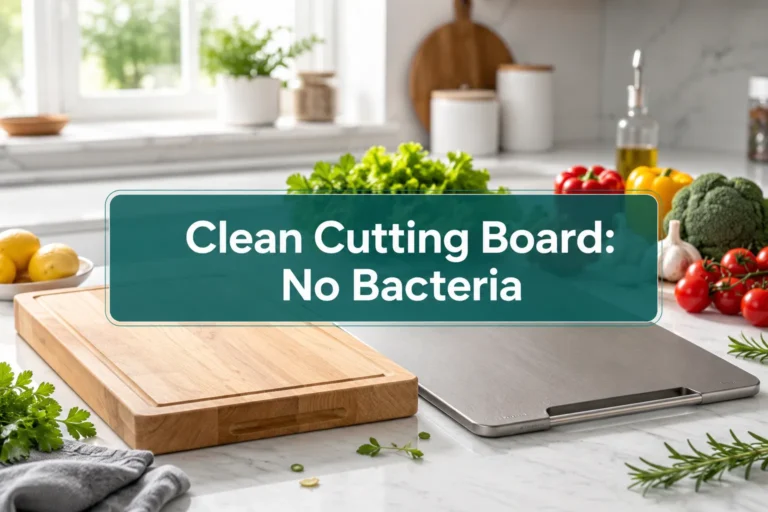
Hygiene is the strongest argument for glass. Unlike wood, which has natural grain channels that trap moisture and bacteria, and plastic, which develops deep knife grooves over time, glass has a completely non-porous surface. Bacteria, mold, and food odors have nowhere to settle. This matters most when handling raw fish, garlic, or onions, foods notorious for leaving lingering smells on other board materials.
Here are the main benefits in plain terms:
- Non-porous surface: No micro-grooves where bacteria or mold can grow.
- Odor-resistant: Garlic, fish, and onion smells rinse away completely.
- Stain-resistant: Beet juice, turmeric, and berry stains wipe clean without scrubbing.
- Dishwasher-safe: Glass boards can go straight into the dishwasher without warping or cracking from heat cycles.
- Non-reactive: Glass doesn’t interact with acidic foods like lemon juice or vinegar, so it won’t affect food flavor.
- Long surface life: The glass itself doesn’t degrade, crack, or absorb moisture over years of use.
- Easy to sanitize: Bleach, hydrogen peroxide, or boiling water can be used without damaging the surface.
For cooks focused on food safety, particularly those preparing food for immunocompromised family members or young children, the non-porous nature of glass is a meaningful advantage. If you’re also researching how to support overall health in the kitchen, you might find our guide on how to improve digestive enzyme function naturally a useful companion read.
Do Glass Cutting Boards Dull Your Knives
Yes, glass cutting boards dull knives faster than almost any other cutting surface. This is the single most significant drawback in the glass cutting board pros and cons debate, and it’s not a minor issue.
Glass rates approximately 5.5 on the Mohs hardness scale. Most kitchen knife steel rates between 5.5 and 6.5. When two materials of similar or equal hardness meet repeatedly, both surfaces suffer, but the knife edge, being the thinner and more precise of the two, takes the worst of it. Each cut on a glass surface microscopically rolls or chips the blade edge, which is why professional chefs almost universally avoid glass boards.
What this means practically:
- A knife that stays sharp for weeks on a wood board may need honing after just a few sessions on glass.
- High-end Japanese knives with harder, thinner edges are especially vulnerable to glass-induced chipping.
- Budget knives made from softer steel will dull quickly but are easier to resharpen.
- Even ceramic knives, which are harder than glass, can develop micro-fractures from the impact.
Choose a glass board if: You primarily use it for slicing bread, cheese, or cooked foods where you’re not applying heavy downward pressure with each cut.
Avoid glass if: You own quality chef’s knives above $80 and use them daily for vegetable prep, meat slicing, or any task requiring a sustained sharp edge.
If you’re curious how glass compares to a premium alternative that claims to be knife-friendly, the Katori Titanium Cutting Board reviews offer a detailed look at a material that handles knife compatibility differently.
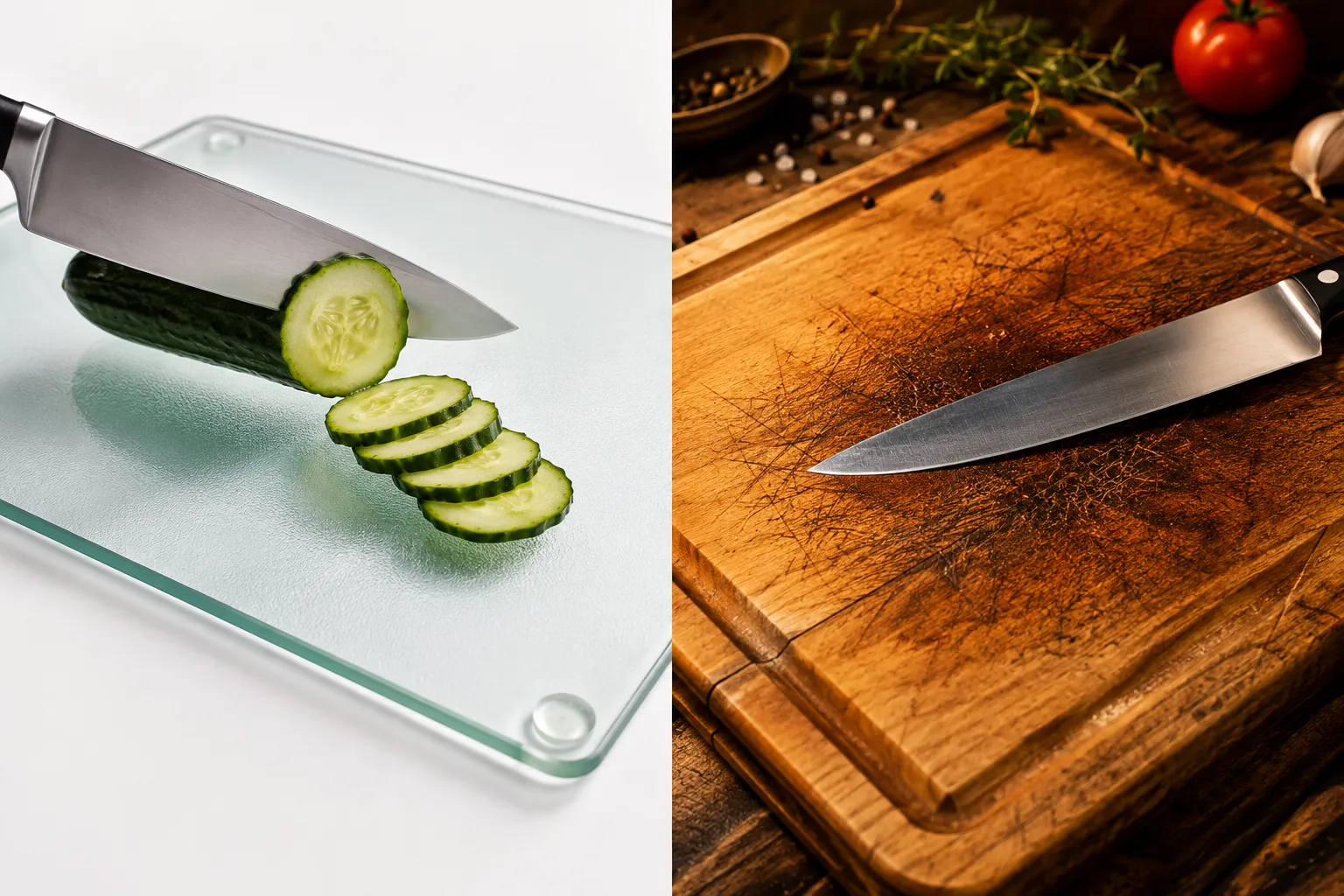
Is a Glass Cutting Board Better Than Wood or Plastic
Glass is better than wood and plastic in hygiene and maintenance, but worse for knife preservation and user comfort. The best choice depends entirely on what you prioritize in a cutting surface.
Here’s a direct comparison across the factors that matter most:
| Factor | Glass | Wood | Plastic |
|---|---|---|---|
| Hygiene | Excellent (non-porous) | Moderate (grain traps bacteria) | Poor over time (knife grooves) |
| Knife Safety | Poor (dulls blades fast) | Excellent (self-healing grain) | Good (softer surface) |
| Durability | High (won’t warp/stain) | Moderate (can warp/crack) | Low (degrades with grooves) |
| Ease of Cleaning | Very easy (dishwasher-safe) | Moderate (hand-wash only) | Easy (dishwasher-safe) |
| Odor Resistance | Excellent | Poor without oiling | Moderate |
| Break Risk | Yes (drops can shatter) | No | No |
| Noise During Use | Loud (metallic/clinking) | Quiet | Quiet |
Bottom line: Wood wins for knife preservation and cooking comfort. Glass wins for sanitation and zero-maintenance cleaning. Plastic sits in the middle but loses on long-term hygiene once grooves develop. If you cook frequently and own good knives, wood or a premium alternative like titanium is the smarter daily driver.
Glass Cutting Board vs Bamboo: Which Is Better
Glass beats bamboo on hygiene and odor resistance, but bamboo is gentler on knives and less likely to shatter. For most home cooks, bamboo is the more practical everyday choice, while glass excels as a dedicated board for tasks where sanitation is the top priority.
Bamboo is technically a grass, not wood, and it’s denser than most hardwoods. It’s also slightly more forgiving on knife edges than glass, though not as gentle as end-grain maple. Bamboo boards do require occasional oiling to prevent cracking, and they can develop surface grooves over time that harbor bacteria, a disadvantage glass doesn’t share.
Choose glass over bamboo if: You want a zero-maintenance board that you can bleach, boil, or run through the dishwasher repeatedly without any degradation.
Choose bamboo over glass if: You chop vegetables daily, care about knife longevity, and prefer a quieter, more tactile cutting experience.
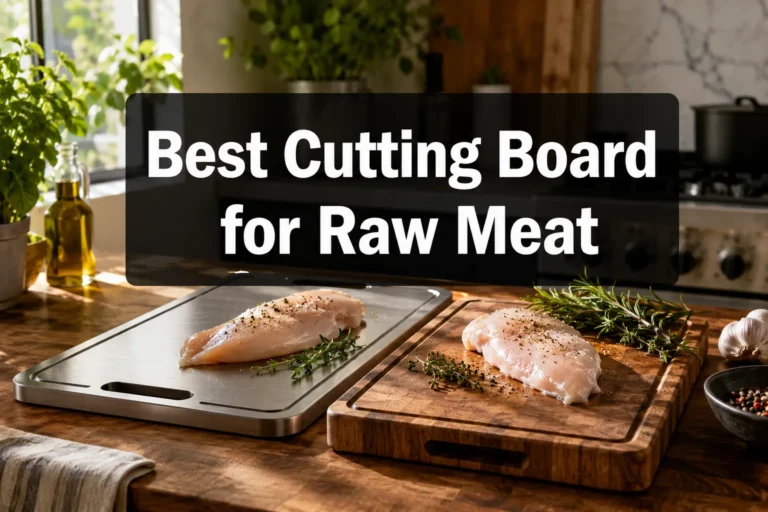
Can You Cut Raw Meat on a Glass Cutting Board
Yes, you can cut raw meat on a glass cutting board, and from a pure food safety standpoint, glass is actually one of the better surfaces for this task. The non-porous surface means meat juices, blood, and bacteria cannot soak into the board the way they can with wood or grooved plastic.
That said, there are practical considerations:
- Cross-contamination risk is lower because glass can be fully sanitized with bleach or hot water between uses.
- Knife damage is accelerated when cutting through meat with bones or cartilage, since the blade hits the glass surface with more force.
- Slippage is a concern, raw meat can cause the board to slide if it doesn’t have non-slip feet, creating a safety hazard.
- For boneless cuts (chicken breasts, fish fillets, steak), glass works fine as a raw meat surface.
- For bone-in cuts or whole poultry, a thicker wood or plastic board is safer and kinder to both your knife and your wrists.
A dedicated glass board used exclusively for raw meat, then sanitized thoroughly after each use, is a legitimate food-safe setup. Color-coding boards by task (one for raw meat, one for produce) is a practice recommended by food safety professionals regardless of board material.
Are Glass Cutting Boards Safe for Food Prep
Glass cutting boards are safe for food prep. Tempered glass, which is the standard material used in modern glass cutting boards, is food-grade, non-toxic, and non-reactive. It does not leach chemicals, absorb food residue, or interact with acidic ingredients.
The safety considerations worth knowing:
- Tempered glass is designed to break into small, blunt chunks rather than sharp shards if it does break, this is a deliberate safety feature.
- Non-tempered glass boards (rare but available cheaply) are more dangerous and should be avoided.
- Surface scratches from knife use can accumulate over years, but unlike plastic, glass scratches do not harbor bacteria because the surface remains non-porous even when scratched.
- No BPA, no phthalates, no chemical leaching, glass is inert, which makes it one of the cleanest food-contact surfaces available.
For health-conscious households, glass is a reassuring choice from a chemical safety standpoint. It’s worth noting that overall kitchen hygiene connects to broader health outcomes, if you’re interested in how gut health relates to what you eat and how you prepare it, our article on how the immune system is linked to gut health provides useful context.
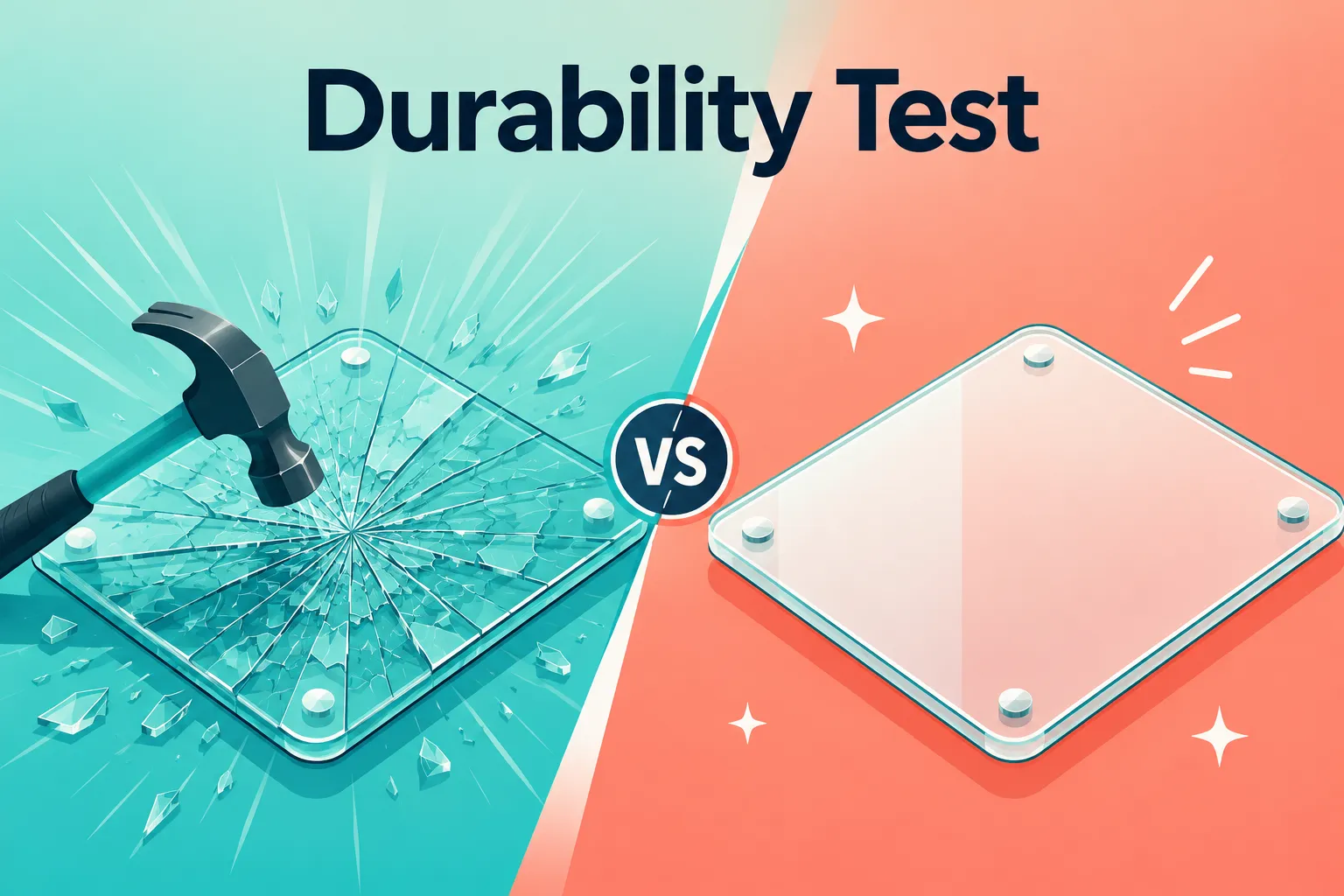
Can a Glass Cutting Board Break or Shatter Easily
A tempered glass cutting board can break if dropped on a hard floor, but it won’t shatter from normal cutting pressure or dishwasher heat. The risk of breakage is real but manageable with proper handling.
Key facts about glass board durability:
- Tempered glass is 4 to 5 times stronger than regular glass and is designed to withstand thermal and mechanical stress during normal kitchen use.
- Dropping the board on tile, stone, or concrete flooring is the most common cause of breakage. A drop from counter height onto a hard surface can cause the board to shatter.
- Thermal shock (placing a very cold board into a hot oven, for example) can cause cracking, but this is not a normal use case for a cutting board.
- Edge impacts, hitting the board’s edge against a sink or counter corner, are a more common cause of chipping than surface impacts.
- Thickness matters: Boards 5mm or thicker are significantly more resistant to breakage than thin 3mm boards.
Common mistake: Storing glass boards stacked flat with heavy items on top. Store them upright in a board rack to reduce edge-chip risk and prevent pressure cracks.
What’s the Best Way to Clean a Glass Cutting Board
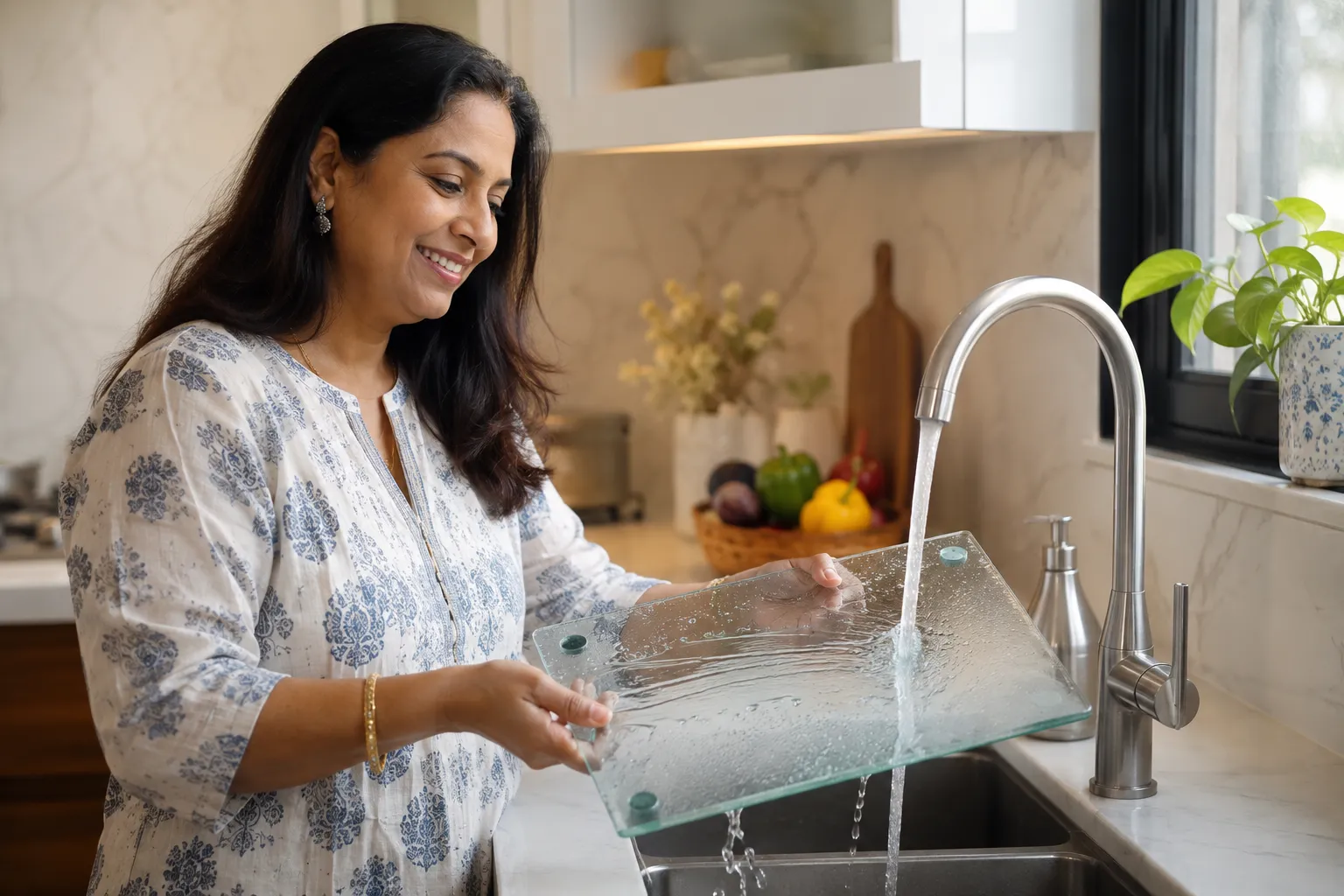
Glass cutting boards are among the easiest kitchen surfaces to clean. The non-porous surface means a simple rinse with hot soapy water removes most residue, and the board can go in the dishwasher without any risk of warping, cracking, or absorbing detergent chemicals.
Step-by-step cleaning routine:
- Rinse the board under hot running water immediately after use to prevent food from drying on the surface.
- Apply dish soap and scrub with a soft sponge or cloth, avoid steel wool or abrasive scrubbers, which can scratch the surface over time.
- For strong odors (garlic, fish), wipe the surface with a small amount of white vinegar or lemon juice before rinsing.
- To sanitize after raw meat contact, spray with a diluted bleach solution (1 tablespoon bleach per gallon of water), let sit for 2 minutes, then rinse thoroughly.
- Dry with a clean towel or allow to air dry upright.
Dishwasher use: Glass boards are fully dishwasher-safe. Place them on the bottom rack, away from other items that could chip the edges during the wash cycle.
Deep sanitizing options: Boiling water poured over the surface, or a wipe-down with 70% isopropyl alcohol, are both effective and safe for glass.
How Much Does a Good Glass Cutting Board Cost
A quality glass cutting board typically costs between $20 and $60 in 2026, depending on size, thickness, and brand. Budget options start around $15, while large, thick tempered glass boards from established kitchenware brands can reach $70 to $80.
Price tiers by category:
- Budget ($15,$25): Thin boards (3-4mm), basic tempered glass, minimal non-slip features. Adequate for occasional use.
- Mid-range ($25,$50): Thicker glass (5-6mm), rubber feet, juice grooves, better edge finishing. Good for regular home use.
- Premium ($50,$80): Extra-large boards, decorative designs, reinforced edges, branded kitchenware lines. Best for cooks who want durability and aesthetics.
Value note: Glass boards don’t degrade the way plastic boards do, so a $40 glass board purchased today could realistically last 10 to 15 years with proper care. The cost-per-use math favors glass over cheap plastic boards that need replacing every year or two.
If you’re comparing glass to higher-end alternatives, titanium boards like the Katori sit in the $89,$179 range and offer a different set of trade-offs, you can read the full Katori Titanium Cutting Board review for a detailed breakdown.
Who Should Use a Glass Cutting Board and Who Shouldn’t
Glass cutting boards are a strong fit for specific types of cooks and kitchen setups, but they’re a poor match for others. Knowing which category you fall into saves you money and frustration.
Glass cutting boards are a good fit for:
- Cooks who prioritize sanitation above all else (households with young children, elderly family members, or immunocompromised individuals).
- People who use their board primarily for slicing bread, cheese, fruit, or cooked foods.
- Cooks who want a low-maintenance surface that requires no oiling, conditioning, or special care.
- Kitchens where the board doubles as a serving platter, glass looks clean and presentable on a table.
- Anyone who finds themselves frustrated by persistent odors on wood or plastic boards.
Glass cutting boards are a poor fit for:
- Cooks who own high-quality knives above $80 and use them daily.
- Anyone who does heavy chopping, butchering, or high-volume vegetable prep.
- Households with children who might knock the board off the counter.
- Cooks who find the loud clinking sound of knife-on-glass irritating.
- Anyone cooking in a kitchen with tile floors, where a dropped board is likely to shatter.
What Size Glass Cutting Board Do I Need
For most home cooks, a glass cutting board measuring 12 by 18 inches (roughly 30 by 45 cm) is the most practical size. It’s large enough for most prep tasks without being unwieldy, and it fits standard dishwashers.
Size guide by use case:
- Small (8×10 to 10×14 inches): Best for quick tasks, slicing a lemon, cutting cheese, prepping a single ingredient. Easy to store and clean.
- Medium (12×15 to 12×18 inches): The most versatile size for everyday cooking. Handles most vegetable and protein prep comfortably.
- Large (15×20 inches and above): Suited for meal prepping, entertaining, or cooks who work with large cuts of meat or whole fish.
Thickness recommendation: Choose at least 5mm thickness for daily use. Thinner boards (3mm) are lighter and cheaper but more prone to chipping and flexing under pressure.
How Do You Prevent a Glass Cutting Board from Sliding
A glass cutting board without non-slip features can slide dangerously during use, especially on smooth countertops. The fix is simple: place a damp kitchen towel or a silicone mat underneath the board before use.
Practical anti-slip options:
- Damp towel method: Wet a folded kitchen towel, place it flat on the counter, and set the board on top. The friction from the damp fabric holds the board firmly in place. This costs nothing and works immediately.
- Silicone mat: A thin silicone baking mat or grip liner cut to size provides consistent non-slip performance and is easy to wash.
- Boards with built-in rubber feet: Many mid-range and premium glass boards come with small rubber feet molded into the underside. These work well on flat counters but may not grip textured surfaces as reliably.
- Non-slip shelf liner: A piece of rubber shelf liner cut to the board’s dimensions is an inexpensive permanent solution.
Common mistake: Relying on a dry glass board placed directly on granite or quartz countertops. Both surfaces are smooth enough that the board can shift mid-cut, which is a real injury risk.
Can You Use a Glass Cutting Board for Bread
Yes, glass cutting boards work well for slicing bread. The firm, flat surface supports the loaf without flexing, and the non-porous glass won’t absorb bread crumbs or oils the way wood does.
A few practical notes:
- A serrated bread knife used on glass will dull faster than on wood, but bread slicing requires less downward pressure than vegetable chopping, so the damage is slower.
- Glass boards make excellent serving surfaces for bread, cheese, and charcuterie because they look clean and can be brought directly to the table.
- For crusty artisan loaves that require significant sawing force, the noise of knife-on-glass can be pronounced. This is a comfort issue rather than a safety or hygiene one.
What Common Mistakes People Make with Glass Cutting Boards
Most problems with glass cutting boards come from a handful of avoidable errors. Knowing these in advance saves both your board and your knives.
The most common mistakes:
Using good knives on glass daily. This is the fastest way to ruin expensive blades. Reserve glass for tasks where knife sharpness is less critical, or accept that you’ll need to sharpen more frequently.
Storing boards flat with weight on top. Stacking heavy pots or other boards on top of a glass board increases edge-chip risk. Store upright in a rack.
Placing a cold board on a hot burner or under a broiler. Glass cutting boards are not designed for heat exposure. Thermal shock can crack even tempered glass.
Using the board without a non-slip base. Skipping the damp towel or silicone mat is a safety hazard, especially during fast chopping.
Buying a very thin board (3mm) for heavy use. Thin glass boards flex slightly under pressure and are more prone to chipping. Spend a little more for 5mm or thicker.
Using abrasive scrubbers for cleaning. Steel wool and harsh scouring pads scratch the glass surface and dull its appearance over time. A soft sponge is all you need.
Ignoring edge chips. A small chip on the board’s edge can grow into a crack with continued use. Inspect the board periodically and retire it if significant edge damage appears.
A Full Look at Glass Cutting Board Pros and Cons
After covering each individual aspect, it helps to see the complete glass cutting board pros and cons picture in one place. This summary is designed to be the deciding factor for anyone still on the fence.
Pros:
- Non-porous surface prevents bacterial and mold growth
- Completely odor-resistant, no lingering food smells
- Stain-resistant against beet, turmeric, berries, and sauces
- Dishwasher-safe with no risk of warping or swelling
- Non-reactive with acidic foods, no flavor contamination
- Long surface lifespan, the glass itself doesn’t degrade
- Easy to sanitize with bleach, alcohol, or boiling water
- Doubles as an attractive serving board for cheese and charcuterie
- No oiling, conditioning, or special maintenance required
Cons:
- Dulls knife edges significantly faster than wood or plastic
- Can shatter if dropped on hard flooring
- Loud clinking noise during chopping
- Slippery on smooth countertops without a non-slip base
- Heavy compared to plastic boards of the same size
- Not suitable for heavy butchering or bone-in meat work
- Cold, hard surface can be tiring on wrists during extended prep sessions
- Fewer design and size options compared to wood or plastic
Frequently Asked Questions
Q: Do glass cutting boards cause more knife damage than plastic?
Yes. Glass is harder than most kitchen knife steel, which causes the blade edge to dull or chip faster than it would on plastic or wood. Plastic is softer and more forgiving on knife edges.
Q: How long does a glass cutting board last?
With proper care, a quality tempered glass cutting board can last 10 to 20 years or more. The glass surface itself doesn’t degrade, stain, or absorb moisture. The main risk is breakage from drops or edge chips.
Q: Is it safe to cut raw chicken on a glass cutting board?
Yes. Glass is non-porous, so bacteria from raw chicken cannot soak into the surface. Sanitize with a diluted bleach solution after use. Designate a separate board for raw poultry to avoid cross-contamination with other foods.
Q: Can I use a glass cutting board as a trivet for hot pots?
No. Glass cutting boards are not designed for direct heat contact. Placing a hot pot or pan on a glass board can cause thermal shock and cracking. Use a proper trivet or silicone pad instead.
Q: Why does my glass cutting board make such a loud noise when I chop?
The hard glass surface amplifies the impact of the knife blade, creating a sharp clinking or tapping sound. This is normal and unavoidable with glass. If the noise bothers you, a wood or bamboo board will be significantly quieter.
Q: Can I use a glass cutting board for garlic and onions?
Yes, and this is actually one of the best uses for glass. The non-porous surface doesn’t absorb garlic or onion odors, so the board rinses clean without any lingering smell, a clear advantage over wood.
Q: Are cheap glass cutting boards safe?
Budget glass boards are generally safe if they’re made from tempered glass. Check the product description before buying. Non-tempered glass boards are less safe because they break into sharp shards rather than blunt chunks.
Q: Is a glass cutting board good for someone who rarely cooks?
Yes. For occasional cooks, the low maintenance and easy cleaning of glass make it a practical choice. The knife-dulling issue is less significant when the board is used infrequently.
Q: How do I remove scratches from a glass cutting board?
Light surface scratches from knife use are generally not removable at home. They don’t affect hygiene or safety, but they do affect appearance. Deep scratches or chips that create rough edges are a reason to replace the board.
Q: What’s the difference between tempered and non-tempered glass cutting boards?
Tempered glass is heat-treated to be 4 to 5 times stronger than regular glass. When it breaks, it fractures into small blunt pieces rather than sharp shards. Always choose tempered glass for kitchen use. Non-tempered glass boards are cheaper but significantly more dangerous if broken.
Q: Can a glass cutting board go in the microwave?
No. Glass cutting boards are not designed for microwave use. While glass itself is microwave-safe in some forms, the rubber feet, decorative prints, and metal rims found on many boards are not. Use a proper microwave-safe dish instead.
Q: Is glass better than plastic for raw meat from a food safety standpoint?
Yes, for long-term use. New plastic boards are comparable to glass in hygiene, but plastic develops knife grooves over time that trap bacteria. Glass remains non-porous indefinitely, making it the more hygienic choice for raw meat over the board’s lifetime.
Conclusion
The glass cutting board pros and cons debate doesn’t have a universal winner, it has a right answer for each type of cook. Glass earns its place in kitchens where hygiene, odor resistance, and low maintenance are the top priorities. It’s a genuinely excellent surface for bread, cheese, fruit, cooked foods, and raw meat prep when paired with proper sanitizing habits.
The trade-offs are real and worth taking seriously. If you own quality knives and use them daily for heavy chopping, glass will cost you in sharpening time and blade longevity. If the sound of knife-on-glass sets your teeth on edge, no amount of hygiene benefit will make the board enjoyable to use.
Actionable next steps:
- If hygiene is your primary concern and you do light-to-moderate prep, buy a mid-range tempered glass board (5mm thick, with rubber feet) in the $30,$50 range.
- If you own good knives and cook daily, use glass as a secondary board for tasks like slicing bread or serving cheese, and keep a wood or bamboo board as your main cutting surface.
- Always place a damp towel or silicone mat under the board before use, this single habit eliminates the sliding risk entirely.
- Inspect the board’s edges every few months and replace it if significant chipping appears.
- If you’re ready to invest in a cutting surface that addresses both hygiene and knife compatibility, consider reading our detailed Katori Titanium Cutting Board review before making a final decision.
The best cutting board is the one that fits how you actually cook, not the one with the longest list of features on the packaging.
Tags: glass cutting board, cutting board pros and cons, glass vs wood cutting board, kitchen hygiene, knife safety, tempered glass board, best cutting boards 2026, food prep surfaces, cutting board comparison, kitchen tools, glass cutting board cleaning, raw meat cutting board

With over 13 years of experience in holistic health blogging, I aim to help you navigate your wellness journey with honest insights, expert-backed advice, and a sprinkle of real-world practicality.
Certified Wellness Writer | Herbal Nutrition Advocate | Wellness Research Enthusiast