How to Sanitize a Cutting Board: The Safest Ways to Kill Germs and Bacteria
{“cover”:”Professional landscape format (1536×1024) hero image with bold text overlay ‘How to Sanitize a Cutting Board’ in crisp white sans-serif on a dark semi-transparent panel, centered with 8% safe margins from every edge. Background: bright, clean editorial kitchen scene with a wooden cutting board being rinsed under running water, spray bottle of sanitizer nearby, fresh vegetables on a white marble countertop, natural daylight streaming through a window, magazine-quality composition, teal and white color palette, sharp editorial photography aesthetic.”,”content”:[“Editorial landscape format (1536×1024) split-screen image: left half shows a person scrubbing a cutting board with soap under bright kitchen sink faucet labeled ‘CLEAN’ in bold 5-word max text, right half shows the same board being sprayed with a sanitizing solution labeled ‘SANITIZE’, bright natural daylight, white and blue tones, clean modern kitchen background, Pinterest-worthy composition, diverse South Asian woman demonstrating technique, sharp editorial photography.”,”Editorial landscape format (1536×1024) natural daylight flat-lay of a wooden cutting board on a white marble kitchen counter surrounded by a small bowl of coarse salt, half a lemon, a spray bottle, and a white cloth, overhead bird’s-eye perspective, warm golden-hour kitchen lighting, soft shadows, minimalist food photography aesthetic, earthy brown and cream tones, no people, save-worthy Pinterest composition with short label ‘Wood Board Care’ in subtle corner text.”,”Editorial landscape format (1536×1024) step-by-step symbolic illustration showing four stages of cutting board sanitization: Stage 1 soap scrub, Stage 2 bleach solution spray, Stage 3 hot water rinse, Stage 4 air dry upright, flat vector infographic style on a bright teal background, bold simple icons for each stage, short 1-3 word labels per stage, clean sans-serif typography, 8% safe margins, modern kitchen hygiene theme, no tables or pricing grids, bright and informative.”,”Editorial landscape format (1536×1024) cinematic side-by-side product hero shot: left side shows a gleaming titanium cutting board with no scratches under bright studio lighting, right side shows a worn plastic cutting board with deep knife grooves and visible discoloration, dramatic high-contrast studio lighting, dark charcoal background, short label ‘Titanium vs Plastic’ in white bold text at top center within safe margins, sharp product photography, premium magazine aesthetic, no tables or comparison grids.”]
Last updated: July 29, 2026
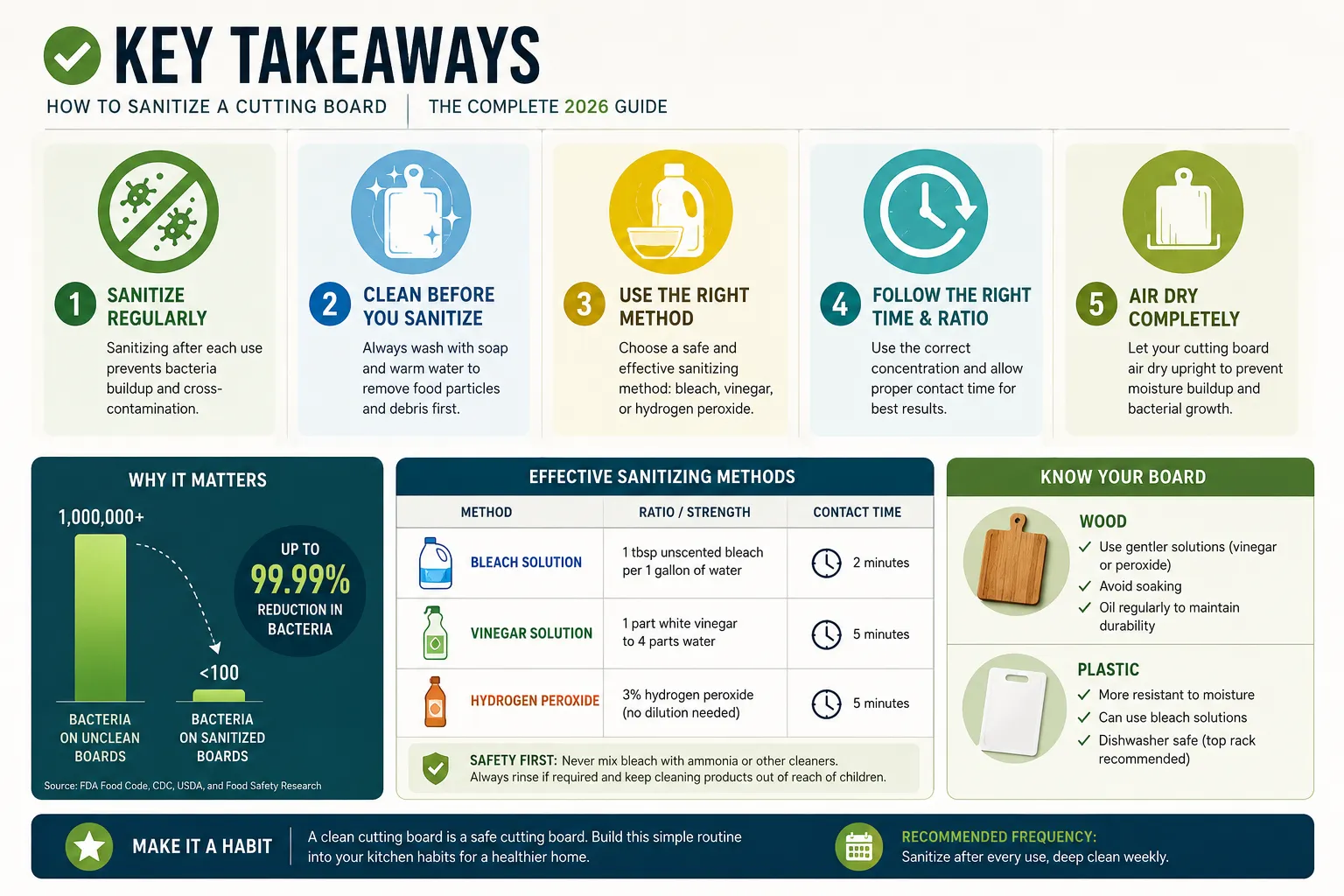
Quick Answer: To sanitize a cutting board, first wash it with hot soapy water, then apply a food-safe sanitizing solution, such as a diluted bleach mix (1 tablespoon of unscented liquid bleach per gallon of water), white vinegar, or hydrogen peroxide. Let the solution sit for at least one minute, rinse thoroughly, and air dry upright. The method varies slightly depending on whether your board is wood, plastic, or titanium.
Key Takeaways
- Cleaning removes visible dirt; sanitizing kills bacteria and pathogens that cleaning alone misses.
- Always sanitize a cutting board after contact with raw meat, poultry, seafood, or eggs.
- A diluted bleach solution (1 tablespoon per gallon of water) is one of the most effective and affordable sanitizers for food-prep surfaces.
- Wooden boards should never be soaked or run through the dishwasher, use a spray or wipe method instead.
- Plastic boards can go in the dishwasher, but deep knife grooves harbor bacteria that hot water alone may not reach.
- Titanium boards are non-porous and the easiest to sanitize, bacteria cannot hide in micro-grooves.
- Sanitize after every use involving raw proteins, and at least weekly for boards used with produce only.
- Temperatures above 160 degrees Fahrenheit (71 degrees Celsius) kill most common foodborne pathogens on contact surfaces.
- Vinegar reduces bacteria but does not meet the technical definition of a sanitizer for food-contact surfaces, use it as a deodorizer, not a primary sanitizer.
- Replace plastic boards with deep grooves; no amount of sanitizing fully clears bacteria embedded in cracked surfaces.
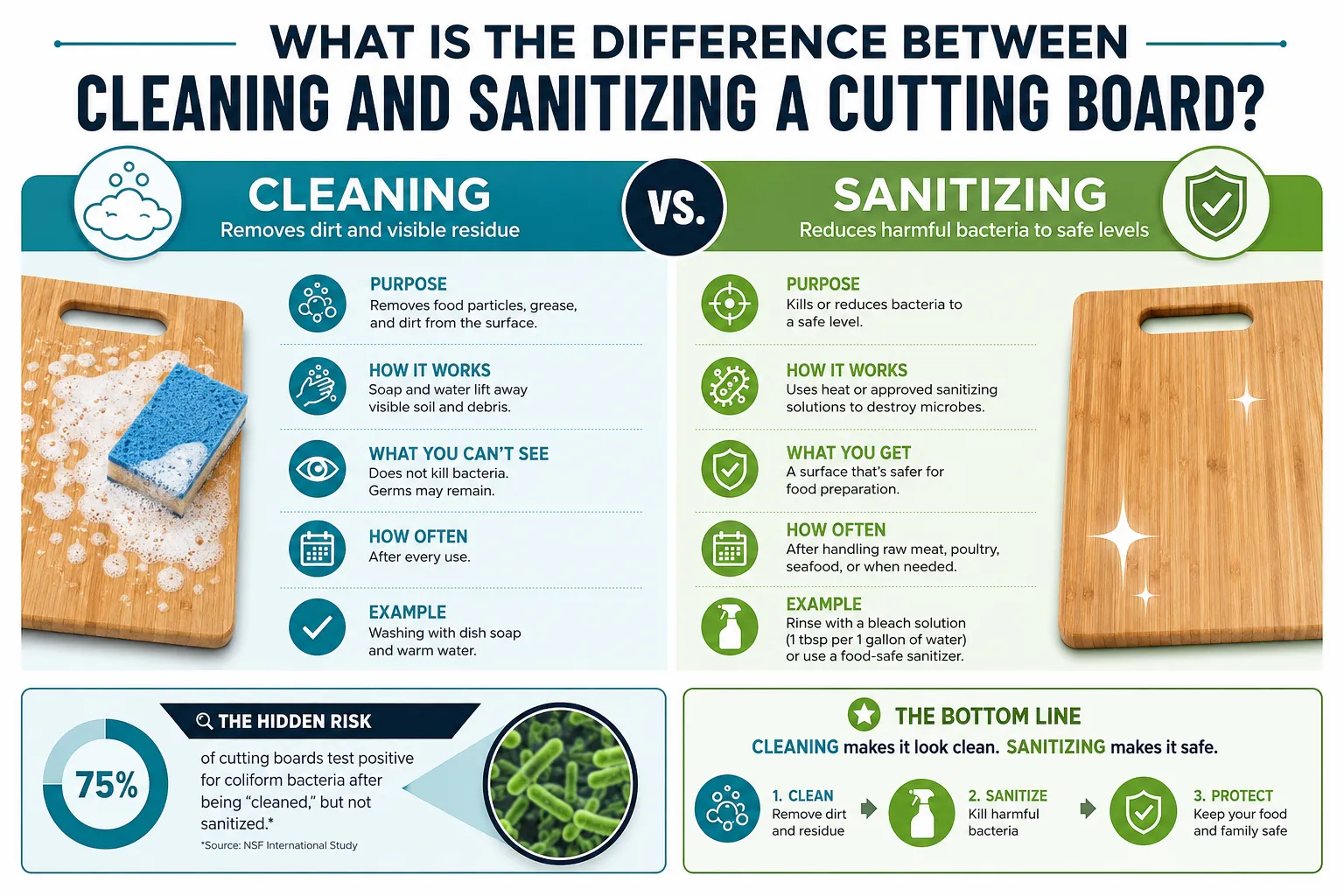
What Is the Difference Between Cleaning and Sanitizing a Cutting Board
Cleaning and sanitizing are two separate steps, and skipping the second one is one of the most common kitchen hygiene mistakes. Cleaning removes food residue, grease, and visible debris using soap and water. Sanitizing goes further, it uses heat or a chemical solution to kill bacteria, viruses, and other pathogens that remain on the surface after cleaning.
Think of it this way: a board that looks clean can still carry Salmonella, E. coli, or Listeria from a previous use. According to the U.S. Food and Drug Administration (FDA), cross-contamination from cutting boards is a leading cause of foodborne illness in home kitchens. Cleaning first is not optional, you must remove organic matter before sanitizing, because food residue can neutralize sanitizing agents and reduce their effectiveness.
The two-step process every time:
- Wash with hot water and dish soap, scrubbing all surfaces.
- Apply a sanitizing solution, let it dwell for at least 60 seconds, then rinse and dry.
Skipping step one means your sanitizer is working against a layer of food debris rather than directly on the board surface. Skipping step two means pathogens from raw proteins can survive on a board that looks perfectly clean.
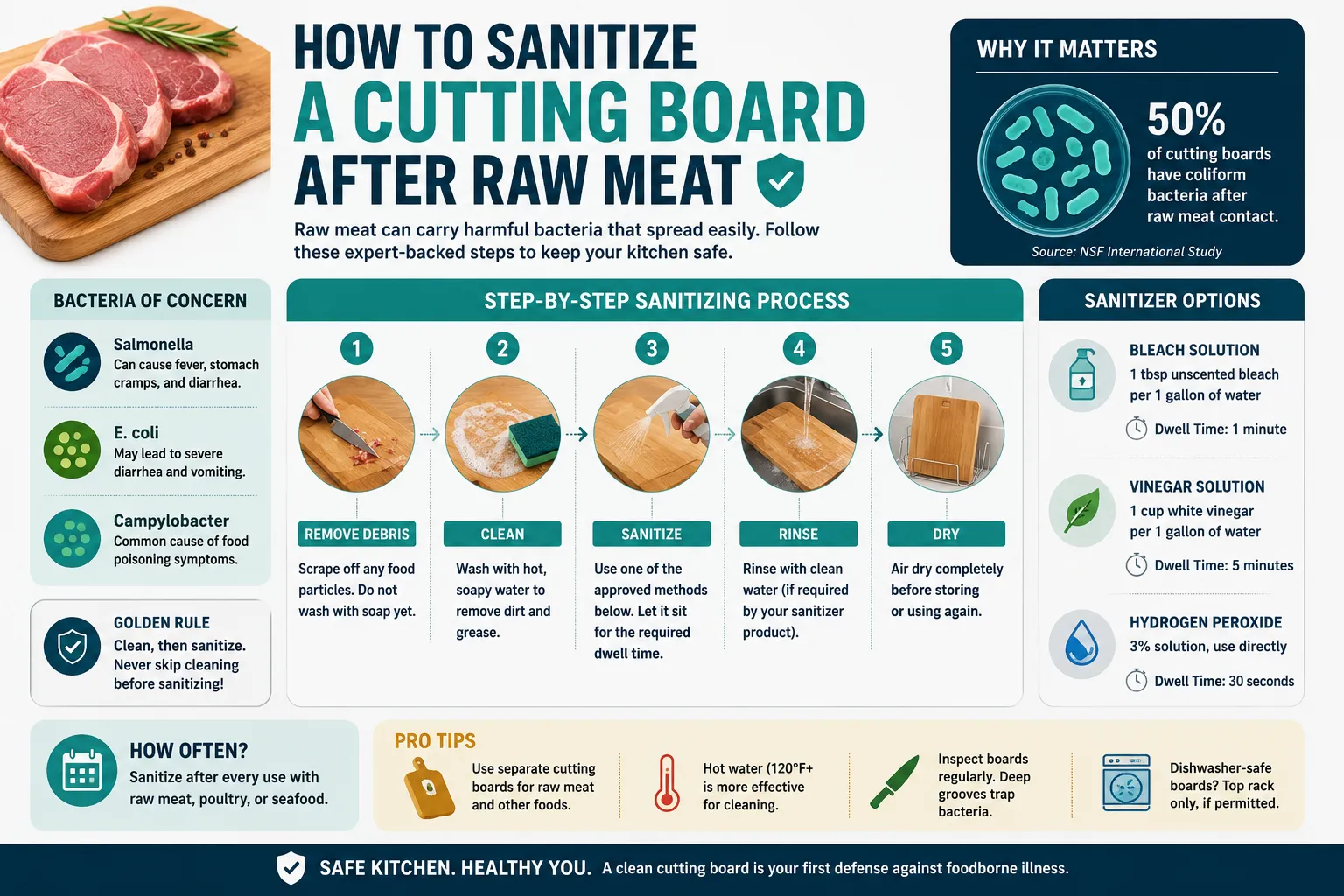
How to Sanitize a Cutting Board After Raw Meat
Sanitizing a cutting board after raw meat is the single most critical kitchen hygiene habit you can build. Raw chicken, beef, pork, and seafood carry bacteria that can cause serious illness if transferred to other foods.
Step-by-step process:
- Scrape off all food particles into the trash immediately after use.
- Rinse the board under hot running water.
- Scrub both sides with dish soap and a stiff brush for at least 20 seconds.
- Rinse again thoroughly.
- Apply your chosen sanitizing solution (see options below) and let it sit for 1 to 2 minutes.
- Rinse with clean water.
- Stand the board upright or place it on a drying rack, never flat, which traps moisture.
Best sanitizing solutions for after raw meat:
| Sanitizer | Dilution | Contact Time | Notes |
|---|---|---|---|
| Bleach solution | 1 tbsp per gallon of water | 1 minute | Most effective; rinse well |
| Hydrogen peroxide (3%) | Undiluted spray | 1 minute | Food-safe; no harsh odor |
| Commercial food-safe sanitizer | Per label instructions | Per label | NSF-certified options available |
Common mistake: rinsing the board with cold water after raw meat contact before washing. Cold water can cause fats from meat to solidify and stick to the surface, making cleaning harder. Always start with hot water.
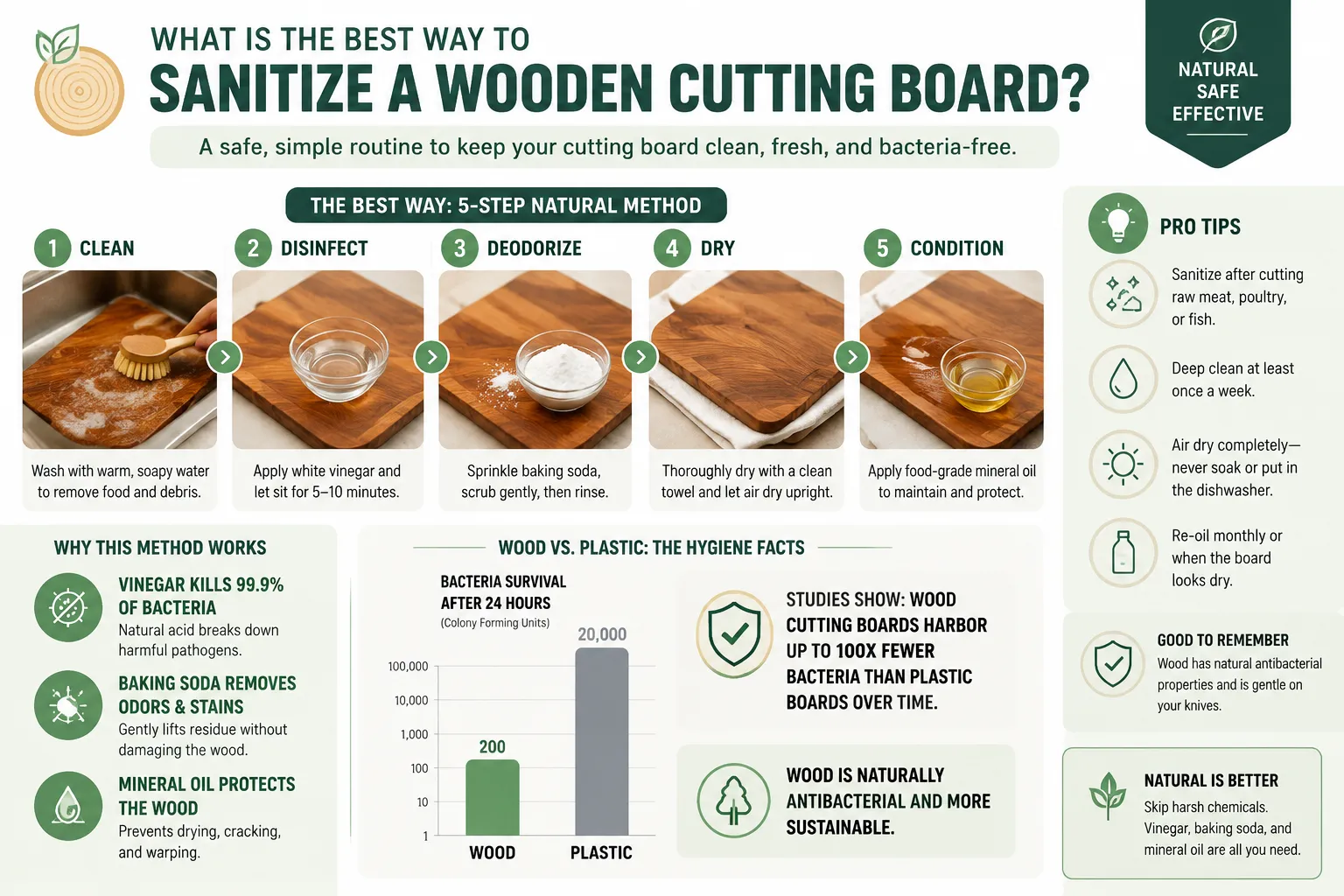
What Is the Best Way to Sanitize a Wooden Cutting Board
The best way to sanitize a wooden cutting board is to use a spray or wipe method with a diluted bleach solution or hydrogen peroxide, never soaking, never the dishwasher. Wood is porous, and prolonged water exposure causes warping, cracking, and splitting, which creates more grooves for bacteria to hide in.
Recommended method for wood boards:
- Wash with hot soapy water and a stiff brush.
- Rinse and shake off excess water.
- Spray or wipe with a solution of 1 tablespoon of unscented bleach per gallon of water, or with undiluted 3% hydrogen peroxide.
- Let it sit for 1 to 2 minutes.
- Rinse lightly with clean water.
- Dry immediately with a clean towel, then stand upright to air dry completely.
Optional natural deodorizing step: Sprinkle coarse salt over the surface, rub with half a lemon, let sit for 5 minutes, then rinse. This does not sanitize the board, but it removes odors and surface staining effectively.
Monthly maintenance: Apply food-grade mineral oil to condition the wood and seal the surface. A well-oiled board is less porous and easier to sanitize.
“A cracked or deeply grooved wooden board cannot be fully sanitized. If your board has deep knife cuts that catch debris, it is time to replace it.”
Can You Sanitize a Cutting Board in the Dishwasher
Plastic and titanium cutting boards can go in the dishwasher, but wooden boards should never be machine-washed. For plastic boards, the dishwasher’s hot water cycle (typically 140 to 160 degrees Fahrenheit) combined with detergent does sanitize the surface effectively, provided the board has no deep grooves.
Dishwasher rules by board type:
- Plastic boards: Dishwasher-safe. Use the hottest cycle available. However, if the board has deep knife grooves, bacteria can survive even in the dishwasher because water may not penetrate those crevices fully. Consider replacing heavily scored plastic boards.
- Wooden boards: Never put in the dishwasher. The heat and prolonged moisture exposure will warp and crack the wood, making it more unsanitary, not less.
- Titanium boards: Fully dishwasher-safe. The non-porous surface means bacteria have nowhere to hide, and the dishwasher cycle sanitizes it completely. This is one of the key advantages of a titanium cutting board over traditional materials.
- Bamboo boards: Not recommended for the dishwasher, treat like wood.
Edge case: Even a dishwasher-safe plastic board should be hand-sanitized with bleach solution if it was used for raw poultry and has visible knife grooves. Do not rely solely on the dishwasher in that scenario.
Does Bleach Sanitize Cutting Boards
Yes, a properly diluted bleach solution is one of the most reliable and widely recommended sanitizers for cutting boards. The FDA and USDA both endorse diluted bleach as an effective food-contact surface sanitizer when used correctly.
The correct bleach solution for cutting boards:
- Mix 1 tablespoon of unscented liquid chlorine bleach with 1 gallon of water.
- Apply to a pre-cleaned surface.
- Allow a contact time of at least 1 minute.
- Rinse thoroughly with clean water.
- Air dry.
Important caveats:
- Always use unscented bleach. Scented bleach contains additives that are not food-safe.
- Do not mix bleach with vinegar, hydrogen peroxide, or ammonia-based cleaners. The chemical reactions produce toxic gases.
- Bleach solutions degrade quickly. Mix a fresh batch each time rather than storing a pre-made solution for days.
- For wooden boards, use the minimum effective concentration and rinse promptly to avoid drying out the wood.
Bleach is not the only option, but it is the most cost-effective and widely available sanitizer for home kitchens. If you prefer a bleach-free approach, 3% hydrogen peroxide or a commercial NSF-certified food-safe sanitizer are solid alternatives.
Can You Use Vinegar to Sanitize a Cutting Board
Vinegar reduces bacteria on cutting board surfaces, but it does not meet the technical definition of a sanitizer for food-contact surfaces. White vinegar (5% acetic acid) has antimicrobial properties and is useful for deodorizing and reducing bacterial load, but it is not effective against all pathogens, particularly Salmonella and E. coli at the concentrations found in household vinegar.
What vinegar is good for:
- Removing odors from garlic, onion, and fish.
- Reducing surface bacteria as part of a multi-step cleaning routine.
- A light daily wipe-down on boards used only for produce.
What vinegar should not replace:
- Bleach solution or hydrogen peroxide after raw meat contact.
- Any NSF-certified sanitizer in a professional food prep setting.
If you want to use vinegar as part of your routine, spray it on after washing, let it sit for a few minutes, then follow up with a hydrogen peroxide spray for a more complete antimicrobial effect. Do not mix the two in the same bottle, apply them separately.
What Temperature Kills Bacteria on Cutting Boards
Most common foodborne pathogens, including Salmonella, E. coli O157:H7, and Listeria monocytogenes, are killed at temperatures of 160 degrees Fahrenheit (71 degrees Celsius) or higher on food-contact surfaces. This is the principle behind dishwasher sanitization and boiling water methods.
Practical temperature-based sanitizing options:
- Dishwasher hot cycle: Most home dishwashers reach 140 to 160 degrees Fahrenheit during the wash cycle, with some sanitize cycles reaching 170 degrees Fahrenheit. This is effective for plastic and titanium boards.
- Boiling water pour: Pouring boiling water (212 degrees Fahrenheit / 100 degrees Celsius) over a pre-cleaned board and letting it run off is an effective heat sanitizing method for boards that can tolerate it, titanium handles this easily; plastic may warp with repeated exposure; wood should not be soaked.
- Steam cleaning: A handheld steam cleaner reaches temperatures above 200 degrees Fahrenheit and can sanitize board surfaces effectively, including the grooves in plastic boards.
Note: Heat alone is not a substitute for washing first. Organic matter (food residue, fats) insulates bacteria from heat and reduces the effectiveness of any temperature-based sanitizing method.
How Often Should You Sanitize a Cutting Board
Sanitize your cutting board after every single use involving raw meat, poultry, seafood, or eggs. For boards used only with produce or cooked foods, a thorough wash after each use is sufficient, with a full sanitizing routine at least once a week.
Frequency guide by use type:
- After raw meat, poultry, or seafood: Sanitize every time, immediately after use.
- After cutting unwashed produce: Wash with soap and water after each use; sanitize weekly.
- After cutting cooked foods or bread: Wash with soap and water after each use; sanitize every few days.
- If the board has been sitting unused for several days: Sanitize before using it again, even if it looks clean.
A good habit I recommend is keeping two separate boards in your kitchen, one designated for raw proteins only, one for everything else. Color-coded boards (red for meat, green for produce) make this easy to maintain consistently.
Do I Need to Sanitize a Cutting Board Every Time I Use It
You do not need to sanitize after every single use, but you should sanitize after any use involving raw proteins or high-risk foods. For low-risk uses like cutting bread or slicing fruit, washing with hot soapy water is adequate for daily use.
The key question is: what was on the board, and what will be on it next?
Sanitize every time if:
- You cut raw chicken, beef, pork, lamb, or seafood.
- You handled unwashed root vegetables (which carry soil bacteria).
- The board was used by someone who was sick.
- The board sat out for more than two hours after use.
Washing alone is sufficient if:
- You sliced cooked foods, bread, cheese, or clean fruit.
- The board was used for dry foods only.
Decision rule: When in doubt, sanitize. The extra 60 seconds of contact time with a diluted bleach solution costs almost nothing and eliminates the guesswork.
What Happens If You Don’t Sanitize Your Cutting Board
Failing to sanitize a cutting board, especially after raw meat contact, creates a direct pathway for cross-contamination and foodborne illness. Bacteria like Salmonella, Campylobacter, and E. coli can survive on an unwashed or improperly cleaned board for hours, and in some cases, days.
Real consequences of skipping sanitization:
- Bacteria from raw chicken transferred to salad vegetables cut on the same board can cause Salmonella infection.
- Listeria monocytogenes, which can survive refrigerator temperatures, can persist in the grooves of a plastic board that has not been sanitized.
- Mold can grow in the cracks of wooden boards that are not dried and sanitized properly, contributing to off-flavors in food and potential health risks.
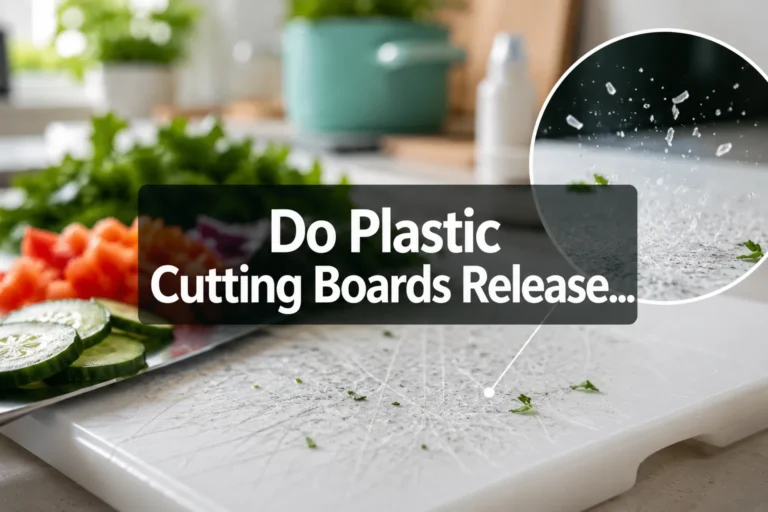
- Over time, unsanitized boards develop persistent odors from bacterial biofilms that simple washing cannot remove.
The CDC estimates that 48 million Americans experience foodborne illness each year (CDC, 2024), and cross-contamination from kitchen surfaces and utensils is a significant contributing factor. Proper sanitization is one of the simplest and most effective preventive measures available in any home kitchen.
Maintaining good overall health habits, including kitchen hygiene, connects to broader wellness. If you are also focused on gut health, understanding how gut bacteria interact with digestion can complement your food safety practices.
Sanitize Plastic vs Wooden Cutting Boards: Which Is Harder
Plastic boards are technically easier to sanitize than wooden boards because they are non-porous and dishwasher-safe. However, plastic boards develop deep knife grooves over time that harbor bacteria in ways that are difficult to address, even with chemical sanitizers. Wooden boards require more careful technique but, when well-maintained, can be equally hygienic.
Comparison by sanitizing method:
| Method | Plastic Board | Wooden Board |
|---|---|---|
| Dishwasher | Yes | No |
| Bleach solution | Yes | Yes (brief contact) |
| Hydrogen peroxide | Yes | Yes |
| Boiling water | Caution (may warp) | No (warps/cracks) |
| Vinegar wipe | Yes | Yes |
| Mineral oil conditioning | No | Yes (monthly) |
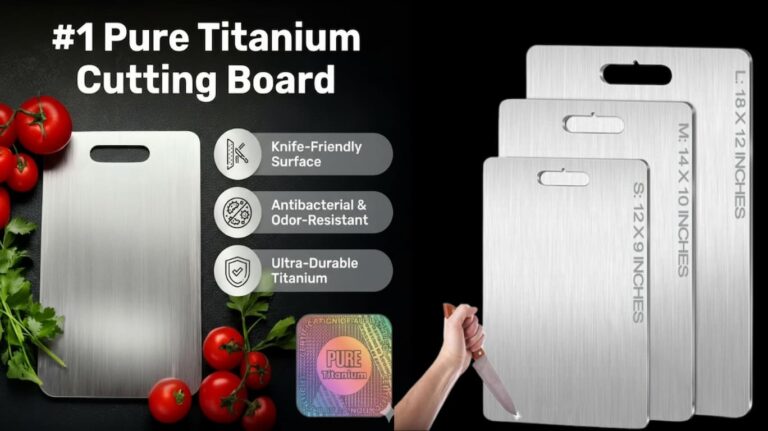
The case for titanium: Both plastic and wood have limitations. Titanium boards, such as the Katori Titanium Cutting Board, offer a non-porous surface with no grooves, no odor absorption, and full dishwasher compatibility. They are the easiest cutting board surface to sanitize because bacteria have no physical place to hide. The tradeoff is a higher upfront cost.
Choose plastic if: You want an affordable, lightweight option and commit to replacing it when grooves appear.
Choose wood if: You prefer the aesthetic and are willing to hand-sanitize and oil it regularly.
Choose titanium if: You cook frequently, prioritize hygiene, and want a surface that will last decades without degrading.
Best Sanitizer for Food Prep Cutting Boards
The best sanitizer for food prep cutting boards depends on your board material and how you prefer to work. For most home kitchens, a diluted bleach solution is the gold standard, it is inexpensive, widely available, and highly effective against the broadest range of pathogens.
Top options ranked by effectiveness for food prep:
Diluted bleach solution (1 tbsp unscented bleach per gallon of water): Most effective, lowest cost, works on all board types except prolonged wood exposure. Rinse thoroughly after use.
3% hydrogen peroxide spray: Food-safe, no harsh odor, effective against most pathogens. Good choice for wood boards or anyone who prefers bleach-free options.
NSF-certified commercial food-safe sanitizer: Products like Star San or similar no-rinse sanitizers used in food service settings. Follow label dilution and contact time instructions precisely.
Quaternary ammonium (quat) sanitizers: Common in commercial kitchens. Effective and low-odor, but must be used at correct concentrations to be food-safe.
Boiling water: Effective for titanium and heat-tolerant boards. Not practical for daily use on wood or thin plastic.
What to avoid:
- Rubbing alcohol (isopropyl alcohol) at standard concentrations is less effective on food surfaces than bleach or hydrogen peroxide, and it evaporates too quickly to achieve adequate contact time.
- Dish soap alone is not a sanitizer, it cleans but does not kill pathogens at the concentrations used in home kitchens.
For anyone focused on whole-body health, food safety in the kitchen is just one piece of the picture. Maintaining healthy gums and teeth and staying on top of natural ways to balance hormones are equally important aspects of a health-conscious lifestyle.
How Long Does It Take to Sanitize a Cutting Board
The active sanitizing step takes as little as 1 to 2 minutes of contact time, but the full process, including washing, sanitizing, rinsing, and drying, takes about 5 to 10 minutes for a thorough job.
Time breakdown:
- Scraping and rinsing: 30 seconds
- Scrubbing with soap: 1 to 2 minutes
- Rinsing off soap: 30 seconds
- Applying sanitizer and waiting: 1 to 2 minutes
- Final rinse: 30 seconds
- Drying (towel + air): 2 to 5 minutes
The contact time of the sanitizer is the most important variable. Applying bleach solution and immediately rinsing it off provides minimal benefit. The solution needs at least 60 seconds of direct surface contact to be effective.
If you are using a dishwasher, the full cycle takes 30 to 90 minutes, but your active effort is under a minute. The machine handles the rest.
Conclusion: Build a Sanitizing Routine That Actually Sticks
Knowing how to sanitize a cutting board is not complicated, but it does require consistency. The biggest gap in most home kitchens is not a lack of the right products, it is the habit of treating cleaning and sanitizing as two separate, non-negotiable steps.
Your actionable next steps starting today:
- Keep a spray bottle of diluted bleach solution (1 tablespoon per gallon of water) under your kitchen sink, mixed fresh weekly.
- Designate separate boards for raw proteins and produce. Color-code them if possible.
- Sanitize immediately after every raw meat use, do not let the board sit.
- Inspect your plastic boards for deep grooves. If you can see or feel significant knife cuts, replace the board.
- Oil your wooden boards monthly with food-grade mineral oil to reduce porosity.
- If you are in the market for a new board, consider a titanium option. The non-porous surface makes sanitizing faster and more reliable than wood or plastic.
Good kitchen hygiene is one of the most direct ways to protect your health and the health of everyone you cook for. A five-minute sanitizing routine, done consistently, eliminates one of the most common sources of preventable illness in the home.
Key Takeaways (Summary)
- Always clean before you sanitize, organic matter neutralizes sanitizing agents.
- Bleach solution (1 tbsp per gallon of water) is the most effective and affordable option for most kitchens.
- Sanitize after every raw meat use, and at minimum weekly for other uses.
- Wooden boards need hand-sanitizing only, no dishwasher, no soaking.
- Plastic boards are dishwasher-safe but must be replaced when deep grooves appear.
- Titanium boards are the easiest to sanitize due to their non-porous surface.
- Vinegar deodorizes but does not fully sanitize, do not rely on it after raw meat contact.
- Heat above 160 degrees Fahrenheit kills most foodborne pathogens on contact surfaces.
- Contact time matters: let your sanitizer sit for at least 60 seconds before rinsing.
- Two-board systems (one for meat, one for produce) dramatically reduce cross-contamination risk.
Frequently Asked Questions
Q: Can I use the same cutting board for meat and vegetables if I sanitize between uses?
A: You can, but it is not recommended as best practice. Even with proper sanitizing, the risk of cross-contamination is higher with a single board. Using separate boards, one for raw proteins, one for produce, is the safer and more practical approach.
Q: Is hydrogen peroxide or bleach better for sanitizing a cutting board?
A: Both are effective. Bleach solution kills a broader range of pathogens at lower cost. Hydrogen peroxide (3%) is a good bleach-free alternative with less odor and no risk of discoloration. For wooden boards, hydrogen peroxide is gentler on the wood fibers.
Q: How do I sanitize a cutting board without bleach?
A: Use undiluted 3% hydrogen peroxide as a spray, let it sit for 1 to 2 minutes, then rinse. Alternatively, a commercial NSF-certified food-safe no-rinse sanitizer works well. Boiling water is also effective for titanium and heat-tolerant boards.
Q: Can I sanitize a bamboo cutting board the same way as wood?
A: Yes. Treat bamboo like wood, hand-wash, apply hydrogen peroxide or diluted bleach briefly, rinse, and dry immediately. Never soak or put bamboo in the dishwasher.
Q: Does salt and lemon sanitize a cutting board?
A: No. Salt and lemon is an effective deodorizer and surface scrub, but it does not kill pathogens at the concentrations used in this method. Use it for odor removal, then follow with a proper sanitizing solution.
Q: How do I know when it is time to replace a cutting board?
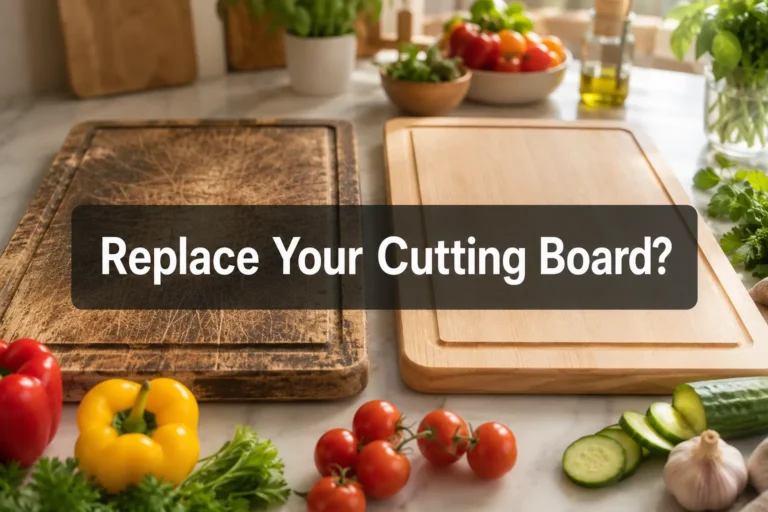
A: Replace a plastic board when it has deep knife grooves that you cannot scrub clean, or when it has persistent staining and odor despite sanitizing. Replace a wooden board when it has cracks, deep fissures, or mold that does not respond to cleaning and oiling. Titanium boards generally do not need replacement.
Q: Is it safe to sanitize a cutting board with rubbing alcohol?
A: Rubbing alcohol (isopropyl alcohol at 70%) has some antimicrobial properties but is not recommended as a primary food-contact surface sanitizer. It evaporates too quickly for adequate contact time and is less effective against certain pathogens than bleach or hydrogen peroxide.
Q: Can bacteria survive on a dry cutting board?
A: Some bacteria, including Salmonella, can survive on dry surfaces for several hours. Listeria monocytogenes can survive for much longer, even in cool, dry conditions. This is why sanitizing, not just drying, is essential after raw meat contact.
Q: What is the safest cutting board material for someone with a compromised immune system?
A: Titanium is the safest choice for immunocompromised individuals because its non-porous surface prevents bacterial colonization entirely. If titanium is not accessible, a new plastic board (with no grooves) sanitized with bleach solution after every use is a reasonable alternative.
Q: Do I need to sanitize a brand-new cutting board before using it?
A: Yes. New boards can carry dust, packaging residue, and handling contamination from manufacturing and shipping. Wash and sanitize any new cutting board before its first use.
Tags: cutting board sanitization, how to sanitize a cutting board, food safety kitchen, wooden cutting board care, plastic cutting board hygiene, bleach sanitizer kitchen, cross-contamination prevention, kitchen cleaning tips, titanium cutting board, foodborne illness prevention, raw meat food safety, cutting board maintenance

With over 13 years of experience in holistic health blogging, I aim to help you navigate your wellness journey with honest insights, expert-backed advice, and a sprinkle of real-world practicality.
Certified Wellness Writer | Herbal Nutrition Advocate | Wellness Research Enthusiast