How Often Should You Replace a Cutting Board?
Last updated: July 29, 2026
Quick Answer: Most plastic cutting boards should be replaced every 1 to 2 years with regular use, while wooden boards can last 5 to 10 years or longer if properly maintained. The real trigger for replacement is not time alone but visible damage: deep grooves, warping, persistent stains, or odors that won’t wash out. A damaged cutting board is a genuine food safety risk, not just an aesthetic problem.
Key Takeaways
- Replace plastic cutting boards every 1 to 2 years under regular use; wooden boards can last 5 to 10 years with proper care.
- Deep knife grooves are the single biggest red flag because bacteria can survive inside them even after washing.
- Warped, cracked, or heavily stained boards should be discarded immediately, regardless of age.
- Wooden boards last longer than plastic when oiled regularly and kept away from the dishwasher.
- Bamboo is harder than most wood but can crack faster if not conditioned, making it a middle-ground option for longevity.
- Titanium cutting boards last the longest of any material, potentially decades, but come at a premium price.
- Using separate boards for raw meat and vegetables significantly reduces cross-contamination risk.
- You can restore a lightly worn wooden board by sanding and re-oiling, but deeply grooved boards should still be replaced.
- A quality replacement cutting board costs between $20 and $200 depending on material and size.
- Good maintenance, including regular oiling and hand-washing, is the single most effective way to extend a board’s life.
How Long Does a Cutting Board Last Before You Need to Replace It
The lifespan of a cutting board depends heavily on the material and how often it is used. Plastic boards typically last 1 to 2 years with daily cooking, while well-maintained wooden boards can serve you for 5 to 10 years or more.
These are general estimates based on average home cooking frequency (roughly one to two meals per day). Heavy daily use in a busy household shortens these timelines. Light use in a single-person home extends them.
Here is a quick reference by material:
| Material | Average Lifespan | Key Factor |
|---|---|---|
| Plastic | 1 to 2 years | Grooves accumulate fast |
| Wood (hardwood) | 5 to 10+ years | Requires regular oiling |
| Bamboo | 3 to 5 years | Prone to cracking if dry |
| Rubber/composite | 5 to 7 years | Durable but heavy |
| Titanium | 20+ years | High upfront cost |
The honest answer is that age matters less than condition. A two-year-old plastic board used gently may be fine. A six-month-old board that has been through a dishwasher daily and used for heavy chopping may already be past its prime.
What Are the Signs Your Cutting Board Needs to Be Replaced
A cutting board needs replacing when it shows visible damage that cannot be reversed, or when it retains odors and stains after thorough cleaning. These are not cosmetic issues. They are food safety concerns.
Watch for these warning signs:
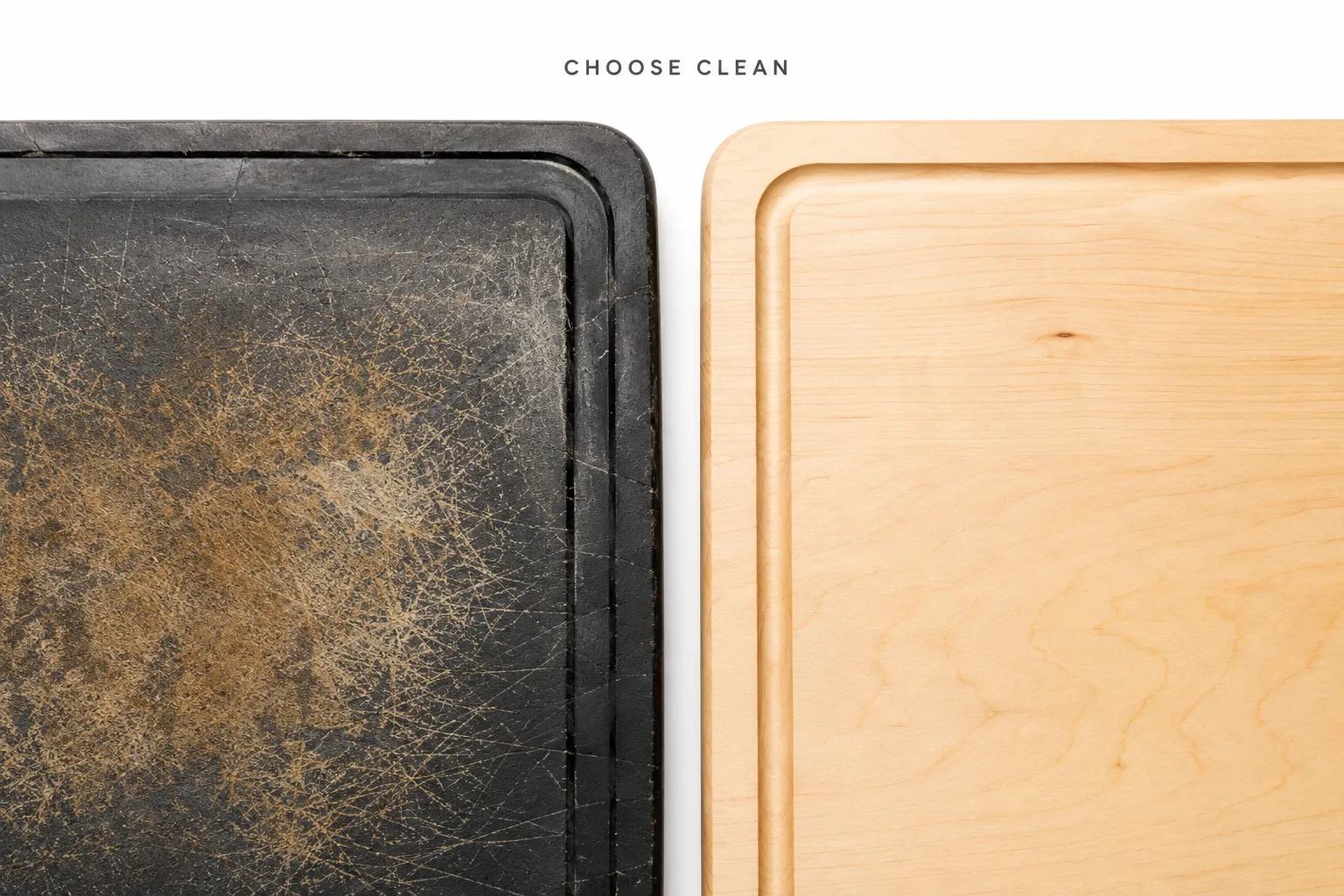
- Deep knife grooves that you can feel with your fingernail and that do not rinse clean
- Persistent odors from garlic, fish, or onion that survive soap and hot water
- Dark stains that have penetrated the surface, especially after cutting raw meat
- Warping or bowing that causes the board to rock on the counter
- Cracks or splits in wooden boards, especially along the grain
- Soft or spongy spots on plastic boards, which indicate material breakdown
- Discoloration that spreads despite regular cleaning
A useful rule of thumb: run your finger across the surface after washing. If you can feel grooves deep enough to trap food, the board is past the point of safe use.
Can Bacteria Grow in Old Cutting Board Cracks
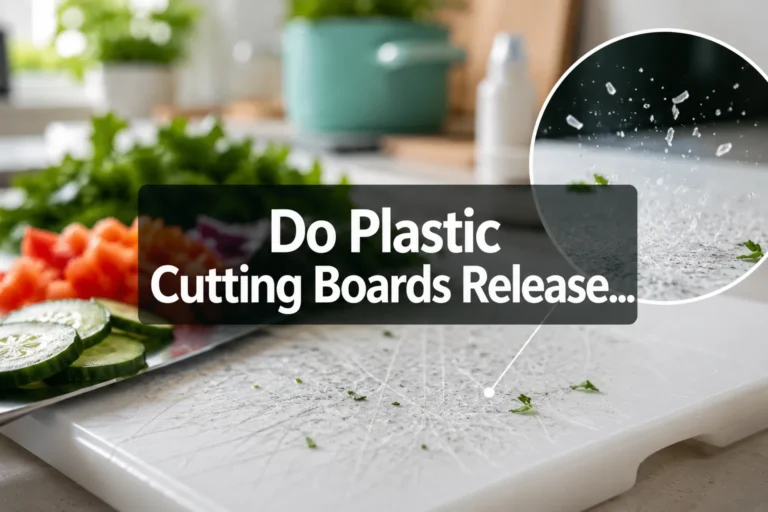
Yes, and this is one of the most important food safety facts about cutting boards. Bacteria including Salmonella, E. coli, and Listeria can survive inside the grooves and cracks of a cutting board even after washing with soap and water.
Research from food safety institutions has consistently shown that knife grooves in plastic boards are particularly difficult to sanitize. The grooves trap food particles and moisture, creating a protected environment where bacteria can multiply. Wooden boards have some natural antibacterial properties due to compounds in the wood itself, but deep cracks compromise this advantage entirely.
The key distinction:
- Shallow surface scratches on a hardwood board can often be sanded away and re-oiled safely.
- Deep grooves on any board, especially plastic, cannot be reliably cleaned and represent a real contamination risk.
If you are cutting raw chicken on a board with deep grooves and then cutting salad vegetables on the same surface, you are creating a direct path for cross-contamination. This is not a hypothetical risk.
Is It Safe to Use a Damaged Cutting Board
No. A visibly damaged cutting board is not safe for food preparation, particularly for raw meat, poultry, or fish. The surface damage creates hiding spots for pathogens that standard washing cannot reach.
When to stop using a board immediately:
- Any crack deep enough to hold water
- Warping that prevents the board from lying flat (a rocking board is a knife safety hazard as well)
- Soft or pitted areas on plastic boards
- Mold growth, which appears as black or green spots and cannot be fully removed from porous surfaces
Some home cooks repurpose damaged boards for non-food tasks like craft projects or as trivets. That is a reasonable way to avoid waste. But a board that has been used for raw meat and is now cracked should not continue in any kitchen role where it contacts food.
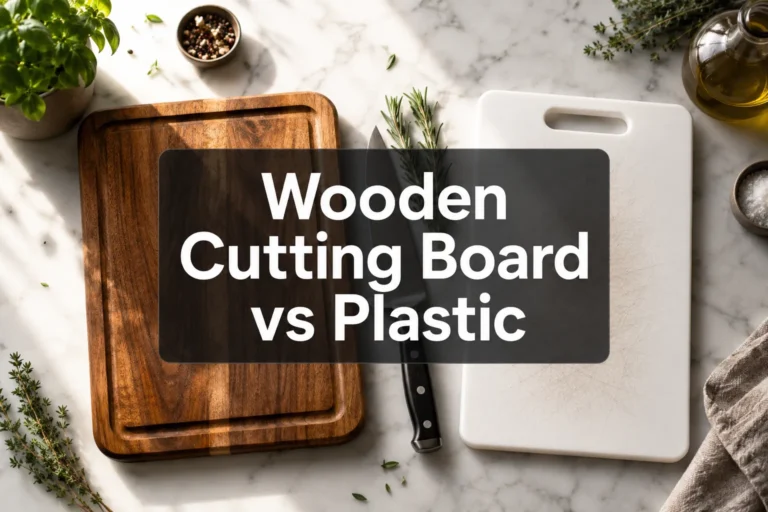
How Often Should You Replace a Plastic Cutting Board vs. Wood
Plastic boards need replacing more often than wooden boards in most real-world kitchens. This surprises many people, since plastic seems more hygienic at first glance.
Plastic cutting boards:
- Develop knife grooves faster than hardwood
- Cannot be sanded and restored like wood
- Become harder to sanitize as grooves deepen
- Should be replaced every 1 to 2 years with regular use, or sooner if heavily grooved
Wooden cutting boards:
- Develop grooves more slowly when made from dense hardwoods like maple or walnut
- Can be lightly sanded and re-oiled to restore the surface
- Last 5 to 10 years or more with proper care
- Require hand-washing and regular oiling to prevent cracking
The practical takeaway: if you cook daily and use a plastic board, plan to replace it roughly once a year. If you invest in a quality hardwood board and maintain it properly, you may not need to replace it for a decade.
Does a Wooden Cutting Board Last Longer Than Plastic
Yes, in most cases a well-maintained wooden cutting board outlasts plastic by several years. Dense hardwoods like end-grain maple and walnut are especially durable.
The reason comes down to how each material responds to knife cuts. Wood fibers have some flexibility, so a knife blade tends to push them aside rather than carve out a permanent groove. Plastic is rigid, so each cut creates a defined groove that stays. Over time, a plastic board accumulates far more surface damage than a comparable wooden one.
Choose wood if:
- You cook frequently and want a long-term investment
- You are willing to hand-wash and oil the board every few months
- You prefer a surface that can be restored rather than discarded
Choose plastic if:
- You need a dishwasher-safe option
- You want a lower upfront cost and are comfortable replacing it regularly
- You need color-coded boards for a food-safe kitchen system
Is Bamboo or Wood Cutting Board Better for Longevity
Hardwood boards generally outlast bamboo over the long term, even though bamboo is harder by surface hardness measurements. This is a common point of confusion.
Bamboo is technically a grass, not a wood, and its hardness can actually dull knives faster than softer hardwoods like maple. More importantly, bamboo boards are made from strips of bamboo glued together, and the glue seams are vulnerable to moisture. Without regular conditioning, bamboo boards crack and split within a few years.
Bamboo pros:
- Eco-friendly and fast-growing
- Resistant to surface staining
- Affordable
Bamboo cons:
- Harder surface can dull knife edges faster
- Prone to cracking without regular oiling
- Glue seams can separate with heavy moisture exposure
- Shorter practical lifespan than quality hardwood
For longevity, a solid end-grain maple or walnut board beats bamboo. For budget-conscious buyers who want something more sustainable than plastic, bamboo is a reasonable middle option, provided it is conditioned regularly.
What Is the Best Cutting Board Material That Lasts Longest
Titanium lasts the longest of any cutting board material currently available, with a potential lifespan measured in decades rather than years. Among traditional materials, end-grain hardwood (especially maple or walnut) offers the best combination of longevity, knife safety, and restorability.
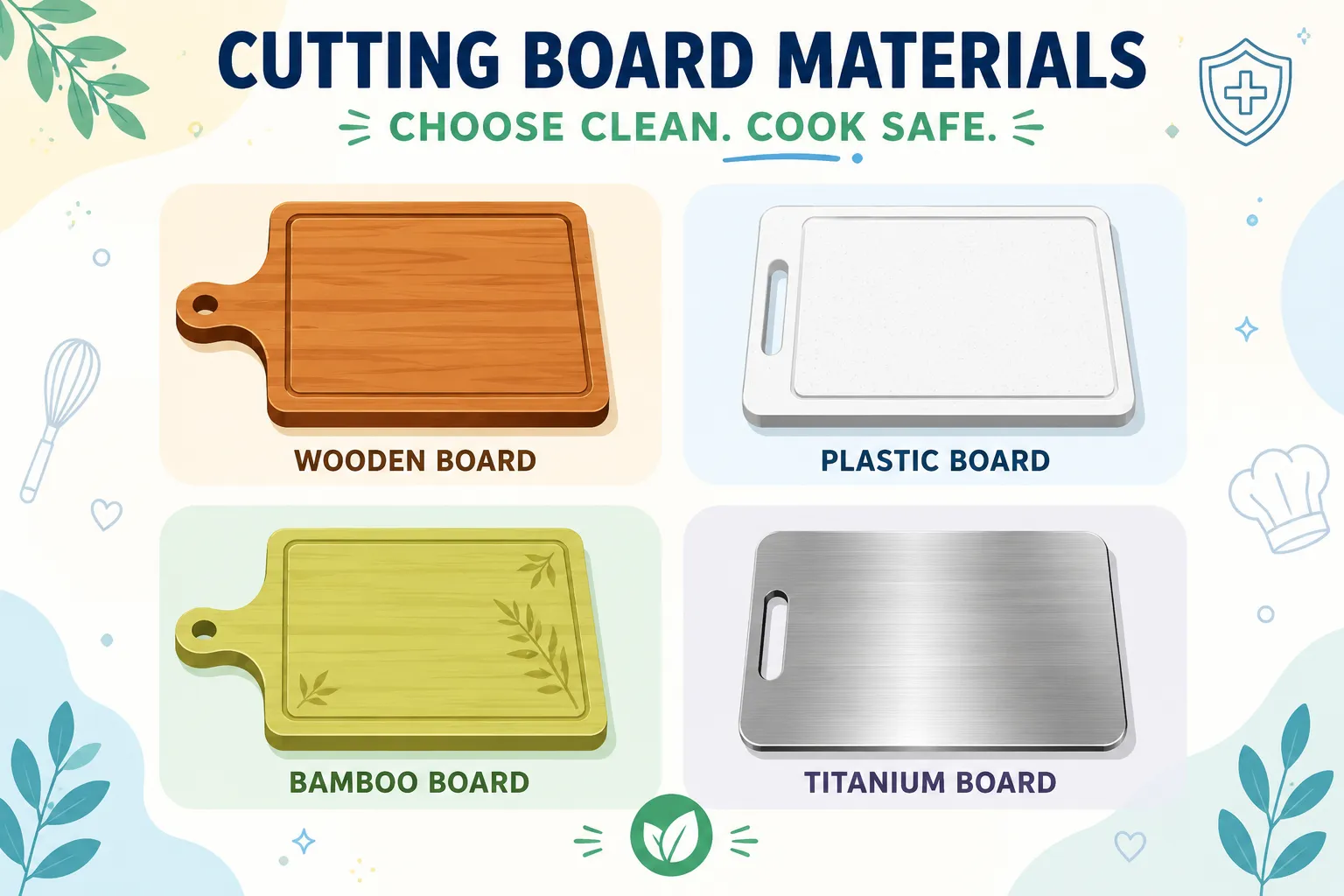
Material longevity ranking:
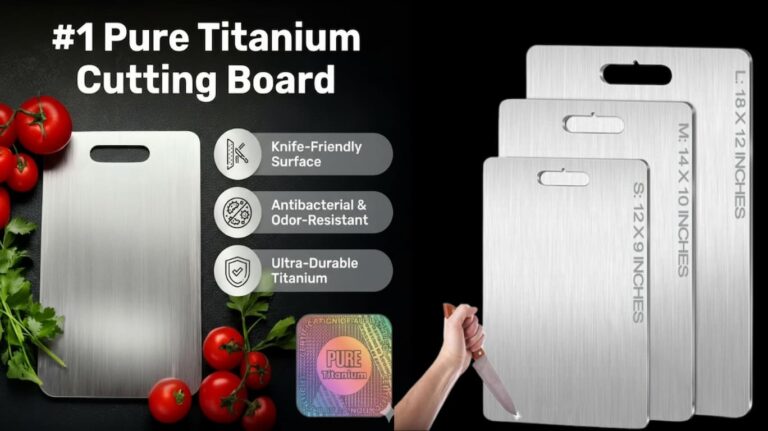
- Titanium (20+ years) – Non-porous, rustproof, antibacterial, and virtually indestructible under normal kitchen use. Products like the Katori Titanium Cutting Board are designed as a “buy once, use forever” investment.
- End-grain hardwood (10+ years with care) – Dense, self-healing surface, restorable by sanding
- Rubber/composite (5 to 7 years) – Durable and knife-friendly but heavy and expensive
- Bamboo (3 to 5 years) – Eco-friendly but moisture-sensitive
- Plastic (1 to 2 years) – Cheap and dishwasher-safe but grooves fast
For home cooks who want to stop replacing boards every year or two, a quality hardwood or titanium board is the smarter long-term choice despite the higher upfront cost.
Can You Restore an Old Cutting Board Instead of Replacing It
Yes, you can restore a wooden cutting board if the damage is limited to surface scratches and light staining. Restoration is not possible for deeply grooved, cracked, or warped boards, or for any plastic board.
How to restore a wooden cutting board:
- Sand the surface starting with 80-grit sandpaper, then progress to 120-grit and 220-grit for a smooth finish.
- Wipe away all dust with a damp cloth and allow the board to dry completely.
- Apply a generous coat of food-grade mineral oil or a beeswax-based board conditioner.
- Let the oil soak in for several hours or overnight.
- Wipe off excess oil and allow to cure before use.
This process can add years to a wooden board’s life and is worth doing every three to six months as preventive maintenance, not just when the board looks worn.
When restoration is not enough:
- Grooves deeper than roughly 2 to 3 millimeters that you can feel clearly with a fingernail
- Cracks that run through the board’s thickness
- Mold that has penetrated below the surface
- Persistent odors after sanding and oiling
How to Extend the Life of Your Cutting Board
The single most effective habit for extending a cutting board’s life is keeping it dry between uses. Moisture is the primary enemy of both wood and bamboo boards, and it accelerates groove buildup in plastic.

Practical maintenance habits:
- Hand-wash wooden and bamboo boards rather than using the dishwasher. Dishwasher heat and prolonged moisture exposure cause warping and cracking.
- Dry immediately after washing. Stand the board upright or prop it at an angle to allow airflow on both sides.
- Oil wooden boards every one to three months with food-grade mineral oil. This prevents drying and cracking.
- Use a non-slip mat underneath any board to prevent sliding and reduce stress on the surface.
- Avoid soaking boards in water, even briefly.
- Rotate between two boards if you cook daily. Giving each board time to dry fully between uses significantly reduces wear.
- Use the right board for the task. Reserve your best board for vegetables and bread. Use a dedicated board for raw meat.
For titanium boards, maintenance is minimal. Rinse, dry, and store. No oiling required.
Do You Need Separate Cutting Boards for Meat and Vegetables
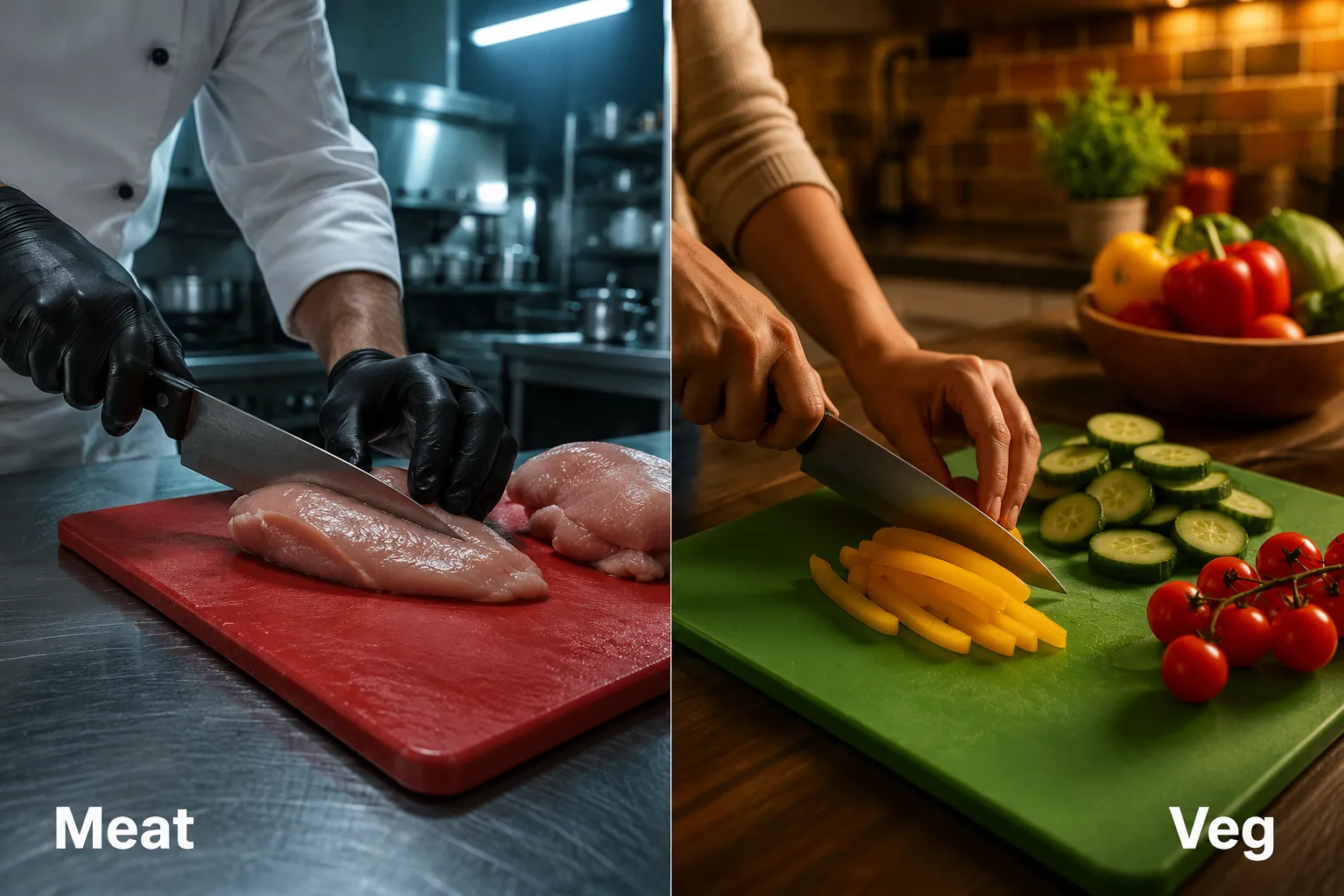
Yes. Using separate cutting boards for raw meat and produce is one of the most important steps in preventing foodborne illness in a home kitchen. This practice is recommended by food safety authorities including the USDA and FDA.
Raw poultry, beef, and seafood carry pathogens that can transfer to ready-to-eat foods like salad greens or fruit if they share a surface. Even a freshly washed board can retain bacteria in its grooves after cutting raw meat.
A practical color-coding system:
- Red board: Raw meat and poultry
- Yellow board: Raw seafood
- Green board: Fruits and vegetables
- White board: Bread, cheese, and cooked foods
This system is standard in professional kitchens and works just as well at home. You do not need to spend a lot on each board. A set of color-coded plastic boards costs around $20 to $30 and is a worthwhile investment in kitchen safety.
Just remember: separate boards only help if you replace or restore them on the same schedule. A dedicated meat board with deep grooves is still a contamination risk.
When Should You Throw Away a Cutting Board with Deep Grooves
Throw away a cutting board with deep grooves when the grooves are visible to the naked eye, feel rough under your fingernail, and cannot be removed by sanding (for wood) or cleaning. For plastic boards, deep grooves are almost always a sign that replacement is overdue.
A practical test: after washing your board, run your fingernail firmly across the surface in the direction of the grooves. If your nail catches and drags, the grooves are deep enough to harbor bacteria. If the surface feels smooth despite visible marks, the board may still be serviceable.
For wooden boards, a single round of sanding can often remove moderate grooves. If the grooves return quickly after sanding, or if the board is already thin from previous sandings, it is time to replace it.
How Much Does a Good Replacement Cutting Board Cost
A quality replacement cutting board costs between $20 and $200 depending on material, size, and brand. You do not need to spend at the top of that range to get a safe, durable board, but the cheapest options often need replacing sooner.
Price ranges by material:
- Plastic (basic): $10 to $30. Fine for everyday use, but plan to replace annually.
- Bamboo: $20 to $50. Mid-range durability, eco-friendly option.
- Hardwood (maple/walnut): $40 to $120. Best long-term value for traditional materials.
- Rubber/composite: $60 to $150. Professional-grade durability.
- Titanium: $89 to $200+. Highest upfront cost, lowest lifetime cost.
The cost-per-use math often favors a higher-quality board. A $100 hardwood board that lasts 10 years costs about $10 per year. A $20 plastic board replaced annually costs the same, but requires more frequent purchasing and creates more waste.
For those interested in titanium options, the Katori Titanium Cutting Board sits in the mid-premium range and is marketed as a lifetime purchase. Whether that investment makes sense depends on how often you cook and how much you value a low-maintenance, hygienic surface.
How Often Should You Replace a Cutting Board: A Practical Decision Guide
To summarize the replacement question with clear decision rules:
Replace your cutting board if any of these are true:
- It is a plastic board and more than 2 years old with daily use
- It has deep grooves you can feel clearly with your fingernail
- It retains odors after thorough washing
- It is warped, cracked, or has visible mold
- It has been used heavily for raw meat and shows significant surface damage
You may not need to replace it yet if:
- It is a wooden board with only light surface scratches that can be sanded
- It passes the fingernail test (smooth surface after washing)
- Odors and stains wash out completely
- There is no warping or cracking
Consider upgrading your material if:
- You are replacing plastic boards more than once a year
- You cook daily and want a lower-maintenance option
- Food safety is a priority and you want a non-porous surface
Good kitchen hygiene extends beyond just the cutting board. Just as you maintain your food prep surfaces, it is worth paying attention to overall health habits. For example, if you are interested in how gut health connects to your immune response, our overview of how the immune system is linked to gut health offers useful context on why food safety matters beyond just avoiding immediate illness.
Frequently Asked Questions
How often should you replace a cutting board if you cook every day?
For daily cooks using plastic boards, plan to replace every 12 to 18 months. Wooden boards used daily can last 5 years or more with regular oiling and hand-washing. The condition of the surface matters more than a fixed schedule.
Can a cutting board make you sick?
Yes. Deeply grooved or cracked cutting boards can harbor bacteria including Salmonella and E. coli, particularly after contact with raw meat or poultry. These pathogens can survive washing and transfer to other foods cut on the same surface.
Is it okay to use both sides of a cutting board?
Yes, using both sides can extend the board’s life by distributing wear. However, do not use one side for raw meat and the other for vegetables without thoroughly sanitizing between uses.
How do you sanitize a cutting board properly?
After washing with hot soapy water, you can sanitize a plastic or wooden board by applying a solution of one tablespoon of unscented liquid bleach per gallon of water. Let it sit for a few minutes, then rinse and dry. For wooden boards, avoid soaking in the solution.
Does putting a cutting board in the dishwasher damage it?
Yes, for wooden and bamboo boards. The heat and prolonged moisture cause warping, cracking, and splitting. Plastic boards are generally dishwasher-safe, though repeated dishwasher cycles can accelerate groove formation.
What is the most hygienic cutting board material?
Non-porous materials like titanium and high-density polyethylene (HDPE) plastic are the most hygienic because they do not absorb liquids or bacteria. Titanium has the added advantage of being naturally antibacterial and rustproof.
Can you use a cutting board with mold on it?
No. Mold on a cutting board, especially a wooden one, penetrates below the surface and cannot be fully removed by cleaning alone. Discard any board with visible mold growth.
How do you know if a wooden cutting board needs oiling?
Sprinkle a few drops of water on the surface. If the water beads up, the board is well-oiled. If the water soaks in immediately, the board needs conditioning. Oil it with food-grade mineral oil and allow it to absorb overnight.
Are expensive cutting boards worth it?
For frequent cooks, yes. A quality hardwood or titanium board costs more upfront but lasts significantly longer than cheap plastic boards, reducing the total cost over time and providing a safer, more consistent cutting surface.
What size cutting board should I buy?
For most home cooks, a board at least 12 by 18 inches gives enough room to work comfortably. Larger boards (15 by 20 inches) are better for breaking down whole chickens or large vegetables. Smaller boards work well as secondary prep surfaces.
Can I use olive oil to condition a wooden cutting board?
No. Olive oil and other culinary oils can go rancid inside the wood, creating off-odors and potentially promoting bacterial growth. Use food-grade mineral oil or a dedicated board conditioner made with beeswax and mineral oil.
How often should you replace a cutting board used only for bread and cheese?
Boards used exclusively for dry, low-risk foods like bread and hard cheese develop far less bacterial risk than meat boards. These can last considerably longer, often 5 to 7 years even for plastic, as long as the surface remains smooth and odor-free.
Key Takeaways
- Most plastic cutting boards need replacing every 1 to 2 years; wooden boards can last a decade with care.
- Deep grooves, persistent odors, warping, and mold are the clearest signs it is time to replace your board.
- Bacteria can survive in grooves and cracks even after washing, making damaged boards a genuine food safety risk.
- Wooden hardwood boards outlast plastic in real-world use when maintained properly.
- Bamboo is eco-friendly but shorter-lived than quality hardwood; titanium lasts the longest of all.
- Restoration (sanding and re-oiling) can extend a wooden board’s life but does not work for plastic or deeply damaged boards.
- Separate boards for raw meat and produce are a simple, effective way to prevent cross-contamination.
- A good replacement board costs $20 to $200; higher-quality materials offer better long-term value.
- Regular oiling, hand-washing, and thorough drying are the most effective maintenance habits.
Conclusion
The question of how often should you replace a cutting board does not have a single universal answer, but the guiding principle is straightforward: replace it when the surface can no longer be safely cleaned, not on a rigid annual schedule.
For most home cooks, that means replacing plastic boards every one to two years and investing in a quality hardwood board that can serve you for a decade with proper care. If you want to step off the replacement treadmill entirely, a titanium board is worth considering as a long-term investment.
Your action steps for 2026:
- Inspect your current boards today. Run your fingernail across the surface. If it catches in grooves, it is time to replace.
- Smell the board after washing. Persistent odors mean bacteria are embedded in the surface.
- If you only have one board, add a second dedicated to raw meat. Color-coded sets are inexpensive and make the habit easy.
- If you have a wooden board, check when you last oiled it. If you cannot remember, do it this week.
- When you replace a board, consider stepping up one material level. The cost difference between a cheap plastic board and a quality hardwood board is often less than $50, but the lifespan difference can be measured in years.
A cutting board is one of the most-used surfaces in your kitchen. Treating it as a long-term tool rather than a disposable item is one of the simplest upgrades you can make for both food safety and cooking enjoyment.
Tags: cutting board replacement, food safety, wooden cutting board, plastic cutting board, kitchen hygiene, cutting board maintenance, bamboo vs wood cutting board, titanium cutting board, how long does a cutting board last, cross-contamination prevention, kitchen tools, cutting board care

With over 13 years of experience in holistic health blogging, I aim to help you navigate your wellness journey with honest insights, expert-backed advice, and a sprinkle of real-world practicality.
Certified Wellness Writer | Herbal Nutrition Advocate | Wellness Research Enthusiast