Best Titanium Cutting Boards of 2026 (Tested & Reviewed)

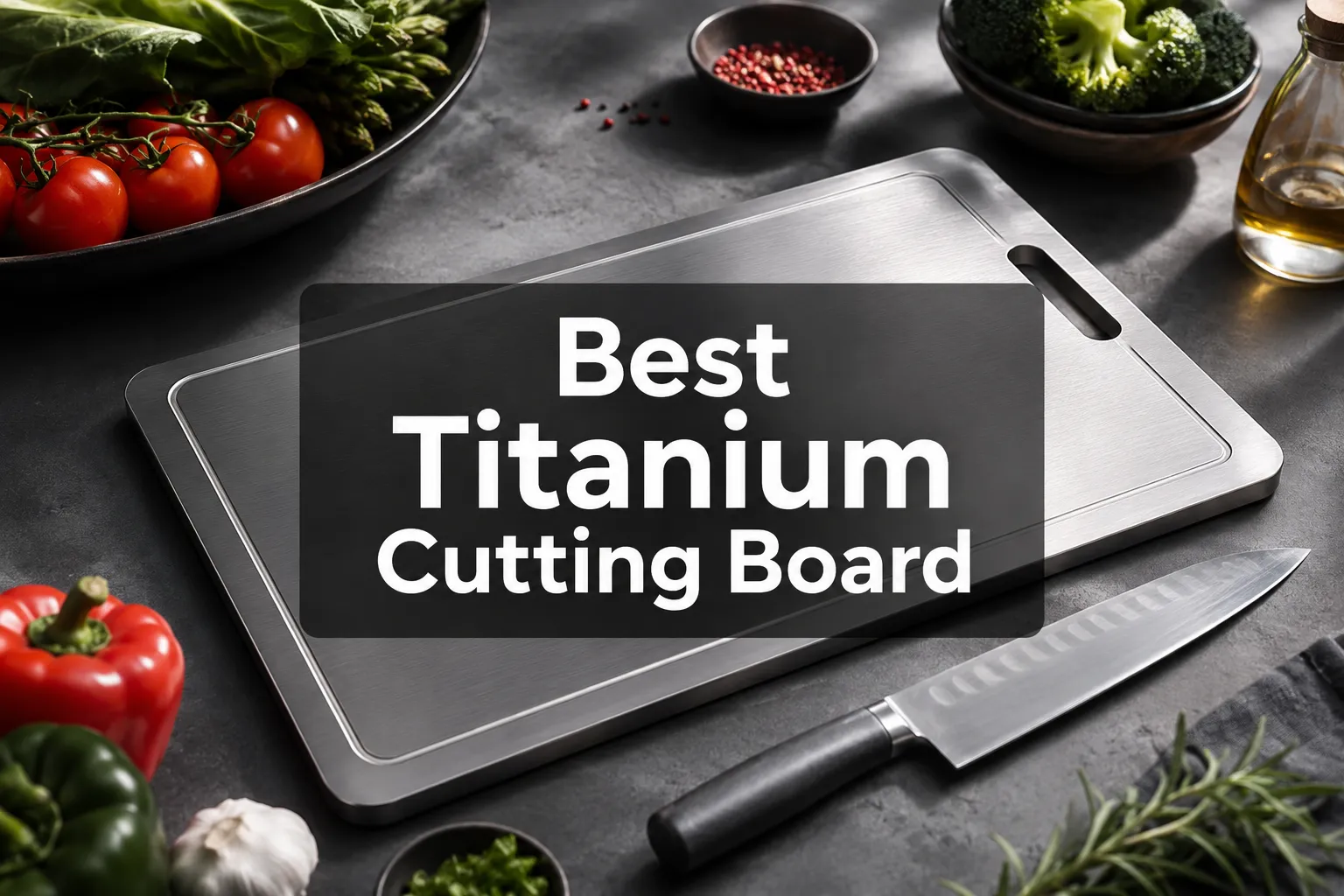
Quick Answer: The best titanium cutting board for most home cooks in 2026 is a pure-grade titanium board from a certified brand such as Taima or Katori, both of which offer non-porous, dishwasher-safe surfaces that resist bacteria, odors, and corrosion.
These boards cost between $89 and $179, last decades with minimal maintenance, and are genuinely safer than plastic for food preparation. The main trade-off is that titanium is harder on knife edges than wood, despite some brand marketing claims to the contrary.
Key Takeaways
- Titanium cutting boards are made from food-grade or medical-grade titanium, making them non-porous, non-reactive, and resistant to bacteria, mold, and odors.
- The best titanium cutting board brands in 2026 include Katori, Taima, Apex, and Plateful, each with distinct certifications and price points.
- Titanium is harder than wood and plastic, which means it can dull knife edges faster than a quality end-grain wood board, despite “knife-friendly” marketing claims.
- Prices range from $89 to $179 for reputable boards; budget options under $50 on Amazon may use titanium-coated steel rather than pure titanium.
- These boards are dishwasher-safe, rust-proof, and do not absorb food smells, making them ideal for raw meat preparation and allergy-sensitive households.
- Titanium is biocompatible (used in surgical implants) and does not leach chemicals or metals into food, even with acidic ingredients.
- The biggest real-world complaints are the metallic chopping sound, potential slippage on smooth counters without a non-slip mat, and the premium upfront cost.
- Titanium boards are best suited for health-conscious cooks, professional kitchens, and anyone replacing worn plastic boards that harbor bacteria in deep grooves.
What Is a Titanium Cutting Board and How Is It Different from Regular Cutting Boards
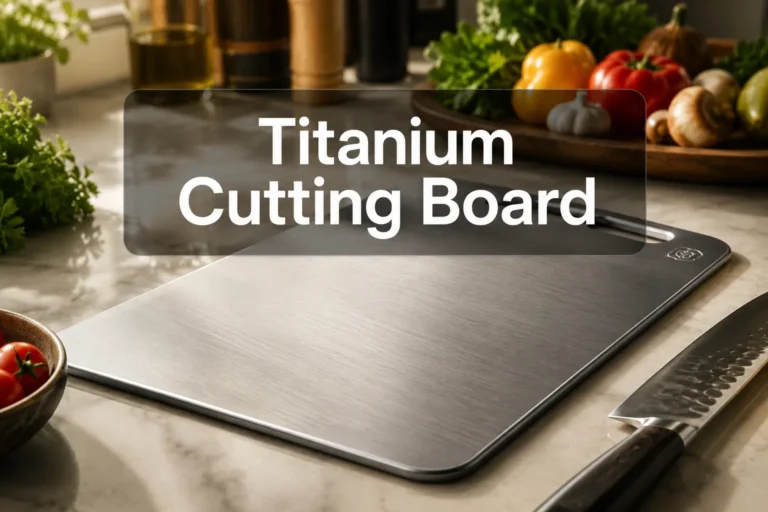
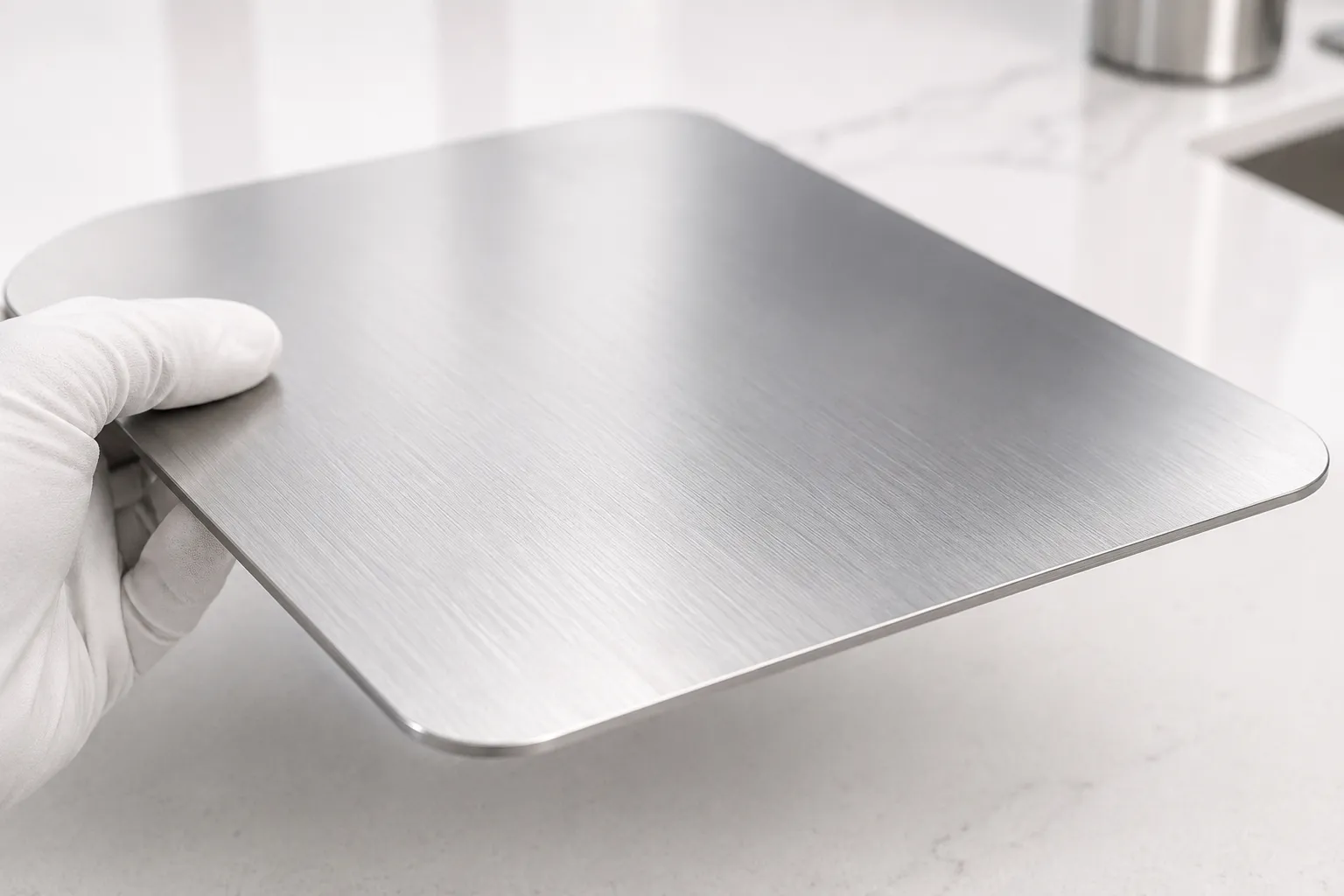
A titanium cutting board is a kitchen prep surface made from food-grade or medical-grade titanium metal, rather than wood, bamboo, or plastic. Unlike traditional boards, titanium is completely non-porous, meaning it has no microscopic grooves or channels where bacteria, mold, or food odors can accumulate.
Regular plastic boards develop knife grooves over time that trap bacteria even after washing. Wooden boards absorb moisture and can harbor pathogens in their grain. Titanium boards have neither problem. The surface stays smooth and sealed regardless of how long you use it.
Key structural differences at a glance:
- Material density: Pure titanium (Grade 1 or Grade 2) has a strength-to-weight ratio roughly twice that of steel at approximately half the weight, making boards feel surprisingly light for their durability.
- Thickness: Most titanium boards are approximately 2 mm thick, which is thinner than a typical wood board but rigid enough for daily chopping.
- Surface finish: Most boards use a brushed matte finish, which reduces glare and provides slight grip for food items.
- Edges: Quality boards have rounded, deburred edges to prevent cuts during handling.
- Non-reactivity: Titanium does not react with acidic foods like tomatoes, citrus, or vinegar, unlike some metal surfaces that can affect food taste.
For a detailed look at one of the leading models, the Katori Titanium Cutting Board reviews and complaints page covers real user feedback in depth.
Are Titanium Cutting Boards Safe for Food Preparation
Yes, titanium cutting boards are among the safest food prep surfaces available. Titanium is biocompatible, meaning it is used in surgical implants and medical devices precisely because the human body does not react to it. It does not leach metals, chemicals, or coatings into food under any normal cooking conditions.
Why titanium is considered food-safe:
- It is non-reactive with acidic, salty, or alkaline foods.
- It contains no BPA, phthalates, or other plasticizers found in some plastic boards.
- It does not absorb food juices, so cross-contamination between raw meat and vegetables is far easier to prevent.
- The non-porous surface means bacteria cannot survive in grooves or cracks after washing.
Many premium brands, including Taima [3] and the Apex board [5], market their products as FDA-compliant or “medical-grade,” which refers to the titanium alloy grade rather than a specific FDA food-contact certification. Buyers should note that “medical-grade” is a material descriptor, not a regulatory approval for kitchen use, but the underlying safety profile of the material is well established.
One important caveat: Titanium boards with non-stick coatings or composite backing materials should be evaluated separately. The titanium surface itself is safe, but any added coating or adhesive layer deserves scrutiny. Pure titanium boards with no coatings are the safest option.
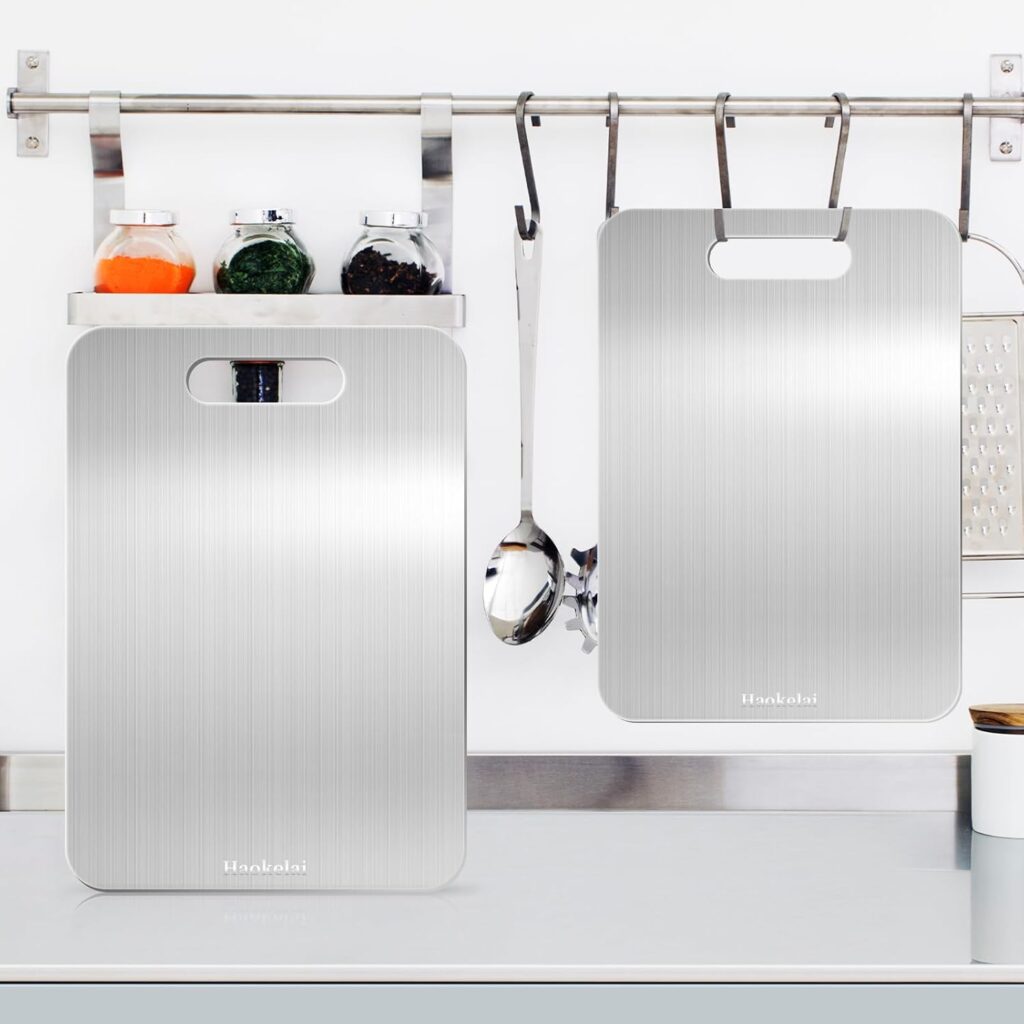
Best Titanium Cutting Board Brands and Reviews in 2026
The best titanium cutting board brands available in 2026 are Katori, Taima, Apex, Plateful, and Baker’s Secret, each targeting slightly different buyers. Here is a breakdown of each.
Katori Titanium Cutting Board
Katori is one of the most searched titanium board brands in 2026. It positions itself as a premium home-kitchen product with a 100% pure titanium surface, antibacterial properties, and a lifetime durability claim. User reviews report an overall satisfaction rating near 4.7 out of 5, with praise for zero smell transfer and easy sanitization. The main criticism is the metallic sound during chopping and occasional slippage on smooth counters without a mat. For a full breakdown, see the Katori Titanium Cutting Board reviews and complaints page.
Taima Pure Titanium Cutting Board V2
Taima offers a third-party certified pure titanium board with an updated V2 design [3]. It includes a non-slip backing and comes with documented lab testing for material purity, which gives it an edge for buyers who want verified claims. Taima is priced at the premium end, typically $149 to $179, and is best for health-sensitive households or professional cooks.
Apex Titanium Board
Apex launched its titanium board in mid-2026 [5] with a focus on lab-tested purity and a sleek modern aesthetic. It is marketed toward high-end home kitchens and positions itself alongside stainless steel alternatives.
Plateful Ti Cutting Board
Plateful’s Ti board [8] takes a minimalist design approach, targeting design-conscious consumers. It is available in limited sizes but has strong reviews for build quality and finish consistency.
Baker’s Secret Titanium Double-Side Cutting Board
Baker’s Secret offers a double-sided titanium board [4] that attempts to address the knife-dulling concern by pairing a titanium surface with a softer secondary side. This hybrid design is a practical compromise for cooks who want titanium’s hygiene benefits but also want to protect their best knives.
Amazon-listed options
Several titanium boards are available directly through Amazon [2][6][10], including double-sided and combination boards. These range from $45 to $120. Buyers should verify that the listing specifies pure titanium rather than titanium-coated steel, as the two perform very differently.
Home Depot also carries at least one 100% pure titanium board (Adrinfly brand) described as medical-grade and scratch-resistant [9], signaling that titanium boards are moving toward mainstream retail availability.
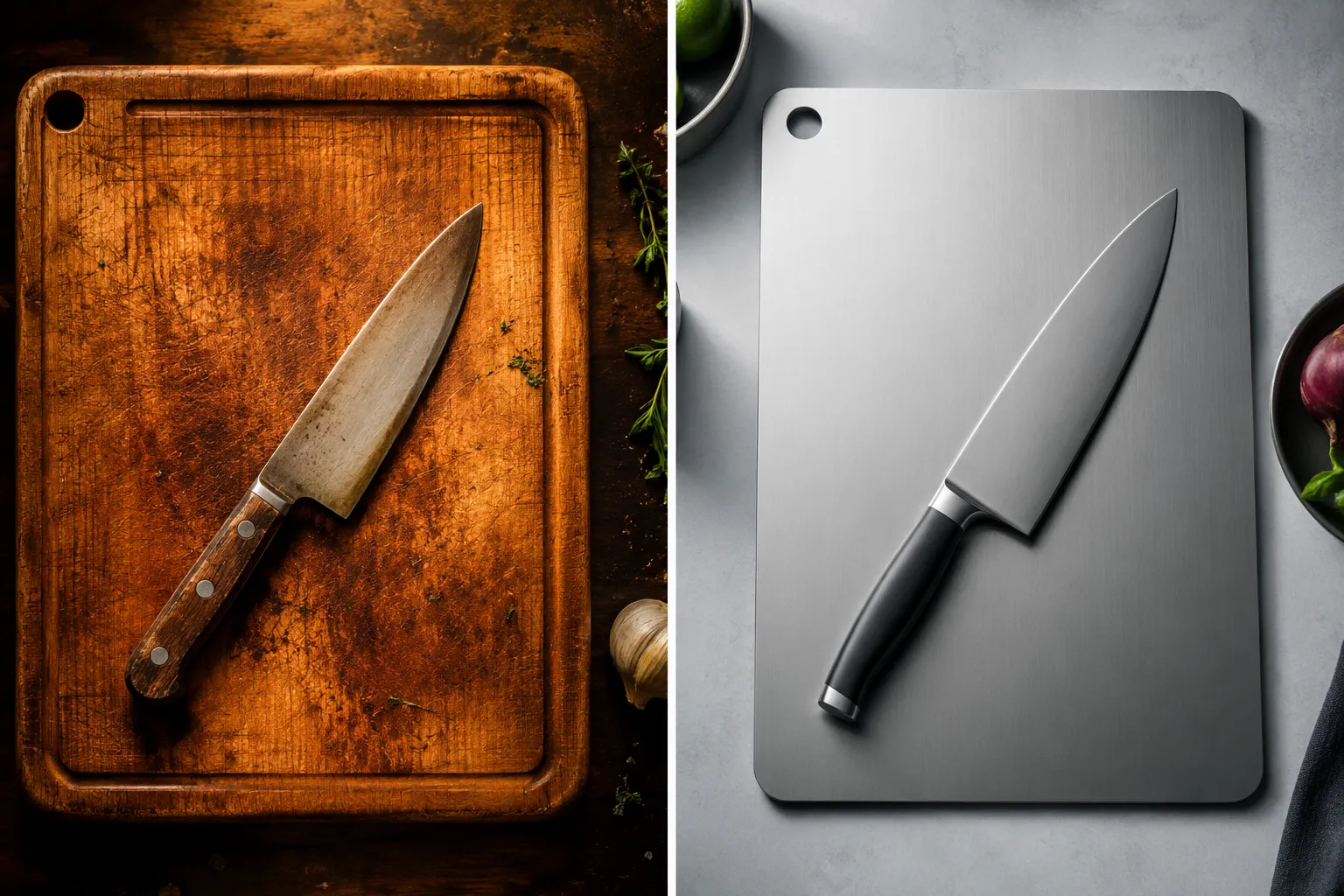
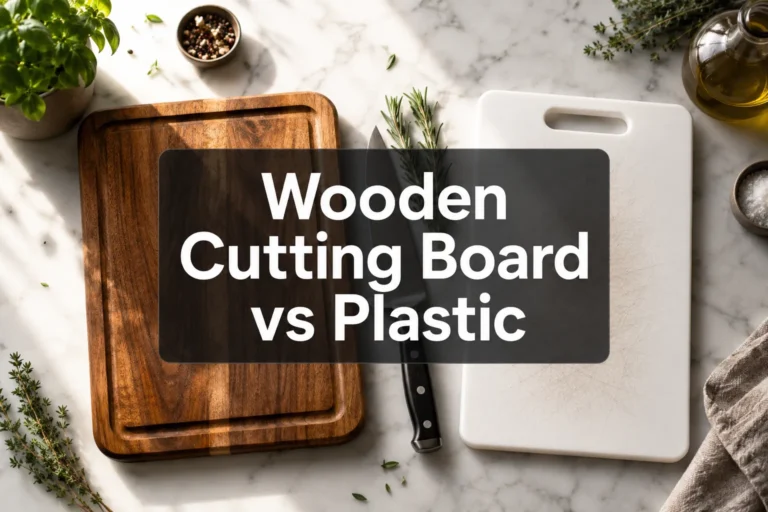
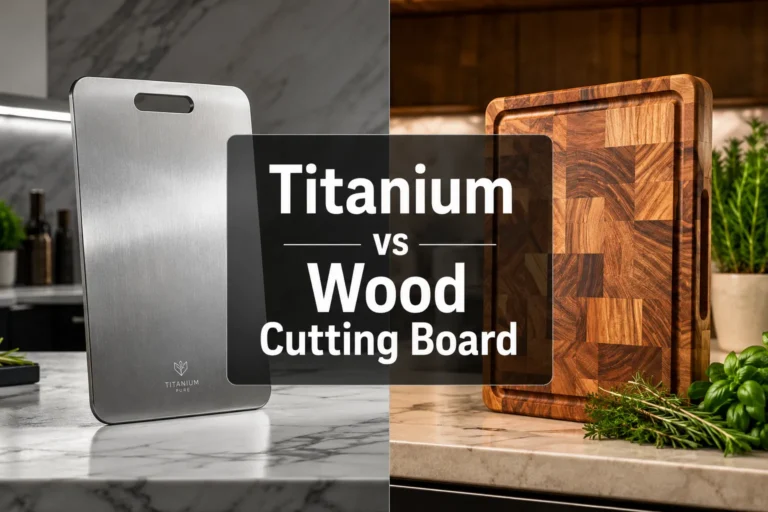
Titanium vs Wood vs Plastic Cutting Boards: Which Is Better
Titanium wins on hygiene, longevity, and chemical safety. Wood wins on knife preservation and aesthetics. Plastic wins only on price. For most cooks who prioritize food safety and low maintenance, titanium is the best long-term choice.
| Factor | Titanium | Wood | Plastic |
|---|---|---|---|
| Bacteria resistance | Excellent (non-porous) | Moderate (grain absorbs) | Poor (grooves trap bacteria) |
| Knife preservation | Moderate (can dull edges) | Best (end-grain) | Good (soft surface) |
| Durability | Decades | 5-15 years with care | 1-5 years |
| Odor absorption | None | Moderate | High (especially garlic/fish) |
| Dishwasher-safe | Yes | No (warps) | Yes (but degrades) |
| Chemical safety | No leaching | No leaching (untreated) | Possible BPA/microplastics |
| Price range | $89-$179 | $30-$200+ | $10-$50 |
The bottom line on comparisons: Wood looks beautiful and is gentler on knives, but it requires oiling, cannot go in the dishwasher, and absorbs moisture.
Plastic is cheap but develops deep grooves quickly that harbor bacteria, and there is growing concern about microplastic contamination from knife cuts. Titanium has the highest upfront cost but the lowest long-term maintenance burden and the best hygiene profile.
Do Titanium Cutting Boards Dull Knives
This is the most contested claim in the titanium cutting board market. Most brands advertise their boards as “knife-friendly,” but independent testing and user reviews consistently show that titanium is harder on knife edges than wood or bamboo, and comparable to or worse than plastic in this regard.
The science behind it: Titanium’s Mohs hardness is approximately 6, compared to wood at 1-3 and plastic at 2-3. A knife’s steel edge, typically rated at 5.5-6.5 Mohs, meets a surface of similar hardness when it contacts titanium. This causes micro-abrasion on the blade edge with each cut, which gradually dulls the knife faster than a softer surface would.
What brands actually mean by “knife-friendly”: Most titanium board makers mean their surface does not chip or crack knife edges the way ceramic or glass boards do. That is accurate. But “knife-friendly” compared to ceramic is not the same as “knife-friendly” compared to a quality end-grain maple board.
Practical advice:
- If you use expensive Japanese knives with thin, hard edges (above 60 HRC), a titanium board will dull them faster than wood.
- For standard Western chef knives and stainless steel blades, the dulling effect is noticeable but manageable with regular honing.
- Double-sided boards like Baker’s Secret [4] offer a softer side for your best knives and a titanium side for raw meat and heavy prep work.
- Plan to hone your knives more frequently if you switch to a titanium board full-time.
How Much Does a Good Titanium Cutting Board Cost
A quality titanium cutting board from a reputable brand costs between $89 and $179 in 2026. Budget titanium-coated boards on Amazon start around $35-$50, but these use a titanium coating over steel rather than solid titanium, which changes the performance and longevity significantly.
Price breakdown by tier:
- Entry-level ($35-$60): Titanium-coated steel, often sold through Amazon [2][6]. Adequate for light use but may chip or rust at the coating edges over time.
- Mid-premium ($89-$120): Pure titanium boards from brands like Katori and Plateful [8]. Best value for most home cooks.
- Premium ($140-$179): Certified pure titanium with third-party lab testing, non-slip backing, and lifetime warranty documentation. Taima V2 [3] and Apex [5] fall here.
Is the cost justified? A $150 titanium board used daily for 20 years works out to roughly $7.50 per year, or about two cents per day. A $25 plastic board replaced every two years costs $12.50 per year. The titanium board is actually cheaper over a decade, and it does not contribute plastic waste to landfills.
Where Can I Buy a Titanium Cutting Board
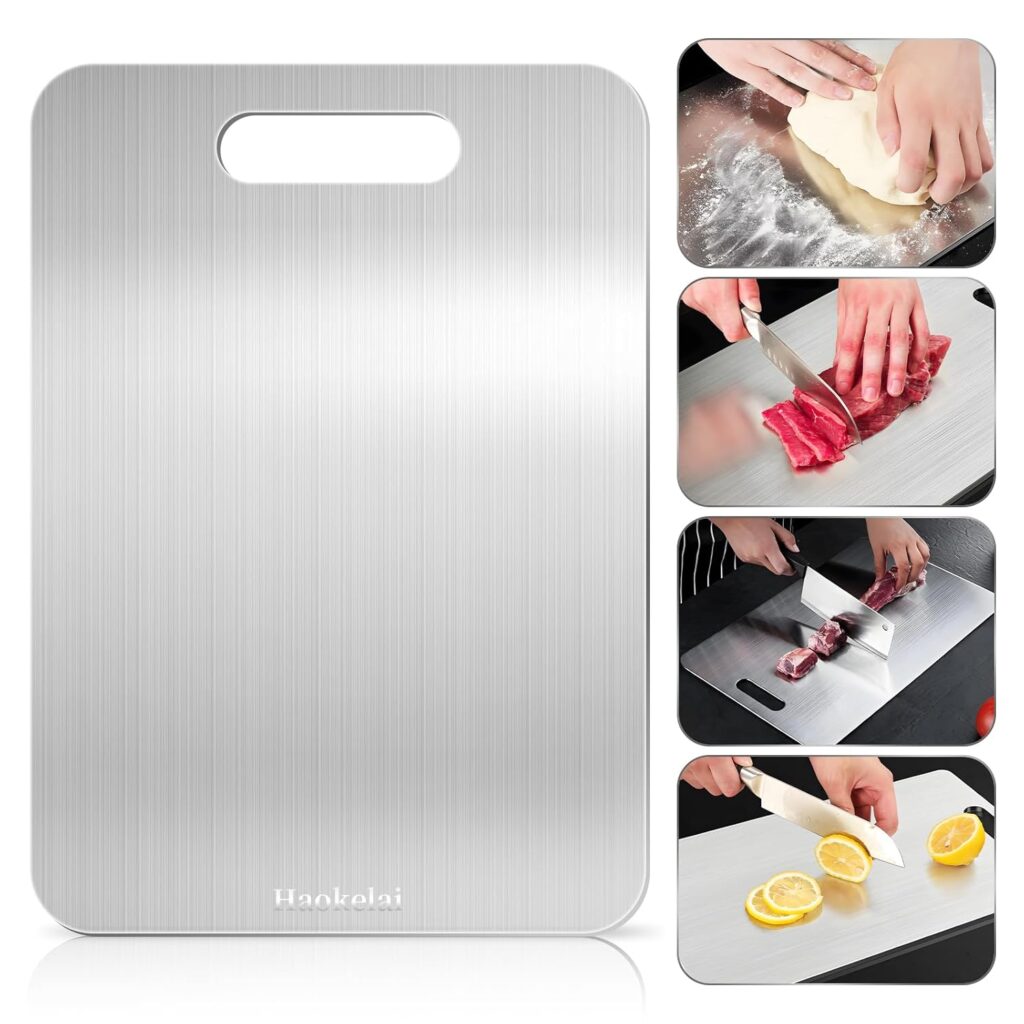
Titanium cutting boards are available through brand websites, Amazon, Home Depot, and specialty kitchen retailers. In 2026, mainstream retail availability has expanded significantly, though the category remains niche compared to wood and plastic boards.
Recommended purchase channels:
- Brand official websites: Taima [3], Apex [5], Plateful [8], and Katori all sell directly. Buying direct ensures authenticity, valid warranty registration, and access to official care guides.
- Amazon: Multiple verified sellers list titanium boards [2][6][10]. Check that the listing specifies “100% pure titanium” and read recent reviews for quality consistency.
- Home Depot: Carries at least one pure titanium board (Adrinfly) in-store and online [9], making it a convenient option for buyers who prefer to see the product before purchasing.
- Baker’s Secret: Available through their website [4] for the double-sided hybrid model.
Warning: Third-party marketplace sellers on platforms like eBay or Wish frequently list titanium-coated boards as “titanium cutting boards.” Always verify material grade (Grade 1 or Grade 2 pure titanium) and look for a warranty card, brand logo engraving, and an included care guide as authenticity markers.

Can You Cut Raw Meat on a Titanium Cutting Board and Is It Dishwasher Safe
Yes, titanium cutting boards are excellent for raw meat preparation, and yes, they are fully dishwasher-safe. These two features together make titanium boards one of the best options for food safety in households that handle raw poultry, beef, or fish regularly.
Why titanium works well for raw meat:
- The non-porous surface does not absorb meat juices, blood, or fat, so bacteria cannot colonize the board between washes.
- Titanium does not retain odors, so fish or raw poultry smells do not linger after cleaning.
- The surface can be sanitized with boiling water, food-safe disinfectant spray, or a dishwasher cycle without degrading the material.
- Unlike plastic boards, titanium does not develop deep knife grooves where pathogens like Salmonella or Listeria can hide even after surface washing.
Dishwasher safety specifics:
- Pure titanium boards are safe for standard dishwasher cycles, including heated drying.
- For a spotless, streak-free finish, hand-drying immediately after the cycle is recommended.
- Boards with rubber non-slip backing or composite materials should be checked by the manufacturer for dishwasher compatibility, as the backing may degrade before the titanium does.
For vegetables: Titanium boards work equally well for produce. There is no flavor transfer between uses, and the surface does not stain from beet juice, turmeric, or berry juices the way plastic and wood can.
Recommended practice: Designate one side of a double-sided board for raw meat and the other for ready-to-eat foods, even though titanium’s non-porous nature makes cross-contamination far less likely than with other materials.
Katori vs. Taima Titanium Cutting Board (Competitor Comparison)
Let’s pit Katori against its main rival, Taima Titanium, which is also popular in the premium market.
| Feature | Katori Titanium Board | Taima Pure Titanium Board |
|---|---|---|
| Purity Claim | 100% Pure Titanium | Grade 1, 99.89% Certified Titanium |
| Lab Testing | Not publicly listed | Third-party verified |
| Price | Mid-premium | Premium |
| Knife Protection | Excellent | Excellent |
| Anti-bacterial | Yes | Yes |
| Non-slip Backing | Optional accessory | Included |
| Warranty | Lifetime (stated) | Lifetime (with proof) |
| Ideal For | Home cooks & chefs | Premium buyers, health-sensitive users |
Titanium Cutting Board Thickness, Size Options, and Who Should Use One
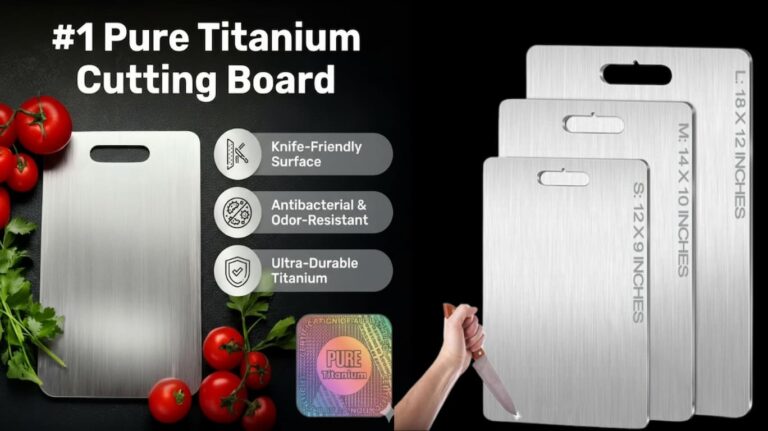
Most titanium cutting boards are 2 mm thick, which is thin enough to feel lightweight but rigid enough for heavy chopping. Size options in 2026 range from small prep boards (approximately 9 x 12 inches) to full chef-size slabs (14 x 18 inches or larger).
Common size categories:
- Small (9×12 in): Ideal for quick prep tasks, small kitchens, or travel/camping use. The Adrinfly board at Home Depot [9] measures 12 x 9 inches and is a good example of this category.
- Medium (12×15 in): The most popular size for home kitchens. Handles most daily prep tasks without taking up excessive counter space.
- Large (14×18 in or larger): Suited for professional kitchens or home cooks who prep large meals regularly.
Who should use a titanium cutting board:
- Health-conscious cooks who want to eliminate plastic microcontamination from their food prep.
- Households with allergy concerns, where cross-contamination between foods is a serious issue.
- Cooks who handle raw meat frequently and want the easiest possible sanitization routine.
- Anyone who has replaced multiple plastic boards over the years and wants a permanent solution.
- Outdoor and camping cooks, since titanium does not rust or warp in variable conditions.
Who might want to consider alternatives:
- Serious knife collectors or users of high-end Japanese knives who prioritize blade preservation above all else. A quality end-grain wood board is gentler on thin, hard edges.
- Budget-constrained buyers who need a functional board for occasional cooking. A $15 plastic board serves that need adequately.
- Cooks who prefer the tactile warmth and aesthetics of wood in their kitchen environment.
Do Titanium Cutting Boards Stain or Scratch Easily
Titanium cutting boards do not stain, but they do develop minor surface scratches over time with regular use. This is a normal characteristic of the material and does not affect food safety or hygiene performance.
Stain resistance: Titanium’s non-porous surface means that pigmented foods like beet juice, turmeric, blueberries, and red wine cannot penetrate the material. Any surface discoloration wipes off easily. This is a significant advantage over plastic boards, which stain permanently, and wood boards, which absorb pigments into the grain.
Scratch behavior: Knife marks will appear on the surface over time, particularly with heavier chopping. These scratches are shallow and cosmetic rather than structural. Because titanium is non-porous, bacteria cannot colonize these scratches the way they do in plastic board grooves. The board remains hygienic even as it develops a patina of use marks.
Maintenance tips to minimize scratching:
- Avoid steel wool or abrasive scrubbers, which accelerate surface marking. Use a soft sponge or cloth instead.
- Use a non-slip silicone mat underneath the board to prevent sliding, which also reduces the force of each cut and minimizes surface wear.
- Store the board upright rather than flat-stacked to prevent scratching from other kitchen items.
- Hand-dry after washing to prevent water spots, which can look like stains but are not.
How to Clean and Maintain a Titanium Cutting Board
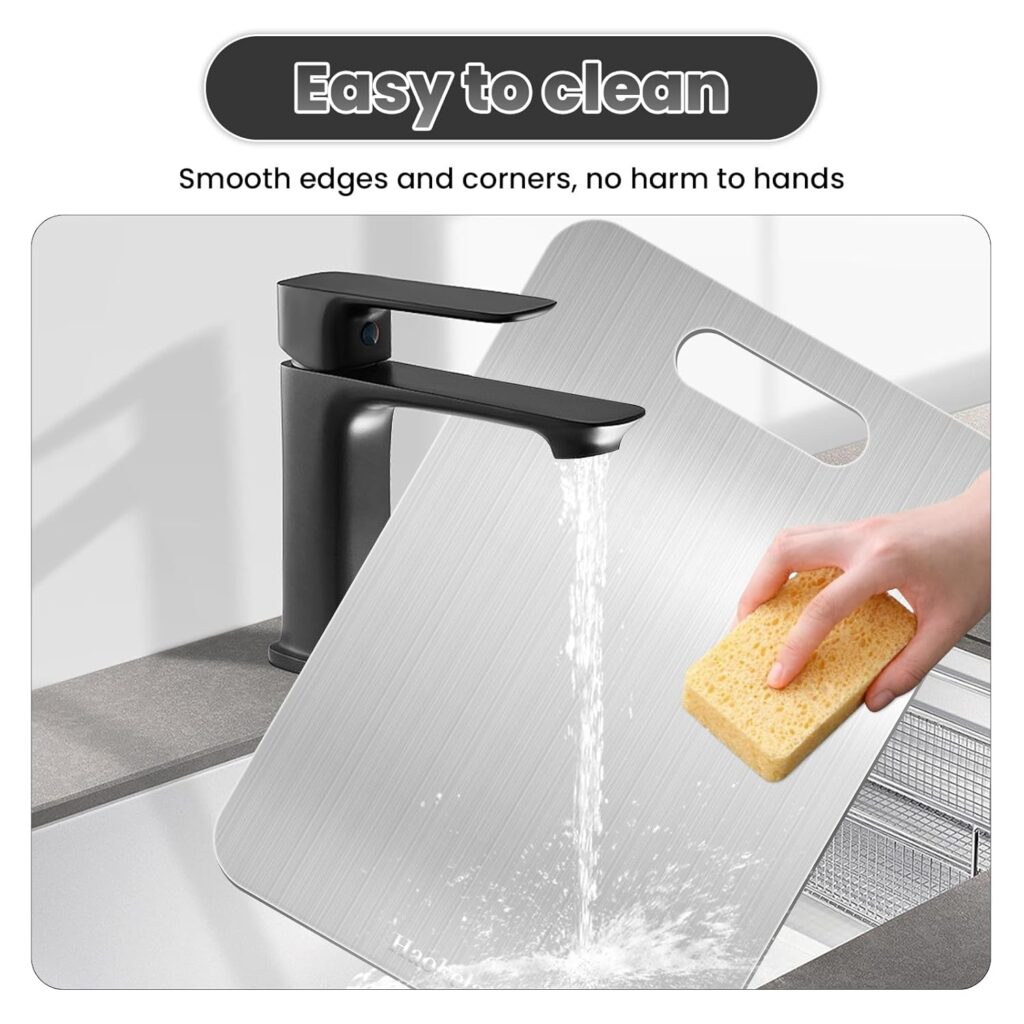
Titanium cutting boards are among the easiest kitchen surfaces to maintain. A rinse under hot water with dish soap is sufficient for everyday cleaning. For raw meat or heavy use, a dishwasher cycle or a wipe-down with food-safe sanitizer provides thorough disinfection.
Step-by-step cleaning routine:
- Rinse the board under hot running water immediately after use to remove loose food particles.
- Apply a small amount of dish soap and scrub with a soft sponge or cloth. Avoid abrasive pads.
- Rinse thoroughly and either air-dry or hand-dry with a clean towel.
- For raw meat, poultry, or fish: place in the dishwasher or sanitize with a food-safe spray before the next use.
- For deep cleaning: pour boiling water over the surface or wipe with a diluted food-safe disinfectant.
What to avoid:
- Steel wool or metal scrubbers (cause unnecessary surface scratching)
- Bleach in high concentrations over extended periods (unnecessary and may affect any non-slip backing)
- Soaking in standing water for long periods (not harmful to titanium itself, but may affect rubber feet or backing materials)
Long-term maintenance: Unlike wood boards, titanium requires no oiling, conditioning, or periodic resurfacing. The board you buy today should perform identically in 15 years with basic cleaning. This low-maintenance profile is one of the strongest practical arguments for the higher upfront cost.
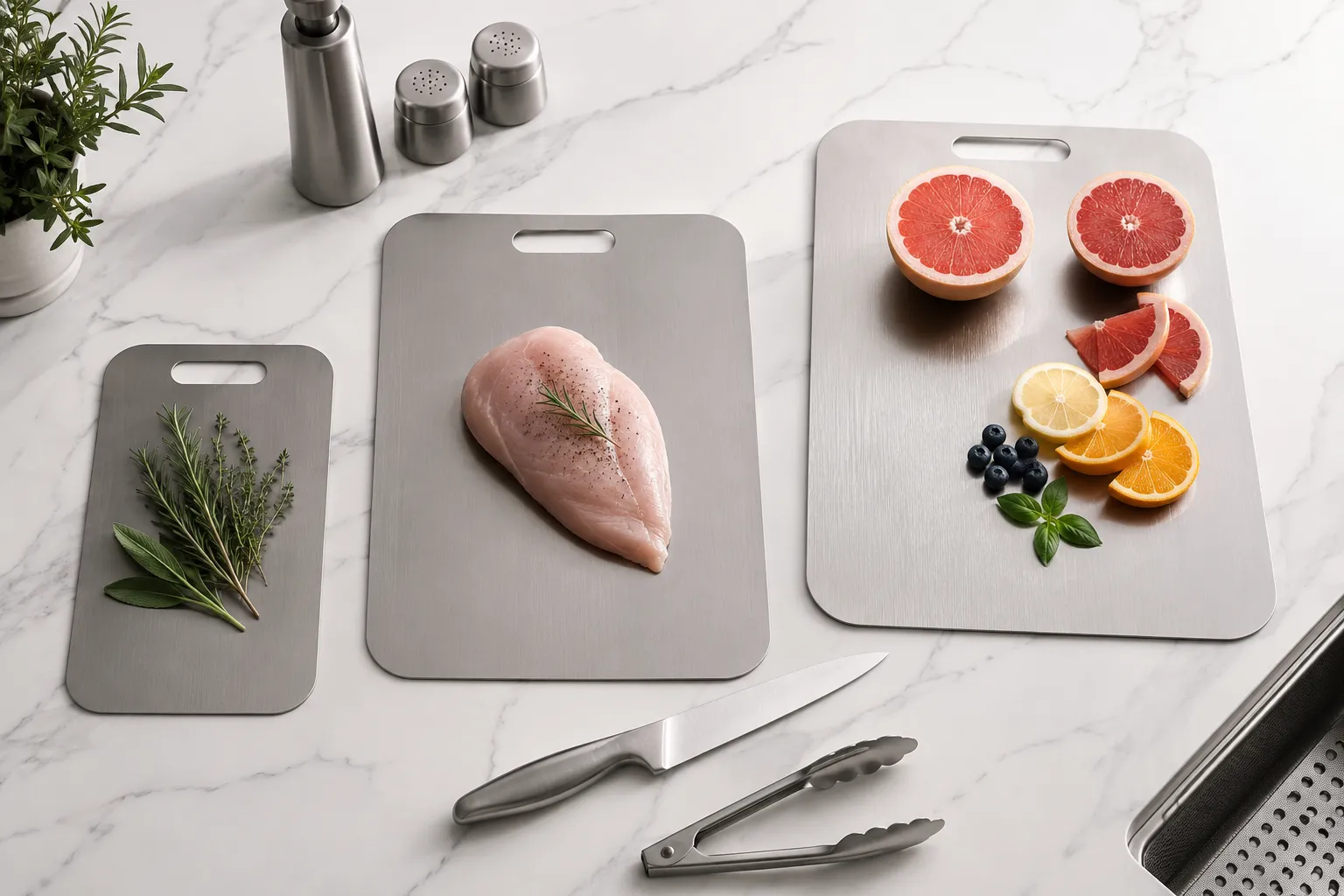
Pros and Cons of Titanium Cutting Boards
Pros:
- Non-porous surface eliminates bacteria, mold, and odor retention
- Fully dishwasher-safe and easy to sanitize
- Non-reactive with all foods, including acidic and salty ingredients
- No BPA, microplastics, or chemical leaching
- Rust-proof and corrosion-resistant
- Extremely durable, with a realistic lifespan measured in decades
- Lightweight relative to its strength
- Does not stain from pigmented foods
Cons:
- Higher upfront cost ($89-$179) compared to wood or plastic alternatives
- Can dull knife edges faster than end-grain wood, despite marketing claims
- Produces a metallic sound during chopping that some users find unpleasant
- May slide on smooth counters without a non-slip mat or backing
- Limited style and color options compared to wood boards
- Pure titanium boards are primarily sold online, with limited in-store availability outside of Home Depot
Key Takeaways Before You Decide
- Choose a titanium board if hygiene, food safety, and long-term durability are your top priorities.
- Choose end-grain wood if knife preservation is your primary concern.
- Verify “pure titanium” claims before buying, especially from Amazon marketplace sellers.
- Budget $89-$179 for a quality board from a reputable brand.
- Add a non-slip silicone mat to your purchase if the board does not include one.
- Pair with regular knife honing to offset the harder cutting surface.
Conclusion
The best titanium cutting board in 2026 is not a gimmick or a luxury item for its own sake. It is a genuinely functional upgrade for cooks who are serious about food safety, kitchen hygiene, and buying once rather than replacing boards every few years.
The evidence is clear on the core benefits: titanium is non-porous, non-reactive, dishwasher-safe, and will not harbor bacteria in surface grooves the way plastic boards do after months of use. For raw meat preparation in particular, a titanium board is one of the most defensible choices you can make from a food safety standpoint.
The honest trade-offs are equally clear. Titanium will dull your knives faster than a quality wood board, the chopping sound takes some getting used to, and the upfront cost is real. If you own a set of expensive Japanese knives and treat blade preservation as a priority, pair your titanium board with a quality end-grain wood board and use each for its strengths.
Actionable next steps:
- Decide on your primary use case (raw meat, general prep, or both) to choose the right size.
- Set a budget of at least $89 for a pure titanium board from a verified brand.
- Check the Katori Titanium Cutting Board reviews and complaints page for detailed real-user feedback before purchasing.
- Verify material grade (Grade 1 or Grade 2 pure titanium) and look for a warranty card at checkout.
- Purchase a silicone non-slip mat if your chosen board does not include one.
- Add a honing steel to your routine to keep knife edges sharp on the harder surface.
A titanium cutting board is a once-in-a-generation kitchen purchase. Buy the right one, and you will likely never need another.

Frequently Asked Questions
Is titanium safe for food preparation?
Yes. Titanium is biocompatible and non-reactive, meaning it does not leach metals or chemicals into food under any normal cooking conditions. It is used in surgical implants for the same reason, and it is one of the safest materials available for food contact surfaces.
Does a titanium cutting board dull knives?
It can, more so than end-grain wood. Titanium has a Mohs hardness of approximately 6, which is similar to the steel in many knife blades. Regular honing after use on a titanium board is recommended. Double-sided hybrid boards offer a softer surface for your best knives.
How do I clean a titanium cutting board?
Rinse with hot water and dish soap using a soft sponge for everyday cleaning. For raw meat, use the dishwasher or sanitize with a food-safe spray. Titanium can also be sanitized with boiling water or diluted food-safe disinfectant. Avoid steel wool or abrasive scrubbers.
Are titanium cutting boards dishwasher-safe?
Yes. Pure titanium boards are fully dishwasher-safe, including heated drying cycles. For a spotless finish, hand-dry immediately after the cycle. Check manufacturer guidance if your board has a rubber or composite non-slip backing.
How heavy is a titanium cutting board?
Titanium boards are lighter than you might expect. At approximately 2 mm thick, a standard medium-size board weighs noticeably less than a comparable wood board. Titanium is roughly 40% lighter than steel at the same volume.
Can I cut bones or frozen food on a titanium board?
Yes. Titanium’s hardness and structural strength make it suitable for heavy chopping tasks, including frozen food and light bone work. The board will not crack, chip, or warp under this kind of use.
Do titanium cutting boards stain?
No. The non-porous surface does not absorb pigments from beet juice, turmeric, berries, or other strongly colored foods. Surface discoloration wipes off easily. Minor cosmetic scratches from knife use will appear over time but do not affect hygiene.
What is the difference between pure titanium and titanium-coated boards?
Pure titanium boards use solid Grade 1 or Grade 2 titanium throughout. Titanium-coated boards use a titanium or titanium-nitride coating over a steel or aluminum core. Coated boards are cheaper but may chip at the edges over time, potentially exposing the underlying metal to rust. Pure titanium boards are the better long-term investment.
What size titanium cutting board should I buy?
A 12 x 15 inch medium board handles most daily home cooking tasks. Small boards (9 x 12 in) work for quick prep or small kitchens. Large boards (14 x 18 in or larger) suit professional use or large-batch cooking. Consider a double-sided board if you want titanium’s hygiene benefits with a softer surface option for knife-sensitive tasks.
Where is the best place to buy a titanium cutting board?
Buy directly from brand websites (Katori, Taima, Apex, Plateful) for authenticity guarantees and warranty registration. Amazon is also a reliable option if you verify the seller and confirm “100% pure titanium” in the product description. Home Depot carries at least one pure titanium option in-store.
Are titanium cutting boards worth the price?
For most cooks who prioritize hygiene and durability, yes. A $150 board used daily for 20 years costs less per year than replacing $25 plastic boards every two years, and it eliminates the ongoing hygiene concerns associated with grooved plastic surfaces.
Can titanium cutting boards be used outdoors or for camping?
Yes. Titanium does not rust, warp, or degrade in variable weather conditions, making it an excellent choice for outdoor cooking, camping, or travel use. Its light weight is an additional advantage for portable applications.
References
Reason: This link leads to a review published in a biomedical journal detailing the inherent properties of titanium alloys, including their exceptional mechanical strength, corrosion resistance, and biocompatibility. This provides a materials science basis for the claims of durability and longevity.
For Titanium Biocompatibility and Safety:
Reason: This is an official summary from the U.S. Food and Drug Administration (FDA) regarding the safety profile of titanium used in implantable medical devices. This strongly supports the article’s claim that titanium is a non-toxic, safe, and biocompatible material suitable for food contact.
For Bacterial Contamination Comparison (Why Plastic Fails):
URL: https://pubmed.ncbi.nlm.nih.gov/31113021/
Reason: This PubMed citation links to a study on the survival of bacteria (like Salmonella and E. coli) on plastic and wooden cutting boards. It helps scientifically substantiate the article’s argument that plastic boards fail due to their tendency to harbor and allow bacteria to multiply in micro-grooves.
For Titanium’s Inherent Properties (Durability/Corrosion Resistance):
URL: https://pmc.ncbi.nlm.nih.gov/articles/PMC10780041/
Tags: titanium cutting board, best titanium cutting board, Katori cutting board, Taima titanium board, food safe cutting board, non-porous cutting board, dishwasher safe cutting board, cutting board comparison, kitchen hygiene, titanium vs wood cutting board, antibacterial cutting board, medical grade titanium kitchen

With over 13 years of experience in holistic health blogging, I aim to help you navigate your wellness journey with honest insights, expert-backed advice, and a sprinkle of real-world practicality.
Certified Wellness Writer | Herbal Nutrition Advocate | Wellness Research Enthusiast