ProDentim Side Effects: Is It Safe or Are There Hidden Risks?
Last updated: July 25, 2026
Quick Answer: ProDentim side effects are generally mild and uncommon, but some users report temporary digestive discomfort, mild bloating, or initial oral sensitivity when first starting the supplement. Most reported reactions resolve within one to two weeks. People with dairy allergies, probiotic sensitivities, or those taking immunosuppressant medications should consult a doctor before use.
Key Takeaways
- Most ProDentim users tolerate the supplement well; serious adverse effects have not been widely documented in consumer reports or clinical literature on its individual ingredients.
- The most commonly reported ProDentim side effects are mild: temporary bloating, gas, or loose stools during the first week of use.
- Allergic reactions are rare but possible, particularly in people sensitive to dairy-derived strains or prebiotic fibers like inulin.
- ProDentim contains probiotic strains (Lactobacillus paracasei, Lactobacillus reuteri, B.lactis BL-04) and natural compounds like malic acid and peppermint that are generally recognized as safe.
- People who are immunocompromised, pregnant, breastfeeding, or taking prescription medications should get medical clearance before starting any oral probiotic supplement.
- Headaches and nausea are occasionally mentioned in user reviews but are not consistently linked to ProDentim’s specific formula.
- Long-term use appears safe based on the safety profiles of its individual ingredients, though no long-term clinical trials on ProDentim itself have been published.
- If oral discomfort persists beyond two weeks, stop use and consult a dentist or physician.
What Are the Most Common ProDentim Side Effects?
The most frequently reported ProDentim side effects are digestive in nature and tend to be short-lived. Because ProDentim is a probiotic-based oral supplement, introducing new bacterial strains to the body can temporarily shift gut and oral microbiome balance, causing mild gas, bloating, or loose stools in the first few days.
Here is a breakdown of what users most commonly report:
- Mild bloating or gas during the first 5 to 7 days of use
- Loose stools in a small subset of new users, typically resolving within one week
- Temporary oral sensitivity or a tingling sensation, likely from malic acid or peppermint
- Mild nausea, occasionally reported, especially when taken on an empty stomach
- Headaches, mentioned in a small number of user reviews, though causation is unclear
The majority of these reactions are consistent with what researchers call a “probiotic adjustment period.” A 2019 review published in the journal Nutrients noted that mild gastrointestinal symptoms are the most common adverse effects of probiotic supplementation and typically resolve without intervention.
Decision rule: If symptoms are mild and fade within 7 to 10 days, continuing use is generally reasonable. If they worsen or persist beyond two weeks, stop and speak with a healthcare provider.
Can ProDentim Cause Allergic Reactions?
Allergic reactions to ProDentim are possible but uncommon. The supplement contains dairy-derived probiotic strains, which means people with milk protein allergies face a real, if small, risk of a reaction.
Potential allergen triggers in ProDentim include:
- Dairy-derived strains (Lactobacillus paracasei, B.lactis BL-04), risk for those with milk protein sensitivity
- Inulin (chicory root), a prebiotic fiber that can cause reactions in people with ragweed or chicory allergies
- Peppermint, rare contact sensitivity in some individuals
Signs of an allergic reaction to watch for include hives, swelling of the lips or tongue, difficulty breathing, or a rash. These would warrant immediate discontinuation and medical attention.
Most people with standard lactose intolerance (not a true milk protein allergy) tolerate dairy-derived probiotic strains without issue, but it is worth checking the label carefully if you have a confirmed dairy allergy.
ProDentim Ingredients That Might Cause Reactions
Understanding which specific ingredients are behind potential ProDentim side effects helps you assess your personal risk before buying.
| Ingredient | Purpose | Potential Concern |
|---|---|---|
| Lactobacillus paracasei | Supports gum health, sinus balance | Mild GI upset during adjustment |
| Lactobacillus reuteri | Reduces oral inflammation | Bloating in sensitive users |
| B.lactis BL-04 | Supports respiratory and oral flora | Dairy-derived; allergy risk |
| Inulin (chicory root) | Prebiotic fiber, feeds probiotics | Gas, bloating, chicory allergy |
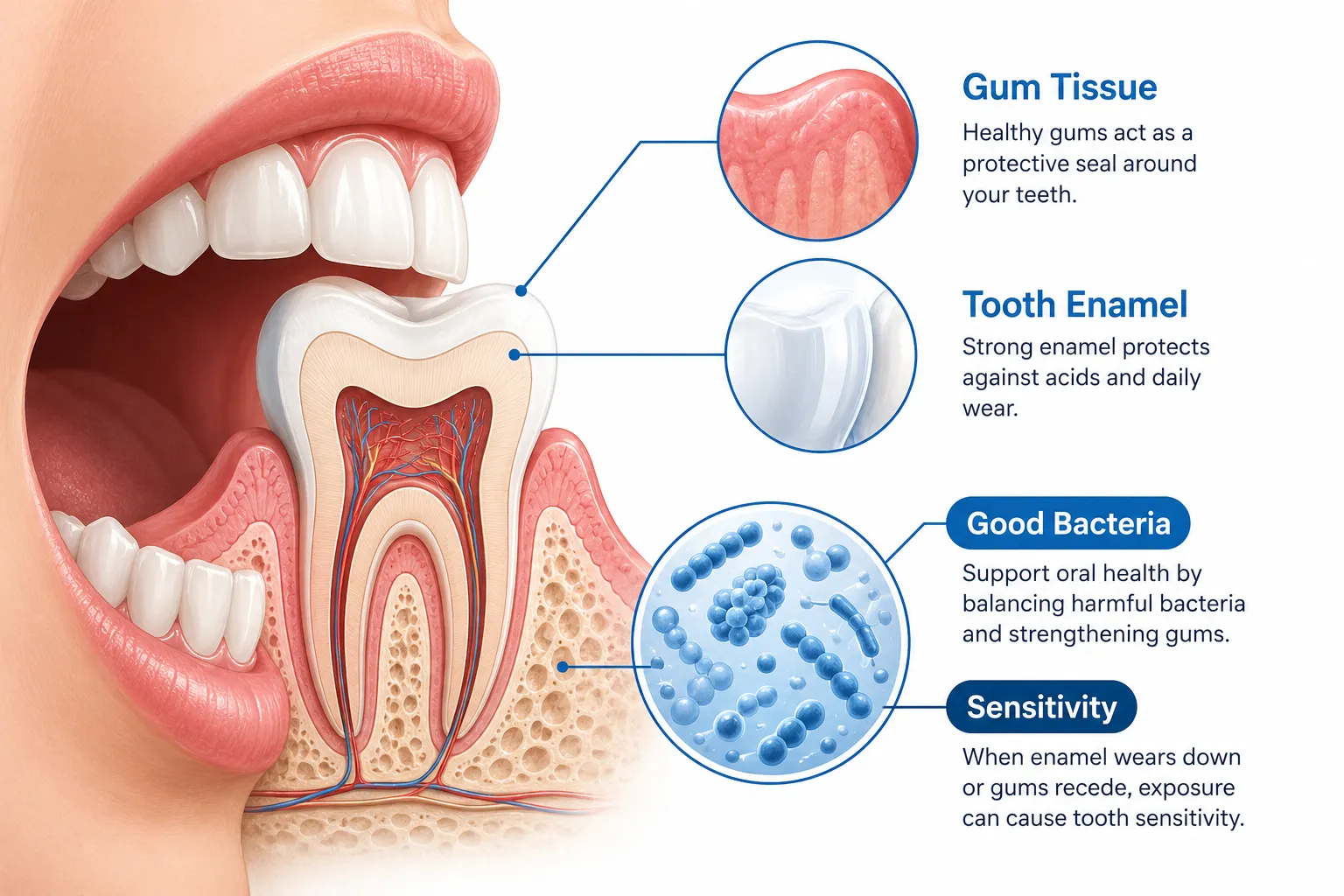
| Malic acid | Tooth whitening support | Enamel sensitivity at high doses |
| Peppermint | Freshens breath | Rare oral sensitivity or heartburn |
Malic acid deserves special attention for people with sensitive teeth. While the amount in ProDentim is low, malic acid is mildly acidic and can temporarily increase tooth sensitivity if used excessively or in combination with other acidic products. For more on how to keep your gums and teeth healthy, including how diet and supplements interact with oral health, that guide covers the essentials.
Is ProDentim Safe to Take Long Term?
Based on the safety profiles of its individual ingredients, long-term ProDentim use appears to carry low risk for most healthy adults. No long-term clinical trials specific to ProDentim have been published, but the probiotic strains it contains have been studied extensively in other contexts.
Key points on long-term safety:
- Lactobacillus reuteri and Lactobacillus paracasei have been used in clinical research for periods of three to twelve months without significant adverse events in healthy adults (Doron & Snydman, 2015, Clinical Infectious Diseases).
- Inulin is a well-tolerated prebiotic at low to moderate doses, though high daily intake can worsen bloating over time in people with irritable bowel syndrome.
- Malic acid at supplement doses is generally safe; it is naturally present in apples and other fruits.
Common mistake: Assuming that “natural” equals unlimited safety. Even well-tolerated supplements can interact with medications or shift microbiome balance in unexpected ways over months of continuous use. A periodic check-in with your dentist or doctor every six months is a reasonable precaution.

Who Should Not Take ProDentim?
Certain groups face a higher risk of ProDentim side effects and should either avoid the supplement or get medical clearance first.
Avoid or consult a doctor before use if you:
- Are immunocompromised (HIV, chemotherapy, organ transplant recipients), live probiotic strains carry a small infection risk in severely immunosuppressed individuals
- Have a confirmed dairy or milk protein allergy
- Are pregnant or breastfeeding (see section below)
- Are currently taking immunosuppressant medications
- Have a history of small intestinal bacterial overgrowth (SIBO)
- Are a child under 18 (ProDentim is formulated for adults)
People with sensitive teeth should also read the ingredient list carefully because of the malic acid content. For broader context on how oral hygiene supplements fit into a preventive care routine, it helps to understand what each ingredient does before committing to daily use.
ProDentim Side Effects During Pregnancy and Breastfeeding
ProDentim has not been tested in pregnant or breastfeeding women, so its safety in these groups is unknown. Most probiotic supplements are considered low-risk during pregnancy, but the lack of specific data on ProDentim’s formula means caution is warranted.
The general guidance from obstetric organizations is that probiotic supplements are probably safe during pregnancy for healthy women, but they should only be used under the supervision of a healthcare provider. Breastfeeding mothers face a similar situation: the probiotic strains are unlikely to pass into breast milk in meaningful quantities, but it is still worth discussing with a doctor or midwife before starting.
ProDentim Side Effects vs. Other Dental Probiotics
ProDentim’s side effect profile is broadly similar to other oral probiotic supplements like Dentitox Pro, Steel Bite Pro, and ProvaDent. The key differences come down to ingredient composition.
- ProDentim vs. Steel Bite Pro: Steel Bite Pro contains a wider range of herbal extracts (berberine, turmeric, artichoke), which carry a higher risk of drug interactions and GI upset compared to ProDentim’s simpler probiotic-focused formula.
- ProDentim vs. Dentitox Pro: Dentitox Pro uses liquid drops with a different delivery mechanism. Some users find liquid formats cause more oral sensitivity than dissolvable tablets.
- ProDentim vs. ProvaDent: Both use similar Lactobacillus strains. Side effect profiles are comparable, with mild GI adjustment being the most common complaint for both.
For people who have previously experienced digestive issues with herbal supplements, ProDentim’s relatively clean ingredient list may actually be a safer starting point. If you’ve had reactions to other health supplements before, our review of common hidden side effects in natural supplements is worth reading before trying any new product.
ProDentim Side Effects: What Reddit and Real Users Say
User reviews on Reddit and consumer forums in 2026 paint a mixed but mostly tolerant picture. The most common themes from real-world feedback include:
- Positive majority: Most users report no noticeable side effects and describe mild improvements in breath freshness and gum sensitivity within 3 to 4 weeks.
- Digestive complaints: A recurring minority mention bloating and gas in the first week, with most saying it resolved on its own.
- Skepticism about efficacy: Some Reddit users question whether ProDentim produces meaningful results, raising the broader question of whether it works at all (addressed below).
- Oral tingling: A small number of users describe a mild tingling or cooling sensation in the mouth, likely from peppermint or malic acid, which most considered harmless.
One pattern worth noting: users who took ProDentim on an empty stomach reported nausea more often than those who took it after a meal. Taking it with food appears to reduce the likelihood of stomach-related discomfort.
Does ProDentim Work, or Is It a Scam?
ProDentim is not a scam in the sense of being fraudulent, but its marketing claims outpace the available clinical evidence. The supplement contains legitimate probiotic strains with published research behind them, but no independent clinical trial has specifically tested the ProDentim formula as a whole product.
What the evidence supports:
- Lactobacillus reuteri has shown promise in reducing gingival inflammation in small clinical trials (Twetman et al., 2009, Journal of Clinical Periodontology).
- Oral probiotics as a category show early-stage evidence for supporting gum health and reducing bad breath-causing bacteria, but results are inconsistent across studies.
What the evidence does not support:
- Claims that ProDentim can reverse significant gum disease or replace professional dental treatment.
- Any guarantee of specific outcomes based on the current published literature.
The honest assessment: ProDentim is a reasonable supplementary tool for oral microbiome support, not a replacement for brushing, flossing, and regular dental visits. For a broader look at gut health and its connection to overall immunity, understanding how probiotics work systemically helps set realistic expectations.
ProDentim Side Effects With Other Medications
ProDentim can potentially interact with certain medications, particularly those that affect the immune system or gut flora.
Interactions to be aware of:
- Antibiotics: Taking ProDentim simultaneously with antibiotics will likely reduce its effectiveness, as antibiotics kill both harmful and beneficial bacteria. Space them at least two hours apart.
- Immunosuppressants: As noted above, live probiotic strains carry a theoretical infection risk in severely immunocompromised patients.
- Antifungal medications: Some antifungals can disrupt probiotic colonization, reducing ProDentim’s potential benefit.
- Blood thinners: No direct interaction is documented for ProDentim’s specific ingredients, but peppermint in concentrated forms has mild antiplatelet properties. The amount in ProDentim is likely too small to be clinically significant, but it is worth mentioning to your doctor.
If you take prescription medications regularly, it is always worth reviewing potential supplement interactions. Our article on long-term effects of medications on specific health conditions illustrates how even common supplements can interact with prescription drugs in ways that are not always obvious.
What to Do If ProDentim Causes Mouth Discomfort or Other Reactions
If ProDentim causes oral pain, increased sensitivity, or other discomfort, the first step is to stop using it and assess whether the symptom is new or pre-existing.
Step-by-step response:
- Stop use immediately if you experience hives, swelling, difficulty breathing, or severe pain, seek medical attention.
- Pause for 48 to 72 hours for mild symptoms (tingling, sensitivity, mild soreness) to see if they resolve on their own.
- Restart at a reduced frequency (every other day instead of daily) if symptoms were mild and resolved completely.
- Check for other causes, new toothpaste, dietary changes, or dental work can all cause oral sensitivity that gets mistakenly attributed to a supplement.
- Consult a dentist if oral discomfort persists beyond two weeks regardless of supplement use.
Keeping a simple symptom log (date, symptom, severity, what you ate or took) for the first two weeks of any new supplement makes it much easier to identify patterns and communicate clearly with a healthcare provider.
How Long Do ProDentim Side Effects Last?
For most users, ProDentim side effects are temporary and resolve within 7 to 14 days. The adjustment period is driven by microbiome shifts rather than toxicity, which is why symptoms tend to fade as the body adapts.
- Digestive symptoms (bloating, gas, loose stools): typically resolve within 5 to 10 days
- Oral sensitivity or tingling: usually fades within 1 to 2 weeks
- Nausea: often resolves by taking the supplement with food; rarely persists beyond a few days
- Headaches: if linked to ProDentim at all, typically resolve within the first week
If any side effect lasts longer than three weeks or worsens over time, that is a signal to stop use and seek professional advice rather than continuing to wait it out.
Frequently Asked Questions About ProDentim Side Effects
Q: Can ProDentim cause stomach pain?
Mild stomach discomfort is possible during the first week as your gut adjusts to new probiotic strains. Severe or persistent stomach pain is not a typical ProDentim side effect and warrants medical evaluation.
Q: Is ProDentim safe for people over 65?
Generally yes, but older adults are more likely to be on multiple medications. Anyone over 65 taking prescription drugs should review the supplement with their pharmacist or physician before starting.
Q: Can ProDentim cause bad breath to get worse before it gets better?
A small number of users report a brief period of altered breath during the first week, likely due to microbiome shifts. This typically resolves as beneficial bacteria establish themselves.
Q: How many people experience side effects from ProDentim?
No controlled data exists on the exact percentage. Based on available user reviews and the general tolerability profile of its ingredients, the majority of users report no significant side effects. Mild GI symptoms appear to affect a minority, estimated at roughly 10 to 20% based on probiotic supplement research broadly, though this is not ProDentim-specific data.
Q: Is ProDentim safe for sensitive teeth?
For most people with sensitive teeth, ProDentim is well-tolerated. The malic acid content is low, but if you already experience significant enamel sensitivity, monitor for any increase in discomfort during the first two weeks.
Q: Can I take ProDentim with my daily multivitamin?
Yes, no known interactions exist between ProDentim and standard multivitamins. Space them out by 30 minutes if you want to be cautious.
Q: Does ProDentim interact with blood pressure medications?
No direct interaction has been documented for ProDentim’s ingredients and standard antihypertensives. Still, always inform your prescribing doctor about any new supplement you start.
Q: Can ProDentim cause headaches?
Headaches are occasionally mentioned in user reviews but are not a well-established side effect of the ingredients in ProDentim. Dehydration, caffeine changes, or coincidental illness are more likely explanations.
Q: Is ProDentim FDA approved?
No. ProDentim is a dietary supplement, not a drug, and dietary supplements do not require FDA approval before sale. The FDA does regulate supplement manufacturing standards under CGMP (Current Good Manufacturing Practice) guidelines.
Q: What should I do if I have an allergic reaction to ProDentim?
Stop use immediately. For mild reactions (minor rash, itching), antihistamines may help. For severe reactions (throat swelling, difficulty breathing), call emergency services right away.
Conclusion: Is ProDentim Worth the Risk?
ProDentim side effects are real but, for most healthy adults, minor and temporary. The supplement’s probiotic-based formula is backed by reasonable ingredient-level science, even if the product as a whole lacks independent clinical trials. The most practical takeaway is this: if you are a generally healthy adult without dairy allergies, immune conditions, or conflicting medications, the risk profile of ProDentim is low and comparable to other oral probiotic supplements on the market.
Actionable next steps:
- Review the full ingredient list against any known allergies before purchasing.
- Take ProDentim with food to minimize the chance of nausea or stomach upset.
- Give it a full 30-day trial before judging effectiveness, but stop immediately if side effects worsen or persist.
- Schedule a dental check-up alongside starting any oral health supplement, no supplement replaces professional care.
- If you take prescription medications, run the ingredient list by your pharmacist first.
For broader oral health guidance, the oral hygiene resource section covers preventive strategies that work alongside supplements. And if you’re also researching the best supplement for gut health to support your microbiome more broadly, that guide offers useful context on how probiotics work across different body systems.
References
- Doron, S., & Snydman, D. R. (2015). Risk and safety of probiotics. Clinical Infectious Diseases, 60(S2), S129, S134.
- Twetman, S., et al. (2009). Short-term effect of chewing gums containing probiotic Lactobacillus reuteri on the levels of inflammatory mediators in gingival crevicular fluid. Acta Odontologica Scandinavica, 67(1), 19-24.
- Suez, J., et al. (2019). Probiotics and prebiotics: An overview of clinical trials and meta-analyses. Nutrients, 11(10), 2458.
- U.S. Food and Drug Administration. (2024). Dietary supplements: What you need to know. FDA.gov.
Tags: ProDentim side effects, oral probiotic supplement, dental probiotic safety, ProDentim ingredients, oral health supplement risks, probiotic side effects, gum health supplement, ProDentim review, supplement drug interactions, oral microbiome, dental supplement warnings, probiotic allergy

With over 13 years of experience in holistic health blogging, I aim to help you navigate your wellness journey with honest insights, expert-backed advice, and a sprinkle of real-world practicality.
Certified Wellness Writer | Herbal Nutrition Advocate | Wellness Research Enthusiast