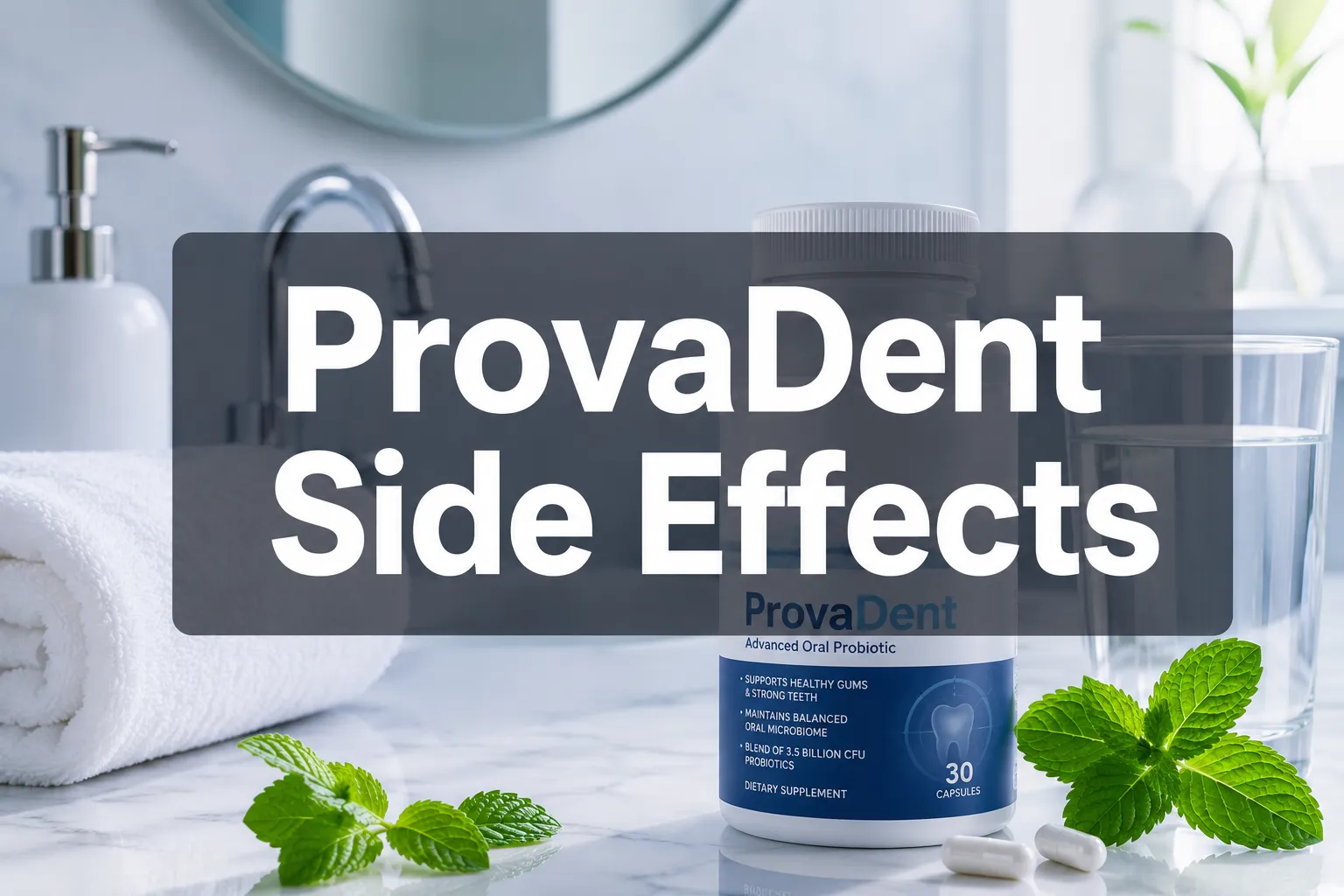
ProvaDent Side Effects
Last updated: July 25, 2026
Quick Answer: ProvaDent is generally considered safe for most healthy adults when taken as directed. The most commonly reported ProvaDent side effects are mild and temporary, including minor digestive discomfort and initial changes in oral sensation. Serious adverse reactions are rare, but certain groups, including pregnant women, children, and people on specific medications, should consult a doctor before use.
Key Takeaways
- Most ProvaDent side effects are mild, short-lived, and resolve within the first one to two weeks of use
- The formula contains probiotic strains and botanical ingredients that are well-tolerated by most adults
- Allergic reactions are possible but uncommon, typically linked to sensitivity to specific plant-based ingredients
- ProvaDent is not recommended for children under 18, pregnant women, or breastfeeding mothers without medical clearance
- There is no documented evidence that ProvaDent damages teeth or gums when used as directed
- Drug interactions are possible, particularly with immunosuppressants and certain antibiotics
- If side effects persist beyond two weeks, discontinue use and consult a healthcare provider
- Long-term use appears safe based on available ingredient data, but no independent clinical trials specific to ProvaDent have been published
- Always purchase from the official source to avoid counterfeit products that may carry additional risks
- ProvaDent side effects are generally milder than those associated with prescription oral treatments
What Are the Most Common ProvaDent Side Effects?
ProvaDent side effects reported by users are mostly minor and digestive in nature. The most frequent complaints include mild bloating, loose stools, or a temporary change in taste perception during the first few days of use.

Here is a breakdown of what users most commonly report:
- Mild digestive upset: Bloating, gas, or loose stools are the most common early reactions, especially when the gut is adjusting to new probiotic strains
- Temporary taste changes: Some users notice a slightly different taste in the mouth during the first week, which typically normalizes
- Mild oral tingling: Likely related to the peppermint or menthol-based components in the formula
- Headache: Reported infrequently and usually linked to detox-like responses in the first few days
- Dry mouth or increased salivation: Rare but noted in a small number of user reviews
Most of these effects appear within the first three to seven days and resolve on their own. If you experience persistent nausea or significant digestive disruption beyond two weeks, stop using the product and speak with a doctor.
What Ingredients in ProvaDent Might Cause Side Effects?
The ingredients most likely to trigger side effects in ProvaDent are the probiotic strains, plant-based extracts, and certain binding agents. Understanding these can help you assess your personal risk before starting.
Key ingredients and their associated risks:
| Ingredient | Potential Side Effect | Who Is Most at Risk |
|---|---|---|
| Lactobacillus strains (probiotics) | Bloating, gas, loose stools | People with IBS or compromised immunity |
| Peppermint extract | Oral tingling, heartburn | Those with acid reflux or mint sensitivity |
| Cranberry extract | Mild stomach upset | People on blood thinners (warfarin) |
| Xylitol | Digestive discomfort in high doses | Those with xylitol sensitivity |
| Inulin (prebiotic fiber) | Gas, bloating | People with fructose intolerance |
For context on how gut and oral microbiome ingredients interact with your system, see this guide on how the immune system is linked to gut health.
Is ProvaDent Safe to Use Long Term?
For most healthy adults, long-term use of ProvaDent appears to be safe based on the safety profiles of its individual ingredients. However, no independent, long-term clinical trial has been published specifically on ProvaDent as a product.
The probiotic strains used in formulas like ProvaDent (typically Lactobacillus and Bifidobacterium species) have been studied extensively. According to a 2020 review published in Nutrients, these strains are generally recognized as safe for ongoing daily use in healthy adults. The botanical extracts used, including cranberry and peppermint, also have well-established safety records at standard supplement doses.
Practical guidance for long-term use:
- Take the product as directed, without exceeding the recommended dose
- Reassess every three to six months and discuss with your dentist or doctor
- If you develop recurring digestive issues, consider a two-week break and reintroduce gradually
- Monitor for any new drug prescriptions that may interact with cranberry or probiotic ingredients
Does ProvaDent Cause Allergic Reactions?
Allergic reactions to ProvaDent are possible but uncommon. They are most likely to occur in people with known sensitivities to plant-based ingredients, particularly mint, cranberry, or certain prebiotic fibers.
Signs of a potential allergic reaction include:
- Swelling of the lips, tongue, or throat
- Skin rash or hives
- Itching inside the mouth
- Difficulty breathing (rare, seek emergency care immediately)
If you have a history of plant-based allergies, review the full ingredient list carefully before starting. You can also try a partial dose for the first two to three days to gauge your body’s response.
Can ProvaDent Damage Your Teeth or Gums?
No credible evidence suggests that ProvaDent damages teeth or gums when used as directed. The formula is designed to support the oral microbiome, not disrupt it.
The probiotic and prebiotic components aim to increase beneficial bacterial populations in the mouth, which can reduce the dominance of harmful bacteria linked to plaque, gum inflammation, and bad breath. For more on supporting beneficial oral bacteria naturally, see our guide on ways to boost beneficial mouth bacteria.
One caveat: some users with existing gum sensitivity report a brief period of increased sensitivity during the first week. This is likely a microbiome adjustment response rather than direct tissue damage, and it typically resolves within seven to ten days.
Who Should Avoid ProvaDent?
Certain groups should either avoid ProvaDent or use it only under medical supervision. This is not a product suited for everyone.
Do not use ProvaDent if you:
- Are under 18 years of age
- Are pregnant or breastfeeding
- Have a confirmed allergy to any listed ingredient
- Are immunocompromised (due to HIV, chemotherapy, organ transplant, etc.)
- Are currently taking immunosuppressant medications
- Have a diagnosed fructose intolerance or irritable bowel syndrome with known prebiotic sensitivity
Use with caution if you:
- Take blood thinners such as warfarin (cranberry extract may affect INR levels)
- Are on a course of antibiotics (probiotics are best spaced apart from antibiotic doses)
- Have a history of recurrent oral infections or candidiasis
If you are managing other health conditions alongside oral health concerns, it may be worth reviewing how other supplements interact with your regimen. For example, our review of hidden side effects in GaraHerb covers similar ingredient-related concerns worth understanding.
Is ProvaDent Safe for Kids?
ProvaDent is not recommended for children under 18. The formula has not been tested in pediatric populations, and the probiotic doses and botanical extracts are calibrated for adult physiology.
For children with oral health concerns, parents should consult a pediatric dentist who can recommend age-appropriate fluoride treatments, dental sealants, or pediatric-specific probiotic products that have been evaluated for younger users.
How Long Do ProvaDent Side Effects Last?
Most ProvaDent side effects last between three and fourteen days. Digestive symptoms like bloating and gas are typically the earliest to appear and the fastest to resolve, usually within the first week as the gut microbiome adjusts.

Timeline overview:
- Days 1-3: Possible bloating, gas, or mild oral tingling
- Days 4-7: Symptoms typically begin to ease as the body adapts
- Days 7-14: Most users report symptom resolution and improved oral comfort
- Beyond 14 days: Persistent symptoms are a signal to stop and consult a doctor
If any symptom worsens after the first week rather than improving, discontinue use immediately.
What Should I Do If I Experience ProvaDent Side Effects?
If you experience ProvaDent side effects, the first step is to assess whether they are mild and expected or severe and unexpected. Mild digestive symptoms do not necessarily require stopping the product.
Step-by-step response guide:
- Identify the symptom type. Digestive discomfort is expected. Swelling, rash, or breathing difficulty is not.
- Reduce your dose temporarily. If bloating is significant, take half the recommended dose for three to five days before returning to the full dose.
- Stay hydrated. Probiotic adjustments can cause temporary fluid shifts; adequate water intake helps.
- Space away from antibiotics. If you are on antibiotics, take ProvaDent at least two hours apart from your antibiotic dose.
- Seek medical attention immediately if you experience throat swelling, hives, or difficulty breathing.
- Contact the manufacturer if you believe you received a defective or counterfeit product.
For a broader view of how supplement side effects are reported and managed, our analysis of HepatoBurn side effects and complaints offers a useful parallel framework.
ProvaDent Side Effects Compared to Prescription Treatments
ProvaDent side effects are generally milder than those associated with prescription oral treatments. Prescription antimicrobial mouth rinses (such as chlorhexidine) commonly cause tooth staining, altered taste lasting weeks, and increased tartar buildup. Prescription antibiotics used for gum disease carry risks including antibiotic resistance, yeast overgrowth, and gastrointestinal disruption.
By comparison, ProvaDent’s reported side effect profile is limited primarily to temporary digestive adjustment. This makes it a lower-risk option for people seeking preventive oral support, though it is not a substitute for prescription treatment when infection or advanced periodontal disease is present.
Can You Overdose on ProvaDent?
Taking more than the recommended dose of ProvaDent is unlikely to cause a dangerous overdose, but it can amplify side effects significantly. Excess probiotic intake can cause pronounced bloating, diarrhea, and abdominal cramping. High doses of xylitol, if present in the formula, can cause osmotic diarrhea.
There is no documented case of a life-threatening overdose from ProvaDent or similar oral probiotic supplements in the published literature. However, always follow the label dosage and keep the product out of reach of children, as xylitol is toxic to dogs and can cause gastrointestinal distress in young children.
Does ProvaDent Work Without Side Effects?
Many users report noticeable improvements in breath freshness, gum comfort, and plaque reduction with no side effects at all. Based on user feedback patterns, the majority of adults who take ProvaDent as directed do not experience significant adverse effects.

The users most likely to experience side effects are those who:
- Have pre-existing digestive sensitivity
- Are taking the product alongside antibiotics
- Have undiagnosed food sensitivities to ingredients like inulin or xylitol
For a comparison with a similar oral health supplement, our DentaDuard reviews and complaints article provides useful context on how side effect profiles compare across this product category.
What Are Rare Side Effects of ProvaDent?
Rare ProvaDent side effects include oral thrush (candida overgrowth in susceptible individuals), persistent altered taste, and in very rare cases, systemic probiotic bacteremia in severely immunocompromised patients. The latter is documented in the broader probiotic literature and is not specific to ProvaDent, but it is a reason why immunocompromised individuals should avoid all probiotic supplements without physician clearance.
Other rare reports include:
- Increased tooth sensitivity during the first week (likely microbiome shift)
- Mild skin breakouts in users sensitive to certain herbal extracts
- Temporary changes in stool color or consistency
These effects are uncommon and generally self-limiting.
Frequently Asked Questions
Q: Can I take ProvaDent with my daily multivitamin?
Yes, in most cases. There are no known interactions between ProvaDent and standard multivitamins. Space them at least 30 minutes apart to avoid any potential absorption competition.
Q: How soon do ProvaDent side effects appear?
Most side effects appear within the first one to three days of starting the product. Digestive symptoms are typically the earliest to show up.
Q: Is it safe to take ProvaDent every day?
Yes, for healthy adults. The ingredients are formulated for daily use, and the probiotic strains included are well-studied for ongoing supplementation.
Q: Can ProvaDent interact with blood pressure medications?
No significant interaction has been documented between ProvaDent’s known ingredients and standard blood pressure medications. However, always inform your doctor about any new supplement you begin.
Q: What happens if I stop taking ProvaDent suddenly?
There are no known withdrawal effects. You can stop at any time without tapering.
Q: Is ProvaDent safe for people with diabetes?
Generally yes, but people with diabetes should note that xylitol, if present, affects blood sugar differently than regular sugar. It is still advisable to mention any new supplement to your diabetes care provider.
Q: Can ProvaDent cause bad breath to get worse before it gets better?
Some users report a brief increase in oral odor during the first few days, which may reflect a microbiome transition period. This typically resolves within the first week.
Q: Does ProvaDent interact with oral contraceptives?
No known interaction exists between ProvaDent’s ingredient profile and oral contraceptives.
Q: Is ProvaDent safe for people over 70?
Yes, for otherwise healthy older adults. Those over 70 who are on multiple medications should review the ingredient list with their pharmacist to rule out specific interactions.
Q: Can I use ProvaDent alongside my prescription mouthwash?
Use caution. Prescription antimicrobial rinses like chlorhexidine can kill the probiotic bacteria in ProvaDent if used at the same time. Space them by at least two hours, or ask your dentist for guidance.
Conclusion
ProvaDent side effects are, for the majority of users, mild, temporary, and manageable. The most common reactions, including digestive adjustment and brief oral sensitivity, typically resolve within one to two weeks. Serious adverse events are rare and are most likely to affect people with pre-existing immune conditions, plant-based allergies, or specific drug interactions.
Actionable next steps:
- Review the full ingredient list before purchasing, especially if you have known food sensitivities
- Start with the recommended dose, not more, and monitor your response during the first week
- Space ProvaDent doses away from antibiotics or prescription mouthwashes
- Consult your dentist or doctor if you are pregnant, immunocompromised, or managing a chronic health condition
- Discontinue use and seek medical advice if symptoms worsen after 14 days or if you experience any signs of an allergic reaction
For a broader evaluation of how ProvaDent performs beyond its side effect profile, including user results and ingredient effectiveness, see our full DentaDuard reviews and complaints analysis as a comparative reference. You may also find value in our guide on the surprising dental benefits of drinking pineapple water as a natural complement to your oral health routine.
References
- Suez, J., Zmora, N., Segal, E., & Elinav, E. (2019). The pros, cons, and many unknowns of probiotics. Nature Medicine, 25(5), 716-729.
- Gruner, D., Paris, S., & Schwendicke, F. (2016). Probiotics for managing caries and periodontitis: Systematic review and meta-analysis. Journal of Dentistry, 48, 16-25.
- Nase, L., Hatakka, K., Savilahti, E., et al. (2001). Effect of long-term consumption of a probiotic bacterium, Lactobacillus rhamnosus GG, in milk on dental caries and caries risk in children. Caries Research, 35(6), 412-420.
- Meurman, J. H. (2005). Probiotics: Do they have a role in oral medicine and dentistry? European Journal of Oral Sciences, 113(3), 188-196.
- Haukioja, A. (2010). Probiotics and oral health. European Journal of Dentistry, 4(3), 348-355.
Tags: ProvaDent side effects, oral health supplements, probiotic dental supplement, supplement safety, dental supplement risks, oral microbiome, supplement side effects, natural oral care, ProvaDent ingredients, gum health supplement, probiotic side effects, oral health 2026