Joint health supplements for women
Last updated: May 29, 2026
Quick Answer: Joint health supplements for women can meaningfully support flexibility, reduce everyday stiffness, and ease the discomfort that makes simple activities feel exhausting — especially for women over 50 dealing with arthritis, knee pain, or hip pain. The most effective formulas combine clinically studied ingredients like glucosamine, chondroitin, collagen, turmeric (curcumin), and Boswellia. Results typically begin within 4 to 12 weeks of consistent use, and natural options are generally safer for long-term use than prescription anti-inflammatories.
If you’ve been waking up with stiff knees, wincing on the stairs, or quietly giving up activities you love because the pain isn’t worth it anymore — you’re not alone, and this guide is written for you.
Key Takeaways
- Women over 50 experience joint pain at higher rates than men, partly due to declining estrogen, which affects cartilage health and inflammation levels.
- The most effective joint health supplements for women contain glucosamine, chondroitin, collagen type II, curcumin, and Boswellia serrata.
- Natural supplements work best when taken consistently for at least 4–8 weeks — they support the root causes of joint breakdown, not just temporary pain masking.
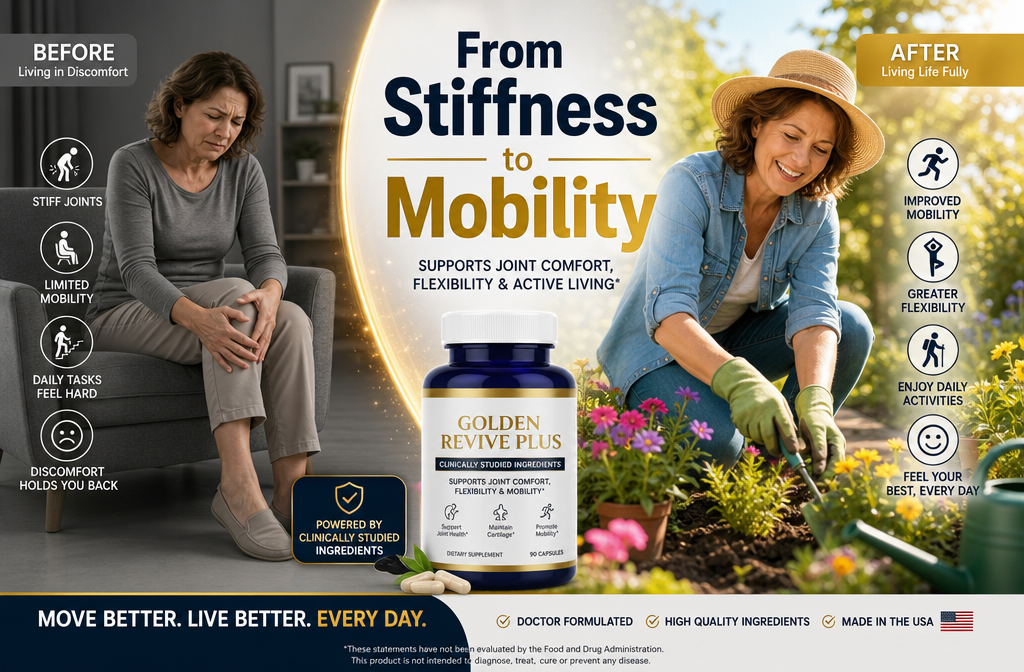
- Doctor-formulated options like Golden Revive Plus combine multiple evidence-backed ingredients in one formula to support mobility, comfort, and flexibility.
- Glucosamine and chondroitin work differently but complement each other — using them together is more effective than either alone.
- Vegan and vegetarian women have good options, including plant-based collagen boosters and Boswellia-based formulas.
- Common mistakes include choosing single-ingredient products, expecting overnight results, or picking supplements with poor bioavailability.
- Quality joint supplements typically cost $30–$80 per month — far less than ongoing injections or specialist visits.
What Are the Best Joint Supplements for Women Over 50?
The best joint supplements for women over 50 address the two core problems that worsen with age: cartilage breakdown and chronic low-grade inflammation. A formula that targets both — rather than just numbing pain — will deliver more lasting results.
The top ingredients to look for include:
| Ingredient | Primary Benefit | Typical Daily Dose |
|---|---|---|
| Glucosamine sulfate | Supports cartilage structure | 1,500 mg |
| Chondroitin sulfate | Retains cartilage moisture and elasticity | 800–1,200 mg |
| Collagen Type II | Rebuilds joint tissue | 40–80 mg (undenatured) |
| Curcumin (turmeric) | Reduces inflammatory pathways | 500–1,000 mg |
| Boswellia serrata | Eases stiffness and swelling | 100–400 mg |
| Hyaluronic acid | Lubricates joint fluid | 80–200 mg |
| Omega-3 fatty acids | Systemic anti-inflammatory support | 1,000–3,000 mg EPA/DHA |
Choose a multi-ingredient formula if you want comprehensive support rather than targeting one symptom. Single-ingredient supplements are fine for maintenance, but women dealing with active pain, stiffness, and reduced mobility typically see better results from a combined approach.
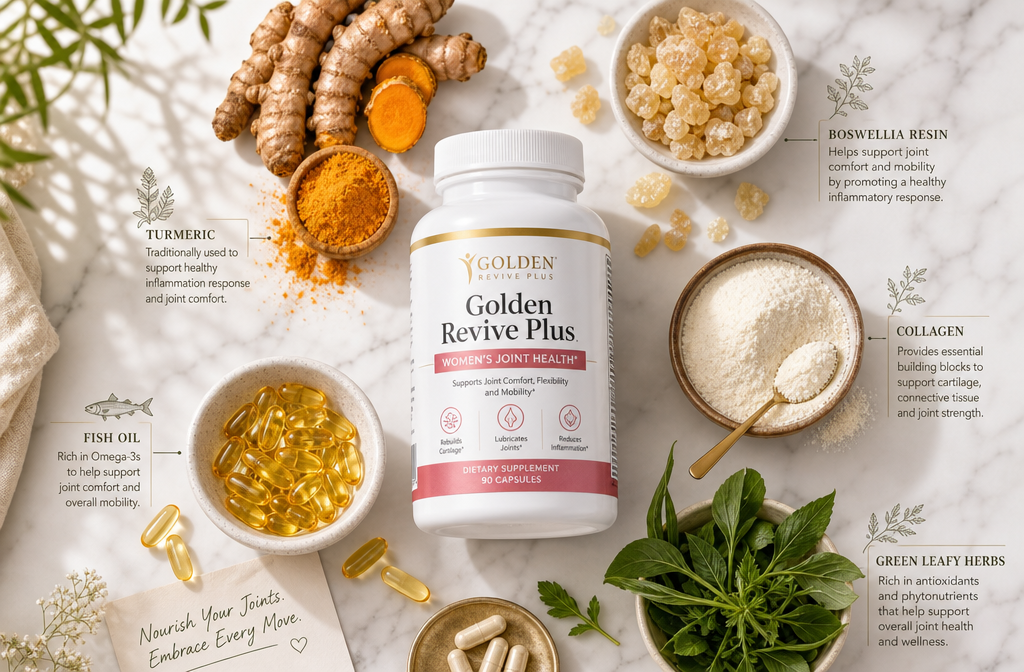
Golden Revive Plus is one of the most well-regarded doctor-formulated options in this category, designed specifically to address inflammation, stiffness, and joint comfort using a synergistic blend of natural ingredients.
👉 Start Moving Comfortably Again — Try Golden Revive Plus Today
How Do Collagen Supplements Help With Joint Pain?
Collagen supplements help with joint pain by supplying the raw building blocks your body needs to maintain and repair cartilage — the cushioning tissue that protects bones from grinding against each other. As women age, natural collagen production declines significantly, which accelerates joint wear.
Type II collagen is the specific form found in joint cartilage. Undenatured Type II collagen (UC-II) works through a process called oral tolerance, where small doses train the immune system to stop attacking joint tissue — a key factor in autoimmune-related arthritis. Hydrolyzed collagen peptides, on the other hand, are broken down for easier absorption and help stimulate the body’s own collagen synthesis.
Key points:
- Collagen works best when combined with Vitamin C, which is essential for collagen synthesis.
- Results from collagen supplementation typically appear after 8–12 weeks of daily use.
- Women with osteoarthritis tend to respond especially well to Type II collagen.
For a broader look at supplements that support women’s structural health, see our bone and joint health resource center.
Are Natural Joint Supplements Better Than Prescription Options?
For long-term daily use, natural joint supplements are generally safer than prescription NSAIDs or corticosteroids, which carry real risks including gastrointestinal damage, cardiovascular strain, and bone density loss with extended use. Natural options don’t mask pain — they work to address the underlying inflammation and tissue degradation that cause it.
That said, prescription options may be appropriate for acute flare-ups or severe arthritis where immediate relief is necessary. The smarter approach for most women over 50 is to use natural supplements consistently for long-term support while reserving stronger medications for crisis moments — not daily use.
Natural supplements win for:
- Long-term safety and tolerability
- Supporting root causes (inflammation, cartilage health)
- Daily use without dependency or side effects
- Combining multiple benefits in one formula
Prescription options may still be needed for:
- Severe rheumatoid arthritis flares
- Post-surgical recovery
- Acute injury management
Also worth noting: women managing blood sugar alongside joint inflammation may find that metabolic health plays a role in inflammation levels. Our guide to natural blood sugar supplements covers how glucose management connects to whole-body inflammation.
What Ingredients Should I Look for in a Joint Health Supplement?
The best joint health supplements for women contain ingredients that work on at least two of the three core problems: inflammation, cartilage breakdown, and joint lubrication. Here’s how to evaluate a label quickly:
Must-have ingredients:
- Curcumin with piperine — curcumin alone has poor absorption; piperine (black pepper extract) increases bioavailability by up to 2,000% according to research published in Planta Medica.
- Boswellia serrata extract — specifically look for AKBA (acetyl-11-keto-β-boswellic acid), the most active anti-inflammatory compound in Boswellia.
- Glucosamine sulfate (not hydrochloride, which has weaker evidence).
- Chondroitin sulfate from bovine or marine sources.
- Collagen Type II or hydrolyzed collagen peptides.
Bonus ingredients that add real value:
- Hyaluronic acid (joint lubrication)
- Quercetin (antioxidant, anti-inflammatory)
- Magnesium (muscle and nerve function around joints)
- Vitamin D3 (bone density support)
Red flags on a label:
- Proprietary blends that hide individual doses
- No third-party testing certification
- Curcumin listed without a bioavailability enhancer
- Unrealistically low price for a multi-ingredient formula
Golden Revive Plus includes several of these key ingredients in clinically relevant doses, which is why it stands out among doctor-formulated joint support options.
👉 Support Your Joints Naturally — See What Golden Revive Plus Contains
How Long Does It Take to See Results From Joint Supplements?
Most women notice initial improvements in stiffness and comfort within 4 to 6 weeks, with more significant changes in mobility and pain levels appearing between 8 and 12 weeks of consistent daily use. This timeline reflects how the body actually works — rebuilding cartilage and calming chronic inflammation takes time.
Realistic timeline:
- Weeks 1–2: Some women notice reduced morning stiffness and slightly better sleep quality.
- Weeks 3–6: Reduced discomfort during daily activities like walking or climbing stairs.
- Weeks 8–12: Noticeable improvement in flexibility, range of motion, and overall joint comfort.
- 3–6 months: Full benefits of cartilage-supporting ingredients become apparent.
Common mistake: Stopping too early. Many women quit after two weeks because they don’t feel dramatic results. Joint supplements are not painkillers — they work gradually by addressing the underlying biology. Consistency is everything.
Which Joint Supplements Work Fastest for Arthritis Symptoms?
For faster relief from arthritis symptoms, Boswellia serrata and curcumin tend to produce the quickest noticeable results because they act directly on inflammatory pathways. Some women report reduced stiffness and improved morning mobility within 2–3 weeks of starting a Boswellia-rich formula.
Hyaluronic acid also works relatively quickly for joint lubrication — some studies suggest improvements in knee comfort within 4 weeks for women with mild to moderate osteoarthritis.
Fastest-acting natural ingredients (in order):
- Boswellia serrata (AKBA form)
- Curcumin with piperine
- Hyaluronic acid
- Omega-3 fatty acids
- Glucosamine/chondroitin (slower but more structural)
If you’re also dealing with nerve-related discomfort alongside joint pain, our guide to nerve health supplements covers complementary options worth knowing about.
What’s the Difference Between Glucosamine and Chondroitin Supplements?
Glucosamine and chondroitin are different compounds that work on different aspects of cartilage health — and they work better together than separately. Glucosamine is an amino sugar that helps build and repair cartilage tissue. Chondroitin is a complex carbohydrate that helps cartilage retain water, keeping it resilient and shock-absorbing.
Think of it this way: glucosamine builds the structure; chondroitin keeps it hydrated and flexible.
Research from the NIH-funded GAIT trial found that the combination of glucosamine and chondroitin was more effective for moderate-to-severe knee osteoarthritis than either ingredient alone. This is why most quality joint supplements include both.
Choose glucosamine sulfate over glucosamine hydrochloride — the sulfate form has stronger clinical evidence for joint outcomes.
Do Joint Supplements Really Work, or Is It Just Marketing?
Joint supplements do work for many people — but the evidence varies significantly by ingredient, dose, and formulation quality. The honest answer is: the right ingredients at the right doses, taken consistently, produce real results for most women with mild to moderate joint issues. They are not a cure for advanced arthritis, and they won’t replace cartilage that’s already severely degraded.
The strongest clinical evidence exists for:
- Glucosamine + chondroitin (multiple randomized controlled trials for knee osteoarthritis)
- Curcumin/turmeric (anti-inflammatory effects supported by research published in journals including the Journal of Medicinal Food)
- Boswellia serrata (studies published in Phytomedicine show significant reduction in knee pain and stiffness)
- Undenatured Type II collagen (UC-II studied in both osteoarthritis and rheumatoid arthritis populations)
The marketing problem in this industry is real: many products underdose key ingredients or use poor-quality forms. That’s why choosing a doctor-formulated product with transparent dosing matters.
For a curated list of top-performing options, see our top 5 best supplements for joint discomfort.
👉 Ready to Feel the Difference? Try Golden Revive Plus Risk-Free
Are There Any Side Effects of Taking Joint Health Supplements?
Most natural joint health supplements are well-tolerated, especially compared to NSAIDs or corticosteroids. That said, a few considerations apply:
- Glucosamine is derived from shellfish in most formulas — women with shellfish allergies should choose a vegan or synthetic form.
- Curcumin can interact with blood thinners (warfarin) at high doses. If you’re on anticoagulants, check with your doctor first.
- Boswellia is generally very safe but may cause mild digestive upset in some people when taken on an empty stomach.
- Fish oil/omega-3s can cause fishy burps and may mildly thin the blood at very high doses.
- Chondroitin is derived from animal cartilage — not suitable for strict vegans.
Who should consult a doctor before starting:
- Women on blood thinners or immunosuppressants
- Those with shellfish allergies (for standard glucosamine)
- Women with active gallbladder issues (high-dose turmeric may stimulate bile)
- Anyone scheduled for surgery within two weeks
Can Vegetarian or Vegan Women Find Effective Joint Health Options?
Yes — vegetarian and vegan women have several strong options for joint support, though they’ll need to read labels carefully. The main challenge is that glucosamine, chondroitin, and Type II collagen are typically animal-derived.
Vegan-friendly joint support ingredients:
- Boswellia serrata (100% plant-based)
- Curcumin/turmeric (plant-based)
- Vitamin C (supports collagen synthesis without animal products)
- Vegan glucosamine (derived from fermented corn or fungi — available but less common)
- Plant-based omega-3s (algae oil provides EPA and DHA without fish)
- Silica from bamboo or horsetail extract (supports connective tissue)
- Quercetin (plant-derived antioxidant with anti-inflammatory properties)
Look for supplements labeled “suitable for vegetarians/vegans” and verify the glucosamine source specifically. A Boswellia + curcumin combination is a solid plant-based foundation for joint support.
Common Mistakes Women Make When Choosing Joint Supplements
Choosing the wrong supplement is one of the most common reasons women don’t see results — and it leads to the false conclusion that “supplements don’t work.”
The most common mistakes:
- Choosing price over quality. Cheap products often underdose key ingredients or use inferior forms (glucosamine HCl instead of sulfate, curcumin without piperine).
- Expecting results in days. Joint supplements rebuild tissue over weeks and months — not overnight.
- Taking supplements inconsistently. Missing days frequently prevents the steady-state levels needed for anti-inflammatory effects.
- Ignoring bioavailability. Curcumin without piperine, or magnesium oxide instead of glycinate — the form matters enormously.
- Buying single-ingredient products when multiple mechanisms need addressing.
- Not pairing supplements with basic lifestyle support — staying hydrated, gentle movement, and maintaining a healthy weight all amplify results.
Women who address their joint health as part of a broader wellness approach — including hormonal balance, which affects inflammation — tend to see better outcomes. Our article on natural ways to balance hormones in women over 30 explains the connection between estrogen decline and joint health in more detail.
How Much Do Good Joint Health Supplements Cost?
Quality joint health supplements for women typically cost between $30 and $80 per month, depending on the number of ingredients and the quality of sourcing. Here’s a rough breakdown:
| Price Range | What to Expect |
|---|---|
| Under $20/month | Usually single-ingredient or underdosed formulas |
| $20–$40/month | Basic glucosamine/chondroitin combos, decent quality |
| $40–$70/month | Multi-ingredient formulas with good bioavailability |
| $70–$100/month | Premium doctor-formulated options with full therapeutic doses |
For context: A single cortisone injection can cost $100–$300 out of pocket. A specialist visit runs $150–$400. Spending $50–$70 per month on a high-quality supplement that actually addresses root causes is genuinely cost-effective by comparison.
Golden Revive Plus falls in the premium-but-reasonable range and is often available at a discount when purchased as a multi-month supply.
👉 Don’t Let Pain Cost You More — Get Golden Revive Plus at the Best Price
Can Young Women Take Joint Supplements, or Are They Just for Older People?
Joint supplements are not exclusively for older women. Younger women — particularly those who are athletic, have a history of joint injuries, carry extra weight, or have a family history of arthritis — can benefit from preventive joint support starting in their 30s or 40s.
That said, the primary audience and strongest evidence base is for women over 50, where estrogen decline, cumulative cartilage wear, and slower tissue repair make supplementation most impactful.
Younger women who may benefit:
- Athletes or runners with repetitive joint stress
- Women with early-onset osteoarthritis
- Those recovering from knee, hip, or shoulder injuries
- Women with inflammatory conditions like lupus or rheumatoid arthritis
For younger women, collagen peptides and omega-3s are often the best starting point — they support joint health without the higher doses of glucosamine/chondroitin typically needed for active arthritis.
Frequently Asked Questions
What is the single best joint supplement for women over 60?
There’s no single “best” supplement, but the most effective options combine glucosamine sulfate, chondroitin, curcumin with piperine, and Boswellia serrata in one formula. Golden Revive Plus is a doctor-formulated option that brings these key ingredients together for comprehensive joint support.
How do I know if a joint supplement is actually working?
Track your symptoms weekly: morning stiffness duration, pain level during activity (scale of 1–10), and how far you can walk comfortably. Most women notice measurable improvement in stiffness within 4–6 weeks and in pain and mobility within 8–12 weeks.
Is turmeric good for joint pain in women?
Yes. Curcumin, the active compound in turmeric, has well-documented anti-inflammatory effects supported by multiple peer-reviewed studies. For joint pain, it works best in a standardized extract form (95% curcuminoids) combined with piperine for absorption. Standard kitchen turmeric powder doesn’t provide therapeutic doses.
Can joint supplements replace pain medication?
For mild to moderate joint pain, many women are able to reduce or eliminate reliance on OTC pain medications after consistent use of quality joint supplements. However, this should always be done in consultation with a healthcare provider — never abruptly stop prescribed medications without medical guidance.
Are joint health supplements for women different from men’s formulas?
Most quality joint supplements are formulated for general adult use. However, women over 50 have specific needs related to estrogen decline and its effect on cartilage and bone density. Some women’s formulas add Vitamin D3, calcium, and magnesium to address these additional factors.
What’s the best time of day to take joint supplements?
Most joint supplements are best taken with food to improve absorption and reduce any risk of digestive upset. Curcumin specifically absorbs better with a fatty meal. Splitting doses (morning and evening) can help maintain more consistent blood levels throughout the day.
Can I take joint supplements with other medications?
Most are safe alongside common medications, but curcumin and fish oil can interact with blood thinners. Always review your supplement list with your pharmacist or doctor, especially if you take warfarin, aspirin therapy, or immunosuppressants.
Is it safe to take joint supplements long-term?
Yes, for the vast majority of women. Glucosamine, chondroitin, collagen, and Boswellia have strong long-term safety profiles in clinical literature. They are designed for sustained daily use — unlike NSAIDs, which carry increasing risk with prolonged use.
Do joint supplements help with back pain?
They can help with back pain that originates from joint inflammation or disc degeneration, since the same anti-inflammatory and cartilage-supporting mechanisms apply. However, back pain has many causes — muscular, structural, neurological — so supplements work best as part of a broader approach that may include physical therapy or movement practice. For nerve-related back pain, our nerve regeneration supplement guide may also be relevant.
Why does joint pain get worse after menopause?
Estrogen plays a protective role in joint health — it helps regulate inflammation and supports the maintenance of cartilage. After menopause, declining estrogen levels accelerate cartilage breakdown and increase inflammatory sensitivity, which is why many women experience a noticeable worsening of joint symptoms in their 50s. This is also why joint supplements that address inflammation directly are especially valuable for post-menopausal women.
Conclusion: You Deserve to Move Freely Again
Joint pain doesn’t have to be your new normal. If you’ve been quietly accepting stiffness, skipping activities you love, or dreading the stairs every morning — there is a real, natural path forward.
The right joint health supplements for women work by addressing what’s actually happening in your joints: inflammation building up, cartilage wearing down, and the natural cushioning that keeps movement comfortable slowly diminishing. Ingredients like curcumin, Boswellia, glucosamine sulfate, chondroitin, and collagen Type II have decades of research behind them — and when combined in the right doses, they can genuinely change how you feel and move.
Here’s your action plan:
- Start with a multi-ingredient formula that includes at least curcumin (with piperine), Boswellia, and glucosamine sulfate.
- Commit to at least 8 weeks of consistent daily use before evaluating results.
- Track your progress weekly — stiffness duration, activity tolerance, sleep quality.
- Support your supplements with gentle movement, hydration, and an anti-inflammatory diet.
- Discuss with your doctor if you’re on blood thinners or managing a diagnosed autoimmune condition.
You should be able to walk to the mailbox without wincing. You should be able to kneel in the garden, board a plane for vacation, and chase your grandchildren without paying for it the next morning. That’s not too much to ask — and it’s more achievable than you might think.
Golden Revive Plus is a doctor-formulated option built around these exact principles: natural ingredients, therapeutic doses, and a formula designed to support your joints from the inside out — not just mask the pain.
👉 Take the First Step Toward Pain-Free Movement — Try Golden Revive Plus Now
Also worth exploring as part of your overall wellness: our article on what happens when you ignore aching joints or weak bones explains why early action matters more than most people realize.
References
Towheed TE, et al. “Glucosamine therapy for treating osteoarthritis.” Cochrane Database of Systematic Reviews, 2005. Cochrane Library
Belcaro G, et al. “Efficacy and safety of Meriva®, a curcumin-phosphatidylcholine complex, during extended administration in osteoarthritis patients.” Alternative Medicine Review, 2010.
Kimmatkar N, et al. “Efficacy and tolerability of Boswellia serrata extract in treatment of osteoarthritis of knee.” Phytomedicine, 2003. ScienceDirect
Clegg DO, et al. “Glucosamine, chondroitin sulfate, and the two in combination for painful knee osteoarthritis.” New England Journal of Medicine, 2006. NEJM
Shep D, et al. “Safety and efficacy of curcumin versus diclofenac in knee osteoarthritis: a randomized open-label parallel-arm study.” Trials, 2019. BioMed Central
Tags: joint health supplements for women, joint pain relief, supplements for arthritis, glucosamine chondroitin, turmeric for joints, Boswellia serrata, collagen for joints, women over 50 joint health, natural anti-inflammatory supplements, knee pain relief, hip pain supplements, Golden Revive Plus