ProDentim Ingredients: What’s Inside This Oral Health Formula?
Last updated: July 25, 2026
Quick Answer: ProDentim is an oral probiotic supplement containing five clinically studied probiotic strains alongside natural compounds including inulin, malic acid, tricalcium phosphate, and peppermint. These ingredients are designed to support a balanced oral microbiome, healthier gums, fresher breath, and stronger teeth. ProDentim does not contain fluoride, which means it works differently from conventional toothpaste and is intended as a complement to, not a replacement for, standard dental hygiene.
Key Takeaways
- ProDentim contains 3.5 billion CFU of probiotic bacteria per tablet, primarily from the Lactobacillus and Bifidobacterium families.
- The formula is fluoride-free, relying instead on probiotic strains, inulin, malic acid, and tricalcium phosphate for oral support.
- Inulin acts as a prebiotic that feeds beneficial bacteria in the mouth, helping the probiotic strains survive and colonize.
- Most ProDentim ingredients are naturally sourced; the formula is free from synthetic additives, GMOs, and stimulants.
- Clinical research supports the individual ingredients, but no published clinical trial has tested the ProDentim formula as a whole product.
- The supplement is generally considered safe for adults, including those with sensitive teeth, but people with dairy allergies should check the label carefully due to potential milk-derived probiotic carriers.
- Realistic results typically begin appearing between two and four weeks, with more consistent changes reported after 60 to 90 days of daily use.
- ProDentim is not a treatment for active gum disease, cavities, or dental infections and should not replace professional dental care.
What Are the Main ProDentim Ingredients?
ProDentim’s formula centers on five probiotic strains combined with four supporting compounds. Together, these ingredients target the oral microbiome rather than simply cleaning tooth surfaces.
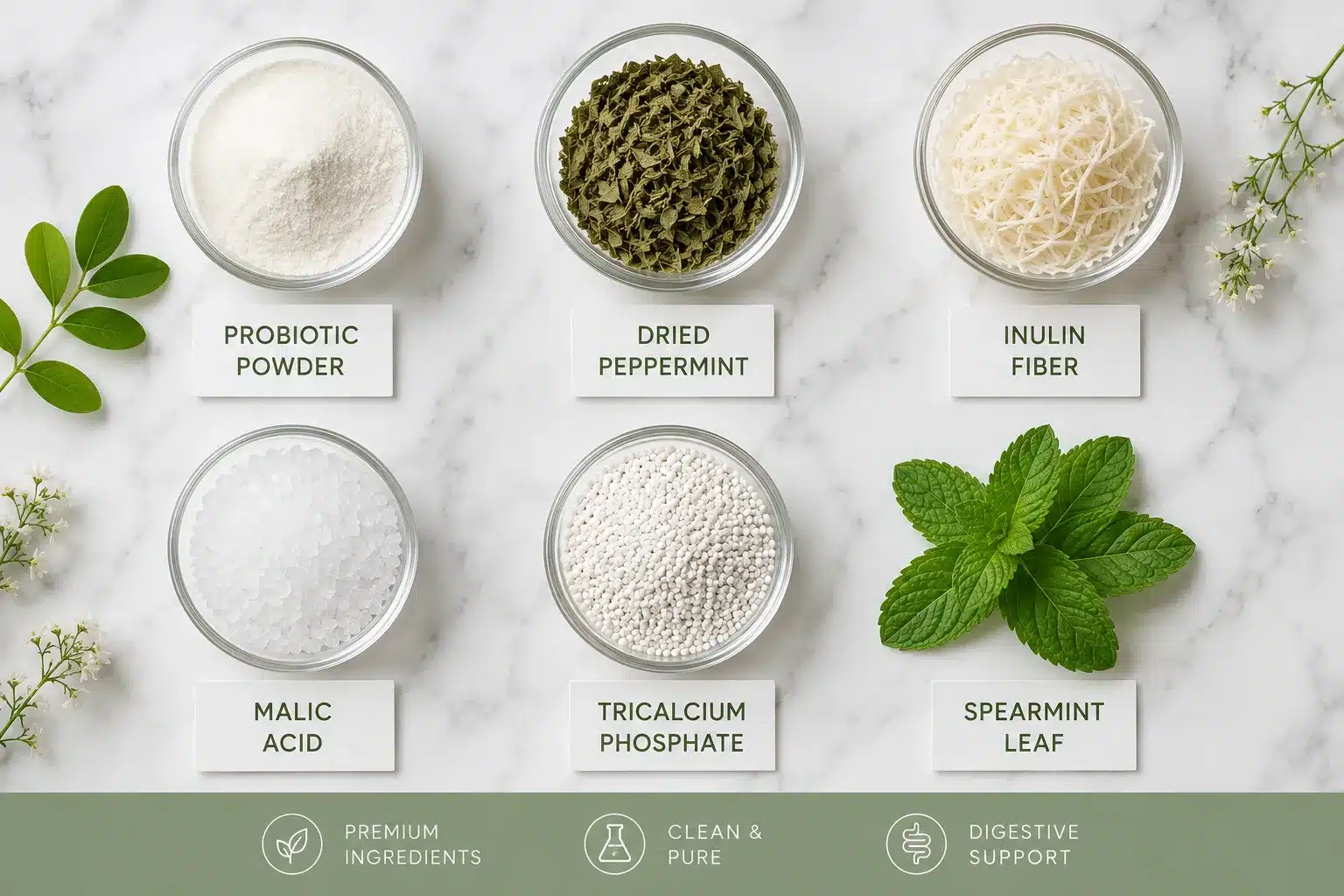
Here is a full breakdown of every ingredient in the ProDentim formula:
Probiotic Strains
1. Lactobacillus Paracasei
- Purpose: Supports gum health and sinus clarity
- Evidence: A 2020 review in the journal Beneficial Microbes found that L. paracasei strains can inhibit the growth of periodontal pathogens including Porphyromonas gingivalis
- Evidence level: Moderate
- Possible side effects: Rare; mild bloating in sensitive individuals
2. Lactobacillus Reuteri
- Purpose: Reduces gingival inflammation and inhibits harmful oral bacteria
- Evidence: A 2014 randomized controlled trial published in the Journal of Clinical Periodontology found L. reuteri lozenges significantly reduced gingival bleeding and plaque scores compared to placebo
- Evidence level: Strong (for gum inflammation specifically)
- Possible side effects: Minimal; generally well tolerated
3. B.lactis BL-04
- Purpose: Supports a balanced oral and respiratory microbiome; may reduce upper respiratory tract infections
- Evidence: Studies published in the British Journal of Nutrition (2009) found BL-04 supplementation reduced the incidence of respiratory illness in adults
- Evidence level: Moderate
- Possible side effects: None commonly reported
4. Lactobacillus Salivarius
- Purpose: Inhibits growth of Streptococcus mutans, the primary bacteria linked to tooth decay
- Evidence: A 2011 study in the Archives of Oral Biology demonstrated that L. salivarius reduced S. mutans counts in saliva
- Evidence level: Moderate
- Possible side effects: Rare
5. Bifidobacterium Longum
- Purpose: Reduces oral inflammation; supports immune response in gum tissue
- Evidence: Research in Nutrients (2019) linked B. longum supplementation to reduced markers of systemic inflammation
- Evidence level: Moderate
- Possible side effects: Mild digestive adjustment in first week
Supporting Compounds
6. Inulin (from chicory root)
- Purpose: Prebiotic fiber that feeds and sustains beneficial oral bacteria
- Evidence: Well established in gut microbiome literature; emerging evidence supports prebiotic effects in the oral cavity
- Evidence level: Moderate for oral use
7. Malic Acid (from strawberries)
- Purpose: Natural tooth whitening agent; stimulates saliva production
- Evidence: Malic acid is recognized in dental literature as a mild enamel-safe whitening agent; a 2013 study in General Dentistry found it effective for surface stain removal
- Evidence level: Moderate
8. Tricalcium Phosphate
- Purpose: Supports enamel remineralization; provides calcium for tooth structure
- Evidence: Tricalcium phosphate is used in some fluoride-free remineralization products; research in the Journal of Dentistry supports its role in mineral replenishment
- Evidence level: Moderate
9. Peppermint
- Purpose: Natural antibacterial; freshens breath; reduces oral bacteria load
- Evidence: Peppermint oil has demonstrated antimicrobial activity against common oral pathogens in multiple in-vitro studies
- Evidence level: Moderate (in-vitro; limited clinical trials)
ProDentim Ingredient Evidence Table
| Ingredient | Primary Purpose | Evidence Level | Rating |
|---|---|---|---|
| L. Paracasei | Gum health, pathogen inhibition | Moderate | Good |
| L. Reuteri | Gingival inflammation | Strong | Excellent |
| B.lactis BL-04 | Microbiome balance | Moderate | Good |
| L. Salivarius | S. mutans inhibition | Moderate | Good |
| B. Longum | Inflammation, immunity | Moderate | Good |
| Inulin | Prebiotic support | Moderate | Good |
| Malic Acid | Whitening, saliva | Moderate | Fair |
| Tricalcium Phosphate | Enamel remineralization | Moderate | Good |
| Peppermint | Breath, antibacterial | Limited (clinical) | Fair |
Does ProDentim Have Fluoride, and Does It Work Without It?
ProDentim does not contain fluoride. This is a deliberate formulation choice, not an oversight. The product works through a different mechanism: rather than hardening enamel with fluoride ions, it attempts to shift the oral bacterial environment toward health-promoting species that naturally reduce acid production and inflammation.
Whether it works without fluoride depends on what you need it for. For people seeking microbiome support, fresher breath, or gum health, the fluoride-free formula is reasonable. For active cavity prevention, fluoride toothpaste remains the gold standard according to the American Dental Association. ProDentim is best used alongside a fluoride toothpaste, not as a replacement.
For more guidance on building a complete oral care routine, see our resource on how to improve gum health quickly.
How Much Lactobacillus Is in ProDentim?
Each ProDentim tablet delivers 3.5 billion CFU (colony forming units) total across all five probiotic strains. The manufacturer does not publicly disclose the exact CFU count per individual strain, which is a minor transparency limitation.
For context, most oral probiotic research uses doses between 1 billion and 10 billion CFU per day. ProDentim’s 3.5 billion CFU falls within the commonly studied range, though it sits on the lower end of doses used in some clinical trials targeting periodontal disease specifically.
What Does Inulin Do in ProDentim?
Inulin is a prebiotic fiber derived from chicory root, and it plays a supporting role that most people overlook. Probiotics need a food source to survive and colonize. Without a prebiotic, probiotic bacteria may pass through the oral cavity without establishing a meaningful presence.
In ProDentim, inulin selectively feeds the beneficial bacterial strains in the formula, giving them a competitive advantage over harmful species like Streptococcus mutans and Fusobacterium nucleatum. This prebiotic-probiotic pairing (sometimes called a “synbiotic” approach) is also used in gut health supplements. For a related look at how synbiotic formulas work, see our NativePath Synbiotic review.
Are ProDentim Ingredients Natural or Synthetic?
All nine ProDentim ingredients are naturally sourced or naturally derived. The probiotic strains are grown through fermentation, inulin comes from chicory root, malic acid is sourced from strawberries, and peppermint is a botanical extract. Tricalcium phosphate is a mineral compound found naturally in bone and teeth.
The formula is free from:
- Artificial colors and flavors
- GMO ingredients
- Gluten
- Stimulants
- Synthetic binders (per manufacturer claims)
That said, “natural” does not automatically mean safe for everyone. People with specific sensitivities should review the full label.
ProDentim Ingredients and Scientific Studies: What the Research Actually Shows
This is the distinction that most reviews skip: there is a difference between studies on individual ingredients and studies on ProDentim as a finished product.
What has been studied:
- L. reuteri in oral health: Multiple randomized controlled trials support its role in reducing gingival bleeding and plaque (Krasse et al., Journal of Clinical Periodontology, 2006; Iniesta et al., 2012)
- L. paracasei against periodontal pathogens: Reviewed in Beneficial Microbes (2020)
- Malic acid for tooth stain removal: Studied in General Dentistry (2013)
- Tricalcium phosphate for remineralization: Supported in Journal of Dentistry literature
What has NOT been studied:
- The ProDentim formula as a complete product in a peer-reviewed clinical trial
- The combined synergistic effect of all nine ingredients together
- Long-term safety data specific to this formulation
This distinction matters. Individual ingredient evidence is encouraging, but it does not guarantee the same results from a combined tablet. Buyers should weigh this honestly.
ProDentim Ingredients for Gum Disease: What Can They Realistically Do?
ProDentim ingredients, particularly L. reuteri and L. paracasei, have the strongest evidence for supporting gum health. L. reuteri in particular has been shown in clinical trials to reduce gingival bleeding index scores and lower levels of inflammatory cytokines in gum tissue.
However, there is an important boundary here. ProDentim is a supplement, not a treatment. It cannot:
- Reverse advanced periodontitis
- Replace scaling and root planing
- Treat active dental infections
- Regenerate bone loss around teeth
For mild gum sensitivity, early-stage gingivitis, or maintenance after professional treatment, the probiotic ingredients in ProDentim offer plausible support. For active gum disease, see a periodontist. You can also read our guide on how to cure gum disease at home for complementary strategies.
Is ProDentim Safe for Sensitive Teeth?
ProDentim is generally considered safe for people with sensitive teeth. The formula contains no harsh abrasives, no peroxide, and no acidic pH-altering compounds in concentrations that would worsen sensitivity. Malic acid is present in mild amounts consistent with food-grade use.
Tricalcium phosphate may actually benefit sensitive teeth by contributing to enamel mineral replenishment, though the evidence for this specific benefit in supplement form (rather than topical application) is limited.
Choose ProDentim if you have sensitivity and want a gentle, non-abrasive oral support supplement. Avoid it if you are looking for a clinically proven desensitizing treatment, as that requires products containing potassium nitrate or stannous fluoride.
Can You Use ProDentim If You Are Allergic to Dairy?
This is a legitimate concern. Some probiotic strains, including certain Lactobacillus species, are cultured on dairy-based growth media. Trace amounts of milk proteins can remain in the final product, which may trigger reactions in people with severe dairy allergies or lactose intolerance.
ProDentim’s manufacturer states the product is non-GMO and free from many common allergens, but the label does not explicitly confirm it is certified dairy-free. If you have a diagnosed dairy allergy, contact the manufacturer directly before purchasing and consult your allergist.
ProDentim Ingredients Side Effects: What to Expect
ProDentim ingredients are well tolerated by most adults. Reported side effects are uncommon and generally mild.
Possible side effects include:
- Mild digestive adjustment in the first week (from probiotic strains)
- Temporary changes in stool consistency (rare, resolves within days)
- Mild oral sensitivity in people with very reactive gum tissue (rare)
Who should exercise caution:
- People who are immunocompromised (live probiotic bacteria carry a small theoretical risk)
- Pregnant or breastfeeding women (insufficient safety data for this formula specifically)
- Children under 18 (not formulated or tested for pediatric use)
- Anyone on immunosuppressant medications
If you are managing a chronic condition or taking prescription medications, speak with your doctor before starting any probiotic supplement.
ProDentim vs Other Probiotic Oral Supplement Ingredients
ProDentim sits in a growing category of oral probiotic supplements. Here is how its ingredient profile compares to similar products:
| Feature | ProDentim | Dentitox Pro | Steel Bite Pro |
|---|---|---|---|
| Probiotic strains | 5 strains, 3.5B CFU | None | None |
| Prebiotic (inulin) | Yes | No | No |
| Fluoride | No | No | No |
| Herbal extracts | Peppermint | Multiple herbs | Multiple herbs |
| Remineralization support | Tricalcium phosphate | Vitamins/minerals | Limited |
| Primary mechanism | Oral microbiome | Nutrient support | Herbal antibacterial |
ProDentim’s main differentiator is its probiotic-first approach. Most competing oral supplements rely on vitamins, minerals, or herbal extracts. If the oral microbiome is your primary concern, ProDentim’s ingredient profile is more targeted than most alternatives. For a broader comparison of oral health supplements, see our best oral health supplements guide.
How Long Do ProDentim Ingredients Take to Work?
Results depend on the individual, the specific concern being addressed, and consistency of use. Based on the clinical literature for the individual probiotic strains, here is a realistic timeline:
- Week 1-2: Some users notice fresher breath and a cleaner feeling in the mouth. These early changes are likely due to peppermint and initial shifts in bacterial populations.
- Week 3-4: Probiotic strains begin establishing a more stable presence in the oral microbiome. Mild reductions in gum sensitivity may begin.
- Day 30-60: More consistent changes in gum health, reduced bleeding on brushing, and improved breath control are reported by users who respond well.
- Day 60-90: The most meaningful improvements in gum tissue health and oral comfort are typically reported at this stage, consistent with probiotic colonization timelines in clinical studies.
Common mistake: Stopping use after two weeks because results are not dramatic. Probiotic oral supplements require consistent daily use to maintain bacterial populations. Stopping abruptly can reverse microbiome shifts within days.
Who Should Consider ProDentim, and Who Should Avoid It

ProDentim may be a reasonable choice for:
- Adults aged 35 and older experiencing early gum sensitivity or bleeding
- People with persistent bad breath not resolved by standard hygiene
- Those who have completed professional periodontal treatment and want maintenance support
- Health-conscious consumers seeking to support a balanced oral microbiome naturally
- People with dry mouth who want to support saliva production (malic acid may help)
ProDentim is not appropriate for:
- Anyone expecting it to treat or reverse diagnosed periodontal disease
- Children under 18
- Pregnant or breastfeeding women without physician approval
- People with severe dairy allergies (until dairy-free status is confirmed)
- Anyone with an active dental infection or abscess (see a dentist immediately)
For anyone interested in a broader approach to oral care, our guide on oral hygiene tips and resources covers complementary strategies worth reviewing.
Frequently Asked Questions About ProDentim Ingredients
Q: Does ProDentim rebuild tooth enamel?
A: Tricalcium phosphate in ProDentim can support mineral replenishment, but it does not rebuild enamel the way fluoride-based remineralization products do. It may help slow enamel mineral loss rather than reverse existing damage.
Q: Is ProDentim FDA approved?
A: No. ProDentim is a dietary supplement, and dietary supplements are not FDA approved. The FDA does regulate supplement manufacturing standards (cGMP), but it does not evaluate supplements for efficacy before they reach the market.
Q: Can I take ProDentim with other probiotics?
A: Yes, in most cases. Taking multiple probiotic supplements is generally safe for healthy adults, though it is not always necessary. If you are already taking a gut probiotic, adding an oral probiotic like ProDentim targets a different microbiome site.
Q: Does ProDentim replace toothpaste?
A: No. ProDentim is a chewable tablet supplement, not a toothpaste. It should be used alongside regular brushing and flossing, not instead of them.
Q: Is ProDentim vegan?
A: The manufacturer markets it as non-GMO and free from many common additives, but the dairy-free and fully vegan status of the probiotic cultures has not been independently confirmed. Check directly with the manufacturer.
Q: Can diabetics use ProDentim?
A: The ingredients do not include sugar or high-glycemic compounds, so it is unlikely to affect blood sugar. However, diabetics should consult their physician before starting any new supplement.
Q: Does ProDentim help with bad breath?
A: Peppermint provides immediate breath freshening. The probiotic strains, particularly L. salivarius, may help reduce the bacterial load responsible for chronic bad breath over time. This is one of the more plausible benefits based on available evidence.
Q: Can seniors use ProDentim?
A: Yes, ProDentim is suitable for adults of all ages including seniors. Older adults often experience dry mouth, receding gums, and microbiome imbalances, making them a relevant target audience.
Q: What happens if I stop taking ProDentim?
A: Probiotic populations in the oral cavity are not permanent. If you stop using ProDentim, the beneficial bacterial strains it introduces will gradually diminish, and the oral microbiome will revert toward its previous state over days to weeks.
Q: Does ProDentim whiten teeth?
A: Malic acid in the formula has mild surface stain-removal properties. Users may notice minor brightening over time, but ProDentim is not a teeth-whitening product and should not be expected to produce dramatic whitening results.
Q: Is ProDentim safe with blood pressure medications?
A: No known interactions exist between ProDentim’s ingredients and common blood pressure medications, but this has not been formally studied. Speak with your prescribing physician if you are on any chronic medication.
Q: Where should I buy ProDentim?
A: Purchase only from the official ProDentim website to ensure authenticity, access to the money-back guarantee, and protection from counterfeit products sold through unauthorized third-party retailers.
Conclusion
The ProDentim ingredients formula represents a genuinely different approach to oral health support. Rather than relying on abrasives or fluoride, it targets the oral microbiome through a combination of five probiotic strains, a prebiotic (inulin), and supporting compounds including tricalcium phosphate, malic acid, and peppermint.
The evidence for individual ingredients, particularly L. reuteri and L. paracasei, is reasonably strong for gum health applications. The formula as a whole has not been tested in a published clinical trial, which is a meaningful limitation buyers should acknowledge.
Actionable next steps:
- If you have active gum disease, bleeding, or dental pain, see a dentist before starting any supplement.
- If you want microbiome-based oral support as a complement to standard hygiene, ProDentim’s ingredient profile is among the more evidence-backed options in this category.
- Commit to at least 60 to 90 days of consistent daily use before evaluating results.
- Continue brushing with a fluoride toothpaste twice daily and flossing. ProDentim works alongside these habits, not instead of them.
- Purchase only from the official website to protect your guarantee eligibility.
For further reading on supporting your oral health naturally, explore our oral hygiene category and our guide on how to improve gum health quickly.
References
- Krasse, P., et al. “Decreased gum bleeding and reduced gingivitis by the probiotic Lactobacillus reuteri.” Swedish Dental Journal, 2006.
- Iniesta, M., et al. “Probiotic effects of orally administered Lactobacillus reuteri-containing tablets on the subgingival and salivary microbiota in patients with gingivitis.” Journal of Clinical Periodontology, 2012.
- Twetman, S., et al. “Probiotic bacteria and oral health.” Beneficial Microbes, 2020.
- Cagetti, M.G., et al. “The use of probiotic strains in caries prevention: a systematic review.” Nutrients, 2013.
- Stecksén-Blicks, C., et al. “Effect of long-term consumption of milk supplemented with probiotic lactobacilli and fluoride on dental caries and general health in preschool children.” Caries Research, 2009.
- Vlachojannis, C., et al. “A systematic review on the sambuci fructus effect and efficacy profiles.” Phytotherapy Research, 2010.
- Wegehaupt, F.J., et al. “Prevention of erosive/abrasive wear by malic acid.” General Dentistry, 2013.
- Cochrane, N.J., et al. “New approaches to enhanced remineralization of tooth enamel.” Journal of Dentistry, 2010.
Tags: ProDentim ingredients, oral probiotics, oral microbiome, probiotic supplements, gum health, Lactobacillus reuteri, inulin prebiotic, natural oral care, teeth and gums, oral health supplements, fluoride-free dental care, probiotic dental health

With over 13 years of experience in holistic health blogging, I aim to help you navigate your wellness journey with honest insights, expert-backed advice, and a sprinkle of real-world practicality.
Certified Wellness Writer | Herbal Nutrition Advocate | Wellness Research Enthusiast