vitamins for knee joint pain
Last updated: May 29, 2026
Quick Answer: Several well-researched vitamins and natural compounds — including Vitamin D, Vitamin C, Omega-3 fatty acids, turmeric (curcumin), and Boswellia — can meaningfully reduce knee joint inflammation, support cartilage health, and improve mobility. For adults over 50, the right combination of these nutrients, especially in a doctor-formulated supplement, can help restore comfort and flexibility without relying solely on painkillers or injections.
Key Takeaways
- Vitamin D deficiency is strongly linked to increased joint pain and cartilage breakdown in adults over 50.
- Curcumin (turmeric) and Boswellia are among the most clinically studied natural anti-inflammatories for knee pain.
- Omega-3 fatty acids help reduce the inflammatory compounds that cause joint swelling and stiffness.
- Most people over 50 can safely take joint support supplements, but should consult a doctor if on blood thinners or other medications.
- Results from joint supplements typically take 4 to 12 weeks of consistent use to become noticeable.
- Golden Revive Plus is a doctor-formulated supplement that combines several of these key nutrients to support flexibility, comfort, and mobility naturally.
- Cost for quality joint supplements ranges from $30 to $80 per month depending on formulation.
- Vegetarians can get effective joint support through plant-based alternatives to glucosamine, including curcumin and Boswellia.
- Warning signs to stop taking a supplement include unusual bruising, digestive distress, or allergic reactions.
What Vitamins Help Reduce Knee Inflammation?
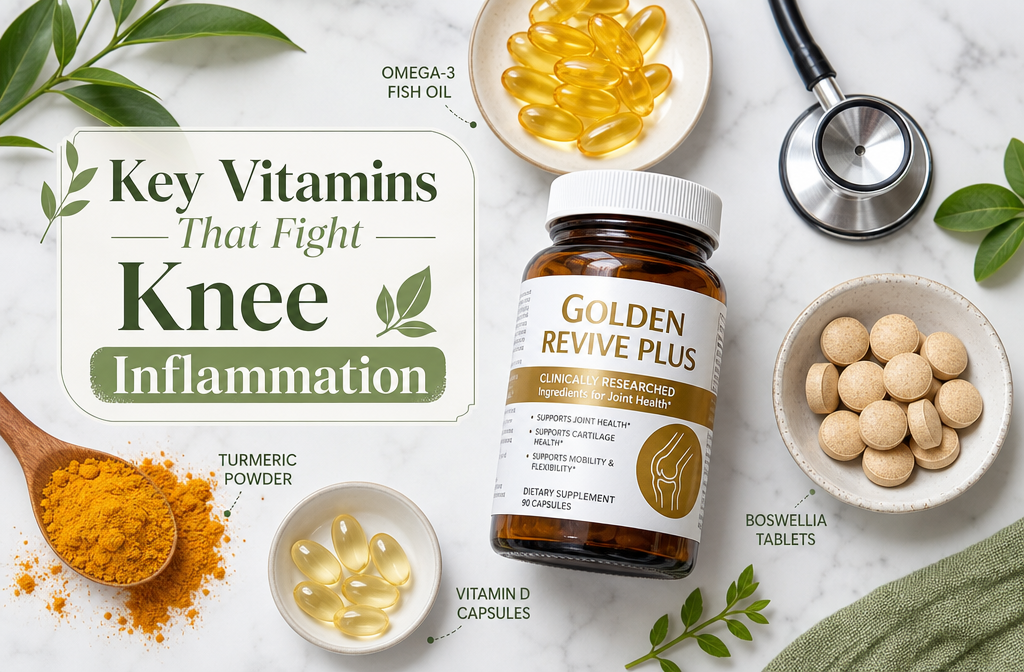
The best vitamins for knee joint pain work by targeting the inflammatory pathways that cause swelling, stiffness, and cartilage breakdown. The most effective options include Vitamin D3, Vitamin C, Vitamin K2, Omega-3 fatty acids, and plant-based compounds like curcumin and Boswellia.
Here’s a breakdown of the key players:
| Nutrient | Primary Benefit | Best Form |
|---|---|---|
| Vitamin D3 | Reduces joint inflammation, supports bone density | Cholecalciferol (D3) |
| Vitamin C | Supports collagen production in cartilage | Ascorbic acid or liposomal C |
| Omega-3 (EPA/DHA) | Lowers inflammatory prostaglandins | Fish oil or algae oil |
| Curcumin (Turmeric) | Blocks NF-kB inflammatory pathway | With piperine for absorption |
| Boswellia Serrata | Inhibits 5-LOX enzyme, reduces swelling | AKBA extract |
| Vitamin K2 | Directs calcium to bones, not joints | MK-7 form |
| Magnesium | Supports muscle relaxation around joints | Glycinate or malate |
Common mistake: Taking turmeric powder alone without a bioavailability enhancer like black pepper extract (piperine) means your body absorbs very little of the active compound. Always look for supplements that pair curcumin with piperine or use a liposomal delivery system.
Best Supplements for Arthritis Knee Pain
For arthritis-related knee pain specifically, the most effective supplements are those that reduce synovial inflammation and slow cartilage degradation simultaneously. Curcumin, Boswellia, and Omega-3s are the top three based on available research.
- Curcumin: Research on curcumin and joint inflammation suggests it can reduce osteoarthritis pain comparably to some NSAIDs, without the gastrointestinal side effects.
- Boswellia Serrata: Studies show it can reduce knee pain and improve walking distance in people with osteoarthritis within 4–8 weeks.
- Glucosamine and Chondroitin: Long used for cartilage support, though results vary between individuals.
- Collagen (Type II): Supports cartilage matrix integrity and may reduce joint stiffness over time.
Choose a multi-ingredient formula if you want to address inflammation, cartilage health, and mobility support at the same time rather than taking 5 separate pills. Golden Revive Plus combines several of these evidence-backed ingredients into one doctor-formulated formula designed specifically for this purpose.
💡 “The most effective joint supplements don’t just mask discomfort — they address the underlying inflammation that’s been quietly wearing down your cartilage for years.”
If you’re also exploring the top-rated supplements for joint discomfort in 2026, you’ll find that multi-ingredient formulas consistently outperform single-nutrient products.
👉 Try Golden Revive Plus — Support Healthy Joints Naturally
How Much Vitamin D Do I Need for Joint Health?
Most adults over 50 need between 1,500 and 2,000 IU of Vitamin D3 daily for joint and bone health, though many are deficient and may need higher therapeutic doses under medical supervision. A simple blood test (25-OH Vitamin D) can confirm your current level.
- Optimal range: 40–60 ng/mL (nanograms per milliliter) is considered ideal for joint and immune health.
- Deficiency threshold: Below 20 ng/mL is classified as deficient and is associated with increased joint pain and muscle weakness.
- Safe upper limit: The tolerable upper intake level for most adults is 4,000 IU/day without medical supervision.
Edge case: If you live in a northern climate, spend most of your time indoors, or have darker skin, your Vitamin D production from sunlight is significantly lower. Supplementation becomes especially important in these cases.
Vitamin D works best alongside Vitamin K2 (MK-7 form), which helps direct calcium to your bones rather than allowing it to deposit in soft tissue around joints.
Which Vitamins Work Fastest for Knee Pain?
Omega-3 fatty acids and curcumin tend to produce the most noticeable short-term relief, often within 2–4 weeks, because they directly reduce inflammatory signaling. Vitamin D and collagen work more slowly, supporting structural repair over 8–12 weeks.
Speed of action by nutrient (general estimates):
- Omega-3s: 2–4 weeks for reduced morning stiffness
- Curcumin + Boswellia: 3–6 weeks for measurable pain reduction
- Glucosamine/Chondroitin: 6–12 weeks for cartilage-level changes
- Vitamin D3: 4–8 weeks for noticeable joint comfort improvement (if deficient)
- Collagen (Type II): 8–12 weeks for structural support
Don’t expect overnight results. Joint tissue heals slowly, and the goal is lasting improvement, not a temporary fix. Consistency over 90 days gives you the clearest picture of what’s working.
How Long Before I See Results From Knee Joint Supplements?
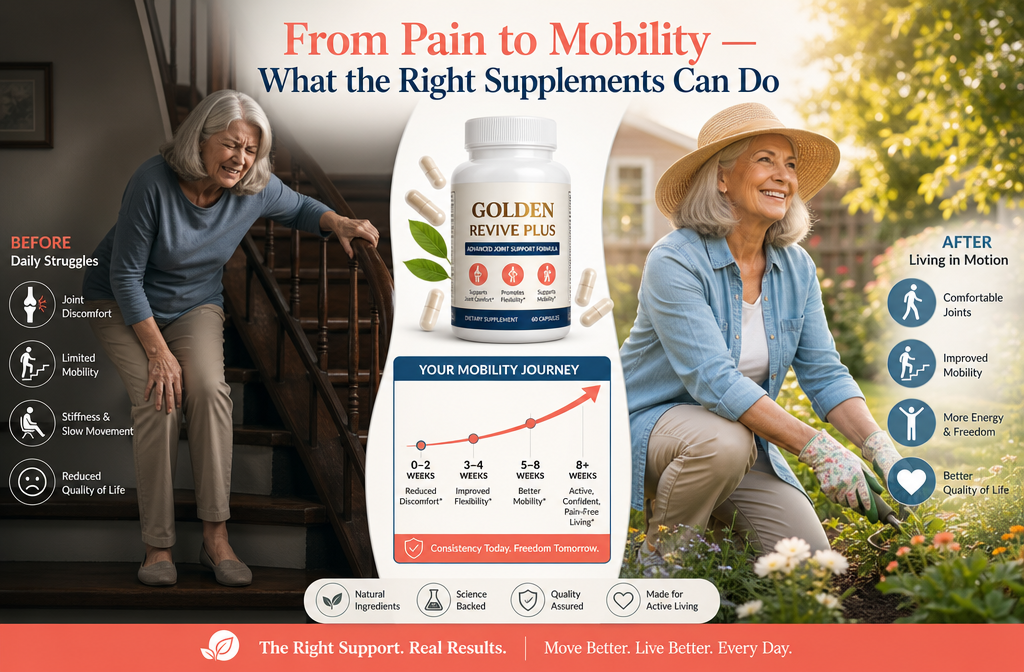
Most people notice initial improvements in stiffness and comfort within 4–6 weeks of consistent daily use. Full benefits — including improved flexibility and reduced swelling — typically develop over 8–12 weeks.
Several factors affect how quickly you respond:
- Severity of inflammation: More advanced arthritis may take longer to respond.
- Nutrient deficiencies: If you’re severely Vitamin D deficient, you may notice faster improvement once levels normalize.
- Dosage and bioavailability: Low-quality supplements with poor absorption may show little effect at any timeframe.
- Lifestyle factors: Staying hydrated, reducing processed foods, and gentle movement all accelerate results.
Actionable tip: Take a simple “stiffness journal” for the first 60 days. Rate your morning stiffness (1–10) each day. Most people who do this are surprised to see a clear downward trend by week 6 that they might otherwise miss day-to-day.
Can I Take Joint Supplements If I’m Over 50?
Yes — adults over 50 are actually the primary group who benefit most from vitamins for knee joint pain, since natural nutrient absorption declines with age and inflammation tends to accumulate over decades. Most joint supplements are safe for this age group, with a few important considerations.
Who should check with a doctor first:
- People taking blood thinners (warfarin, aspirin therapy) — Omega-3s and Vitamin E can have mild anticoagulant effects.
- Those with kidney disease — high-dose Vitamin D requires monitoring.
- Anyone on immunosuppressants — curcumin may interact.
Who benefits most:
- Adults 50–80 with osteoarthritis, chronic knee stiffness, or reduced mobility.
- Those with diagnosed Vitamin D deficiency.
- People who want to reduce NSAID use over time.
For a deeper look at why ignoring joint pain can lead to bigger problems down the road, read Don’t Ignore Aching Joints or Weak Bones — Fix It Before It’s Too Late.
👉 Start Supporting Your Joints Today — Feel the Difference in Weeks
Are There Any Side Effects of Taking Joint Supplements?
Most quality joint supplements are well-tolerated, but side effects can occur, especially at high doses or with certain health conditions. Knowing the warning signs helps you use them safely.
Common mild side effects:
- Mild digestive upset (especially with glucosamine or high-dose Omega-3s)
- Loose stools with high-dose magnesium
- Temporary fishy aftertaste from fish oil (use enteric-coated capsules to minimize this)
Warning signs to stop taking joint vitamins immediately:
- Unusual bruising or prolonged bleeding
- Severe stomach pain or nausea
- Skin rash or hives (possible allergic reaction)
- Headaches or dizziness that worsen over time
- Yellowing of skin or eyes (rare, but warrants immediate medical attention)
Edge case: Curcumin can interfere with iron absorption when taken at the same time as iron supplements. If you’re treating iron deficiency, space them at least 2 hours apart.
The connection between body weight and joint stress is also worth noting — excess weight significantly amplifies knee pain. The relationship between extra pounds and bone health is well-established and worth addressing alongside supplementation.
Natural Alternatives to Glucosamine for Knee Pain
For vegetarians, vegans, or those who don’t respond to glucosamine, several plant-based alternatives provide effective joint support. Curcumin, Boswellia, methylsulfonylmethane (MSM), and plant-based collagen boosters are the strongest options.
- Boswellia Serrata: Derived from the resin of the Boswellia tree. Clinically studied for reducing knee swelling and improving joint function.
- MSM (Methylsulfonylmethane): A naturally occurring sulfur compound found in plants. Supports connective tissue and reduces oxidative stress in joints.
- Curcumin: Fully plant-based, powerful anti-inflammatory, and one of the most studied natural compounds for arthritis pain.
- Ginger Extract: Contains gingerols and shogaols that inhibit inflammatory enzymes similar to NSAIDs, but more gently.
- Hyaluronic Acid (plant-derived): Supports joint lubrication. Vegan versions derived from microbial fermentation are now widely available.
Can vegetarians get effective joint support supplements? Absolutely. A well-formulated plant-based supplement combining curcumin, Boswellia, and MSM can match or exceed the benefits of traditional glucosamine-chondroitin products for many people.
What Causes Knee Joint Pain in Younger Adults (and Why It Matters After 50)
Knee joint pain in younger adults is most often caused by injury, overuse, or early-onset inflammation. After 50, the primary drivers shift to osteoarthritis, cartilage thinning, reduced synovial fluid, and cumulative inflammatory damage.
Understanding the root cause matters because it shapes which vitamins for knee joint pain will help most:
- Osteoarthritis (most common after 50): Cartilage wears down over time. Collagen, glucosamine, and Vitamin C support cartilage repair.
- Inflammatory arthritis (rheumatoid, psoriatic): Immune-driven inflammation. Omega-3s, curcumin, and Vitamin D are most relevant.
- Post-injury degeneration: Old injuries that didn’t heal fully. Collagen and MSM support tissue repair.
- Nutritional deficiencies: Low Vitamin D and magnesium are surprisingly common causes of joint pain that resolve quickly with supplementation.
If your knee pain is accompanied by significant swelling, redness, or warmth, consult a physician before starting any supplement regimen.
How Much Do Good Knee Joint Vitamins Cost?
Quality joint supplements typically cost between $30 and $80 per month, depending on the number of active ingredients, dosage, and brand quality. Budget products under $20/month often use underdosed ingredients or poor-quality extracts.
What to expect at each price tier:
- Under $25/month: Usually single-ingredient (glucosamine only, or basic fish oil). Limited effectiveness for multi-cause joint pain.
- $30–$55/month: Mid-range multi-ingredient formulas. Good starting point.
- $55–$80/month: Premium doctor-formulated blends with clinically dosed ingredients and bioavailability enhancers. Best value for serious joint support.
Value tip: Look for supplements that include curcumin with piperine, Boswellia AKBA extract (not just generic Boswellia powder), and Vitamin D3 (not D2). These markers indicate quality formulation.
Golden Revive Plus sits in the premium tier and is doctor-formulated to include clinically relevant doses of the most effective natural joint support ingredients — making it one of the most comprehensive options available for adults over 50.
👉 Check Current Pricing for Golden Revive Plus — Limited Supply Available

Difference Between Vitamin Supplements for Knee Pain: How to Choose
Not all vitamins for knee joint pain work the same way, and choosing the wrong type means spending money on something that won’t address your specific problem. The key difference is whether a supplement targets inflammation, cartilage structure, or joint lubrication — or all three.
Choose based on your primary symptom:
- Morning stiffness that eases during the day → Prioritize anti-inflammatories: curcumin, Boswellia, Omega-3s.
- Grinding or crunching sensation in the knee → Prioritize cartilage support: glucosamine, chondroitin, Type II collagen.
- Swelling after activity → Prioritize Omega-3s, Boswellia, and MSM.
- General aching with fatigue → Check Vitamin D levels first. Deficiency-related pain responds quickly to D3 supplementation.
- Stiffness that doesn’t improve with movement → Consider magnesium deficiency alongside anti-inflammatory support.
The most effective approach for most adults over 50 is a combination formula that covers multiple pathways. This is exactly what makes Golden Revive Plus stand out — it’s designed as a comprehensive formula rather than a single-ingredient product.
You might also find value in exploring our complete bone and joint health resource library for additional guidance.
👉 Discover the Natural Joint Formula Trusted by Thousands — Try Golden Revive Plus
Frequently Asked Questions
What is the single most important vitamin for knee joint pain?
Vitamin D3 is arguably the most critical single nutrient for knee joint health, especially in adults over 50. Deficiency is widespread and directly linked to increased joint pain, muscle weakness, and cartilage breakdown. Getting your levels tested is a smart first step.
Can I take turmeric every day for knee pain?
Yes. Curcumin (the active compound in turmeric) is safe for daily use in most adults. For meaningful anti-inflammatory effects, you need a standardized extract (typically 500–1,000 mg of curcumin) paired with piperine or in a liposomal form. Plain turmeric spice in food doesn’t provide therapeutic doses.
Is Golden Revive Plus safe for long-term use?
Golden Revive Plus is doctor-formulated with natural ingredients intended for ongoing daily use. As with any supplement, it’s wise to review the ingredient list with your physician if you take prescription medications, particularly blood thinners.
Do joint supplements actually rebuild cartilage?
They can support cartilage health and slow degradation, but they don’t fully “rebuild” damaged cartilage in the way surgery might. Type II collagen, glucosamine, and Vitamin C support the structural components of cartilage and may help maintain what remains while reducing further breakdown.
How do I know if my knee pain is from inflammation or structural damage?
Inflammatory pain tends to be worse in the morning, improves with gentle movement, and is often accompanied by warmth or swelling. Structural damage (cartilage loss) typically causes pain during or after activity, grinding sensations, and reduced range of motion. Many people have both. A physician or orthopedic specialist can confirm with imaging.
Can omega-3 supplements replace anti-inflammatory medications for knee pain?
For mild to moderate inflammation, Omega-3s can meaningfully reduce reliance on NSAIDs for some people. They work through a different pathway (reducing prostaglandins and leukotrienes) and have a much gentler side-effect profile. They are not a replacement for prescribed medications in severe inflammatory arthritis — always discuss changes with your doctor.
What foods make knee joint pain worse?
Processed foods high in refined sugar, trans fats, and omega-6 fatty acids (found in many vegetable oils) promote systemic inflammation and can worsen knee pain. Alcohol in excess and red meat in large quantities are also associated with increased inflammatory markers.
Are there vitamins for knee pain that also help with hip and back pain?
Yes. Vitamin D3, Omega-3s, curcumin, and Boswellia all work systemically — meaning they reduce inflammation throughout the body, not just in the knee. Adults dealing with both knee pain and back or hip discomfort often find that a comprehensive joint supplement addresses multiple areas simultaneously.
How do I take joint supplements for best results?
Take fat-soluble vitamins (D3, K2, Omega-3s) with your largest meal of the day for best absorption. Curcumin with piperine can be taken with any meal. Consistency matters more than timing — missing days significantly slows progress.
At what age should I start taking vitamins for joint health?
Joint cartilage begins thinning gradually from the mid-30s onward, but supplementation becomes most impactful after 45–50 when natural collagen production slows and Vitamin D absorption declines. Starting earlier is fine, but it’s never too late to begin.
Conclusion: Your Next Step Toward Moving Freely Again
Living with knee joint pain doesn’t have to be your permanent reality. The right vitamins for knee joint pain — Vitamin D3, curcumin, Boswellia, Omega-3s, and collagen — target the actual inflammatory and structural causes of your discomfort, not just the symptoms.
You deserve to walk to the mailbox without wincing. To get down on the floor and play with your grandchildren. To wake up in the morning and move without that familiar stiffness that steals the first hour of your day.
Here are your actionable next steps:
- Get your Vitamin D levels tested at your next doctor’s visit.
- Start a simple stiffness journal to track your baseline and progress.
- Reduce inflammatory foods (processed sugar, refined oils) while increasing fatty fish, leafy greens, and colorful vegetables.
- Choose a quality multi-ingredient supplement that includes curcumin with piperine, Boswellia, and Vitamin D3.
- Stay consistent for at least 60–90 days before evaluating results.
If you want a doctor-formulated option that combines the most effective natural joint ingredients into one convenient formula, Golden Revive Plus is worth serious consideration. It’s designed for adults who are done settling for temporary relief and ready to support their joints from the inside out.
👉 Click Here to Try Golden Revive Plus and Start Moving Comfortably Again
Your best, most active years don’t have to be behind you. With the right nutritional support, freedom from daily joint pain is genuinely within reach.
References
Paultre K, et al. — Therapeutic effects of turmeric or curcumin extract on pain and function for individuals with knee osteoarthritis — BMJ Open Sport & Exercise Medicine, 2021.
Sengupta K, et al. — A double blind, randomized, placebo controlled study of the efficacy and safety of 5-Loxin® for treatment of osteoarthritis of the knee — Arthritis Research & Therapy, 2008.
McAlindon TE, et al. — Glucosamine and chondroitin for treatment of osteoarthritis: a systematic quality assessment and meta-analysis — JAMA, 2000.
Kostoglou-Athanassiou I, et al. — Vitamin D and rheumatoid arthritis — Therapeutic Advances in Endocrinology and Metabolism, 2012.
Calder PC — Omega-3 fatty acids and inflammatory processes: from molecules to man — Biochemical Society Transactions, 2017.
Tags: vitamins for knee joint pain, knee joint supplements, joint pain relief, arthritis supplements, vitamin D for joints, curcumin for knee pain, Boswellia for arthritis, natural joint support, best supplements for arthritis, joint inflammation, mobility after 50, Golden Revive Plus