vitamins for joint pain
Last updated: May 29, 2026
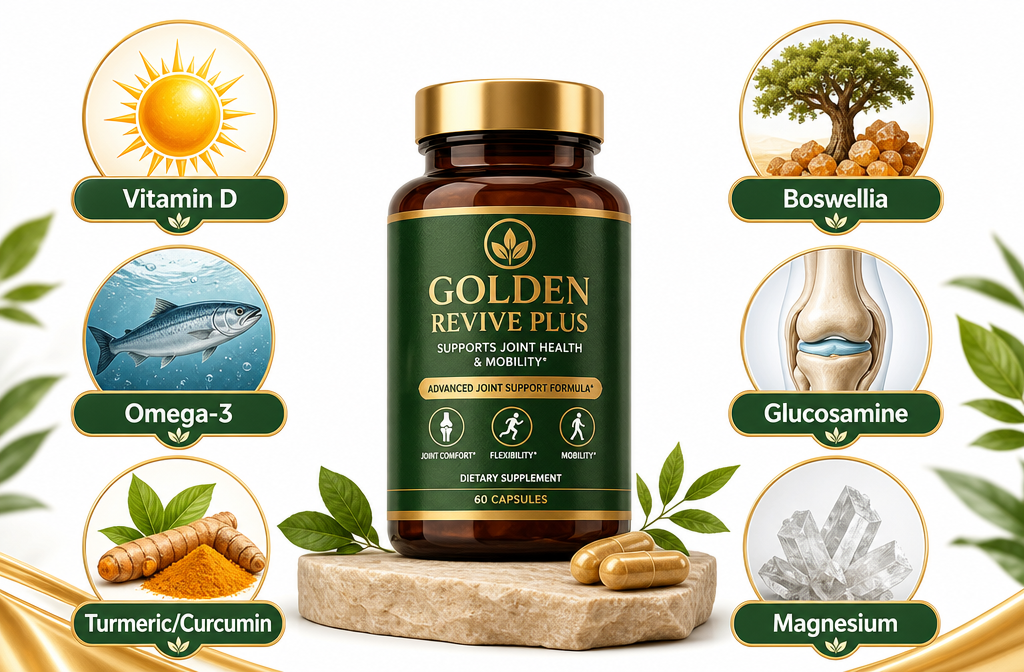
Quick Answer: Several well-researched vitamins and natural compounds, including Vitamin D, Omega-3 fatty acids, curcumin, Boswellia, and magnesium, have been shown to reduce joint inflammation, ease stiffness, and support long-term mobility. They work best when combined consistently over 4–12 weeks, and certain doctor-formulated blends like Golden Revive Plus are specifically designed to stack these ingredients for faster, more noticeable results.
Over 54 million Americans have been diagnosed with arthritis, according to the CDC, and tens of millions more deal with chronic joint pain that never gets a proper label. If you’re over 50 and waking up stiff every morning, struggling to climb stairs, or quietly dreading a walk around the block, you already know that painkillers only go so far. The good news: specific vitamins for joint pain can address the underlying inflammation driving that discomfort, not just cover it up.
Key Takeaways:
- Vitamin D deficiency is one of the most overlooked causes of joint pain in adults over 50
- Curcumin (from turmeric), Boswellia, and Omega-3s are among the most evidence-backed natural anti-inflammatories
- Most joint supplements take 4–12 weeks of consistent use before noticeable results appear
- Combining multiple complementary nutrients in one formula is more effective than taking single ingredients
- Seniors should check for drug interactions before starting any new supplement regimen
- Vegans can get effective joint support through plant-based Omega-3s (algae oil), curcumin, and Boswellia
- Common mistakes include taking too low a dose, expecting overnight results, or ignoring Vitamin D status
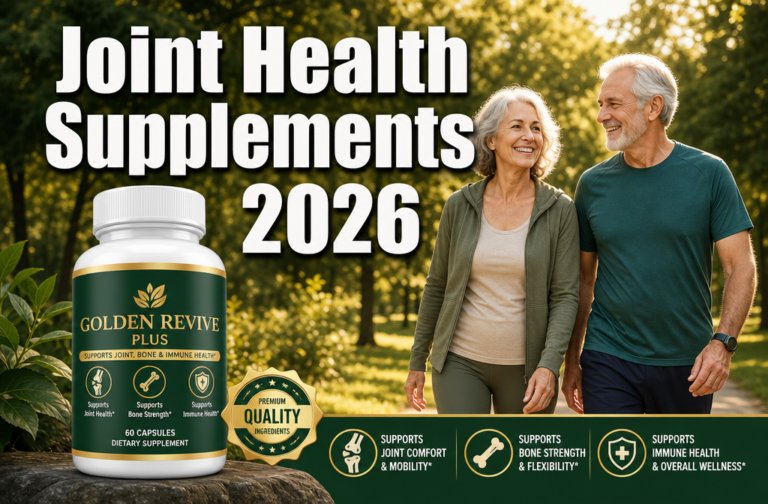
- Golden Revive Plus is a doctor-formulated option that combines several of these key ingredients in clinically relevant doses
What Vitamins Help Reduce Joint Inflammation?
The most effective vitamins for joint inflammation work by calming the immune response that triggers swelling, warmth, and pain inside the joint. The top options backed by research include:
- Vitamin D3: Regulates immune function and reduces inflammatory cytokines. Deficiency is directly linked to increased arthritis symptoms.
- Omega-3 fatty acids (EPA/DHA): Reduce prostaglandins and leukotrienes, the chemical messengers that drive joint inflammation. Research published in the Annals of the Rheumatic Diseases shows consistent Omega-3 supplementation can reduce morning stiffness and tender joint counts in rheumatoid arthritis patients.
- Curcumin (from turmeric): Inhibits the NF-kB pathway, a key driver of chronic inflammation. Works best in a bioavailable form (with piperine or phospholipid complex).
- Boswellia serrata extract: Blocks 5-LOX enzymes that produce inflammatory leukotrienes. Studies in Phytomedicine have found Boswellia reduces knee pain and improves function within 4–8 weeks.
- Magnesium: Supports muscle relaxation around joints and reduces systemic inflammation markers like CRP.
Choose this if: You have daily stiffness and swelling — Omega-3s and curcumin together are your strongest starting combination.
What Vitamin Deficiencies Cause Joint Pain?
Vitamin deficiencies are a surprisingly common and underdiagnosed cause of joint pain, especially in adults over 50. The three most significant ones are:
- Vitamin D deficiency — causes bone pain, muscle weakness, and worsens arthritis inflammation. Adults over 50 absorb far less Vitamin D from sunlight.
- Magnesium deficiency — leads to muscle cramps, joint stiffness, and heightened pain sensitivity. Roughly 50% of Americans don’t meet the daily magnesium requirement (per NHANES data).
- Omega-3 deficiency — promotes a pro-inflammatory internal environment that accelerates cartilage breakdown.
A simple blood test can confirm Vitamin D and magnesium status. If you’ve been dealing with unexplained joint aches for months, low Vitamin D is the first thing worth checking. For a deeper look at protecting your bones and joints together, see our guide on what to do before bone loss becomes irreversible.
How Much Vitamin D Do I Need for Joint Health?
Most adults over 50 need between 2,000–4,000 IU of Vitamin D3 daily for joint and immune health, though some with confirmed deficiency may need more under medical supervision.
The standard RDA of 600–800 IU is widely considered insufficient for older adults, particularly those with limited sun exposure. A serum 25(OH)D level between 40–60 ng/mL is generally considered optimal for musculoskeletal health. Always pair Vitamin D3 with Vitamin K2 (MK-7 form) to direct calcium into bones rather than soft tissues.
Common mistake: Taking Vitamin D2 instead of D3. D3 raises blood levels roughly twice as effectively as D2.
Best Supplements for Arthritis Pain: A Ranked Overview
For anyone dealing with osteoarthritis, rheumatoid arthritis, or general joint wear, these are the supplements with the strongest evidence:
| Supplement | Primary Benefit | Typical Dose | Time to Effect |
|---|---|---|---|
| Curcumin (with piperine) | Reduces inflammation | 500–1,000 mg/day | 4–8 weeks |
| Boswellia serrata | Reduces swelling, improves function | 300–500 mg/day | 4–8 weeks |
| Omega-3 (EPA/DHA) | Lowers inflammatory markers | 2,000–3,000 mg/day | 6–12 weeks |
| Vitamin D3 | Supports bone/immune health | 2,000–4,000 IU/day | 8–12 weeks |
| Glucosamine sulfate | Supports cartilage structure | 1,500 mg/day | 8–12 weeks |
| Magnesium glycinate | Reduces muscle/joint tension | 300–400 mg/day | 2–4 weeks |
For a curated breakdown of top-rated joint products in 2026, see our top 5 best supplements to relieve joint discomfort.
Ready to feel the difference? Try Golden Revive Plus — a doctor-formulated blend targeting joint inflammation naturally ✅
Do Joint Vitamins Actually Work, or Is It Just Marketing?

Honest answer: some work well, some are overhyped, and results depend heavily on the ingredient quality, dose, and how long you take them. The marketing around joint supplements is sometimes exaggerated, but the underlying science for specific compounds is real.
What the evidence actually supports:
- Curcumin has been studied in multiple randomized controlled trials for knee osteoarthritis with results comparable to ibuprofen in some studies, but with fewer GI side effects (per research in the Journal of Medicinal Food)
- Boswellia has demonstrated statistically significant pain reduction in double-blind trials
- Omega-3s have consistent evidence for reducing morning stiffness in inflammatory arthritis
- Glucosamine results are more mixed — it works better for some people than others, and sulfate form outperforms hydrochloride
What doesn’t work: Proprietary blends with undisclosed micro-doses, collagen powders with no supporting joint-specific trials, and anything promising results in 48 hours.
The real issue is that most people either take the wrong form, use too low a dose, or quit after two weeks. Consistency over 8–12 weeks is what separates results from disappointment.
Which Vitamins Work Fastest for Joint Pain Relief?
If you need faster relief while building long-term support, these options tend to work within the shortest timeframe:
- Magnesium glycinate — many people notice reduced muscle tension and improved sleep within 1–2 weeks
- Boswellia — some studies show measurable pain reduction in as little as 4 weeks
- Curcumin with piperine — anti-inflammatory effects can begin within 3–4 weeks at therapeutic doses
- Omega-3s — take longer (6–12 weeks) but produce meaningful stiffness reduction
For faster onset, look for supplements that combine Boswellia and curcumin together. Golden Revive Plus stacks both alongside other mobility-supporting ingredients in a single daily formula, which is exactly why multi-ingredient formulas tend to outperform single-nutrient supplements.
Don’t wait another morning in pain. Start supporting your joints naturally with Golden Revive Plus today 🌿
What Supplements Should I Take If I Have Rheumatoid Arthritis?
Rheumatoid arthritis (RA) involves immune-driven inflammation, so the supplement strategy differs slightly from osteoarthritis. Always consult your rheumatologist before adding supplements if you’re on DMARDs or biologics.
Most relevant for RA:
- Omega-3 fatty acids — most studied for RA; shown to reduce tender joint count and morning stiffness
- Vitamin D3 — RA patients have higher rates of Vitamin D deficiency; correcting it supports immune regulation
- Curcumin — inhibits inflammatory pathways relevant to RA (NF-kB, TNF-alpha)
- Boswellia — reduces leukotriene-driven inflammation
- Selenium and Zinc — antioxidant support for oxidative stress in RA joints
Important edge case: Fish oil (Omega-3) can have mild blood-thinning effects. If you’re on methotrexate or other RA medications, confirm dosing with your doctor. Also see our resource on how to strengthen bones after 50, since RA medications like corticosteroids can accelerate bone loss.
Cheap Alternatives to Glucosamine for Joints
Glucosamine can be expensive and doesn’t work equally well for everyone. These alternatives offer comparable or better value:
- Boswellia extract — often cheaper per dose and has stronger anti-inflammatory evidence than glucosamine
- Curcumin/turmeric extract — widely available, affordable, and well-studied
- Collagen peptides (Type II) — less expensive than glucosamine in bulk form; supports cartilage matrix
- MSM (methylsulfonylmethane) — inexpensive sulfur compound that reduces oxidative stress in joints; often pairs well with glucosamine but works independently too
- Tart cherry extract — natural source of anthocyanins; reduces uric acid and post-exercise joint soreness
Choose Boswellia if you want the most cost-effective single ingredient swap for glucosamine. Choose curcumin if inflammation is your primary complaint.
Are There Side Effects From Taking Joint Supplements?
Most joint supplements are well-tolerated, but side effects are possible, especially at high doses or with certain health conditions.
Common side effects by ingredient:
- Curcumin: GI upset at high doses; may interact with blood thinners
- Omega-3s: Fishy burps, loose stools at doses above 3g/day; mild blood-thinning effect
- Boswellia: Occasional nausea or acid reflux; generally well-tolerated
- Glucosamine: May affect blood sugar in diabetics (use with caution); shellfish allergy risk with some forms
- Vitamin D: Toxicity is possible at very high doses (above 10,000 IU/day long-term); rare but real
Are joint supplements safe for seniors? Yes, for most older adults, the supplements listed above are considered safe at standard doses. The main concerns are drug interactions (especially with blood thinners and diabetes medications) and kidney/liver health at high doses. Starting with one supplement at a time makes it easier to identify any reactions.
If you’re managing multiple health conditions, it’s worth reviewing our article on bone and joint health resources for a broader picture.
Can Vegans Get Effective Joint Support Supplements?
Yes, vegans can get strong joint support without any animal-derived ingredients. The key is knowing which substitutions to make.
Vegan-friendly joint supplement options:
- Algae-based Omega-3 (DHA/EPA) — the original source fish eat; identical bioavailability to fish oil
- Curcumin — 100% plant-based; look for versions with sunflower lecithin instead of piperine for enhanced absorption
- Boswellia — plant-derived tree resin; fully vegan
- Magnesium glycinate — synthetically produced; vegan
- Plant-based Vitamin D3 — sourced from lichen rather than lanolin (sheep’s wool); now widely available
- MSM — synthetically derived; vegan-compatible
Avoid: Standard fish oil, some collagen peptides (bovine or marine), and glucosamine derived from shellfish. Always check labels for gelatin capsules and swap for vegetable cellulose capsules.
How Long Before I See Results From Joint Pain Vitamins?
Most people begin noticing meaningful improvement between 4 and 12 weeks of consistent daily use, depending on the supplement and severity of joint damage.
Here’s a realistic timeline:
- Weeks 1–2: Magnesium may reduce muscle tension; sleep often improves
- Weeks 3–4: Boswellia and curcumin begin reducing acute inflammation
- Weeks 6–8: Omega-3s show measurable reductions in stiffness; overall joint comfort improves
- Weeks 10–12: Glucosamine and collagen support cartilage repair processes; mobility gains become more consistent
The biggest mistake people make is quitting at week 3 because they don’t feel dramatically different. Joint tissue repair is slow. Think of it like physical therapy — the results compound over time.
Stop waiting for the pain to get worse. Give your joints the natural support they deserve with Golden Revive Plus — designed for real, lasting results.
Common Mistakes People Make When Treating Joint Pain
These are the errors that keep people stuck in pain despite trying supplements:
- Taking too low a dose — many over-the-counter products underdose key ingredients to cut costs
- Choosing the wrong form — turmeric powder ≠ curcumin extract; standard fish oil ≠ concentrated EPA/DHA
- Expecting results in days — joint tissue responds slowly; 8 weeks is the minimum fair trial
- Ignoring Vitamin D status — supplementing curcumin while severely Vitamin D deficient limits overall results
- Relying on one ingredient — joints need structural support (collagen, glucosamine) AND anti-inflammatory support (curcumin, Omega-3) together
- Stopping during a good week — consistency matters more than intensity; stopping when you feel better is the most common reason for relapse
For people over 50 who want to stay active and independent, the right supplement strategy is one part of a bigger picture that includes movement, sleep, and diet. Our guide on how to stay fit and active at home after age 50 covers the lifestyle side of the equation.
Your joints deserve better than temporary fixes. Explore what Golden Revive Plus can do for your mobility and comfort — because feeling good at 60, 70, and beyond is absolutely possible.
Frequently Asked Questions
What is the single best vitamin for joint pain?
Vitamin D3 is arguably the most important single vitamin for joint health because deficiency is so common in adults over 50 and directly worsens arthritis symptoms. However, combining Vitamin D3 with curcumin and Omega-3s produces far better results than any single ingredient alone.
Can I take joint supplements with my arthritis medication?
Many joint supplements are safe alongside common arthritis medications, but Omega-3s and curcumin can have mild blood-thinning effects that may interact with NSAIDs or anticoagulants. Always review your supplement plan with your prescribing doctor before combining.
Is Golden Revive Plus a legitimate joint supplement?
Golden Revive Plus is a doctor-formulated joint support supplement that combines several evidence-backed ingredients including curcumin, Boswellia, and other mobility-supporting compounds. It is designed to address inflammation and stiffness naturally rather than masking symptoms.
How do I know if my joint pain is from inflammation or structural damage?
Inflammatory joint pain typically involves warmth, swelling, and morning stiffness lasting more than 30 minutes. Structural damage (like cartilage wear) tends to cause pain with movement that eases with rest. Many people over 50 have both. A doctor can confirm with imaging and bloodwork.
Are joint supplements covered by insurance or FSA/HSA?
Most joint supplements are not covered by standard health insurance. However, many qualify for FSA (Flexible Spending Account) or HSA (Health Savings Account) purchases. Check with your plan administrator, as eligibility varies.
Can I get enough joint-supporting nutrients from food alone?
It’s possible to get some benefit from an anti-inflammatory diet rich in fatty fish, turmeric, leafy greens, and nuts. But reaching therapeutic doses of curcumin or Boswellia through food alone is not realistic. Supplementation is the practical path for adults with active joint pain.
What’s the difference between glucosamine sulfate and glucosamine hydrochloride?
Glucosamine sulfate has stronger clinical evidence for reducing osteoarthritis symptoms, particularly in the knee. Glucosamine hydrochloride is cheaper but has shown less consistent results in trials. If you’re choosing a glucosamine product, sulfate form is the better option.
Should I take joint supplements with food?
Yes. Most fat-soluble joint supplements, including Vitamin D3, curcumin, and Omega-3s, absorb significantly better when taken with a meal that contains some healthy fat. Taking them on an empty stomach also increases the risk of GI discomfort.
Conclusion: Move Freely Again — Naturally
Joint pain doesn’t have to define your 50s, 60s, or 70s. The right vitamins for joint pain — particularly Vitamin D3, curcumin, Boswellia, Omega-3s, and magnesium — can meaningfully reduce inflammation, ease stiffness, and help you reclaim the mobility you’ve been missing.
The key is choosing the right forms, the right doses, and giving them enough time to work. A multi-ingredient formula designed specifically for joint health will outperform a single supplement almost every time.
Your actionable next steps:
- Get your Vitamin D level tested — it’s a simple blood draw
- Start with a curcumin + Boswellia combination as your anti-inflammatory foundation
- Add Omega-3s (algae-based if vegan) for long-term inflammatory control
- Commit to at least 8–10 weeks before evaluating results
- Consider a doctor-formulated blend to simplify your routine
Whether your goal is walking comfortably, gardening without wincing, playing with your grandchildren, or simply waking up without that familiar morning stiffness — natural joint support can get you there.
The life you want is still within reach. Try Golden Revive Plus — the doctor-formulated natural joint support formula trusted by adults who refuse to slow down. Your joints have carried you this far. It’s time to give them back what they need. 💪
References:
Deane KD, Demoruelle MK, Kelmenson LB, et al. Genetic and environmental risk factors for rheumatoid arthritis. Best Practice & Research Clinical Rheumatology. 2017.
Kuptniratsaikul V, Dajpratham P, Taechaarpornkul W, et al. Efficacy and safety of Curcuma domestica extracts compared with ibuprofen in patients with knee osteoarthritis. Journal of Alternative and Complementary Medicine. 2014.
Sengupta K, Alluri KV, Satish AR, et al. A double blind, randomized, placebo controlled study of the efficacy and safety of 5-Loxin® for treatment of osteoarthritis of the knee. Arthritis Research & Therapy. 2008.
Goldberg RJ, Katz J. A meta-analysis of the analgesic effects of omega-3 polyunsaturated fatty acid supplementation for inflammatory joint pain. Pain. 2007.
Holick MF. Vitamin D deficiency. New England Journal of Medicine. 2007.
Tags: vitamins for joint pain, joint pain supplements, arthritis relief, best supplements for arthritis, joint inflammation, Vitamin D for joints, curcumin for joint pain, Boswellia supplement, Omega-3 for arthritis, natural joint support, joint health over 50, reduce joint stiffness