Testosterone Cream
{“cover”:”Professional landscape format (1536×1024) hero image with bold text overlay ‘Testosterone Cream’ in crisp white sans-serif on a deep navy semi-transparent overlay panel, centered with 8% safe margins from every edge. Background: clean editorial photograph of a modern men’s health clinic counter with a small white cream tube and a stethoscope on a light marble surface, soft natural window light, cool-toned professional palette, magazine cover aesthetic, sharp focus, high contrast.”,”content”:[“Editorial landscape format (1536×1024). Split-screen conceptual illustration: left half shows a cross-section diagram of human skin layers with a labeled absorption arrow showing testosterone molecules entering the dermis, rendered in clean medical-illustration style with a light blue and white palette; right half shows a simplified bloodstream icon with testosterone molecule symbols flowing upward. Bright clinical aesthetic, minimal flat-vector style, any text labels max 4 words, 8% safe margins, save-worthy Pinterest polish, no tables or pricing grids.”,”Editorial landscape format (1536×1024). Side-by-side product hero shot in a bright studio setting: on the left, a small white testosterone cream tube on a clean white surface with soft warm lighting; on the right, a glass testosterone injection vial with a syringe beside it on the same surface. Both items sharply focused, minimalist composition, neutral background with subtle warm gradient, high-end pharmaceutical photography aesthetic, no pricing text, no tables, no comparison grids. Visually distinct from section 1.”,”Editorial landscape format (1536×1024). Natural daylight environmental photograph of a 40-something man of South Asian descent sitting across from a male doctor in a bright modern clinic office, both engaged in a calm professional conversation, medical chart visible on a tablet between them. Warm natural light through large windows, shallow depth of field on the patient, optimistic and trustworthy mood, diverse representation, magazine-quality editorial photography. No text overlays, no tables, visually distinct from previous images.”}

Last updated: August 10, 2026
Quick Answer: Testosterone cream is a prescription topical medication applied directly to the skin to raise low testosterone levels in men. It absorbs through the skin into the bloodstream, delivering a steady daily dose. Most men begin noticing meaningful improvements in energy, libido, and mood within 4 to 12 weeks of consistent use, though full effects can take up to 6 months.
Key Takeaways
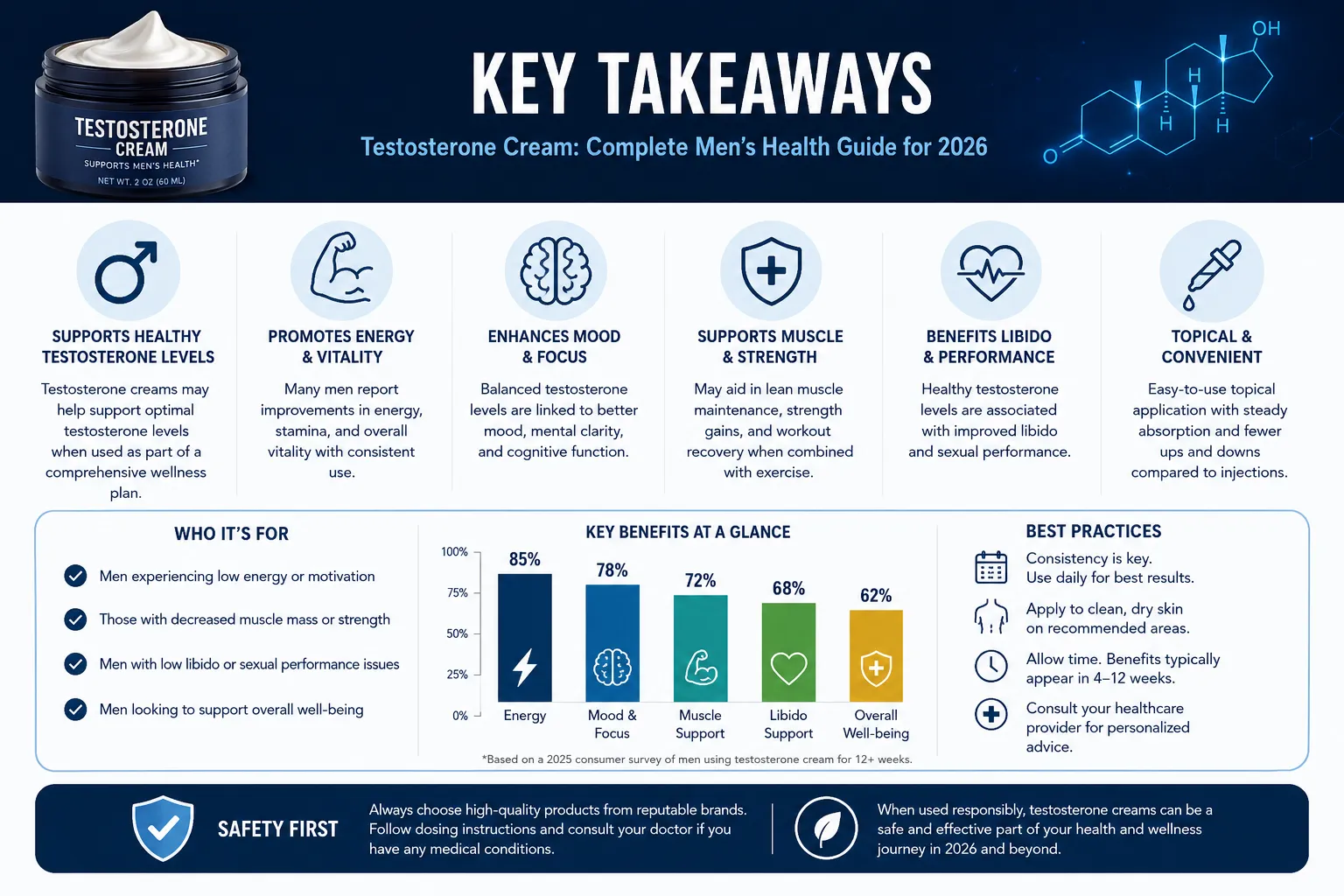
- Testosterone cream is a prescription-only topical treatment for clinically low testosterone (hypogonadism) in men.
- It works by absorbing through the skin into the bloodstream, mimicking the body’s natural hormone rhythm.
- Common side effects include skin irritation, acne, and the risk of transferring testosterone to partners or children through skin contact.
- Cream and gel formulations are similar in effectiveness; the best choice depends on your skin type, dosing preference, and lifestyle.
- Most men pay between $30 and $150 per month depending on insurance coverage and whether they use brand-name or compounded versions.
- Results typically begin within 3 to 6 weeks, with full benefits appearing over 3 to 6 months.
- Women can use testosterone cream under medical supervision, but dosing is much lower and requires careful monitoring.
- You need a valid prescription from a licensed provider; telehealth platforms have made access significantly easier in 2026.
What Is Testosterone Cream and How Does It Work
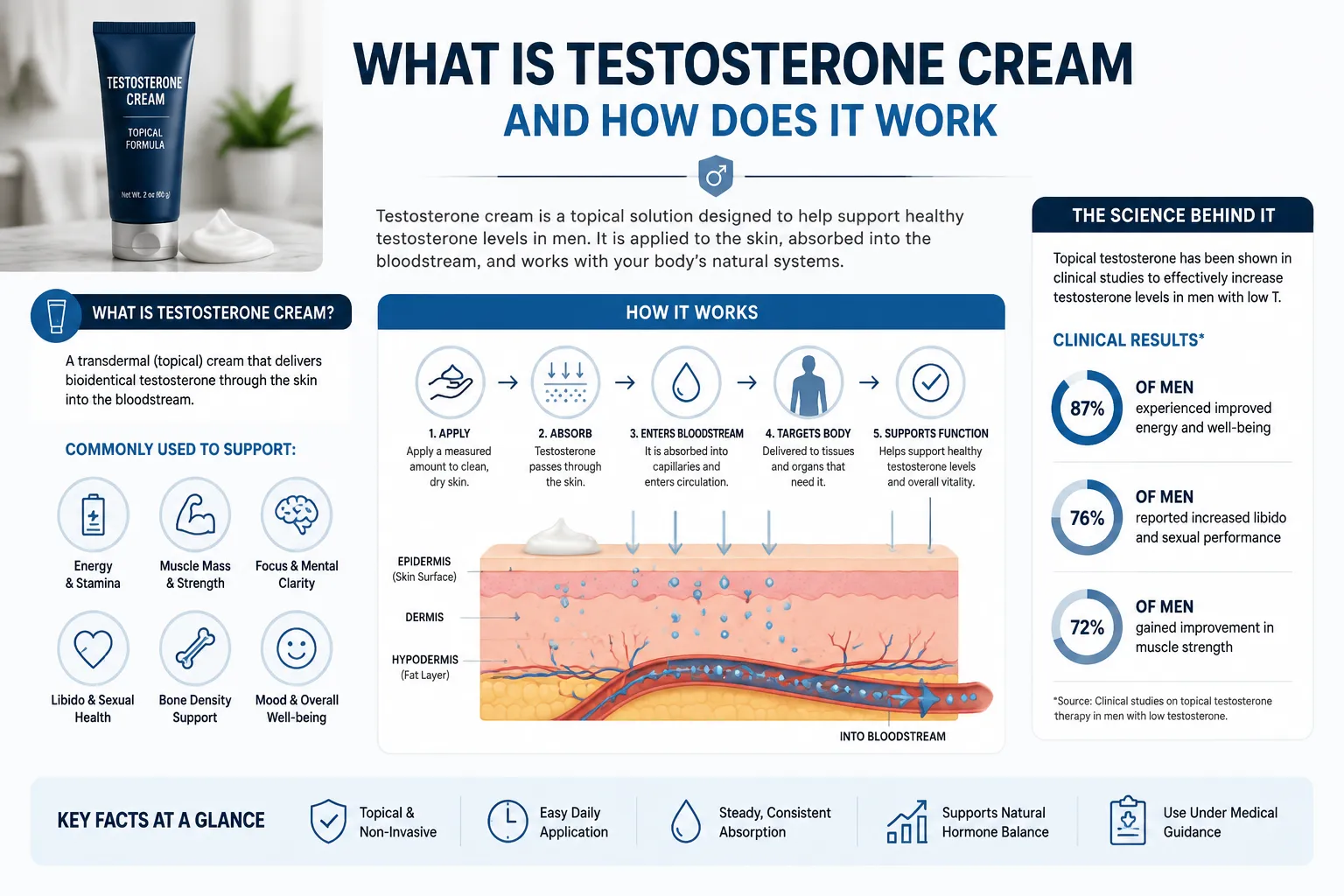
Testosterone cream is a topical hormone therapy that delivers synthetic testosterone through the skin and into the bloodstream. It is prescribed primarily for men diagnosed with hypogonadism, a condition where the body does not produce enough testosterone on its own.
When you apply the cream to a thin-skinned area (such as the inner arm, shoulder, or scrotum), testosterone molecules pass through the outer skin barrier and enter the capillaries beneath. From there, the hormone circulates through the body just as naturally produced testosterone would.
How the absorption process works:
- The cream is applied once or twice daily, usually in the morning to align with the body’s natural testosterone peak.
- Testosterone crosses the stratum corneum (the outermost skin layer) and diffuses into dermal blood vessels.
- Blood levels rise gradually over 2 to 4 hours after application and remain elevated for most of the day.
- Scrotal application has been shown in clinical research to produce significantly higher absorption rates compared to other skin sites, because scrotal skin is thinner and more permeable.
Who it is prescribed for: Men with a confirmed low testosterone level (generally below 300 ng/dL on two separate morning blood tests), along with symptoms such as fatigue, reduced libido, erectile dysfunction, depression, or loss of muscle mass.
Who it is NOT for: Men with prostate cancer, elevated red blood cell counts (polycythemia), untreated sleep apnea, or those actively trying to conceive (exogenous testosterone suppresses sperm production).
How Long Does It Take to See Results From Testosterone Cream
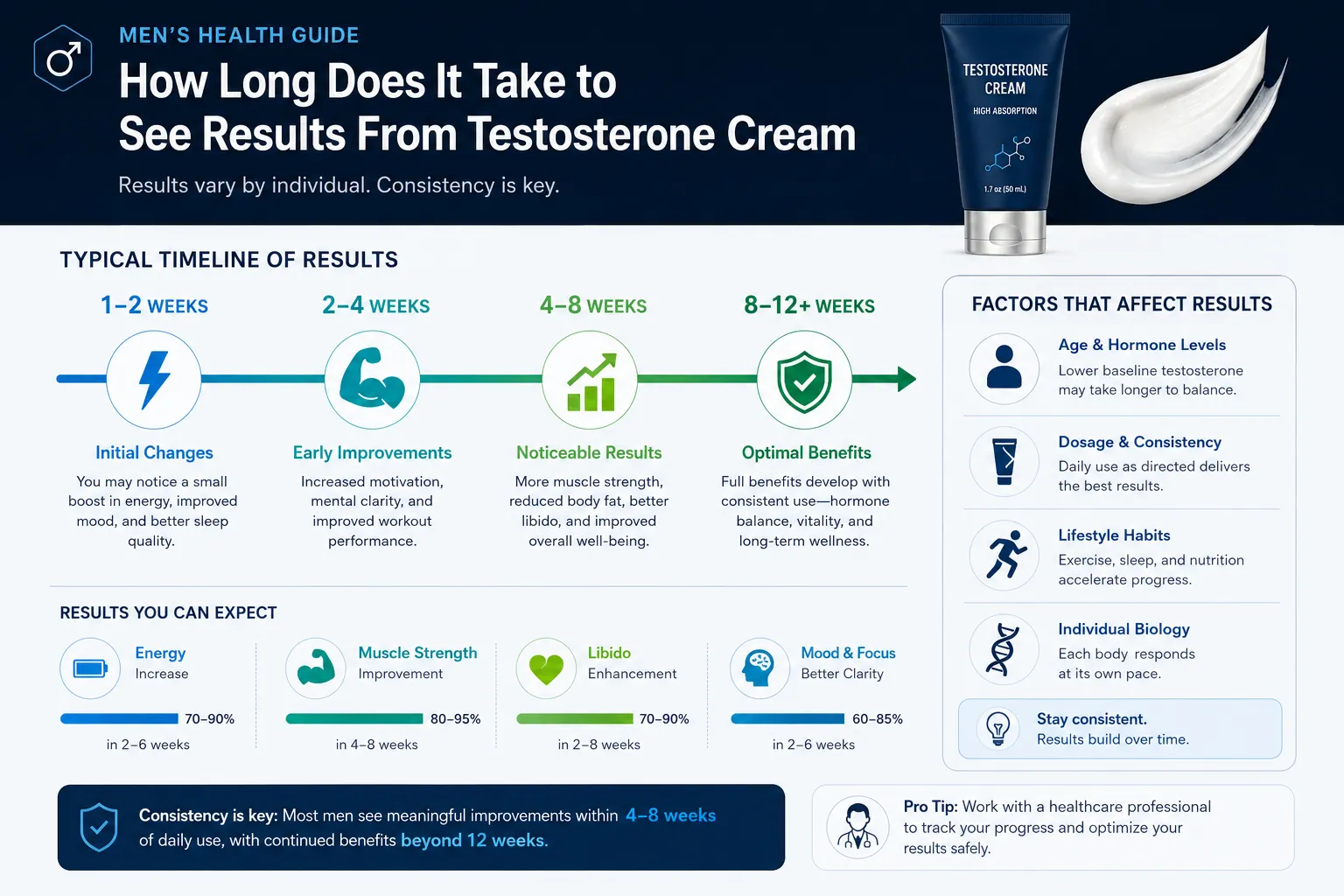
Most men notice early changes within 3 to 6 weeks, but the full range of benefits takes 3 to 6 months to develop. Different symptoms respond on different timelines.
| Symptom | Typical Onset |
|---|---|
| Improved libido | 3-6 weeks |
| Better mood and energy | 3-6 weeks |
| Increased muscle mass | 3-6 months |
| Reduced body fat | 3-6 months |
| Improved bone density | 6-12 months |
| Erectile function improvement | 3-6 months |
Common mistake: Many men stop treatment after 4 to 6 weeks because they feel “only slightly better.” Stopping too early means missing the cumulative benefits that build over months. Consistency and correct application technique matter as much as the prescription itself.
Testosterone Cream vs Testosterone Gel: Which Is Better
Testosterone cream and gel are functionally very similar, but there are practical differences worth knowing before you choose.
Both deliver testosterone transdermally. The main differences are in the base formulation, absorption rate, and cost.
Testosterone cream uses an oil-in-water or anhydrous base that some men find absorbs faster and leaves less residue. Compounded creams are also widely available and can be customized in concentration, which gives prescribers more flexibility.
Testosterone gel (such as brand-name AndroGel or Testim) is FDA-approved, well-studied, and widely covered by insurance. It tends to have a more consistent formulation but is typically more expensive than compounded cream.
Choose cream if:
- You want a compounded option with flexible dosing
- You prefer faster skin absorption with less sticky residue
- Your prescriber uses a compounding pharmacy
Choose gel if:
- You want an FDA-approved, brand-name product
- Your insurance covers a specific gel formulation
- You prefer the familiarity of a widely studied product
Neither form is definitively superior in terms of testosterone delivery. A 2019 study published in the Journal of Clinical Endocrinology and Metabolism found no significant difference in serum testosterone levels between comparable cream and gel formulations when applied correctly.
Testosterone Cream vs Injections: Which Works Faster
Injections work faster than cream. Testosterone injections (typically testosterone cypionate or enanthate) raise blood levels within 24 to 72 hours of the first dose. Cream takes 2 to 4 weeks to reach stable therapeutic blood levels.
However, speed is not the only factor. Injections cause peaks and troughs in testosterone levels, which some men experience as mood swings or energy crashes between doses. Cream provides a steadier daily level, which many men find more comfortable over the long term.
Quick comparison:
- Injections: Faster onset, less daily effort, but requires needle use and causes hormone fluctuations.
- Cream: Slower onset, daily application required, but produces more stable levels and avoids needles.
For men who want rapid symptom relief, injections are often the first choice. For men who prefer a needle-free, steady-state approach, testosterone cream is a strong alternative. Many men also explore men’s health treatment options to understand all available formats before deciding.
Testosterone Cream Side Effects: What Should I Watch For
The most common side effects of testosterone cream are mild and manageable, but a few require prompt medical attention.
Common side effects:
- Skin irritation, redness, or itching at the application site
- Acne or oily skin
- Increased body hair
- Mild fluid retention
Serious side effects to watch for:
- Elevated red blood cell count (polycythemia), which increases clotting risk
- Worsening sleep apnea
- Testicular shrinkage and reduced sperm count
- Breast tissue growth (gynecomastia)
- Cardiovascular changes (blood pressure, cholesterol shifts)
Transfer risk is a unique concern with topical testosterone. If the cream contacts another person’s skin (a partner or child) before it dries, they can absorb the hormone. This is especially dangerous for children and pregnant women. Always let the cream fully dry, wash hands after application, and cover the site with clothing before contact.
Men with existing prostate concerns should also read about what is the best medication for enlarged prostate since testosterone therapy can affect prostate health and should be monitored closely.
How Much Does Testosterone Cream Cost With Insurance
With insurance, testosterone cream typically costs $30 to $60 per month for compounded versions and $50 to $150 per month for brand-name formulations. Without insurance, compounded testosterone cream from a licensed compounding pharmacy generally runs $40 to $100 per month.
Key cost factors:
- Brand-name vs. compounded: Brand-name gels and creams (like AndroGel) can cost $400 to $500 per month without insurance. Compounded testosterone cream is far cheaper, often $40 to $80 per month cash pay.
- Insurance tier: Most major insurance plans cover FDA-approved testosterone products at a Tier 2 or Tier 3 copay. Compounded versions are rarely covered.
- Telehealth platforms: In 2026, several men’s health telehealth providers offer testosterone therapy programs that bundle the consultation, prescription, and medication for a flat monthly fee, often $100 to $200 per month all-in.
- HSA/FSA eligible: Testosterone cream prescribed by a licensed provider qualifies for HSA and FSA reimbursement.
Edge case: If your insurance denies coverage, ask your prescriber to submit a prior authorization with your lab results showing confirmed low testosterone. Approval rates improve significantly with documented clinical need.
Can Women Use Testosterone Cream Safely
Yes, women can use testosterone cream, but only under close medical supervision and at doses far lower than those prescribed for men. Testosterone plays a role in female libido, energy, and bone health, and low levels are associated with reduced sexual desire and fatigue in women.
In women, typical doses range from 0.5 mg to 2 mg per day, compared to 50 to 100 mg per day in men. Even small amounts can cause virilization (unwanted body hair, voice deepening, clitoral enlargement) if the dose is too high or used for too long.
Women should not use testosterone cream if they are:
- Pregnant or breastfeeding
- Diagnosed with hormone-sensitive cancers
- Using it without medical supervision
Women interested in supporting overall skin and tissue health may also find value in resources like the South Beach Skin Lab Repair and Release Cream guide, which covers topical formulations designed specifically for women’s skin concerns.
Testosterone Cream Application Mistakes to Avoid
Incorrect application is the single most common reason testosterone cream fails to work as expected. Getting the technique right matters as much as the prescription itself.
Mistakes that reduce effectiveness:
- Applying to the wrong site. Thick-skinned areas like the back or thighs absorb poorly. Use thin-skinned sites: inner arms, shoulders, or (for compounded scrotal cream) the scrotum.
- Not letting it dry. Applying clothing or touching others before the cream fully dries reduces absorption and creates transfer risk.
- Inconsistent timing. Applying at random times disrupts stable blood levels. Apply at the same time each morning.
- Showering too soon. Wait at least 2 hours after application before showering or swimming.
- Skipping days. Unlike injections, topical testosterone requires daily use to maintain therapeutic levels. Missing days causes levels to drop quickly.
- Using too little or too much. Always use the exact dose prescribed. More is not better and increases side effect risk.
Is Testosterone Cream Right for Me: Am I a Good Candidate
You are likely a good candidate for testosterone cream if you have confirmed low testosterone (below 300 ng/dL on two morning blood tests), are experiencing symptoms that affect your quality of life, and have no contraindications such as prostate cancer or untreated sleep apnea.
Strong candidates:
- Men aged 30 to 65 with documented hypogonadism
- Men who prefer needle-free treatment
- Men who want a stable, daily hormone delivery method
- Men whose symptoms include fatigue, low libido, or mood changes
Poor candidates:
- Men actively trying to father children (testosterone suppresses sperm production)
- Men with prostate cancer or elevated PSA without urological clearance
- Men with polycythemia or high hematocrit
- Men unwilling to commit to daily application
If you are also managing related health issues, supporting your body with supplements good for inflammation or focusing on rebuilding bone strength naturally can complement testosterone therapy and improve overall outcomes.
Testosterone Cream Prescription Requirements: How to Get It
Testosterone cream requires a valid prescription from a licensed medical provider. You cannot legally purchase it over the counter in the United States.
Steps to get a prescription:
- Get a blood test. Request a morning total testosterone test (and ideally free testosterone and LH/FSH) from your primary care doctor or a men’s health specialist.
- Confirm low levels. Most providers require two separate low readings before prescribing.
- Consult a provider. In-person urologists, endocrinologists, and primary care physicians all prescribe testosterone. Telehealth platforms have made this significantly more accessible in 2026.
- Receive your prescription. The provider writes a prescription for a commercial product or sends it to a compounding pharmacy.
- Follow-up monitoring. Expect blood tests every 3 to 6 months to monitor testosterone levels, hematocrit, PSA, and lipid panels.
Men comparing telehealth options for hormone therapy may find the DirectMax vs Hims erectile dysfunction treatment comparison useful, as many of these platforms also offer testosterone therapy programs.
Testosterone Cream Alternatives: Natural Options
Testosterone cream is not the only path to addressing low testosterone. Several evidence-informed lifestyle changes and natural approaches can meaningfully support hormone levels, particularly for men with borderline-low readings.
Natural alternatives to consider:
- Resistance training: Heavy compound lifts (squats, deadlifts, bench press) are consistently associated with short-term testosterone increases in research literature.
- Sleep optimization: Testosterone is primarily produced during deep sleep. Men sleeping fewer than 6 hours per night show significantly lower morning testosterone levels. A fast-acting natural sleep patch may help men who struggle with sleep quality.
- Weight management: Excess body fat, particularly visceral fat, converts testosterone to estrogen via aromatase. Losing even 10% of body weight can raise testosterone levels noticeably.
- Zinc and vitamin D: Both nutrients play roles in testosterone synthesis. Deficiency in either is associated with lower levels.
- Stress reduction: Chronic high cortisol suppresses testosterone production. Addressing stress through exercise, sleep, and mindfulness is a foundational step.
- Avoiding endocrine disruptors: Reducing exposure to BPA (found in some plastics) and phthalates may support healthier testosterone levels over time.
Important note: Natural approaches work best for men with borderline-low levels or lifestyle-driven declines. Men with clinically confirmed hypogonadism (below 300 ng/dL with symptoms) typically need medical treatment to achieve meaningful improvement.
Does Testosterone Cream Show Up on Drug Tests
Yes, exogenous testosterone can be detected on certain drug tests, particularly those used in competitive sports. Standard workplace drug panels (the common 5-panel or 10-panel tests) do not typically screen for testosterone. However, athletic anti-doping tests (such as those run by WADA or USADA) use the testosterone-to-epitestosterone (T/E) ratio and carbon isotope ratio testing to detect synthetic testosterone use.
If you are a competitive athlete subject to anti-doping rules, testosterone cream is a prohibited substance regardless of whether it is prescribed. Always disclose your prescription to your sport’s governing body and consult a sports medicine physician before starting therapy.
For non-athletes in standard employment settings, testosterone cream will not cause a failed drug test on typical workplace screening panels.
Testosterone Cream Storage and Expiration: How Long Does It Last
Testosterone cream should be stored at room temperature (59 to 77 degrees Fahrenheit), away from heat, moisture, and direct sunlight. Do not refrigerate unless the label specifically instructs it.
Key storage facts:
- Commercial products typically carry an expiration date 2 to 3 years from manufacture. Do not use expired product.
- Compounded creams generally have a shorter beyond-use date, often 90 to 180 days from the compounding date. Check the label from your compounding pharmacy.
- Once opened, keep the tube or pump tightly closed to prevent oxidation and contamination.
- Signs of degradation: Separation, unusual odor, or color change indicate the product may have broken down. Discard and request a replacement.
Never store testosterone cream where children can access it. Even small accidental exposures can cause premature puberty in children.
Frequently Asked Questions
Can I apply testosterone cream to my face?
No. The face is not a recommended application site. Facial skin is sensitive, and applying testosterone cream there increases the risk of acne and unwanted hair growth. Use the sites recommended by your prescriber, typically the shoulders, inner arms, or scrotum.
Will testosterone cream shrink my testicles?
Possibly. Exogenous testosterone signals the brain to reduce its own production signals (LH and FSH), which causes the testes to produce less testosterone and sperm. This can lead to testicular atrophy over time. Some providers prescribe hCG alongside testosterone to prevent this.
Can I use testosterone cream if I want to have children?
No, not without medical guidance. Testosterone therapy suppresses sperm production and can cause infertility. Men who want to father children should discuss alternatives like clomiphene citrate or hCG therapy with a reproductive urologist.
How do I know if my testosterone cream is working?
Track your symptoms and get a blood test 4 to 6 weeks after starting therapy. Your provider should check total and free testosterone levels to confirm you are in the therapeutic range (typically 400 to 700 ng/dL).
Is compounded testosterone cream as effective as brand-name gel?
Compounded cream can be equally effective when prepared by an accredited compounding pharmacy and applied correctly. The key difference is that compounded products are not FDA-approved, so quality can vary by pharmacy. Use a pharmacy accredited by PCAB (Pharmacy Compounding Accreditation Board).
Can I drink alcohol while using testosterone cream?
Moderate alcohol consumption is generally not contraindicated, but chronic heavy drinking lowers testosterone levels and can undermine your therapy. Reducing alcohol intake is a practical way to support the treatment’s effectiveness.
Does testosterone cream affect cardiovascular health?
Testosterone therapy has a complex relationship with cardiovascular health. Some studies suggest modest benefits for men with confirmed hypogonadism; others indicate increased risk in certain populations. Your provider should monitor blood pressure, hematocrit, and lipid panels regularly during treatment.
What happens if I miss a day of testosterone cream?
Missing one day will cause a temporary dip in blood levels but will not cause lasting harm. Simply resume your normal dose the next morning. Do not double up to compensate for a missed dose.
Can testosterone cream be used long-term?
Yes, many men use testosterone therapy for years or decades under medical supervision. Regular monitoring (blood tests every 3 to 6 months) is essential to catch any emerging side effects early.
Is testosterone cream covered by Medicare?
FDA-approved testosterone products may be covered under Medicare Part D depending on your specific plan and formulary. Compounded testosterone cream is generally not covered by Medicare. Check your plan’s formulary or call your plan directly to confirm.
Conclusion
Testosterone cream is a well-established, effective treatment for men with clinically confirmed low testosterone. It offers a needle-free, daily delivery method that produces stable hormone levels and, for most men, meaningful improvements in energy, libido, mood, and body composition over 3 to 6 months.
Your next steps:
- Get a morning testosterone blood test if you have not already done so.
- Consult a licensed provider (in-person or via telehealth) to review your results and symptoms.
- If prescribed, apply consistently, follow storage guidelines, and attend all follow-up monitoring appointments.
- Consider supporting your therapy with lifestyle changes: better sleep, resistance training, and weight management.
Low testosterone is a treatable condition. With the right prescription, correct application technique, and ongoing monitoring, testosterone cream can be a safe and effective part of a broader men’s health strategy.