
All Testosterone Treatments

Last updated: August 10, 2026
Quick Answer: All testosterone treatments fall into several delivery categories, injections, gels, patches, pellets, oral tablets, and nasal gels, each with different dosing schedules, absorption rates, and side-effect profiles. The right choice depends on your confirmed testosterone deficiency, health history, lifestyle, and a prescribing physician’s evaluation. As of 2026, the FDA has updated labeling across all testosterone products, removing the old cardiovascular boxed warning while adding a new blood-pressure caution, and regulators are actively reconsidering eligibility criteria for age-related low testosterone [4][7].
Key Takeaways
- All testosterone treatments require a confirmed diagnosis of hypogonadism through blood testing and clinical symptoms before a physician can legally prescribe them.
- The main delivery forms are intramuscular injections, subcutaneous injections, topical gels, transdermal patches, subdermal pellets, buccal tablets, nasal gels, and oral capsules.
- The FDA removed the long-standing cardiovascular boxed warning from all testosterone products in early 2025, based partly on the TRAVERSE trial, but added a blood-pressure monitoring requirement [10].
- In June 2026, HHS and the FDA proposed broadening testosterone therapy labels to include age-related low testosterone, a significant regulatory shift [2][7].
- Results vary by symptom: energy and mood often improve within 3 to 6 weeks; body composition changes typically take 3 to 6 months.
- Testosterone replacement therapy (TRT) and over-the-counter testosterone boosters are fundamentally different, one is a prescription hormone, the other is a supplement with limited clinical evidence.
- Stopping TRT abruptly can suppress natural testosterone production for weeks to months; a physician-supervised taper is strongly recommended.
- Women can use testosterone therapy, but only at much lower doses and under close medical supervision.
- Cost ranges widely: from roughly $30 to $500 per month depending on the formulation, brand versus generic, and insurance coverage.
- Common mistakes include self-dosing, skipping follow-up blood tests, and using topical gels without preventing skin-to-skin transfer to partners or children.
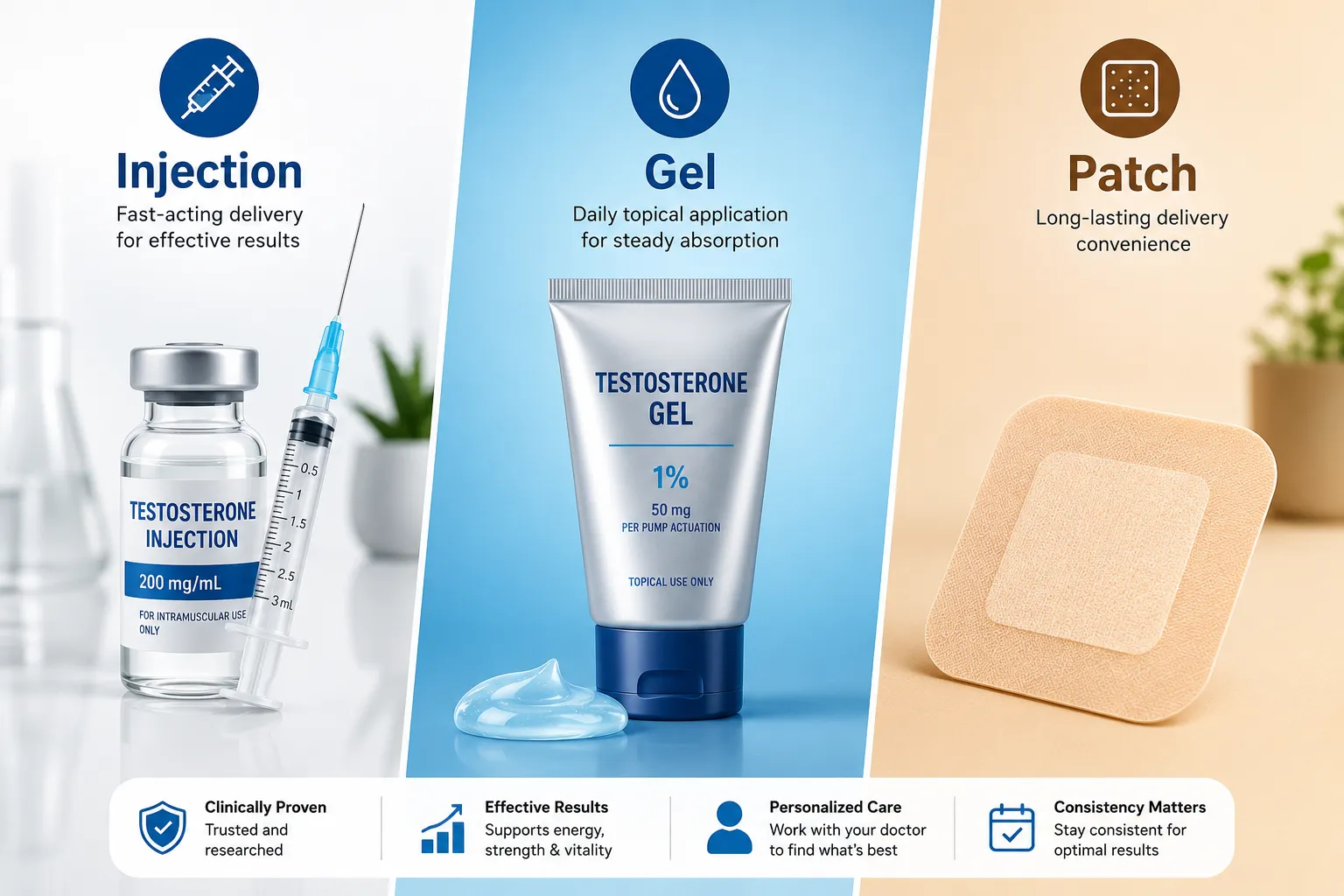
What Are the Different Types of Testosterone Treatments Available?
All testosterone treatments are prescription medications that deliver the hormone testosterone into the body through different routes. The goal of each formulation is the same, restoring testosterone to a normal physiological range, but how they get there differs considerably.
Here is a breakdown of the main options:
Injectable testosterone
- Testosterone cypionate and testosterone enanthate: intramuscular or subcutaneous injections given every 1 to 2 weeks; the most common and cost-effective forms.
- Testosterone undecanoate (Aveed): a long-acting injection given every 10 weeks after an initial loading period; administered in a clinical setting due to a small risk of pulmonary oil microembolism.
Topical gels and solutions
- Applied daily to the shoulders, upper arms, or inner thighs (brand examples: AndroGel, Testim, Vogelxo).
- Convenient but require care to avoid transferring gel to partners or children through skin contact.
Transdermal patches
- Applied once daily to the back, abdomen, upper arm, or thigh (Androderm is the primary brand).
- Steady hormone delivery but can cause skin irritation at the application site.
Subdermal pellets
- Small pellets (Testopel) inserted under the skin of the buttocks every 3 to 6 months by a clinician.
- Consistent levels without daily dosing; minor outpatient procedure required.
Nasal gel
- Natesto is applied inside the nostrils three times daily.
- Preserves fertility better than most other forms because it has less suppressive effect on the hypothalamic-pituitary axis.
Oral and buccal options
- Testosterone undecanoate capsules (Jatenzo, Tlando): taken twice daily with food; newer oral options with improved absorption compared to older oral forms.
- Buccal tablet (Striant): adheres to the gum above the incisor and is replaced every 12 hours.
Decision rule: Choose injections if cost is the primary concern and you’re comfortable with periodic self-injection. Choose pellets if you want the lowest daily burden. Choose nasal gel if preserving fertility matters. For any of these, see our guide to the best online prescription ED treatment if erectile dysfunction is also a concern, since TRT and ED often overlap.
How Do Testosterone Injections vs. Gels vs. Patches Compare?
Injections deliver the highest peak testosterone levels but also produce the most noticeable fluctuations between doses. Gels offer steadier daily levels but require consistent application and carry a transfer risk. Patches sit between the two in terms of stability but have the highest rate of skin irritation among users.
| Feature | Injections | Gels | Patches |
|---|---|---|---|
| Dosing frequency | Every 1-14 days | Daily | Daily |
| Level stability | Peaks and troughs | Steady | Steady |
| Transfer risk | None | High if not dried | Low |
| Cost (est. monthly) | $30,$100 (generic) | $100,$400 | $150,$350 |
| Self-administration | Yes | Yes | Yes |
| Skin irritation | Injection site only | Mild | Moderate to high |
Common mistake: Many men using gels skip the drying step or apply the gel and then immediately hug a child. Testosterone transferred through skin contact can cause premature puberty in children and virilization in female partners, both serious medical events.
How Much Does Testosterone Replacement Therapy Cost?
TRT cost depends heavily on the formulation, whether you use brand-name or generic versions, and your insurance status. Generic testosterone cypionate injections are the least expensive option, often running $30 to $80 per month without insurance. Brand-name gels and long-acting injections can cost $300 to $500 or more monthly out of pocket.
Key cost factors:
- Generic vs. brand name: Generic injectable testosterone is widely available and inexpensive. Brand-name gels like AndroGel carry a significant price premium.
- Insurance coverage: Many insurance plans cover TRT for confirmed hypogonadism. Coverage for age-related low testosterone has historically been inconsistent, though the June 2026 FDA label proposals may change that [2][5].
- Telehealth vs. in-person: Online TRT clinics often offer competitive pricing and bundled lab costs. For a comparison of online men’s health platforms, see our review of the best online ED consultation and treatment program.
- Lab monitoring: Ongoing blood tests (testosterone levels, hematocrit, PSA) add $50 to $200 per test without insurance and are required for safe long-term use.
What Are the Side Effects of Testosterone Treatment?
Testosterone therapy carries real side effects, and their likelihood increases with higher doses, improper monitoring, and pre-existing conditions. Most side effects are manageable when treatment is supervised by a physician.
Common side effects:
- Elevated red blood cell count (erythrocytosis), which raises clotting risk
- Acne and oily skin
- Testicular shrinkage and reduced sperm production
- Fluid retention
- Increased blood pressure, now formally noted in updated FDA labeling [10]
- Mood changes, including irritability
Less common but serious:
- Sleep apnea worsening
- Breast tissue enlargement (gynecomastia)
- Elevated PSA (prostate-specific antigen), which requires monitoring
- Potential surgical complications: a 2025 study found associations between TRT and serious health risks following total knee replacement surgery [8]
What the evidence says on cardiovascular risk: The TRAVERSE trial found no excess in major cardiovascular events among men using testosterone therapy, which contributed to the FDA’s decision to remove the cardiovascular boxed warning in early 2025. However, blood-pressure elevation remains a documented concern, and the updated label requires monitoring [4][10].
Edge case: Men with polycythemia, untreated sleep apnea, active prostate or breast cancer, or severe heart failure are generally not candidates for TRT. Always disclose your full health history.

Who Should and Shouldn’t Take Testosterone Therapy?
Testosterone therapy is appropriate for men with clinically confirmed hypogonadism: two morning blood tests showing low testosterone combined with symptoms such as fatigue, low libido, erectile dysfunction, depression, or reduced muscle mass. It is not appropriate as a general anti-aging treatment without a confirmed deficiency, though the regulatory landscape on this is shifting in 2026 [1][2].
Good candidates:
- Men with primary hypogonadism (testicular failure) or secondary hypogonadism (pituitary or hypothalamic dysfunction)
- Men with confirmed low testosterone and symptomatic impact on quality of life
- Men whose low testosterone stems from a specific medical cause (e.g., Klinefelter syndrome, chemotherapy effects)
Poor candidates or those requiring extra caution:
- Men with active or suspected prostate cancer or breast cancer
- Men trying to conceive (TRT suppresses sperm production; nasal gel or clomiphene may be better alternatives)
- Men with untreated severe sleep apnea
- Men with hematocrit above 54% before starting treatment
- Men with poorly controlled heart failure
The Endocrine Society has stated that TRT decisions should be individualized and based on confirmed biochemical deficiency alongside symptoms [1]. If you’re also managing erectile dysfunction alongside low testosterone, see our comparison of DirectMax vs. Hims erectile dysfunction treatment options.
How Do I Know If I Need Testosterone Treatment?
You need a blood test, not just symptoms, to confirm low testosterone. A single morning serum total testosterone below 300 ng/dL (per most U.S. guidelines) combined with consistent symptoms is the standard diagnostic threshold, though some men are symptomatic at levels between 300 and 400 ng/dL.
What normal testosterone levels look like by age (approximate ranges):
| Age Group | Typical Total Testosterone Range |
|---|---|
| 20-29 | 400-1,000 ng/dL |
| 30-39 | 350-900 ng/dL |
| 40-49 | 300-800 ng/dL |
| 50-59 | 250-700 ng/dL |
| 60+ | 200-600 ng/dL |
Note: These are approximate population ranges. Reference ranges vary by laboratory. Always interpret results with a physician.
Testosterone naturally declines about 1 to 2 percent per year after age 30. That decline is normal. The question is whether your level is low enough, and your symptoms significant enough, to warrant treatment.
Steps to take:
- Request a morning fasting blood draw (testosterone peaks in the morning).
- Have the test repeated on a separate day to confirm the result.
- Ask your physician to also test free testosterone, LH, FSH, and prolactin to identify the cause.
- Discuss symptoms honestly, libido, energy, mood, sleep, and body composition all matter.
What’s the Difference Between Testosterone Replacement and Testosterone Boosting Supplements?
Prescription testosterone replacement therapy directly adds testosterone to your body. Over-the-counter testosterone boosters are supplements, typically containing ingredients like zinc, vitamin D, ashwagandha, or D-aspartic acid, that claim to support the body’s own testosterone production.
The clinical evidence for OTC boosters is weak. Most studies on these ingredients show modest effects at best, and none are FDA-regulated as drugs. They will not meaningfully raise testosterone in a man with true hypogonadism.
Choose TRT if: You have confirmed low testosterone on blood testing and are experiencing symptoms.
Consider supplements only if: Your testosterone is in the low-normal range, you prefer a conservative first step, and your physician agrees it’s worth trying before prescription therapy.
How Long Does It Take to See Results from Testosterone Treatment?
Most men notice the first changes within 3 to 6 weeks of starting TRT, but full effects on body composition and bone density take 6 to 12 months or longer. The timeline varies by symptom type.
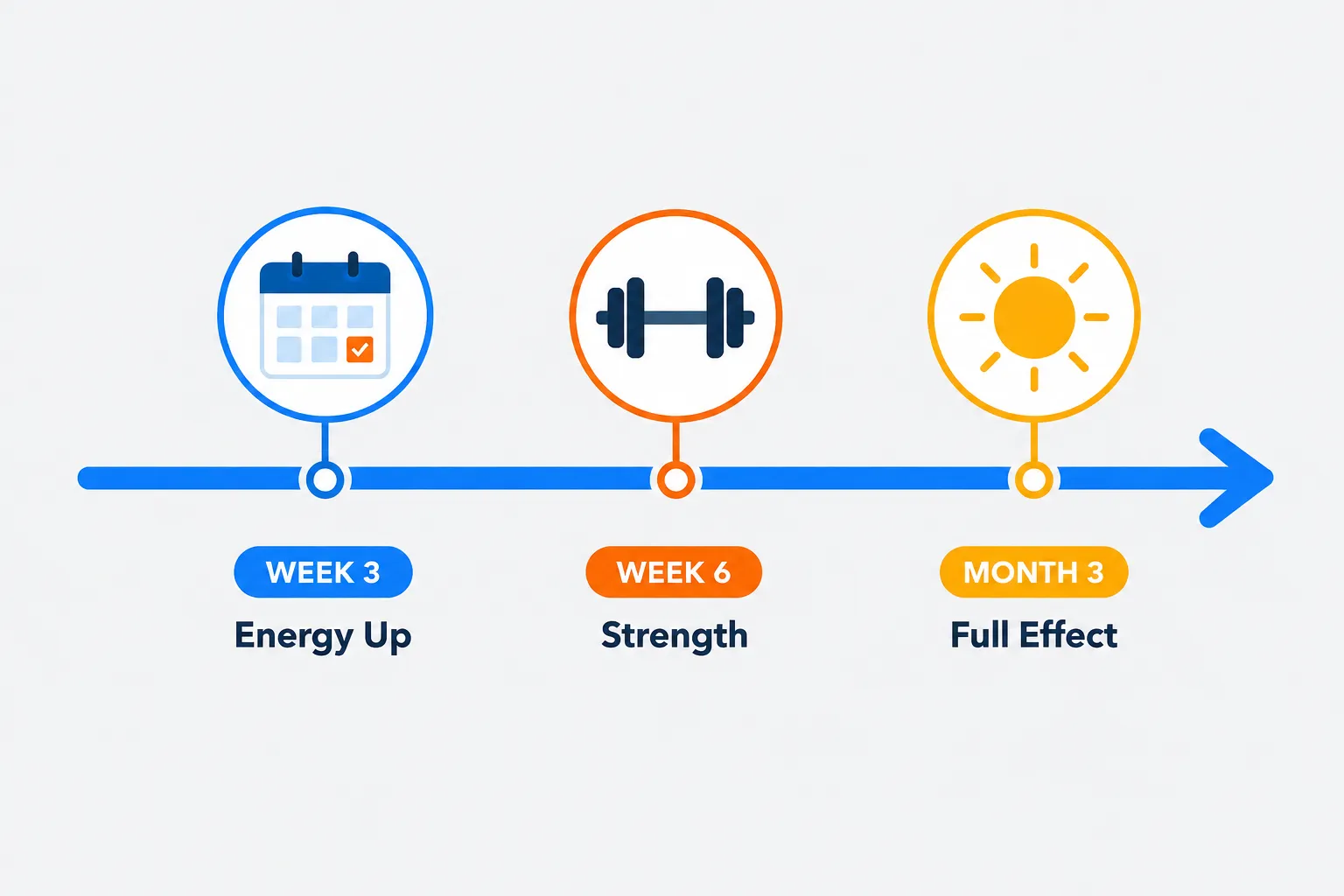
Approximate result timeline:
- Energy and mood: 3 to 6 weeks
- Libido: 3 to 6 weeks
- Erectile function: 3 to 6 months (TRT is not a standalone ED treatment for all men)
- Muscle mass and strength: 3 to 6 months
- Body fat reduction: 3 to 12 months
- Bone density: 12 to 24 months
Common mistake: Stopping treatment at 4 to 6 weeks because results feel incomplete. Most physicians recommend a minimum 3-month trial before evaluating effectiveness. Adjusting the dose too early based on how you feel, rather than blood test results, is also a frequent error.
Can Women Use Testosterone Treatment Safely?
Yes, women can use testosterone therapy, but at doses far lower than those used in men, typically 1/10th to 1/20th of a male dose. The most evidence-supported use in women is for hypoactive sexual desire disorder (HSDD), particularly in postmenopausal women.
No testosterone product is currently FDA-approved specifically for women in the U.S., so prescribing is off-label. Compounded low-dose testosterone creams or gels are the most common approach. Risks in women include acne, unwanted hair growth, voice deepening, and clitoral enlargement, most of which are dose-dependent and reversible if caught early.
Women considering testosterone therapy should work with a gynecologist or endocrinologist experienced in hormone management, not a general TRT clinic focused primarily on men.
What Happens If You Stop Taking Testosterone?
Stopping TRT causes your body’s natural testosterone production to restart, but this process takes time, often 3 to 6 months, because TRT suppresses the hypothalamic-pituitary-gonadal (HPG) axis. During this recovery window, testosterone levels will be low, and symptoms like fatigue, low libido, and mood changes are common.
What to expect after stopping:
- Temporary return of low-testosterone symptoms
- Testicular size may gradually recover
- Sperm production resumes, though the timeline varies
- Men with pre-existing primary hypogonadism may not recover natural production at all
A physician-supervised taper, sometimes using medications like clomiphene citrate or hCG to stimulate the HPG axis, can shorten the recovery period. Never stop TRT abruptly without medical guidance.
Common Mistakes People Make with Testosterone Therapy
The most frequent mistakes in TRT are skipping follow-up labs, self-adjusting doses, and ignoring early warning signs. These errors can turn a well-managed treatment into a serious health risk.
Top mistakes to avoid:
- Skipping blood tests. Hematocrit, PSA, and testosterone levels must be monitored every 3 to 6 months. Elevated hematocrit is one of the most common and preventable TRT complications.
- Self-dosing based on how you feel. Feeling great does not mean your levels are optimal. Supraphysiological testosterone levels carry their own risks.
- Gel transfer. Applying gel and then having skin contact with a partner or child before it fully absorbs.
- Expecting TRT to fix everything. Low testosterone contributes to ED, but it is rarely the only cause. Men who also need ED treatment can explore options through our guide to the best ED treatment for men over 60.
- Ignoring prostate health. PSA should be checked before starting TRT and monitored regularly. The FDA’s June 2026 label revisions revised prostate-risk language, but monitoring remains essential [7].
- Using TRT while trying to conceive. TRT suppresses sperm production. Discuss fertility-preserving alternatives with your physician first. See also our resource on prostate, premature ejaculation, and related men’s health conditions for broader context.
Frequently Asked Questions
Q: How often do you need to take testosterone treatment?
It depends on the form. Injections are typically given every 1 to 2 weeks (or every 10 weeks for long-acting undecanoate). Gels and patches are applied daily. Nasal gel is used three times daily. Pellets are replaced every 3 to 6 months.
Q: Is TRT the same as anabolic steroid use?
No. TRT uses testosterone at doses designed to restore normal physiological levels. Anabolic steroid use typically involves doses many times higher than physiological levels, often without medical supervision, and for performance or aesthetic goals rather than treating a deficiency.
Q: Can TRT cause prostate cancer?
Current evidence does not confirm that TRT causes prostate cancer. However, testosterone can stimulate growth of existing prostate cancer, which is why active prostate cancer is a contraindication. The FDA’s 2026 label revision updated the prostate-risk language to reflect this nuance [7].
Q: Does insurance cover testosterone therapy?
Many plans cover TRT for confirmed hypogonadism. Coverage for age-related low testosterone has been inconsistent, but the June 2026 FDA label proposals to broaden eligibility may improve coverage over time [2][5].
Q: Will TRT make me infertile?
TRT suppresses sperm production in most men. It is not a reliable contraceptive, but it significantly reduces fertility. If you want to father children, discuss alternatives like clomiphene citrate or low-dose hCG with your physician before starting TRT.
Q: Is it safe to start TRT through an online clinic?
It can be, provided the clinic requires proper blood testing, physician evaluation, and ongoing monitoring. Avoid any service that offers testosterone without a blood test or medical consultation.
Q: What testosterone level is considered low?
Most U.S. clinical guidelines use a threshold of below 300 ng/dL on two separate morning blood tests, combined with symptoms, as the standard for diagnosing hypogonadism.
Q: Can TRT improve erectile dysfunction?
TRT can improve ED in men whose ED is primarily caused by low testosterone. For men with normal testosterone levels, TRT is unlikely to help with ED. Other treatments, including PDE5 inhibitors, are often more effective for ED specifically.
Q: How do I find a legitimate TRT provider?
Look for board-certified endocrinologists, urologists, or men’s health physicians. Telehealth TRT providers are legitimate if they require blood testing, physician oversight, and regular follow-up labs. Be cautious of any provider who prescribes without testing.
Q: Are there non-pharmaceutical ways to raise testosterone?
Lifestyle changes, resistance training, weight loss, improved sleep, reducing alcohol, and managing stress, can modestly raise testosterone in men with borderline levels. These are worth pursuing first if your levels are in the low-normal range and symptoms are mild.
Conclusion
All testosterone treatments share a common goal: restoring testosterone to a healthy range so men can function at their best. The right formulation, whether injections, gels, patches, pellets, or oral options, depends on your health profile, lifestyle, and confirmed lab results, not symptoms alone. As of 2026, the regulatory environment is evolving, with the FDA removing the cardiovascular boxed warning, adding blood-pressure monitoring requirements, and proposing broader eligibility criteria [4][7][10].
Your next steps:
- Get a morning blood test to confirm your testosterone level.
- Discuss your full symptom picture with a physician or men’s health specialist.
- If TRT is appropriate, work with your provider to choose the delivery form that fits your lifestyle.
- Commit to follow-up blood tests every 3 to 6 months, this is non-negotiable for safe long-term use.
Do not self-prescribe, and do not rely on supplements alone if you have confirmed hypogonadism. The treatments exist, the evidence supports their use in the right patients, and the regulatory landscape in 2026 is more favorable than it has been in years.
References
[1] Statement On Testosterone Replacement Therapy – https://www.endocrine.org/news-and-advocacy/news-room/2026/statement-on-testosterone-replacement-therapy
[2] Us Health Department Proposes Testosterone Therapy Label Updates 2026 06 18 – https://www.reuters.com/business/healthcare-pharmaceuticals/us-health-department-proposes-testosterone-therapy-label-updates-2026-06-18/
[4] Testosterone Therapy Warning Label Changes Wellness – https://www.cnn.com/2026/06/20/health/testosterone-therapy-warning-label-changes-wellness
[5] Rfk Jr Moves To Lift Label Restrictions On Testosterone Therapy – https://www.bloomberg.com/news/articles/2026-06-18/rfk-jr-moves-to-lift-label-restrictions-on-testosterone-therapy
[7] Fda Takes Step Forward Testosterone Therapy Men – https://www.fda.gov/news-events/press-announcements/fda-takes-step-forward-testosterone-therapy-men
[8] New Research Links Testosterone Therapy With Serious Health Risks After Total Knee Replacement Surgery – https://www.prnewswire.com/news-releases/new-research-links-testosterone-therapy-with-serious-health-risks-after-total-knee-replacement-surgery-302700469.html
[10] Fda Issues Class Wide Labeling Changes Testosterone Products – https://www.fda.gov/drugs/drug-alerts-and-statements/fda-issues-class-wide-labeling-changes-testosterone-products