Signs of Low Testosterone
Last updated: August 10, 2026
Quick Answer
Low testosterone (clinically called hypogonadism) produces a recognizable cluster of symptoms including low sex drive, persistent fatigue, loss of muscle mass, mood changes, and erectile difficulties. A blood test measuring total testosterone is the only reliable way to confirm the condition. Treatment ranges from lifestyle changes to medically supervised hormone therapy, depending on the severity and underlying cause.
Key Takeaways
- Signs of low testosterone include reduced libido, fatigue, depression, muscle loss, increased body fat, and cognitive fog
- Normal testosterone levels for adult men generally fall between 300 and 1,000 ng/dL; below 300 ng/dL is typically considered low
- Testosterone naturally declines about 1% per year after age 30, but significant drops are not inevitable
- A blood test (serum testosterone) is required for diagnosis, symptoms alone are not enough
- Erectile dysfunction is often connected to low testosterone but can have other causes too
- Women can also have low testosterone, though the reference ranges and symptoms differ
- Some lifestyle factors (poor sleep, obesity, chronic stress) can suppress testosterone and are reversible
- Treatment options include testosterone replacement therapy (TRT), lifestyle modification, and addressing underlying conditions
- Natural approaches such as exercise, sleep improvement, and weight loss can meaningfully raise testosterone in some men
- Always work with a licensed physician before starting any hormone treatment
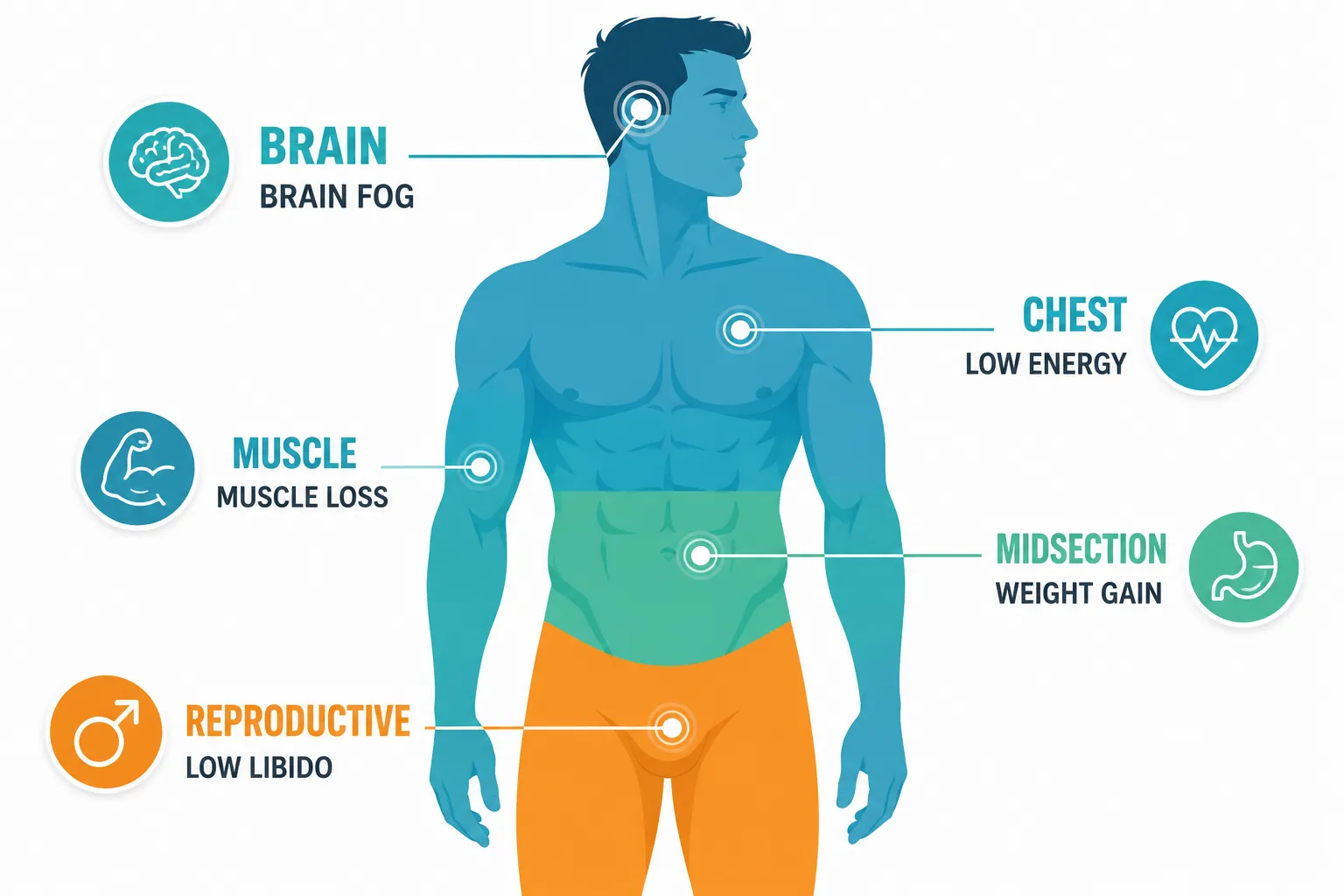
What Are the Main Signs of Low Testosterone?
The most common signs of low testosterone include reduced sex drive, persistent fatigue, loss of muscle mass, increased body fat (especially around the abdomen), mood disturbances, and difficulty concentrating. These symptoms often develop gradually, which is why many men dismiss them as normal aging.
Here is a breakdown of the most frequently reported symptoms:
Physical symptoms:
- Decreased libido (sex drive)
- Erectile dysfunction or reduced morning erections
- Loss of muscle mass and strength
- Increased body fat, particularly around the belly and chest
- Reduced bone density (which can increase fracture risk over time)
- Decreased body and facial hair
- Hot flashes or sweating episodes
- Reduced testicle size
Mental and emotional symptoms:
- Persistent fatigue or low energy, even after adequate sleep
- Depression, irritability, or low motivation
- Difficulty concentrating or brain fog
- Reduced sense of well-being
Common mistake: Many men attribute these symptoms entirely to stress or aging and never get tested. Because the symptoms overlap with other conditions (thyroid disorders, sleep apnea, depression), testing is the only way to know for certain.
How Do I Know If I Have Low Testosterone?
You cannot confirm low testosterone from symptoms alone. The only reliable method is a blood test measuring serum (total) testosterone, typically drawn in the morning when levels are at their daily peak.
If you recognize several of the symptoms listed above, especially reduced libido, unexplained fatigue, and mood changes occurring together, that combination is a reasonable trigger to see a doctor and request testing.
Steps to get evaluated:
- Schedule an appointment with your primary care physician or a urologist/endocrinologist
- Request a morning blood draw for total testosterone (ideally before 10 a.m.)
- If the first result is low, a second test on a different day is typically recommended to confirm
- Ask for additional panels including free testosterone, LH, FSH, and prolactin to identify the cause
Edge case: Some men have symptoms of low testosterone but test within the “normal” range. This can happen because standard lab ranges are broad. Free testosterone (the biologically active fraction) may be a more informative measure in these cases.
What Causes Low Testosterone in Men?
Low testosterone results from either the testes failing to produce enough of the hormone (primary hypogonadism) or the brain failing to send the right signals to the testes (secondary hypogonadism). Both have distinct causes.
Primary causes (testicular):
- Klinefelter syndrome (a chromosomal condition)
- Testicular injury or infection (orchitis)
- Cancer treatment (chemotherapy or radiation)
- Undescended testicles
Secondary causes (brain/pituitary):
- Pituitary tumors or disorders
- Chronic use of opioids or corticosteroids
- Obesity (excess fat tissue converts testosterone to estrogen)
- Type 2 diabetes and metabolic syndrome
- Chronic illness (kidney disease, liver cirrhosis, HIV)
- Obstructive sleep apnea
- Chronic psychological stress
Lifestyle contributors that are reversible:
- Persistent sleep deprivation
- Excessive alcohol consumption
- Sedentary behavior
- Severe caloric restriction or very low-fat diets
“Obesity is one of the most common and most reversible contributors to low testosterone in otherwise healthy men. Losing even 10% of body weight can meaningfully raise levels.”
Low Testosterone vs. Normal Testosterone Levels: What’s the Difference?
Normal testosterone for adult men is generally defined as 300 to 1,000 ng/dL (nanograms per deciliter) of total testosterone, based on guidelines from major endocrinology organizations. A level below 300 ng/dL on two separate morning tests, combined with symptoms, typically meets the clinical threshold for hypogonadism.
| Category | Total Testosterone (ng/dL) | What It Means |
|---|---|---|
| Optimal (adult men) | 500-1,000 | Generally associated with good energy, libido, and muscle maintenance |
| Low-normal | 300-499 | May cause symptoms in some men; monitoring recommended |
| Low (hypogonadism) | Below 300 | Clinical threshold; treatment discussion warranted with symptoms |
| Severely low | Below 150 | Significant health risks; treatment typically recommended |
Important note: Lab reference ranges vary slightly between testing facilities. Always interpret your result in context with your symptoms and with guidance from a physician.
What Age Do Men Start Experiencing Low Testosterone?
Testosterone levels typically peak in a man’s late teens to mid-20s and begin a gradual natural decline around age 30. The rate of decline is roughly 1% per year, meaning most men experience some reduction by their 40s and 50s, but clinically significant low testosterone is not a guaranteed part of aging.
- Men in their 30s may notice subtle changes in energy or recovery from exercise
- Men in their 40s and 50s are most commonly diagnosed with low testosterone
- Men over 60 have a higher prevalence of hypogonadism, but many maintain healthy levels well into older age
Choose this framing if: You’re in your 30s and noticing symptoms, don’t assume it’s too early. Secondary causes like obesity, sleep apnea, and stress can suppress testosterone at any age.
Is Fatigue Always a Sign of Low Testosterone?
Fatigue is one of the most common signs of low testosterone, but it is not exclusive to it. Thyroid disorders, anemia, sleep apnea, depression, and diabetes can all cause similar exhaustion. Fatigue alone is not diagnostic.
What distinguishes testosterone-related fatigue from general tiredness:
- It persists even after a full night of sleep
- It’s accompanied by reduced motivation and low mood
- It coincides with other symptoms like low libido or muscle loss
- It doesn’t improve with rest or lifestyle changes alone
Decision rule: If fatigue is your only symptom and you sleep well, eat well, and exercise regularly, low testosterone is less likely the cause. If fatigue clusters with reduced libido, mood changes, and body composition shifts, get tested.
Low Testosterone and Erectile Dysfunction: What’s the Connection?
Low testosterone can contribute to erectile dysfunction (ED), but it’s rarely the sole cause. Testosterone supports libido (the desire for sex), and without adequate levels, the motivation to initiate sex decreases. However, the physical mechanics of erection also depend heavily on blood flow, nerve function, and cardiovascular health.
Men with low testosterone often report:
- Reduced interest in sex (low libido)
- Fewer spontaneous erections
- Difficulty maintaining erections
ED caused primarily by vascular issues (the most common cause in men over 40) may not improve with testosterone therapy alone. If you’re experiencing ED, it’s worth exploring both hormonal and cardiovascular factors.
For men navigating treatment options, our review of Directmax ED treatment for older men covers one telehealth-based approach worth considering. You can also compare options in our Directmax vs Hims erectile dysfunction treatment breakdown, or explore a broader list of best online prescription ED treatments.
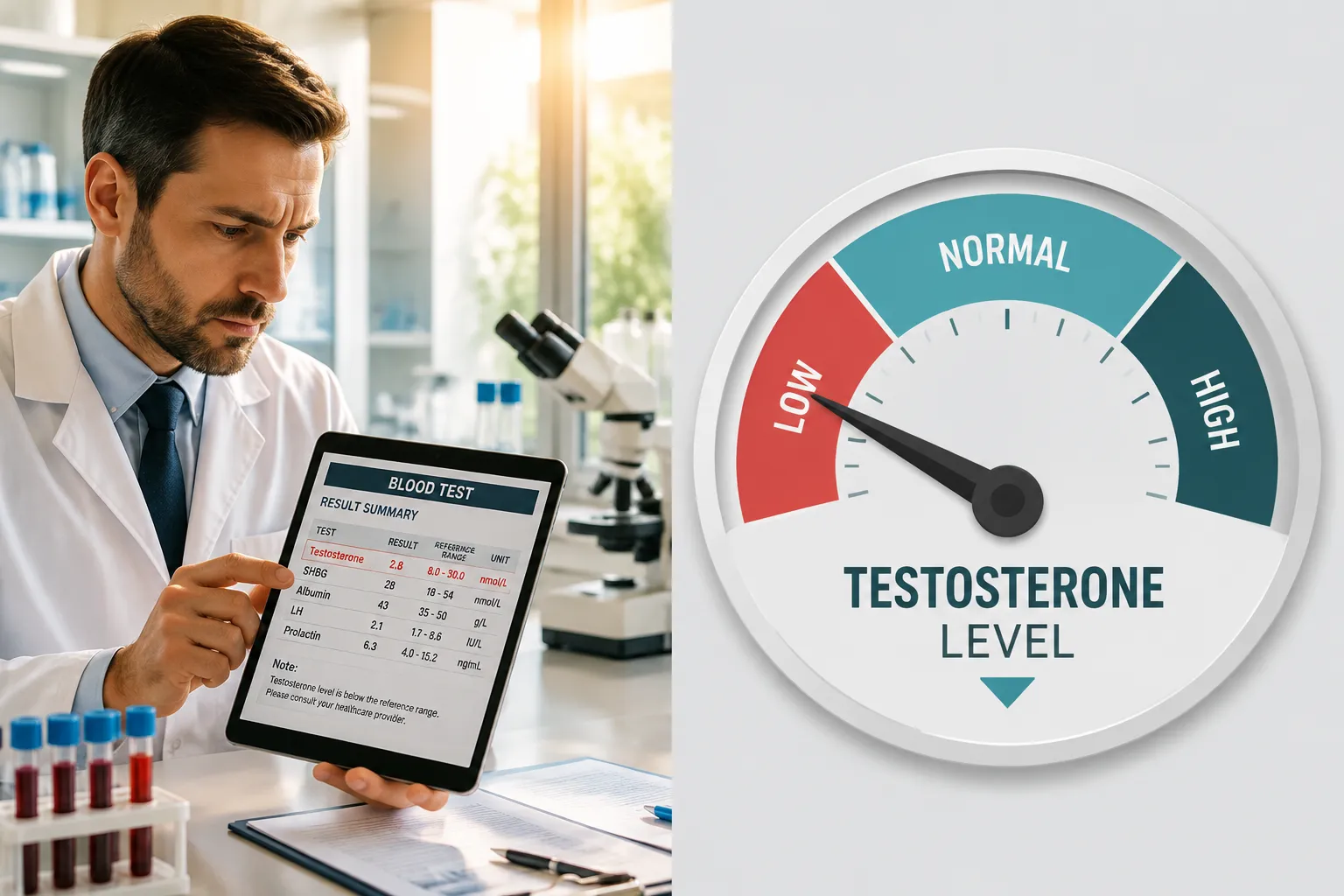
How Is Low Testosterone Diagnosed?
Low testosterone is diagnosed through a combination of blood testing and clinical symptom assessment. A single low result is not sufficient, two separate morning blood draws showing total testosterone below 300 ng/dL, alongside relevant symptoms, are typically required for a formal diagnosis.
Diagnostic process:
- Initial consultation: Discuss symptoms with a physician
- Morning blood draw: Total testosterone measured before 10 a.m. (levels fluctuate throughout the day)
- Confirmatory test: A second test on a different day if the first is low
- Additional labs: Free testosterone, LH (luteinizing hormone), FSH (follicle-stimulating hormone), prolactin, complete blood count, and metabolic panel
- Identify the cause: Results guide whether the problem originates in the testes or the brain/pituitary
Common mistake: Testing testosterone in the afternoon. Levels can be 20-30% lower in the afternoon compared to morning, which can produce a falsely low result.
What Should My Testosterone Level Be at My Age?
There is no single “perfect” number, but general age-related benchmarks help contextualize your result. Most clinical guidelines use 300 ng/dL as the lower threshold for adult men regardless of age, though some physicians apply age-adjusted perspectives.
Approximate average total testosterone by age group (based on population data):
- Ages 20-29: 600-900 ng/dL (peak years)
- Ages 30-39: 500-800 ng/dL
- Ages 40-49: 400-700 ng/dL
- Ages 50-59: 350-650 ng/dL
- Ages 60+: 300-550 ng/dL
These are population averages, not prescriptions. A 55-year-old man at 320 ng/dL with significant symptoms is a very different clinical picture from one at the same level with no complaints.
Does Low Testosterone Cause Weight Gain?
Yes, low testosterone and weight gain are closely linked, and the relationship goes in both directions. Low testosterone reduces muscle mass and metabolic rate, making it easier to gain fat. At the same time, excess body fat (especially visceral abdominal fat) increases the activity of an enzyme called aromatase, which converts testosterone into estrogen, further lowering testosterone levels.
This creates a cycle:
- Low testosterone leads to muscle loss and fat gain
- Increased fat tissue lowers testosterone further
- Lower testosterone makes fat loss harder
Breaking this cycle often requires addressing both sides: medical treatment for the hormone deficiency and lifestyle changes to reduce body fat. Men who lose significant weight through diet and exercise frequently see measurable improvements in testosterone levels without any medical intervention.
Can Women Have Low Testosterone?
Yes, women produce testosterone in smaller amounts through the ovaries and adrenal glands, and low levels can cause symptoms. Signs of low testosterone in women include reduced libido, fatigue, decreased muscle tone, low mood, and reduced sense of well-being.
Women’s normal testosterone range is much lower than men’s (roughly 15-70 ng/dL), so the same tests and thresholds used for men do not apply. Diagnosis and treatment in women is a more nuanced area, and not all physicians are equally experienced with it.
Women experiencing these symptoms should consult a gynecologist or endocrinologist who specializes in hormonal health.
Low Testosterone Treatment Options
Treatment depends on the cause, severity, and whether the man wishes to preserve fertility. Testosterone replacement therapy (TRT) is the most common medical approach, but it’s not the only option.
Medical treatments:
| Treatment | Method | Notes |
|---|---|---|
| Testosterone gels/creams | Applied daily to skin | Convenient; risk of transfer to partners |
| Testosterone injections | Every 1-2 weeks (or weekly) | Cost-effective; levels fluctuate more |
| Testosterone pellets | Implanted under skin every 3-6 months | Steady levels; minor procedure required |
| Testosterone patches | Applied daily | Skin irritation common |
| Clomiphene citrate | Oral medication | Stimulates natural production; preserves fertility |
| hCG therapy | Injection | Used when fertility preservation is a priority |
Cost considerations: TRT costs vary significantly. Generic testosterone cypionate injections can cost as little as $30,$60 per month with a prescription at a pharmacy. Branded gels and pellet therapy can run several hundred dollars per month. Telehealth platforms have made access more affordable for many men.
For men exploring ED-related treatment alongside hormonal concerns, our guide to best impotence tablets for men over 50 and strongest ED medication for older men provide additional context.
Important: TRT suppresses the body’s own testosterone production and can reduce sperm count. Men who want biological children should discuss this with their doctor before starting TRT.
Can Low Testosterone Be Reversed Naturally?
In many cases, yes, particularly when the underlying cause is lifestyle-related. Men with low testosterone driven by obesity, poor sleep, chronic stress, or sedentary behavior can see meaningful improvements through targeted changes.
Evidence-supported natural approaches:
- Resistance training: Compound lifts (squats, deadlifts, bench press) consistently show positive effects on testosterone in multiple studies
- Sleep optimization: Getting 7-9 hours of quality sleep per night is one of the most impactful interventions, testosterone is primarily produced during deep sleep
- Weight loss: Reducing visceral fat directly lowers aromatase activity and raises testosterone
- Reducing alcohol: Heavy alcohol use suppresses testosterone production
- Managing stress: Chronic elevated cortisol suppresses testosterone; stress reduction techniques (meditation, structured rest) can help
- Vitamin D and zinc: Deficiencies in both are associated with lower testosterone; correcting them through diet or supplementation may help in deficient men
Realistic expectation: Natural approaches can raise testosterone by 100-200 ng/dL in men with lifestyle-driven deficiency. They are unlikely to fully correct severe hypogonadism caused by testicular or pituitary dysfunction.
How Long Does It Take to Raise Testosterone Levels?
The timeline depends on the method. Medical TRT typically produces noticeable symptom improvement within 3-6 weeks, with full effects taking 3-6 months. Natural lifestyle changes take longer, typically 3-6 months of consistent effort before meaningful hormonal shifts appear.
Approximate timelines:
- Libido improvement with TRT: 3-6 weeks
- Mood and energy with TRT: 3-6 weeks
- Muscle and body composition changes: 3-6 months
- Bone density improvement: 6-12+ months
- Natural lifestyle changes: 3-6 months for measurable hormonal change
Patience is necessary. Men who stop treatment or lifestyle changes prematurely because they don’t see immediate results often miss the window where real change occurs.

Frequently Asked Questions About Signs of Low Testosterone
Q: Can stress cause low testosterone?
Yes. Chronic stress elevates cortisol, which directly suppresses testosterone production. This is one of the most common and reversible causes of low testosterone in otherwise healthy men.
Q: Can low testosterone cause depression?
Yes. Testosterone plays a role in mood regulation, and low levels are associated with depression, irritability, and reduced motivation. In some men, treating low testosterone improves mood significantly, though it does not replace treatment for clinical depression.
Q: Is low testosterone the same as andropause?
“Andropause” is an informal term sometimes used to describe age-related testosterone decline in men, loosely analogous to menopause. It’s not a formal medical diagnosis, and unlike menopause, the decline is gradual rather than abrupt.
Q: Can I test testosterone at home?
At-home testosterone tests exist (saliva or finger-prick blood tests), but they are less accurate than a laboratory serum blood draw. Use them only as a preliminary screen, not a diagnosis.
Q: Does masturbation lower testosterone?
No credible clinical evidence supports the idea that normal sexual activity meaningfully lowers testosterone over time.
Q: Will TRT make me infertile?
TRT suppresses the body’s own production signals, which reduces sperm count and can cause infertility during use. This is often reversible after stopping TRT, but recovery is not guaranteed. Men who want to father children should discuss alternatives with a specialist.
Q: Can low testosterone cause hair loss?
The relationship is complex. Male pattern baldness is driven by dihydrotestosterone (DHT), a testosterone derivative. Low total testosterone does not typically cause hair loss and may actually slow it in some cases.
Q: How often should testosterone be tested?
If you’re symptomatic, get tested once and confirm with a second test if low. If you’re on TRT, your doctor will typically recheck levels every 3-6 months. Healthy men with no symptoms don’t need routine screening.
Q: Are there supplements that raise testosterone?
Some supplements (vitamin D, zinc, ashwagandha, D-aspartic acid) have limited evidence of modest benefit in deficient men. None replicate the effect of medical TRT. Be cautious of products making dramatic claims.
Q: Can sleep apnea cause low testosterone?
Yes. Untreated sleep apnea disrupts the deep sleep stages when most testosterone is produced. Treating sleep apnea with CPAP therapy has been shown to improve testosterone levels in some men.
Q: Is low testosterone linked to heart disease?
Research suggests a correlation between low testosterone and increased cardiovascular risk factors (obesity, insulin resistance, metabolic syndrome). The relationship is being actively studied. TRT’s effect on cardiovascular health is nuanced, discuss your personal risk with your doctor.
Q: What’s the difference between total and free testosterone?
Total testosterone measures all testosterone in the blood. Free testosterone is the small fraction not bound to proteins and is biologically active. Some men with normal total testosterone have low free testosterone and still experience symptoms.
Conclusion
The signs of low testosterone, reduced libido, persistent fatigue, mood changes, muscle loss, and erectile difficulties, are real, measurable, and in many cases treatable. The key is not to assume these symptoms are just “getting older” without ruling out a hormonal cause.
If you recognize three or more of the symptoms described in this guide, the next step is simple: request a morning blood test from your doctor. Two confirmed low readings combined with symptoms are the clinical basis for a treatment conversation.
For men whose low testosterone is lifestyle-driven, consistent resistance training, better sleep, and weight loss can produce meaningful improvements without medication. For those with more significant deficiency, medical options including TRT are well-established and effective when properly supervised.
Don’t wait years to act on symptoms that have a clear diagnostic pathway. A single blood test can either confirm the issue or rule it out, and either answer is useful.