At-Home Testosterone Test
Last updated: August 10, 2026
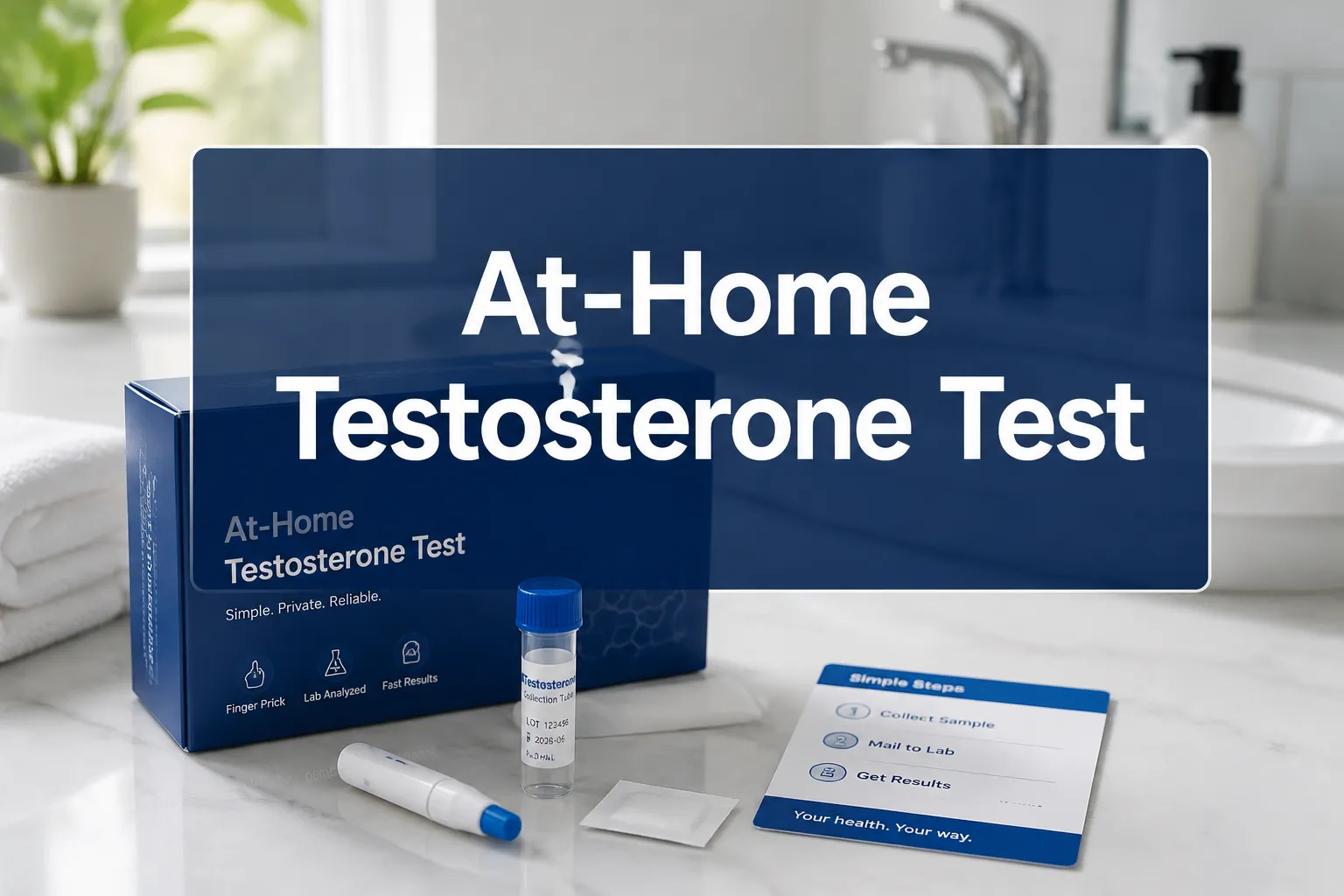
Quick Answer: An at-home testosterone test lets you measure your testosterone levels using a finger-prick blood sample or saliva sample collected at home, then mailed to a certified lab for analysis. Results are typically available within 2 to 5 business days. These tests are a practical first step for men experiencing symptoms like fatigue, low libido, or unexplained weight gain, but a confirmed diagnosis still requires a follow-up with a licensed healthcare provider.
Key Takeaways
- At-home testosterone tests measure total testosterone (and sometimes free testosterone) from a small blood or saliva sample you collect yourself.
- Normal total testosterone for adult men generally falls between 300 and 1,000 ng/dL, though labs may define ranges slightly differently.
- Most at-home kits are not FDA-approved as diagnostic devices, but many use CLIA-certified labs, which means the lab analysis itself meets federal quality standards.
- Accuracy is comparable to standard lab draws for total testosterone, but saliva-based tests are less reliable than blood-based ones.
- Costs range from roughly $45 to $200 depending on the panel, brand, and whether a physician consultation is included.
- No prescription is required to purchase an at-home testosterone test in the United States.
- Women can use these tests, though reference ranges differ significantly from men’s.
- A single low result does not confirm hypogonadism; morning testing and repeat testing improve reliability.
- If results are low, lifestyle factors (sleep, weight, stress) should be addressed before assuming you need hormone therapy.
- For men also concerned about sexual health, our guide on best ED medication after age 50 covers related treatment options worth reviewing alongside testosterone results.
What Is a Normal Testosterone Level for Men?
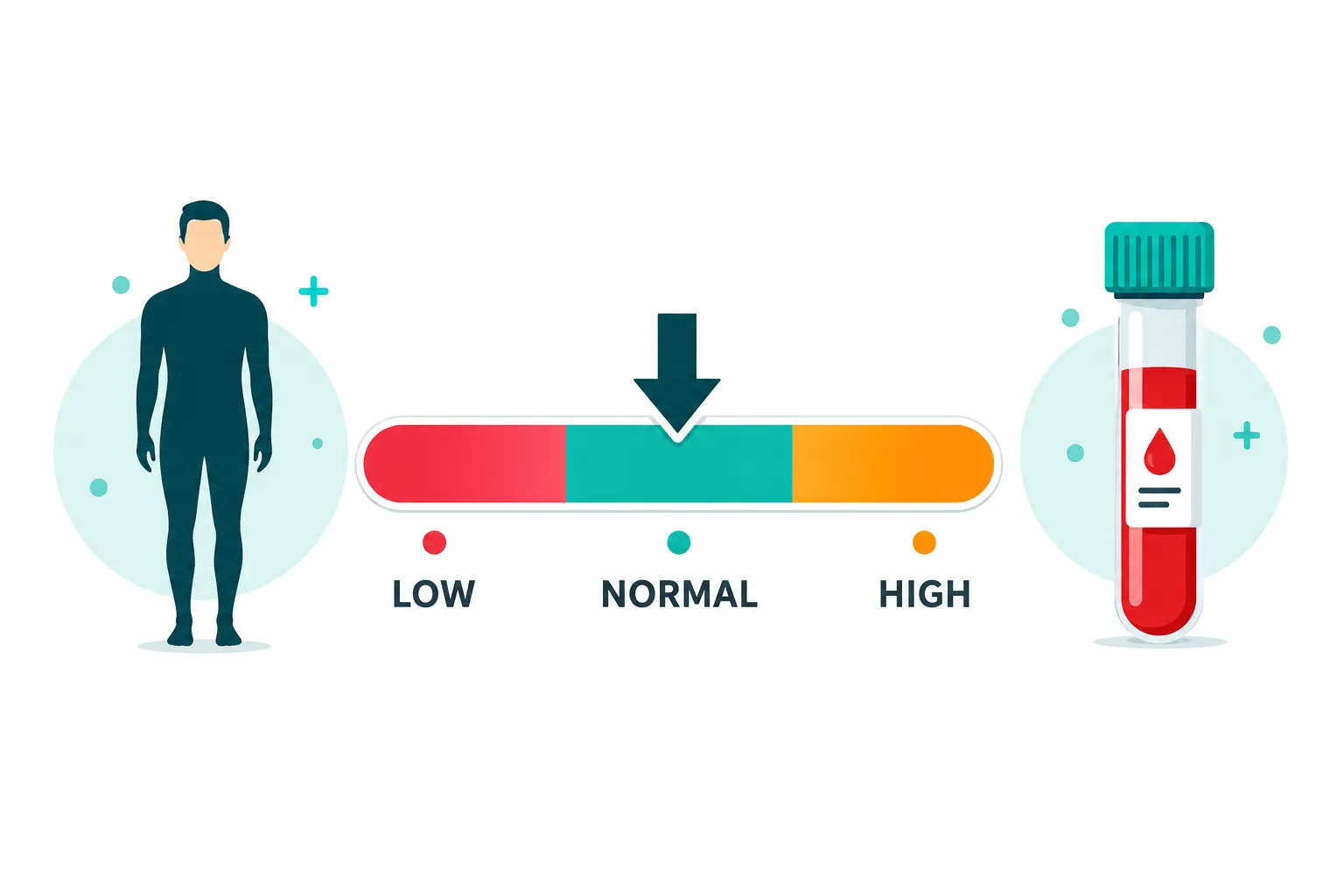
Normal total testosterone for adult men ranges from approximately 300 to 1,000 nanograms per deciliter (ng/dL), according to most major clinical guidelines. The American Urological Association defines low testosterone (hypogonadism) as a total testosterone level below 300 ng/dL, combined with symptoms.
A few important nuances:
- Total testosterone measures all testosterone in the blood, including the portion bound to proteins.
- Free testosterone measures only the unbound, biologically active fraction, which is a smaller but arguably more clinically meaningful number.
- Levels naturally decline with age. Men in their 20s often test in the 600 to 900 ng/dL range; men in their 50s and 60s commonly fall between 400 and 600 ng/dL.
- Reference ranges vary slightly by lab, so always compare your result to the specific lab’s reference interval printed on your report.
Common mistake: Assuming any number below 500 ng/dL is a problem. Context matters. A man at 350 ng/dL with no symptoms is in a different clinical situation than a man at 350 ng/dL with severe fatigue, loss of muscle mass, and low libido.
How Accurate Are At-Home Testosterone Tests?
Blood-based at-home testosterone tests processed through CLIA-certified labs are generally accurate for measuring total testosterone, with results comparable to a standard venous blood draw. Saliva-based tests are less precise and more susceptible to contamination from food, drink, or poor collection technique.
Key accuracy factors to understand:
| Test Type | Accuracy Level | Best For |
|---|---|---|
| Finger-prick blood (dried blood spot) | High for total T | General screening |
| Venous blood draw (home kit) | Very high | Detailed panels |
| Saliva collection | Moderate | Free testosterone estimate |
- CLIA certification (Clinical Laboratory Improvement Amendments) means the processing lab meets federal standards for quality control. Look for this on any kit you buy.
- Finger-prick dried blood spot (DBS) tests have been validated against standard venipuncture in multiple clinical studies, showing strong correlation for total testosterone.
- Timing matters more than most men realize. Testosterone peaks in the early morning (roughly 7 to 10 a.m.) and can be 20 to 30 percent lower by afternoon.
Edge case: If you test in the afternoon and get a borderline result, retest in the morning before drawing conclusions.
At-Home Testosterone Test vs. Blood Test at a Doctor
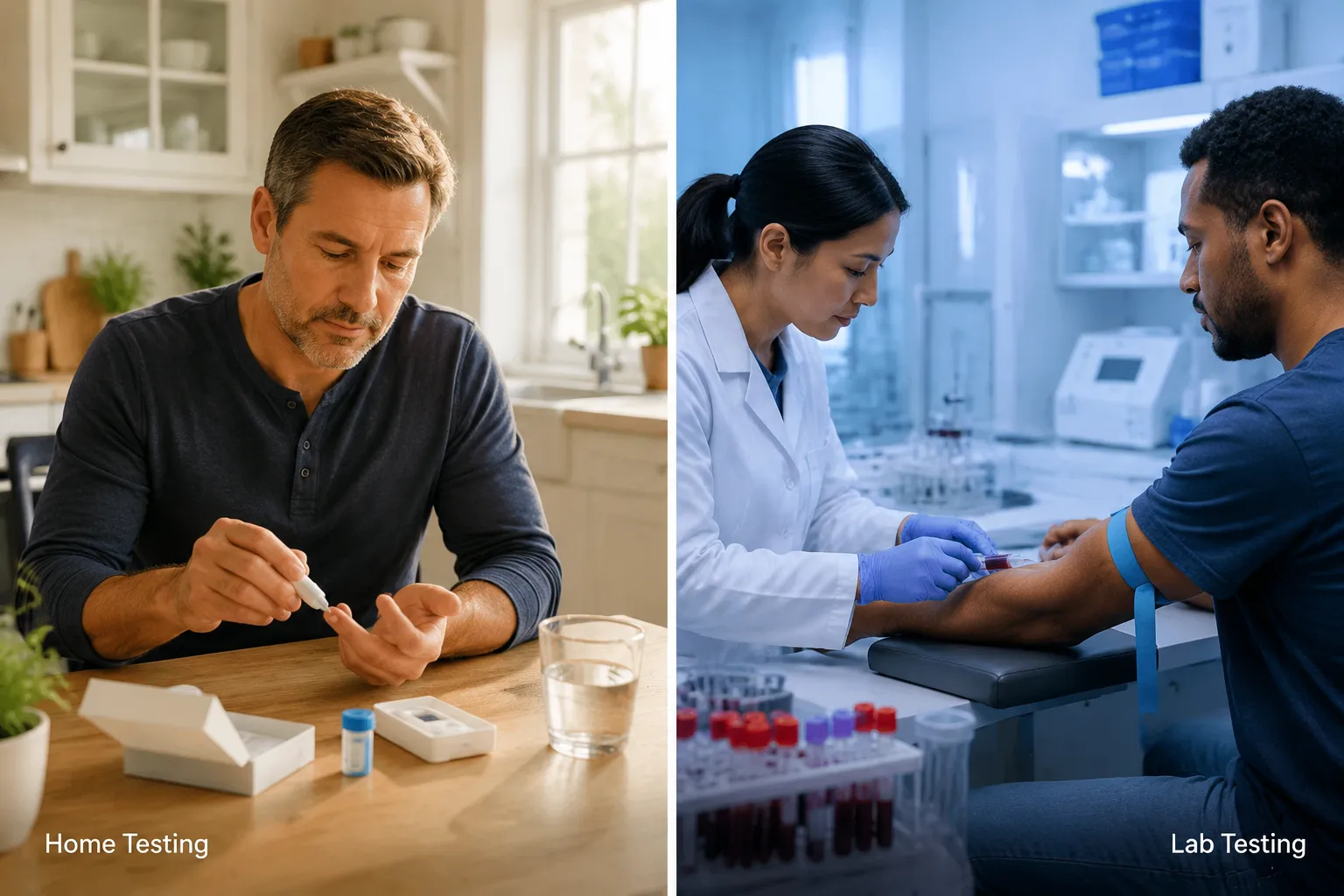
An at-home testosterone test is more convenient and private, but a doctor’s blood test remains the gold standard for clinical diagnosis. The core difference is not accuracy for total testosterone, it’s the clinical context that surrounds the result.
Here’s how they compare:
| Factor | At-Home Test | Doctor’s Blood Test |
|---|---|---|
| Convenience | High (no appointment) | Low (scheduling required) |
| Cost | $45,$200 | $30,$150+ (varies by insurance) |
| Panels available | Total T, free T, some include SHBG, LH | Full hormonal panel, including LH, FSH, prolactin |
| Clinical interpretation | App or online report | Physician review |
| Insurance coverage | Rarely covered | Often covered |
| Diagnostic validity | Screening only | Clinically actionable |
Choose an at-home test if you want a private baseline reading, you’re uninsured, or you want to monitor trends over time without repeated clinic visits.
Choose a doctor’s blood test if you have significant symptoms, you’re considering testosterone replacement therapy (TRT), or you need a result that a physician will act on.
For men exploring telehealth options for follow-up care, our best telehealth ED medication program guide covers providers who also handle hormonal consultations.
Best At-Home Testosterone Test Kits in 2026
Several well-regarded at-home testosterone test kits are available in 2026. The best choice depends on what you want to measure, your budget, and whether you want a physician consultation included.
Top categories to look for:
- Basic total testosterone only: Suitable for a quick baseline. Lower cost, simpler process.
- Comprehensive male hormone panel: Includes total testosterone, free testosterone, SHBG (sex hormone-binding globulin), LH, and sometimes estradiol. More useful for understanding the full picture.
- Kits with physician review included: Some services pair the lab test with a licensed clinician who reviews your results and can recommend next steps.
What to look for in any kit:
- CLIA-certified lab processing
- Blood-based (dried blood spot or venous) rather than saliva-only
- Clear instructions and a prepaid return envelope
- Results delivered through a secure online portal
- Transparent reference ranges
Well-known brands in this space include Everlywell, LetsGetChecked, Hone Health, and Maximus. Pricing and panel depth vary, so compare what each panel actually measures before purchasing.
How Much Does an At-Home Testosterone Test Cost?
At-home testosterone tests range from about $45 for a basic total testosterone screen to $200 or more for a comprehensive male hormone panel with physician consultation included. Most fall in the $69 to $129 range.
Cost breakdown by type:
- Basic total testosterone test: $45,$75
- Comprehensive hormone panel (T + free T + SHBG + LH): $99,$179
- Panel with included physician review: $149,$200+
- Subscription plans (quarterly monitoring): Often reduce per-test cost by 20 to 40 percent
At-home tests are rarely covered by insurance because they’re classified as consumer wellness products rather than diagnostic tests ordered by a physician. If cost is a concern, ask your primary care doctor to order a testosterone panel through your insurance, which may reduce your out-of-pocket cost significantly.
How to Use an At-Home Testosterone Test Kit
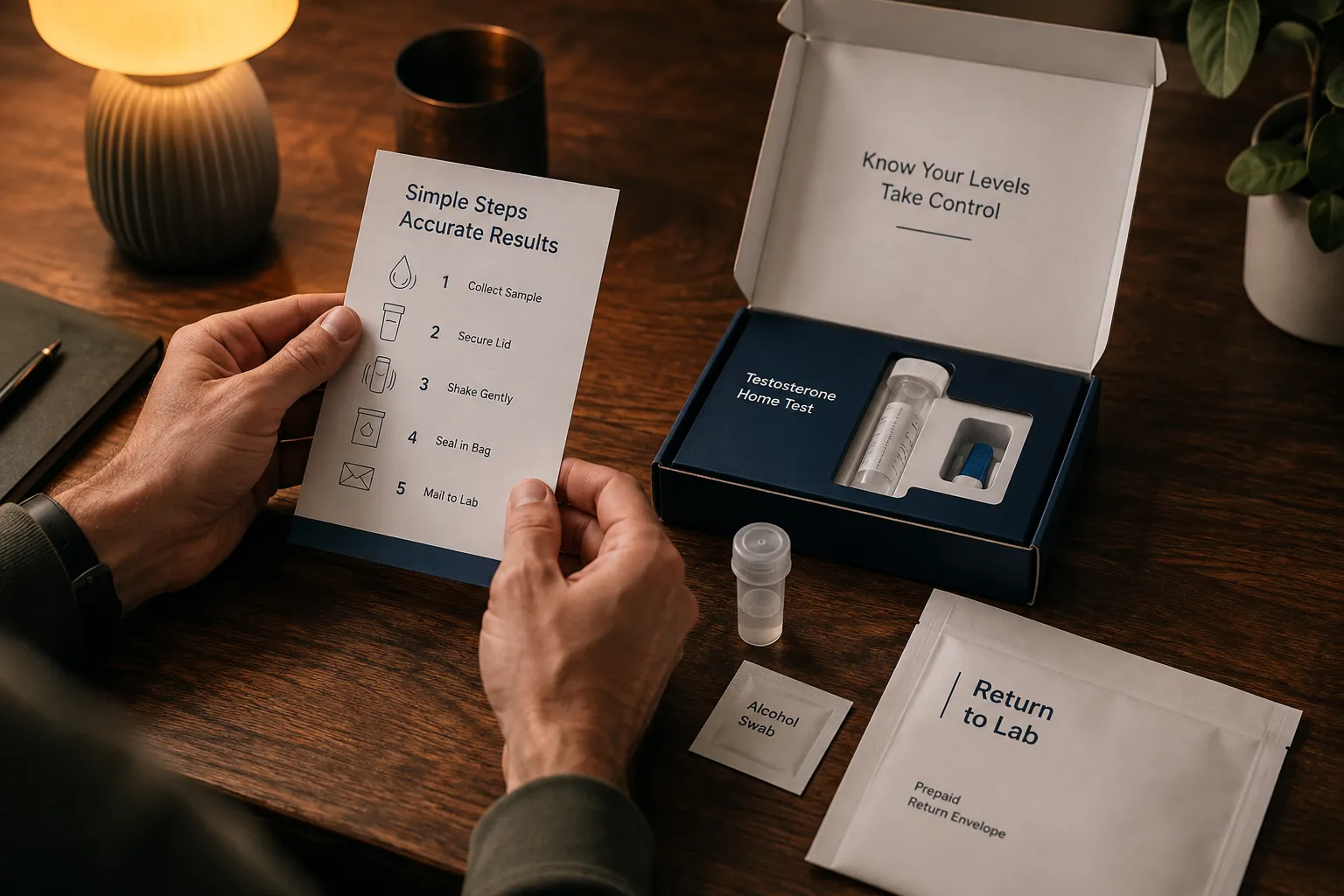
Using an at-home testosterone test correctly takes about 10 to 15 minutes. The most common collection method is a finger-prick dried blood spot, though some kits use a small vacuum collection tube.
Step-by-step process:
- Order your kit. Choose a kit with a CLIA-certified lab. It arrives in 2 to 5 business days.
- Prepare the morning of your test. Fast for at least 8 hours if the kit requires it. Test between 7 and 10 a.m. for the most accurate result.
- Wash and warm your hands. Warm hands increase blood flow to your fingertip, making collection easier.
- Use the lancet to prick your fingertip. Apply gentle pressure from the base of your finger toward the tip to encourage blood flow.
- Fill the collection card or vial. Follow the kit’s instructions exactly. Underfilling is the most common user error.
- Let the sample dry (for dried blood spot cards) for the time specified, usually 30 minutes.
- Seal and mail the sample using the prepaid envelope included in your kit.
- Check your results online. Most services deliver results in 2 to 5 business days via a secure portal.
Common mistake: Testing in the afternoon or after exercise. Both can artificially lower your reading by 15 to 30 percent.
Why Is My Testosterone Test Showing Low Results?
A low at-home testosterone result can stem from the time of day you tested, temporary lifestyle factors, or an underlying medical condition. Before assuming you have clinical hypogonadism, rule out the most common non-medical causes first.
Temporary and lifestyle-related causes:
- Testing in the afternoon (testosterone is lowest between 2 and 6 p.m.)
- Recent intense exercise or physical stress
- Poor sleep (even one night of poor sleep can lower testosterone by 10 to 15 percent, per research published in the Journal of the American Medical Association)
- Obesity or high body fat percentage
- Chronic stress and elevated cortisol
- Alcohol consumption in the days before testing
- Certain medications (opioids, corticosteroids, some antidepressants)
Medical causes worth investigating with a doctor:
- Primary hypogonadism (testicular dysfunction)
- Secondary hypogonadism (pituitary or hypothalamic dysfunction)
- Type 2 diabetes or metabolic syndrome
- Thyroid disorders
Decision rule: If your result is below 300 ng/dL and you tested correctly in the morning after a good night’s sleep, schedule a follow-up blood test with your doctor. One low result is not enough to diagnose hypogonadism.
What Causes Low Testosterone and How to Fix It
Low testosterone is caused by a combination of aging, lifestyle factors, and sometimes underlying medical conditions. The good news is that several lifestyle changes can meaningfully raise levels before medical treatment is needed.
Proven lifestyle interventions:
- Resistance training: Compound lifts (squats, deadlifts) stimulate testosterone production. Aim for 3 to 4 sessions per week.
- Sleep optimization: 7 to 9 hours of quality sleep per night is one of the most powerful natural testosterone supports.
- Weight loss: Adipose (fat) tissue converts testosterone to estrogen. Losing excess body fat directly raises free testosterone.
- Stress reduction: Chronic cortisol elevation suppresses testosterone. Mindfulness, reduced work stress, and regular exercise all help.
- Vitamin D and zinc: Deficiencies in both are associated with lower testosterone. A simple blood panel can identify deficiencies.
- Limit alcohol: Heavy alcohol use suppresses testosterone production in the testes.
If lifestyle changes don’t move the needle after 3 to 6 months, and symptoms persist, a physician may discuss testosterone replacement therapy (TRT), clomiphene, or other medical options.
For men dealing with related concerns, our review of Directmax erectile dysfunction covers one treatment option that some men explore alongside hormonal support. You may also find our coverage of best prostate supplements useful, since prostate health and testosterone levels are closely linked.
Can Women Use At-Home Testosterone Tests?
Yes, women can use at-home testosterone tests, and there are legitimate reasons to do so. Women produce testosterone in smaller amounts than men, and both low and high levels can cause symptoms.
Normal testosterone ranges for women:
- Total testosterone: approximately 15 to 70 ng/dL (varies by lab and age)
- Free testosterone: 0.3 to 1.9 pg/mL (varies by lab)
Women may benefit from testosterone testing if they experience:
- Low libido
- Unexplained fatigue
- Loss of muscle mass
- Symptoms of polycystic ovary syndrome (PCOS), which often involves elevated testosterone
- Perimenopause or menopause-related hormonal changes
Important note: Most at-home testosterone kits are marketed to men and calibrated for male reference ranges. If you’re a woman using one of these kits, confirm that the lab report includes female-specific reference ranges, or choose a kit specifically designed for female hormone panels.
Do At-Home Testosterone Tests Require a Doctor or Prescription?
No prescription is required to purchase or use an at-home testosterone test in the United States. You can buy them directly from the manufacturer’s website, major retailers, or through telehealth platforms.
However, some nuances apply:
- No prescription needed to purchase the test kit itself.
- Some platforms require a brief online health questionnaire before ordering, which a clinician reviews. This is not a prescription requirement; it’s a safety screen.
- Acting on the results may require a doctor. If you want to start TRT or any prescription hormone therapy based on your results, you’ll need a licensed physician to prescribe it.
- FSA/HSA eligibility: Some at-home testosterone tests qualify as FSA/HSA-eligible expenses. Check with your plan administrator.
For men interested in telehealth-based follow-up care after receiving results, our guide to best Hims alternatives covers several platforms that handle testosterone consultations online.
Are At-Home Testosterone Tests FDA Approved?
Most at-home testosterone test kits are not FDA-approved as medical diagnostic devices, but the labs that process the samples are typically CLIA-certified, which is the more meaningful quality standard for the analysis itself.
Here’s the distinction:
- FDA approval for a diagnostic test means the test device itself has been reviewed and cleared for clinical diagnosis.
- CLIA certification means the laboratory performing the analysis meets federal standards for accuracy, quality control, and personnel qualifications.
The practical implication: the at-home collection kit is a consumer wellness product, but if the lab is CLIA-certified, the testosterone measurement it produces is held to the same quality standards as a hospital lab.
What to verify before buying:
- Confirm the processing lab is CLIA-certified (most reputable brands state this clearly).
- Look for CAP (College of American Pathologists) accreditation as an additional quality marker.
- Avoid kits that don’t disclose their lab partner or certification status.
At-Home Testosterone Test False Positives and Inaccurate Results
At-home testosterone tests are more prone to user error than false positives in the clinical sense. A “false positive” for low testosterone is more commonly the result of poor collection timing, sample contamination, or underfilling the collection card.
Factors that can produce an inaccurately low result:
- Afternoon testing (testosterone is naturally lower)
- Testing after intense exercise or illness
- Underfilled blood spot card (insufficient sample volume)
- Sample exposed to heat during mailing
- Saliva test contaminated by food, drink, or oral hygiene products
Factors that can produce an inaccurately high result:
- Testing immediately after waking but before normal circadian peak
- Lab calibration variance (rare in CLIA-certified labs)
Best practice to minimize error:
- Test between 7 and 10 a.m.
- Fast for 8 hours beforehand
- Follow collection instructions exactly
- Mail the sample the same day or the next morning
- If a result seems inconsistent with your symptoms, retest
When Should You Take an At-Home Testosterone Test?
Take an at-home testosterone test if you’re experiencing symptoms that may indicate low testosterone and want a baseline reading before seeing a doctor, or if you’re already on TRT and want to monitor your levels between clinical appointments.
Good reasons to test:
- Persistent fatigue not explained by sleep or lifestyle
- Reduced sex drive or erectile difficulties
- Loss of muscle mass despite consistent training
- Increased body fat, especially around the abdomen
- Mood changes, depression, or difficulty concentrating
- You’re over 35 and want a hormonal baseline for future comparison
When to go straight to a doctor instead:
- You have severe symptoms that are affecting your daily life
- You have a known condition (diabetes, pituitary disorder) that affects hormones
- You’ve already had a low at-home result and need clinical follow-up
Testing once a year as part of a broader men’s health check is a reasonable practice for men over 40, particularly if they have risk factors like obesity, poor sleep, or a sedentary lifestyle.
FAQ
Q: How long does it take to get results from an at-home testosterone test?
Most at-home testosterone tests return results within 2 to 5 business days after the lab receives your sample. Some services offer expedited processing for an additional fee. Results are typically delivered through a secure online portal or app.
Q: Can I test my testosterone at home without a blood draw?
Yes. Saliva-based at-home testosterone tests exist and require no blood draw. However, saliva tests are less accurate than blood-based tests for measuring total testosterone, and results can be affected by food, drink, or oral hygiene products consumed before collection.
Q: What time of day should I take an at-home testosterone test?
Test between 7 and 10 a.m. Testosterone levels peak in the early morning and can fall 20 to 30 percent by afternoon. Testing at the wrong time is the most common reason for a misleadingly low result.
Q: Is one low at-home testosterone result enough to diagnose low T?
No. A single low result is not sufficient for a clinical diagnosis of hypogonadism. Most guidelines recommend two separate morning blood tests showing low levels, combined with symptoms, before a diagnosis is made. Use your at-home result as a reason to follow up with a doctor, not as a final answer.
Q: Do at-home testosterone tests measure free testosterone?
Some do, some don’t. Basic kits typically measure only total testosterone. More comprehensive panels include free testosterone, SHBG, and sometimes LH. If you want free testosterone measured, confirm the panel includes it before purchasing.
Q: Can stress affect my at-home testosterone test result?
Yes. Acute and chronic stress elevates cortisol, which suppresses testosterone production. If you’re going through a high-stress period, your result may be lower than your true baseline. Retest after a period of lower stress for a more representative reading.
Q: Will my health insurance cover an at-home testosterone test?
Most health insurance plans do not cover consumer at-home test kits because they’re classified as wellness products rather than physician-ordered diagnostics. However, some kits are FSA/HSA eligible. If you want insurance coverage, ask your doctor to order a testosterone panel through a standard lab.
Q: How is total testosterone different from free testosterone?
Total testosterone measures all testosterone in the blood, including the portion bound to proteins (primarily SHBG and albumin). Free testosterone is the small fraction (roughly 1 to 3 percent) that is unbound and biologically active. Some men have normal total testosterone but low free testosterone due to high SHBG, which can still cause symptoms.
Q: What should I do if my at-home testosterone test shows low results?
First, confirm the result by retesting in the morning under ideal conditions. If the second result is also low (below 300 ng/dL for men), schedule an appointment with your primary care doctor or a urologist. Bring your test results. A physician will order a confirmatory blood draw and evaluate for underlying causes before recommending treatment.
Q: Are at-home testosterone tests safe?
Yes. The collection process involves a small finger-prick lancet, which is safe for most adults. The main risks are minor: a small bruise or soreness at the collection site. If you have a blood clotting disorder or are on anticoagulants, consult your doctor before using a blood-based home test.
Conclusion
An at-home testosterone test is a practical, accessible tool for men who want to understand their hormonal health without the friction of a clinic visit. For a baseline reading, trend monitoring, or a first step before seeing a doctor, a blood-based kit processed through a CLIA-certified lab gives you reliable data.
The key rules: test in the morning, follow collection instructions carefully, and treat a single low result as a prompt to investigate further, not a diagnosis. If your result is below 300 ng/dL and you have symptoms, follow up with a licensed physician who can order a confirmatory test and evaluate the full clinical picture.
For men managing related health concerns, explore our guides on best telehealth ED medication programs and men’s prostate health supplements that work for a broader view of men’s hormonal and sexual health in 2026.