
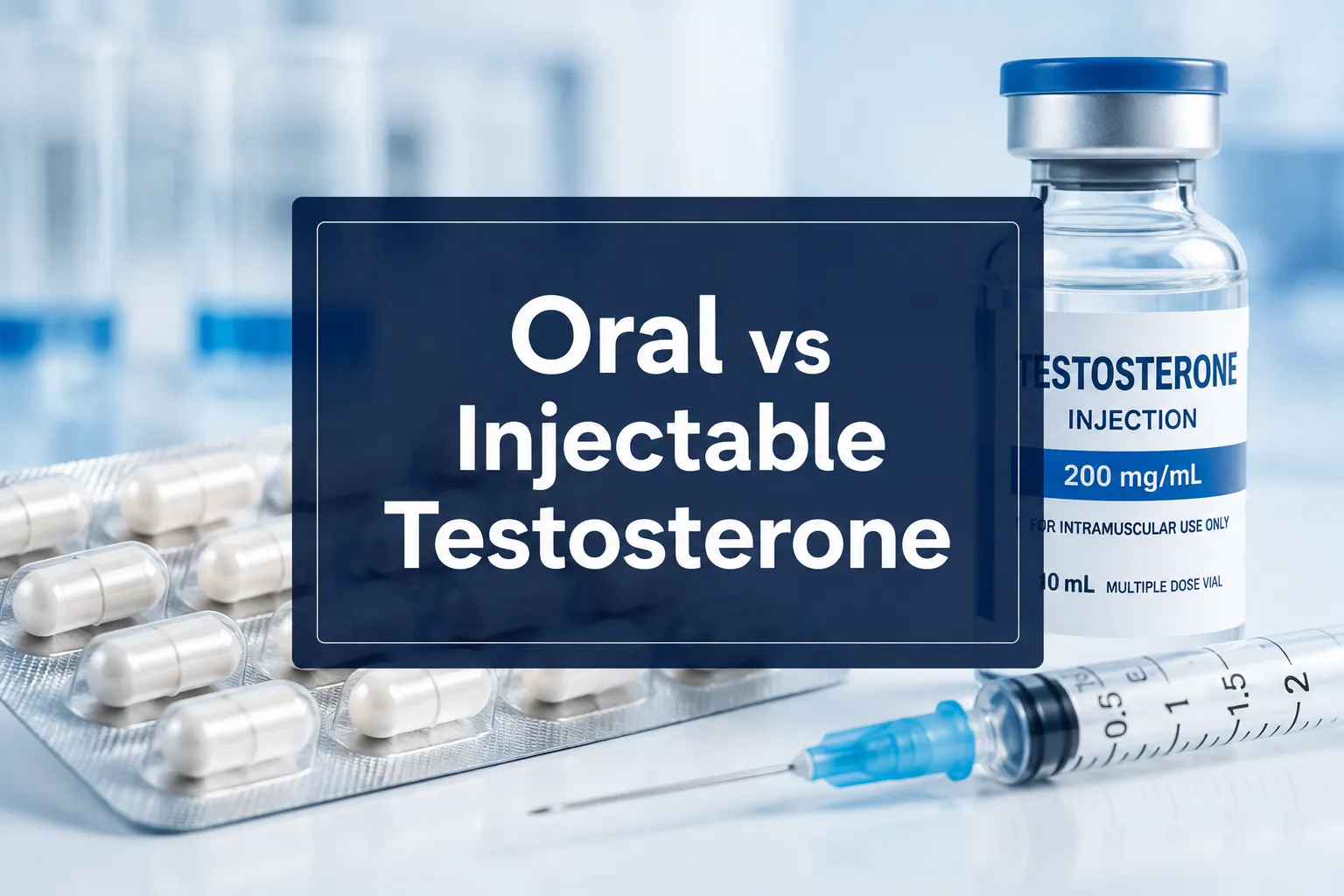
Oral vs Injectable Testosterone
Last updated: August 10, 2026
Quick Answer
When comparing oral vs injectable testosterone, both forms can effectively normalize testosterone levels in men with hypogonadism, but they differ significantly in dosing schedule, liver processing, cost, and convenience. Injectables remain the most widely prescribed option in 2026, but newer oral formulations have closed much of the efficacy gap. The right choice depends on your lifestyle, health history, and how your prescribing physician weighs the trade-offs.
Key Takeaways
- Injectable testosterone has been the clinical standard for decades due to its predictable absorption and lower cost per dose.
- Newer oral testosterone undecanoate (TU) formulations reliably raise serum testosterone into the normal range for most hypogonadal men [2].
- Oral testosterone must be taken with food containing fat to absorb properly, skipping this step significantly reduces effectiveness.
- Injectable testosterone stays in your system anywhere from a few days (short-esters like cypionate/enanthate) to several weeks (undecanoate), depending on the ester used.
- Oral testosterone carries a lower risk of injection-site complications but requires twice-daily dosing for most formulations.
- Cardiovascular safety data on testosterone replacement therapy (TRT) overall is reassuring, meta-analyses do not show a significant increase in major adverse cardiovascular events [4][5].
- Switching between oral and injectable forms is possible but requires physician supervision and a transition period to stabilize levels.
- Cost differences are real: oral TU is generally more expensive per month than injectable cypionate or enanthate.
- Neither form should be combined without medical guidance, mixing oral and injectable testosterone simultaneously is not standard practice.
- Men who cannot self-inject and prefer needle-free therapy are the clearest candidates for oral testosterone.
What Is the Difference Between Oral and Injectable Testosterone?
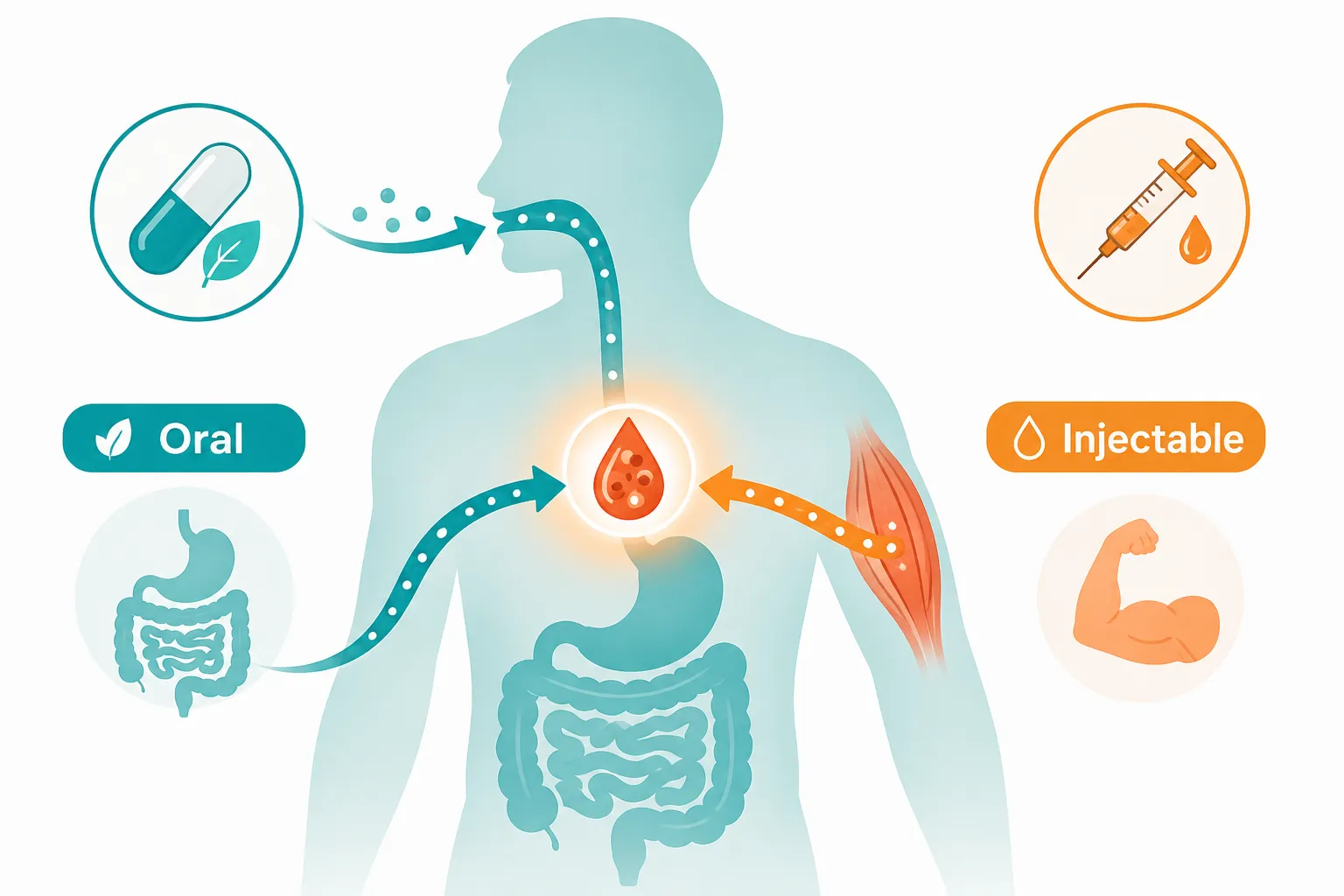
Oral and injectable testosterone deliver the same hormone but through entirely different absorption pathways, which affects how quickly levels rise, how stable they stay, and what metabolic burden each form places on the body.
Injectable testosterone is administered directly into muscle tissue (intramuscular) or under the skin (subcutaneous). The testosterone ester dissolves slowly from the injection site into the bloodstream, bypassing the digestive system entirely. Common injectable forms include testosterone cypionate, testosterone enanthate, and testosterone undecanoate (long-acting).
Oral testosterone, specifically modern testosterone undecanoate capsules (brand name Jatenzo, FDA-approved) [6], is absorbed through the lymphatic system via dietary fat, not through the portal vein, which largely avoids first-pass liver metabolism. Older oral forms like methyltestosterone did pass through the liver and carried significant hepatotoxicity risk; those are no longer recommended.
Key structural differences at a glance:
| Feature | Oral Testosterone (TU) | Injectable Testosterone |
|---|---|---|
| Administration | Swallowed capsule with food | Intramuscular or subcutaneous injection |
| Dosing frequency | Twice daily | Every 1-2 weeks (short-ester) or every 10-14 weeks (long-ester) |
| Absorption route | Lymphatic (bypasses liver) | Direct bloodstream via muscle |
| Level stability | Moderate peaks/troughs daily | Wider peaks/troughs with short-esters |
| Liver risk (modern forms) | Low (lymphatic absorption) | Minimal |
| Typical monthly cost | Higher | Lower |
Which Form of Testosterone Works Faster: Oral or Injection?
Injectable testosterone generally produces faster initial increases in serum testosterone levels than oral forms, particularly with short-acting esters like cypionate or enanthate. Oral testosterone undecanoate raises levels within hours of a dose but requires consistent twice-daily administration to maintain steady-state concentrations.
With a single intramuscular injection of testosterone cypionate, serum levels peak within 24-72 hours [8]. Oral TU reaches peak plasma concentration roughly 2-6 hours after each dose, but because it’s taken twice daily, the “working” period is continuous rather than a single sustained release.
Bottom line on speed:
- If you need levels normalized quickly (e.g., severe symptomatic hypogonadism), injectable short-esters act faster in the first week.
- For long-term maintenance, both forms achieve comparable steady-state levels when dosed correctly [2].
- Long-acting injectable TU (Aveed) takes several weeks to reach stable levels due to its slow-release depot mechanism.
Oral Testosterone Side Effects vs Injectable: What’s Different?
Both forms share the core side-effect profile of testosterone replacement, increased red blood cell count (erythrocytosis), acne, testicular atrophy, and potential effects on fertility. But each delivery method adds its own specific risks.
Oral testosterone (TU) specific concerns:
- Blood pressure increases: The FDA label for Jatenzo includes a warning about hypertension, and clinical monitoring is required [6].
- Requires food with fat: Without adequate dietary fat, absorption drops substantially (more on this below).
- Twice-daily dosing burden: Missing doses creates more noticeable level fluctuations than missing a weekly injection.
Injectable testosterone specific concerns:
- Injection-site reactions: Pain, bruising, and in rare cases, oil embolism (particularly with intramuscular injections).
- Mood swings with short-esters: The peak-and-trough pattern of cypionate/enanthate can cause energy and mood fluctuations mid-cycle.
- Polycythemia risk: Injectables, particularly at higher doses, are associated with elevated hematocrit levels that require monitoring [8].
- Pulmonary oil microembolism: A rare but documented risk with injectable testosterone undecanoate (Aveed) [3].
Shared side effects for both forms:
- Elevated hematocrit
- Suppression of natural testosterone and sperm production
- Potential prostate effects (requires monitoring)
- Skin oiliness and acne
If you’re managing related men’s health concerns alongside TRT, our guide on what is the best medication for enlarged prostate covers prostate health considerations worth reviewing with your doctor.
Is Oral Testosterone Safer Than Injectable?
Neither form is categorically safer than the other, they carry different risk profiles, not a clear safety hierarchy. Modern oral testosterone TU avoids the liver toxicity of older oral androgens because it absorbs lymphatically [2][6]. Injectable testosterone avoids the blood pressure concerns flagged for oral TU but introduces injection-related risks.
Where oral TU has an edge:
- No needles, so no injection-site infections or oil embolism risk.
- Avoids the dramatic testosterone spikes that can occur with intramuscular short-esters.
Where injectables have an edge:
- No FDA blood pressure warning (unlike oral TU).
- Longer clinical track record with well-characterized safety data.
- Easier to titrate dose with less frequent administration.
“The choice between oral and injectable testosterone is not primarily a safety decision, it is a clinical fit decision based on the individual patient’s cardiovascular profile, lifestyle, and adherence patterns.”
Cardiovascular safety data on TRT broadly is reassuring. Meta-analyses of testosterone replacement therapy do not demonstrate a significant increase in major adverse cardiovascular events [4][5]. However, men with pre-existing cardiovascular conditions should discuss both options carefully with their physician before starting any form of TRT.
For men interested in how inflammation intersects with hormone health, our article on supplements good for inflammation provides useful complementary reading.

Why Do Doctors Recommend Injectable Testosterone Over Oral?
Most physicians still default to injectable testosterone because of its longer clinical history, lower cost, and well-established dosing protocols. Injectable testosterone cypionate and enanthate have been in clinical use for decades, giving prescribers confidence in their safety and efficacy data.
The main reasons doctors prefer injectables:
- Cost: Generic injectable testosterone cypionate costs significantly less per month than brand-name oral TU (Jatenzo).
- Dosing flexibility: Injections can be precisely titrated in small increments; oral TU comes in fixed capsule strengths.
- Established protocols: Clinical guidelines from major urology and endocrinology bodies have decades of injectable data to draw from [3].
- Monitoring simplicity: A single weekly or biweekly injection makes it easier to correlate blood draw timing with peak/trough levels.
That said, prescriber attitudes are shifting. As newer oral TU data accumulates showing reliable normalization of serum testosterone in hypogonadal men [2], more physicians are offering oral options, especially for patients who are needle-averse or have difficulty self-injecting.
How Much Does Oral Testosterone Cost Compared to Injectable?
Oral testosterone is generally more expensive than injectable testosterone, sometimes significantly so. Injectable testosterone cypionate (generic) can cost as little as $30,$80 per month without insurance, while oral testosterone undecanoate (Jatenzo) typically runs $400,$600 or more per month at retail pricing without coverage [VERIFY: confirm current 2026 retail pricing with pharmacy benefit manager data].
Cost comparison overview:
| Form | Estimated Monthly Cost (2026) | Insurance Coverage |
|---|---|---|
| Injectable cypionate/enanthate (generic) | $30,$80 | Widely covered |
| Injectable testosterone undecanoate (Aveed) | $300,$500 | Variable |
| Oral testosterone undecanoate (Jatenzo) | $400,$600+ | Variable, often prior auth required |
Ways to reduce cost:
- Use manufacturer savings cards for brand-name oral TU (check the official Jatenzo website).
- Ask about compounded injectable testosterone, often cheaper, though quality varies.
- Confirm insurance formulary status before starting; prior authorization is common for oral TU.
- HSA/FSA accounts can offset out-of-pocket costs for both forms.
For men exploring broader men’s health treatment costs, our comparison of Directmax vs Hims for erectile dysfunction treatment illustrates how telehealth pricing models work across different therapies.
What Happens If You Take Oral Testosterone With Food, or Without It?
Taking oral testosterone undecanoate with a fat-containing meal is not optional, it is essential for the drug to work. Oral TU absorbs through the lymphatic system via dietary fat (chylomicrons). Without adequate fat in the meal, absorption drops dramatically, and serum testosterone levels may not reach therapeutic range [6][2].
Practical guidance:
- Each dose should be taken with a meal containing at least 15-20 grams of fat.
- Good options: eggs, avocado, nuts, full-fat dairy, or any meal with a moderate fat component.
- Taking oral TU on an empty stomach or with a very low-fat meal is one of the most common reasons patients report poor response.
- The FDA label for Jatenzo specifically instructs patients to take each dose with food [6].
Common mistake: Men who switch from injectable to oral TU and feel “it isn’t working” often discover they were taking their capsules with low-fat breakfasts or skipping meals entirely. This is an adherence and education issue, not a drug failure.
How Long Does Injectable Testosterone Stay in Your System?
The duration depends entirely on which ester is used. Different injectable testosterone formulations have very different half-lives and clearance times.
| Injectable Form | Half-Life | Approximate Clearance |
|---|---|---|
| Testosterone propionate | ~2 days | 4-6 days |
| Testosterone cypionate | ~8 days | 2-3 weeks |
| Testosterone enanthate | ~4.5 days | 1-2 weeks |
| Testosterone undecanoate (Aveed) | ~20-21 days | 6-10 weeks |
Testosterone cypionate and enanthate, the two most commonly prescribed injectables in the US, are typically dosed every 7-14 days. After stopping, levels return to baseline within approximately 2-4 weeks for these short-esters [8].
Long-acting injectable TU (Aveed) has a much longer tail: levels can remain elevated for 6-10 weeks after the last injection, which matters if you need to stop TRT quickly for a medical procedure or fertility treatment.
Who Should Use Oral Testosterone Instead of Injectable?
Oral testosterone is the better fit for a specific subset of men. It is not universally superior, but for the right patient, it removes meaningful barriers to consistent treatment.
Choose oral testosterone if you:
- Are needle-averse or have a documented phobia of injections.
- Cannot safely self-inject due to limited dexterity, vision problems, or living situation.
- Prefer not to visit a clinic for injections and want a fully at-home regimen.
- Have experienced significant mood swings or energy crashes with short-ester injectables (the twice-daily oral dosing produces a smoother daily curve).
- Do not have uncontrolled hypertension (given the blood pressure warning on oral TU) [6].
Oral testosterone is likely NOT the best fit if you:
- Have cardiovascular risk factors that make the blood pressure concern clinically significant.
- Are on a tight budget and cannot access insurance coverage for brand-name oral TU.
- Have difficulty maintaining consistent meal timing with adequate fat content.
- Need a long-acting, low-frequency dosing schedule (injectables offer weekly or quarterly options; oral TU requires twice-daily dosing).

Does Injectable Testosterone Require More Frequent Dosing Than Oral?
It depends on the specific injectable form. Short-ester injectables (cypionate, enanthate) require dosing every 7-14 days, which is less frequent than oral TU’s twice-daily schedule. Long-acting injectable TU (Aveed) is dosed just 4-5 times per year after the initial loading period [3].
Dosing frequency comparison:
- Oral TU (Jatenzo): twice daily, every day
- Testosterone cypionate/enanthate: every 7-14 days
- Testosterone undecanoate injection (Aveed): every 10 weeks (after loading doses)
So in terms of total number of administrations per year, long-acting injectable TU requires far fewer interventions than any oral form. For men who prioritize minimal treatment burden, quarterly or near-quarterly injections are hard to beat on convenience, if the cost and in-clinic administration are manageable.
Can You Switch From Oral to Injectable Testosterone?
Yes, switching between oral and injectable testosterone is clinically feasible and done regularly. The transition requires physician oversight to time the switch correctly and avoid either a gap in coverage (low testosterone symptoms) or an overlap (temporarily supra-physiologic levels).
General switching approach:
- Discuss the reason for switching with your prescriber, cost, side effects, convenience, or inadequate response.
- For switching from oral to injectable: the last oral dose is typically taken the day before or the day of the first injection, depending on the injectable ester chosen.
- For switching from injectable to oral: timing depends on the ester’s half-life. With cypionate/enanthate, starting oral TU 7-10 days after the last injection (as levels are declining) is a common approach.
- Blood work at 4-6 weeks after the switch confirms whether levels have stabilized in the therapeutic range.
Do not self-manage a switch. Overlapping two testosterone forms without guidance can push hematocrit and testosterone levels above safe thresholds.
Can You Mix Oral and Injectable Testosterone Together?
Combining oral and injectable testosterone simultaneously is not standard medical practice and is not recommended without explicit physician direction. Using both at once significantly increases the risk of supraphysiologic testosterone levels, elevated hematocrit, and cardiovascular strain [4].
This is different from a supervised transition (described above), where one form is being phased out as the other is introduced. True concurrent use of both forms is occasionally done in highly specialized clinical contexts, but it is not a routine TRT protocol.
Bottom line: Do not add oral testosterone on top of your injectable regimen (or vice versa) without your prescribing physician explicitly directing it and monitoring your labs closely.
Is Injectable Testosterone Better for Muscle Gain Than Oral?
At equivalent serum testosterone levels, there is no strong clinical evidence that injectable testosterone produces greater muscle gains than oral testosterone. Muscle anabolism is driven by the testosterone itself, not the delivery method. What matters is achieving and maintaining serum levels in the therapeutic range consistently [2][5].
Where injectables may have a practical edge for body composition:
- Higher doses are easier to achieve with injectables, which is relevant in performance contexts (though not standard TRT).
- Some men report better subjective energy and strength near the peak of their injection cycle, though this can also cause more pronounced troughs.
Where oral TU may actually help:
- Twice-daily dosing produces more stable daily testosterone levels, which could theoretically support more consistent anabolic signaling than the peaks and troughs of weekly injections.
The honest answer: for standard hypogonadism treatment at therapeutic doses, the delivery method matters far less for muscle gain than training consistency, protein intake, sleep quality, and overall health. If you’re managing joint discomfort alongside your TRT program, our guide to the best supplements for joint pain covers evidence-based options worth considering.
What Are Common Mistakes People Make With Oral Testosterone?
Several avoidable errors reduce the effectiveness of oral testosterone therapy or create unnecessary health risks.
The most common mistakes:
Taking it without fat: As covered above, this is the single biggest reason oral TU underperforms. Every dose needs a fat-containing meal.
Skipping doses: Unlike a weekly injection where one missed dose has limited impact, missing one of two daily oral doses meaningfully drops that day’s testosterone exposure.
Not monitoring blood pressure: The FDA label for oral TU specifically flags hypertension risk. Men who skip blood pressure checks after starting oral TU are missing a required safety step [6].
Expecting injectable-level convenience: Oral TU is needle-free, but it demands twice-daily discipline. Men who want a “set it and forget it” approach are often better served by long-acting injectable TU.
Stopping abruptly without a plan: Stopping oral TU cold without transitioning to another form or managing the hormonal withdrawal can cause rapid return of hypogonadism symptoms.
Using older oral androgens: Methyltestosterone and similar older oral androgens are hepatotoxic and should not be used. Modern TRT means oral TU specifically [2].
For men concerned about bone health, a relevant consideration in long-term hypogonadism, our article on how to reverse bone loss naturally offers practical guidance.
Oral vs Injectable Testosterone: A Side-by-Side Decision Framework
Use this framework to guide your conversation with your prescribing physician.
Choose injectable testosterone if you:
- Want the lowest monthly out-of-pocket cost.
- Prefer infrequent dosing (weekly or quarterly).
- Are comfortable with self-injection or clinic visits.
- Have blood pressure concerns that make oral TU’s hypertension warning relevant.
- Want the most established long-term safety data.
Choose oral testosterone if you:
- Are needle-averse or cannot self-inject.
- Prefer a fully oral, at-home regimen.
- Experience mood instability with injection peak-and-trough cycles.
- Have insurance coverage that makes oral TU cost-competitive.
- Can reliably take twice-daily doses with fat-containing meals.
If you’re also managing erectile dysfunction alongside low testosterone, our comparison of Directmax vs Cialis for erectile dysfunction provides useful context on how these conditions are often treated together.
Frequently Asked Questions
Q: Can oral testosterone replace injectable testosterone completely?
Yes. For most men with hypogonadism, oral testosterone undecanoate can fully replace injectable testosterone and normalize serum levels without injections. The key is consistent twice-daily dosing with fat-containing meals and regular blood monitoring [2][6].
Q: How do I know if my oral testosterone dose is working?
Blood work is the only reliable measure. Serum total testosterone should be drawn 4-6 hours after a dose (at peak) to confirm levels are in the therapeutic range. Symptom improvement alone is not sufficient to confirm adequate dosing.
Q: Does oral testosterone affect the liver like older oral steroids?
Modern oral testosterone undecanoate (Jatenzo) absorbs through the lymphatic system, not the portal vein, so it largely bypasses first-pass liver metabolism. This is fundamentally different from older oral androgens like methyltestosterone, which were hepatotoxic [2].
Q: Can I drink alcohol while taking oral testosterone?
Moderate alcohol consumption is not specifically contraindicated with oral TU, but alcohol can affect testosterone metabolism and is generally discouraged in men undergoing TRT. Discuss your specific intake with your physician.
Q: Is injectable testosterone available as a generic?
Yes. Testosterone cypionate and testosterone enanthate are both available as low-cost generics, which is a major reason they remain the most commonly prescribed forms of TRT in the US.
Q: How often do I need blood tests on oral vs injectable testosterone?
Both forms require periodic monitoring. Typically: a baseline panel before starting, a follow-up at 3 months, then every 6-12 months once stable. Blood pressure monitoring is specifically required for oral TU per FDA labeling [6].
Q: Can oral testosterone cause infertility?
Yes, like all exogenous testosterone, oral TU suppresses the hypothalamic-pituitary axis, reducing LH and FSH, which decreases sperm production. Men who want to preserve fertility should discuss alternatives (such as clomiphene or hCG) with a reproductive urologist before starting TRT.
Q: What is the fastest way to raise testosterone levels?
A loading injection of testosterone cypionate or enanthate raises serum levels within 24-72 hours. Oral TU begins working within hours of the first dose but takes several days of consistent twice-daily dosing to reach steady state [8].
Q: Are there non-hormonal ways to support testosterone levels?
Lifestyle factors, resistance training, adequate sleep, body fat reduction, and managing chronic inflammation, can support natural testosterone production. Our guide on supplements good for inflammation covers relevant options, though these are adjuncts, not replacements for TRT in clinically diagnosed hypogonadism.
Q: Is oral testosterone approved by the FDA?
Yes. Testosterone undecanoate capsules (Jatenzo) received FDA approval, and the updated labeling was revised as recently as 2025 [6]. It is a legitimate, regulated prescription medication, not a supplement.
Conclusion
The oral vs injectable testosterone decision is not about which form is universally better, it is about which form fits your health profile, lifestyle, and clinical needs. Injectables remain the default for good reasons: lower cost, flexible dosing intervals, and decades of safety data. But modern oral testosterone undecanoate is a credible, FDA-approved alternative that works reliably when taken correctly, particularly for men who cannot or will not use injections.
Your actionable next steps: get a full hormone panel with your physician, discuss your blood pressure history before considering oral TU, and be honest about your ability to maintain twice-daily dosing with fat-containing meals. If cost is a barrier, ask specifically about generic injectable options. Whatever form you choose, consistent monitoring is non-negotiable, testosterone therapy is a long-term commitment, not a one-time fix.
References
[1] PMC12821475 – https://pmc.ncbi.nlm.nih.gov/articles/PMC12821475/
[2] Oral Testosterone Therapy JSEDM – https://seriesscience.com/wp-content/uploads/2024/09/Oral-Testosterone-Therapy-JSEDM.pdf
[3] JU.0000000000000900 – https://www.auajournals.org/doi/10.1097/JU.0000000000000900.014
[4] The Expert’s Approach to Managing CV Risk Among Athletes Using Anabolic Androgenic Steroids – https://www.acc.org/latest-in-cardiology/articles/2024/04/01/16/10/the-experts-approach-to-managing-cv-risk-among-athletes-using-anabolic-androgenic-steroids
[5] Sexual Medicine Reviews – https://academic.oup.com/smr/article/13/3/373/8100477
[6] FDA Label – Jatenzo (208088s002lbl) – https://www.accessdata.fda.gov/drugsatfda_docs/label/2025/208088s002lbl.pdf
[7] FDA Drug Safety and Availability – https://www.fda.gov/drugs/drug-safety-and-availability
[8] PMC9452423 – https://pmc.ncbi.nlm.nih.gov/articles/PMC9452423/
[9] The Medical Letter – https://secure.medicalletter.org/TML-article-1726d
[10] PubMed 20646185 – https://pubmed.ncbi.nlm.nih.gov/20646185/