Oral Testosterone
Last updated: August 10, 2026
Quick Answer
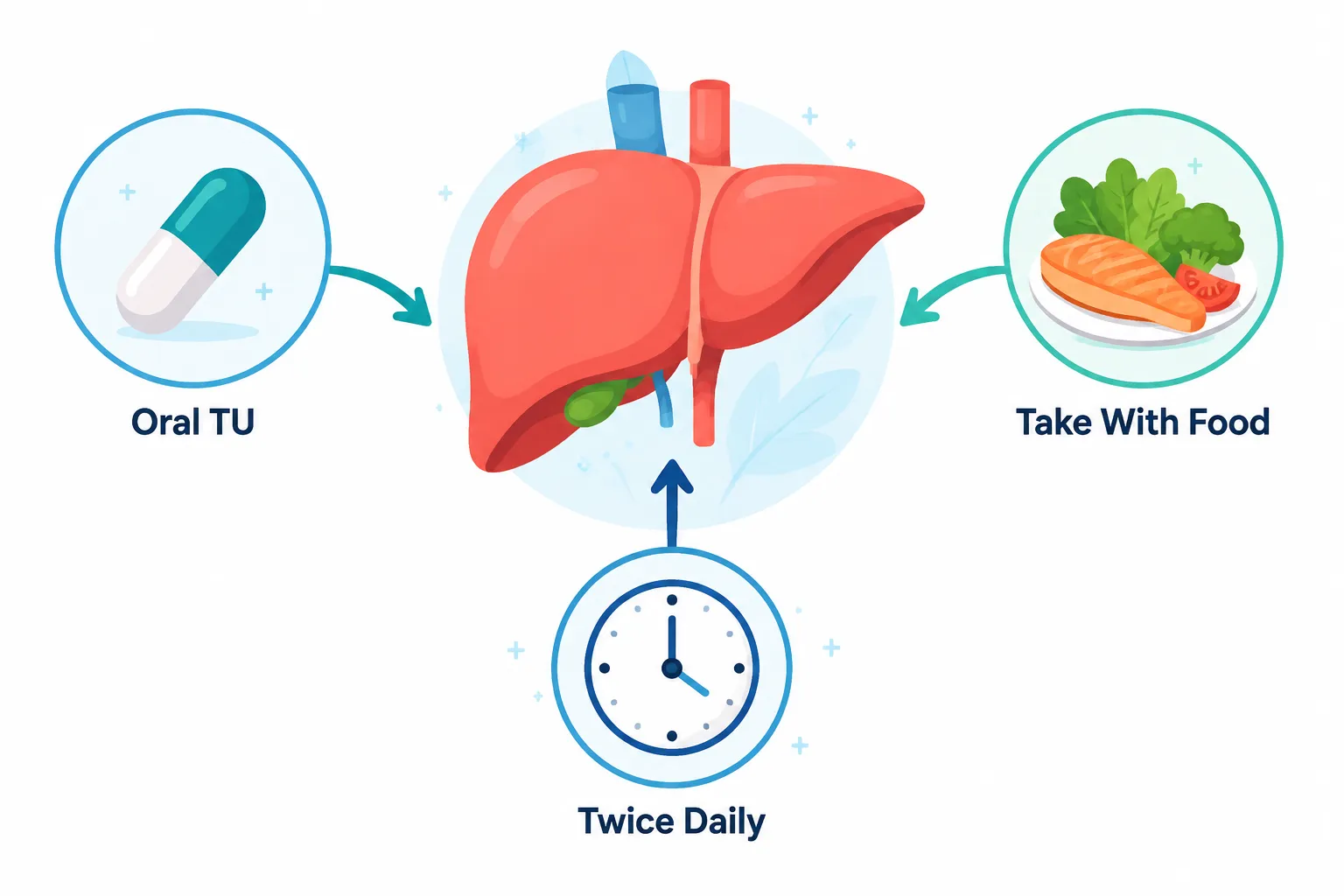
Oral testosterone is a prescription medication taken by mouth to treat low testosterone (hypogonadism) in men. The FDA has approved three oral testosterone undecanoate (TU) products in the United States, Jatenzo, Tlando, and Kyzatrex, each of which must be taken with food to absorb properly. These options give men a needle-free alternative to injections and gels, though they come with specific dosing rules and monitoring requirements.
Key Takeaways
- The FDA has approved three oral testosterone products in the U.S.: Jatenzo, Tlando, and Kyzatrex, all using testosterone undecanoate as the active compound [1][2]
- Oral testosterone must be taken with food because fat in a meal drives absorption through the lymphatic system, bypassing first-pass liver metabolism
- Unlike older methyltestosterone products, modern oral testosterone undecanoate does not carry a significant liver toxicity risk when used as directed [5]
- Most men see meaningful testosterone level improvements within two to four weeks, with full effects on symptoms taking two to three months
- Oral testosterone is not approved for women in the U.S., though off-label use is studied in specific clinical contexts
- Cost ranges widely, brand-name products can run $300 to $600 per month without insurance, and coverage varies significantly by plan
- Common mistakes include skipping the food requirement, missing doses, and not monitoring blood pressure, which oral TU can elevate [4]
- Men with severe liver disease, certain cardiovascular conditions, or prostate cancer are generally not candidates for any testosterone therapy
- If you have concerns about erectile dysfunction alongside low testosterone, see our guide to the best ED treatment for men over 60 for related options
What Is Oral Testosterone and How Does It Work?
Oral testosterone is a form of testosterone replacement therapy (TRT) delivered as a capsule swallowed by mouth. It works by using a fat-soluble testosterone ester, testosterone undecanoate, that gets absorbed through the gut’s lymphatic system rather than the liver, which allows it to reach the bloodstream in therapeutically useful amounts [5].
Here is why that matters: earlier oral testosterone products (like methyltestosterone) were processed almost entirely by the liver on first pass, causing liver stress and producing inconsistent blood levels. Testosterone undecanoate sidesteps this by hitching a ride on dietary fat. When you eat a meal containing fat, bile acids emulsify the fat into chylomicrons, and testosterone undecanoate travels with those chylomicrons into the lymphatic system before entering general circulation [8].
How it differs from other TRT forms:
- Injections deliver testosterone directly into muscle, bypassing absorption issues entirely
- Gels and patches absorb through skin into subcutaneous tissue
- Oral TU depends entirely on dietary fat for absorption, skip the meal, and you may absorb very little
All three FDA-approved oral products use the same active compound (testosterone undecanoate) but differ in formulation, dosing schedule, and whether dose titration is required [1][2].
Oral Testosterone Brands and Options Available
Three oral testosterone products are currently FDA-approved in the United States, all approved between 2019 and 2022 [1][2].
| Brand | Approval Year | Dosing | Titration Required? |
|---|---|---|---|
| Jatenzo (oral TU) | 2019 | 158-396 mg twice daily with food | Yes |
| Tlando (oral TU) | 2022 | 225 mg twice daily with food | No |
| Kyzatrex (oral TU) | 2022 | 100-200 mg twice daily with food | Yes |
Jatenzo was the first FDA-approved oral testosterone undecanoate in the U.S. It requires dose titration based on blood testosterone levels and carries a black-box warning for blood pressure elevation [4].
Tlando uses a fixed dose of 225 mg twice daily, which eliminates the need for titration and simplifies management. It was approved in March 2022 [2].
Kyzatrex received approval in August 2022 and extension data support its long-term safety and efficacy profile. Studies showed that roughly 87% of men on Kyzatrex achieved average testosterone levels within the normal range [1].
All three require a valid prescription from a licensed U.S. healthcare provider. None are available over the counter.
Oral Testosterone vs. Injections: Which Is Better?
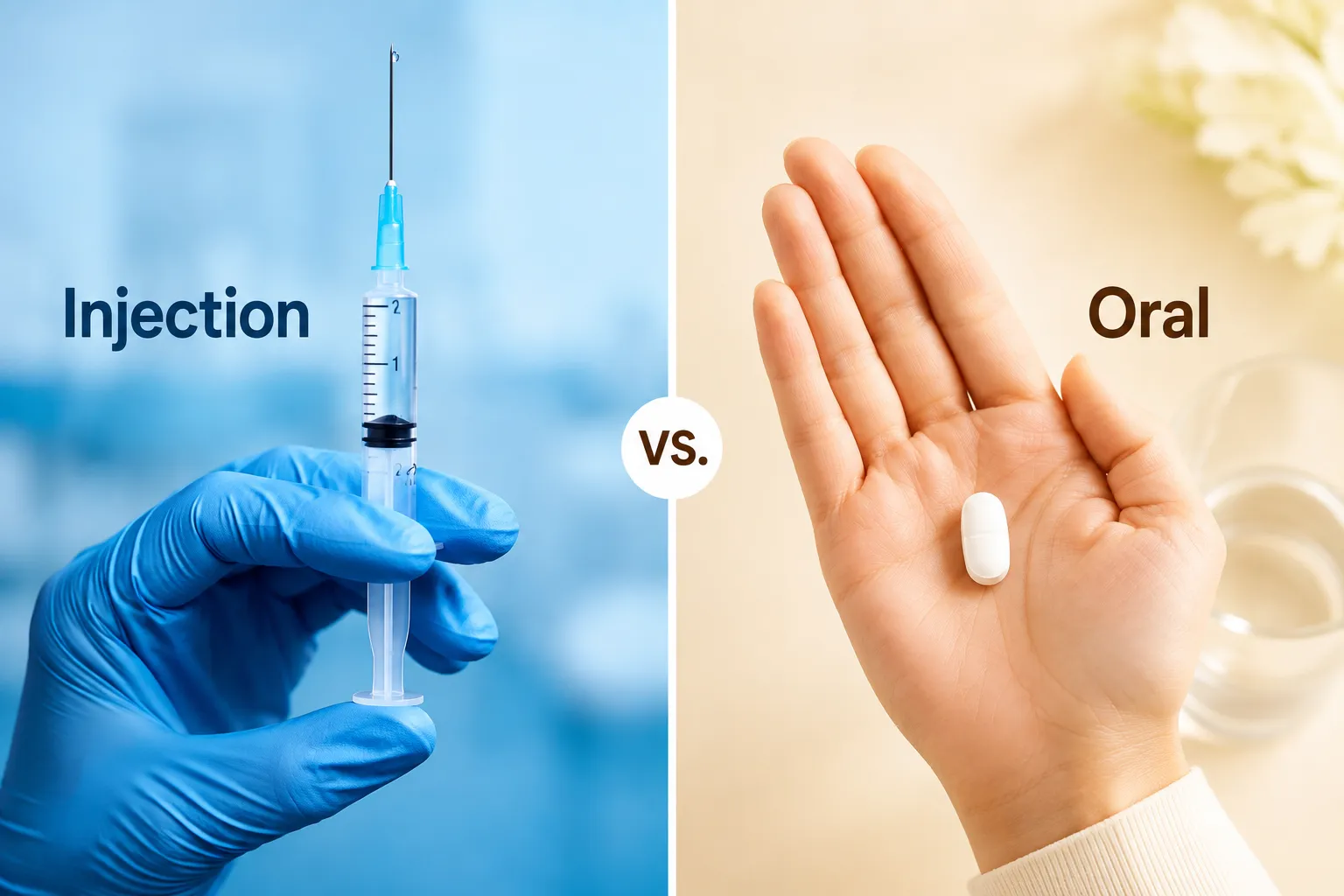
Neither is universally better, the right choice depends on your lifestyle, tolerance for needles, and how closely you want to manage hormone fluctuations. Injections (typically testosterone cypionate or enanthate) have decades of clinical data, lower cost, and flexible dosing intervals. Oral testosterone offers convenience and avoids needles, but requires strict twice-daily dosing with food [4][5].
Choose oral testosterone if:
- You dislike or cannot self-administer injections
- You prefer a discreet, portable option while traveling
- Your prescriber is comfortable managing the blood pressure monitoring requirement
Choose injections if:
- Cost is a primary concern (generic injectable testosterone is significantly cheaper)
- You can tolerate once- or twice-weekly self-injection
- You want a longer-established safety record
Key trade-offs at a glance:
- Hormone stability: Injections (especially weekly cypionate) can cause peaks and troughs. Oral TU taken twice daily tends to produce steadier daily levels [8]
- Liver safety: Modern oral TU does not carry the liver risk of older oral androgens (see the liver section below)
- Blood pressure: Oral TU products carry FDA black-box warnings for blood pressure increases; injections do not carry this specific warning [4]
- Convenience: Oral wins on needle avoidance; injections win on fewer daily doses
Oral Testosterone vs. Patches vs. Gels: Full Comparison
Oral testosterone, transdermal patches, and topical gels all treat hypogonadism but differ in application, absorption reliability, and transfer risk.
| Factor | Oral TU | Topical Gel | Patch |
|---|---|---|---|
| Application | Swallowed twice daily with food | Applied to skin daily | Applied to skin daily |
| Transfer risk to others | None | Yes (skin-to-skin contact) | Minimal |
| Food dependency | High | None | None |
| Skin irritation | None | Possible | Common |
| Hormone level consistency | Good (twice daily) | Good | Moderate |
| Prescription required | Yes | Yes | Yes |
Gels (like AndroGel or Testim) are widely used and well-tolerated, but the risk of accidental transfer to partners or children is a real concern that requires careful hand-washing and clothing coverage after application.
Patches (like Androderm) are convenient but have a high rate of skin irritation at the application site, which leads many men to discontinue them.
Oral TU eliminates transfer risk entirely and requires no skin prep, but the twice-daily food requirement is a genuine compliance challenge for men with irregular eating schedules.
Side Effects of Oral Testosterone Therapy
Oral testosterone therapy shares most side effects with other TRT forms, plus a few specific to the oral route. The most clinically significant is blood pressure elevation, which is serious enough that all three FDA-approved oral TU products carry a black-box warning for it [4].
Common side effects:
- Increased red blood cell count (polycythemia), requires periodic hematocrit monitoring
- Acne or oily skin
- Increased body hair
- Testicular shrinkage (due to suppression of natural testosterone production)
- Mood changes, including irritability
Oral-route-specific concerns:
- Blood pressure increase: Documented in clinical trials for Jatenzo, Tlando, and Kyzatrex. Monitor BP at baseline and regularly during treatment [1]
- GI discomfort: Some men report mild nausea or stomach upset, particularly early in treatment
- Absorption variability: If you eat inconsistently, your testosterone levels will be inconsistent
Less common but serious:
- Worsening of sleep apnea
- Cardiovascular events (risk elevated in men with pre-existing heart disease)
- Infertility (TRT suppresses sperm production)
If you are managing related metabolic concerns alongside TRT, our article on the rise of fatty liver disease covers relevant liver health context worth reviewing.
Oral Testosterone Liver Damage Risk: Is It Real?
Modern oral testosterone undecanoate does not carry a meaningful liver toxicity risk at prescribed doses, this is one of the most important distinctions between current FDA-approved products and older oral androgens. Methyltestosterone and 17-alpha alkylated androgens (common in older products and some anabolic steroids) are processed by the liver in a way that can cause hepatotoxicity, peliosis hepatis, and liver tumors [5][7].
Testosterone undecanoate avoids this because it is absorbed lymphatically, not hepatically. Clinical trial data for Jatenzo, Tlando, and Kyzatrex did not show clinically significant liver enzyme elevations at therapeutic doses [5].
Bottom line: If your doctor prescribes one of the three FDA-approved oral TU products and you take it as directed, liver damage is not a significant concern. The real monitored risks are blood pressure and hematocrit, not liver enzymes.
“The lymphatic absorption pathway of testosterone undecanoate is the key reason it avoids the liver toxicity seen with older oral androgens.”, Denver Urology [4]
Oral Testosterone Absorption and Food Interactions
Oral testosterone must be taken with food, this is not optional. Fat content in a meal is what drives absorption. Studies show that taking oral TU in a fasted state can reduce absorption by 50% or more compared to taking it with a meal [8][9].

What counts as enough food:
- A meal containing at least 15-20 grams of fat is generally sufficient
- Full meals (breakfast, lunch, dinner) work well
- A small snack with some fat (peanut butter, cheese, avocado) may be adequate but is less reliable than a full meal
Foods and substances to be cautious about:
- Grapefruit and grapefruit juice can inhibit CYP3A4 enzymes, potentially altering testosterone metabolism, check with your prescriber
- High-fiber, very low-fat meals may reduce absorption
- Alcohol does not directly block absorption but can affect liver metabolism and hormone levels over time
Practical tip: Take your morning dose with breakfast and your evening dose with dinner. Building the dose around your two largest meals of the day is the most reliable approach for consistent blood levels.
How Long Does Oral Testosterone Take to Work?
Blood testosterone levels typically rise within the first one to two weeks of starting oral TU. However, the full symptomatic effects, improved energy, libido, mood, and body composition, generally take two to three months to become clearly noticeable [4][5].
Timeline by symptom:
- Libido and sexual function: Often improves within 3-6 weeks
- Energy and mood: Typically 4-8 weeks for noticeable change
- Body composition (muscle, fat): 3-6 months for meaningful changes
- Bone density: 12-24 months for measurable improvement
Lab monitoring typically occurs at 3-6 weeks after starting or after a dose change, then every 6-12 months once stable. If your levels are not in the target range at the first follow-up, your prescriber will adjust the dose (for Jatenzo and Kyzatrex) or reassess the approach.
Who Should Take Oral Testosterone and Who Shouldn’t
Oral testosterone is appropriate for adult men diagnosed with hypogonadism, confirmed low testosterone with symptoms and two morning blood tests showing levels below the normal range (generally below 300 ng/dL, though labs vary) [4][10].
Good candidates:
- Men with primary or secondary hypogonadism confirmed by lab testing
- Men who prefer oral medication over injections or topical products
- Men with no significant cardiovascular disease or uncontrolled hypertension
- Men without active prostate or breast cancer
Not appropriate for:
- Men with prostate cancer or suspected prostate cancer
- Men with breast cancer
- Men with severe untreated sleep apnea
- Men with uncontrolled high blood pressure (given the BP warning on oral TU)
- Men trying to conceive (TRT suppresses sperm production)
- Women (not FDA-approved for women in the U.S.)
- Men under 18
If you are also dealing with erectile dysfunction that may be separate from low testosterone, our comparison of BlueChew vs. DirectMax and guide to discreet online ED medication cover complementary treatment options.
Oral Testosterone Dosage: How Much Should You Take?
Dosage depends on which product you are prescribed and your blood testosterone response. Do not self-dose, all three FDA-approved products require a prescription and lab-guided management [1][2].
Approved starting doses:
- Jatenzo: 158 mg twice daily with food; titrated up or down based on 8-hour post-dose testosterone levels
- Tlando: Fixed 225 mg twice daily with food; no titration
- Kyzatrex: 100 mg twice daily with food; titrated to a maximum of 200 mg twice daily
Common mistake: Taking a higher dose than prescribed because symptoms haven’t fully resolved. Supraphysiologic testosterone levels increase cardiovascular risk, hematocrit, and do not produce proportionally better symptom relief. Let your lab results guide titration, not how you feel week to week.
Can Women Take Oral Testosterone Safely?
Oral testosterone products approved in the U.S. are not FDA-approved for use in women. That said, testosterone therapy for women, particularly postmenopausal women with low libido, is an active area of clinical research, and some physicians prescribe it off-label [10].
The risks for women include virilization (deepened voice, clitoral enlargement, facial hair), which are dose-dependent and partly reversible if caught early. The doses used in women’s off-label therapy are much lower than those used in men.
Women considering testosterone therapy should consult a board-certified endocrinologist or gynecologist who specializes in hormone management. The oral TU products approved for men are not appropriate for women at those doses.
Oral Testosterone Cost and Insurance Coverage
Brand-name oral testosterone is expensive without insurance. As of 2026, retail prices for a 30-day supply of Jatenzo, Tlando, or Kyzatrex range from approximately $300 to $600 per month, depending on dose and pharmacy [6].
Insurance coverage:
- Coverage varies significantly. Many commercial insurance plans cover TRT for diagnosed hypogonadism, but prior authorization is often required
- Medicare Part D covers some TRT formulations, though oral TU coverage varies by plan
- Manufacturer savings cards and patient assistance programs can reduce out-of-pocket costs substantially for eligible patients
Ways to reduce cost:
- Ask your prescriber about manufacturer copay assistance programs (Kyzatrex and Jatenzo both have savings programs)
- Check GoodRx and similar discount platforms for pharmacy-specific pricing
- HSA and FSA funds can be used for prescription TRT
- Some telehealth platforms that offer TRT have negotiated pricing, see our guide to the best compounded semaglutide clinic for context on how telehealth prescription pricing works more broadly
Note: Compounded testosterone (not FDA-approved brand-name products) may be available at lower cost through compounding pharmacies, but quality and consistency are not guaranteed in the same way as FDA-approved products.
Where to Get an Oral Testosterone Prescription
You need a prescription from a licensed U.S. healthcare provider. Options include primary care physicians, urologists, endocrinologists, and men’s health telehealth platforms [6].
Steps to get started:
- Schedule an appointment with your primary care doctor or a men’s health specialist
- Request a morning testosterone blood test (ideally before 10 a.m., when levels peak)
- If results are below the normal range, get a second confirmatory test
- Discuss symptoms and treatment options, including oral TU, injections, and gels
- If oral TU is appropriate, receive a prescription and baseline blood pressure and hematocrit measurements
- Follow up at 3-6 weeks for dose titration if using Jatenzo or Kyzatrex
Telehealth options: Several men’s health platforms now offer TRT prescriptions online, including for oral testosterone. Hims, for example, has added branded oral testosterone to its platform [6]. See our comparison of Hims vs. WeightWatchers clinic for a sense of how telehealth health platforms compare on service and pricing.
What to bring to your appointment:
- A list of current medications (some interact with testosterone, including blood thinners and insulin)
- Any prior testosterone lab results
- A description of your symptoms and how long you’ve had them
Common Mistakes People Make With Oral Testosterone
The most frequent errors with oral TU therapy are skipping food with doses, inconsistent timing, and ignoring blood pressure monitoring. Each of these directly undermines treatment effectiveness or safety [4].
Mistake 1: Taking it without food
Absorption drops dramatically without dietary fat. This is the single most common reason men on oral TU report inconsistent results.
Mistake 2: Missing doses
Unlike weekly injections, oral TU requires twice-daily dosing. Missing doses creates gaps in testosterone levels that can worsen symptoms.
Mistake 3: Ignoring blood pressure
All three oral TU products carry black-box warnings for BP elevation. Men who don’t monitor their blood pressure can develop hypertension without realizing it [1].
Mistake 4: Expecting immediate results
Some men stop treatment after a few weeks because they don’t feel different. Symptomatic improvement takes two to three months for most outcomes.
Mistake 5: Stopping suddenly
Abruptly stopping TRT without medical guidance can cause a temporary drop in testosterone below pre-treatment levels as the hypothalamic-pituitary axis recovers.
Mistake 6: Self-adjusting dose
Increasing your dose based on how you feel rather than lab results increases cardiovascular and hematologic risk without proportional benefit.
FAQ
What is the difference between oral testosterone and testosterone boosters sold at supplement stores?
Oral testosterone (Jatenzo, Tlando, Kyzatrex) is a prescription medication containing actual testosterone. Over-the-counter “testosterone boosters” are supplements, typically containing zinc, ashwagandha, or D-aspartic acid, that may support hormone levels marginally but do not contain testosterone and are not regulated as drugs.
Does oral testosterone affect fertility?
Yes. Like all forms of TRT, oral testosterone suppresses the hypothalamic-pituitary-gonadal axis, reducing sperm production. Men who want to father children should discuss alternatives (such as clomiphene or hCG) with their doctor before starting TRT.
Can I drink alcohol while taking oral testosterone?
Occasional moderate alcohol consumption is not specifically contraindicated, but chronic heavy drinking can suppress testosterone production and interfere with liver metabolism. Discuss your alcohol use honestly with your prescriber.
How is oral testosterone monitored long-term?
After stabilizing on a dose, most providers check total testosterone, hematocrit, PSA (prostate-specific antigen), and blood pressure every 6-12 months. Liver enzymes are not typically monitored because oral TU does not stress the liver at therapeutic doses.
Will oral testosterone cause hair loss?
Testosterone can accelerate male pattern baldness in men who are genetically predisposed. This applies to all forms of TRT, not just oral. If hair loss is a concern, discuss it with your prescriber before starting.
Is oral testosterone the same as anabolic steroids?
No. FDA-approved oral testosterone products contain natural testosterone at doses designed to restore normal physiologic levels. Anabolic steroids are typically synthetic derivatives used at supraphysiologic doses for performance enhancement, a very different context with much higher risk.
Can I take oral testosterone if I have high blood pressure?
Not without careful management. The black-box warning on all three oral TU products specifically addresses BP elevation. Men with pre-existing hypertension should have their BP well-controlled before starting, and should monitor it closely during treatment [1][4].
How do I store oral testosterone capsules?
Store at room temperature, away from heat and moisture. Do not store in the bathroom. Keep out of reach of children.
What happens if I take oral testosterone with a very low-fat meal?
Absorption will be reduced, potentially significantly. A meal with at least 15-20 grams of fat is recommended to ensure adequate absorption [8][9].
Is compounded oral testosterone an option?
Compounding pharmacies can prepare testosterone undecanoate capsules, often at lower cost. However, compounded products are not FDA-approved and may vary in potency and quality. Discuss the trade-offs with your prescriber.
Conclusion
Oral testosterone is a legitimate, FDA-approved treatment for male hypogonadism that offers a needle-free alternative to injections and topical products. The three available brands, Jatenzo, Tlando, and Kyzatrex, all use testosterone undecanoate and must be taken twice daily with food. Modern oral TU does not carry the liver toxicity risk of older oral androgens, but does require blood pressure monitoring. Most men see lab-level improvements within two weeks and symptomatic improvements within two to three months.
Your next steps:
- Get a morning testosterone blood test if you have symptoms of low T (fatigue, low libido, mood changes, reduced muscle mass)
- If results are low, consult a urologist, endocrinologist, or men’s health telehealth provider about whether oral TU is appropriate for you
- If cost is a barrier, ask about manufacturer savings programs or check telehealth platforms that offer TRT
- Once on therapy, monitor blood pressure regularly and keep all follow-up lab appointments
For men managing related health concerns, our guides on what is the best medication for enlarged prostate and best online ED consultation and treatment programs cover adjacent men’s health topics worth reviewing alongside your TRT plan.
References
[1] FDA Approves Oral Testosterone Replacement Therapy For Hypogonadism – https://www.urologytimes.com/view/fda-approves-oral-testosterone-replacement-therapy-for-hypogonadism
[2] FDA Approves Oral Testosterone Replacement Tlando – https://www.managedhealthcareexecutive.com/view/fda-approves-oral-testosterone-replacement-tlando
[4] Oral Testosterone – https://www.denverurology.com/urology-blog/oral-testosterone/
[5] PMC9452423 – https://pmc.ncbi.nlm.nih.gov/articles/PMC9452423/
[6] The New Standard In Testosterone Treatment – https://news.hims.com/newsroom/the-new-standard-in-testosterone-treatment-exclusive-branded-oral-testosterone-and-expanded-treatment-options
[7] Medscape – https://www.medscape.com/viewarticle/831977
[8] PMC7328356 – https://pmc.ncbi.nlm.nih.gov/articles/PMC7328356/
[9] PMC7282712 – https://pmc.ncbi.nlm.nih.gov/articles/PMC7282712/
[10] PMC12821475 – https://pmc.ncbi.nlm.nih.gov/articles/PMC12821475/