Pain relief with turmeric
Last updated: May 29, 2026
Quick Answer: Pain relief with turmeric is backed by decades of research showing that curcumin, turmeric’s active compound, reduces inflammation at the cellular level — the same root cause behind arthritis, knee pain, hip stiffness, and chronic joint discomfort. For adults over 50, the right turmeric supplement (paired with black pepper extract for absorption) can meaningfully reduce daily pain and support better mobility. Results typically begin within 4–8 weeks of consistent use.
Key Takeaways
- Turmeric’s active compound, curcumin, blocks pro-inflammatory enzymes (COX-2 and NF-kB) that drive chronic joint pain
- Clinical studies show curcumin performs comparably to ibuprofen for knee osteoarthritis pain — without the stomach damage
- Standard effective dosing ranges from 500–1,000 mg of curcumin per day, ideally with piperine (black pepper extract) to boost absorption by up to 2,000%
- Turmeric works best for inflammatory pain — arthritis, osteoarthritis, tendinitis, and general joint stiffness
- Most people notice a difference within 4–8 weeks; some report improvement in as few as 2 weeks
- Turmeric is generally safe but may interact with blood thinners and certain medications — always check with your doctor first
- Golden Revive Plus is a doctor-formulated supplement combining turmeric with complementary natural ingredients for enhanced joint support
- Natural alternatives like Boswellia, omega-3s, and magnesium can work alongside turmeric for broader pain relief
What Makes Turmeric Good for Reducing Pain?
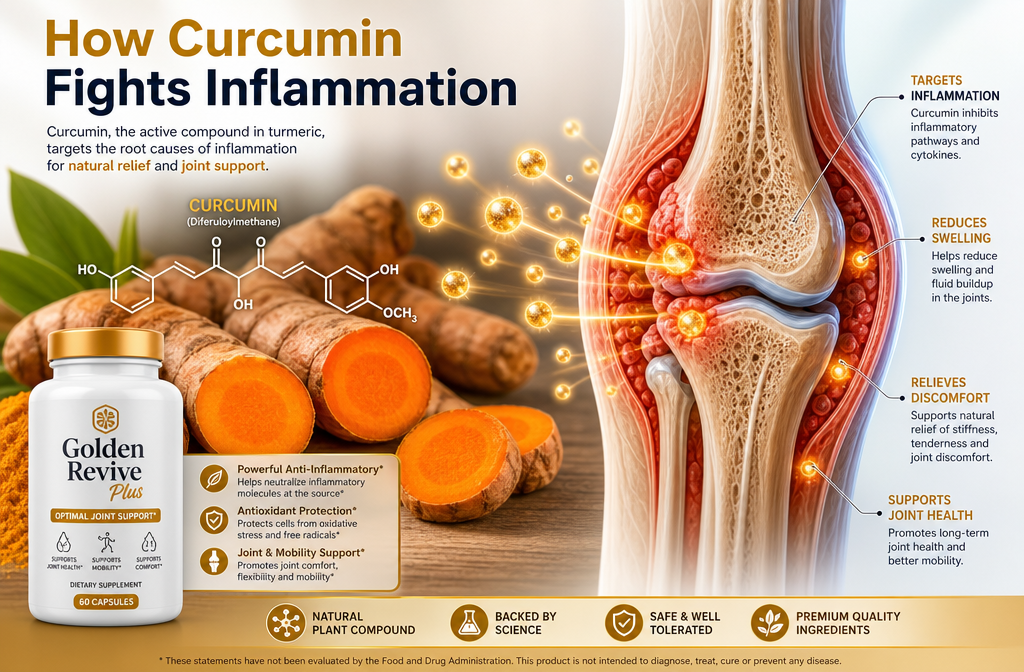
Turmeric reduces pain because curcumin, its primary bioactive compound, directly interferes with the body’s inflammatory signaling pathways. It inhibits two key enzymes — COX-2 and 5-LOX — and suppresses a protein called NF-kB that essentially “turns on” inflammation throughout the body.
Here’s why this matters for joint pain specifically:
- Chronic inflammation is the driving force behind arthritis, osteoarthritis, and most joint degeneration after age 50
- Most pain medications block symptoms after inflammation fires. Curcumin works upstream, reducing the inflammatory signal itself
- Curcumin also has antioxidant properties that protect cartilage from oxidative damage — a major factor in joint breakdown over time
The catch: Raw turmeric powder has very low bioavailability. Your body absorbs very little curcumin on its own. This is why high-quality supplements that include piperine (from black pepper) or use enhanced delivery systems are far more effective than simply adding turmeric to your food.
“Curcumin doesn’t just mask pain — it targets the inflammatory process that causes it. That distinction matters enormously for anyone dealing with chronic joint issues.”
For adults who also struggle with nerve-related discomfort alongside joint pain, our guide on best nerve health supplements for neuropathy relief covers complementary natural options worth exploring.
How Does Turmeric Compare to Ibuprofen for Inflammation?
For mild-to-moderate joint pain, turmeric compares surprisingly well to ibuprofen — and carries a significantly better long-term safety profile.
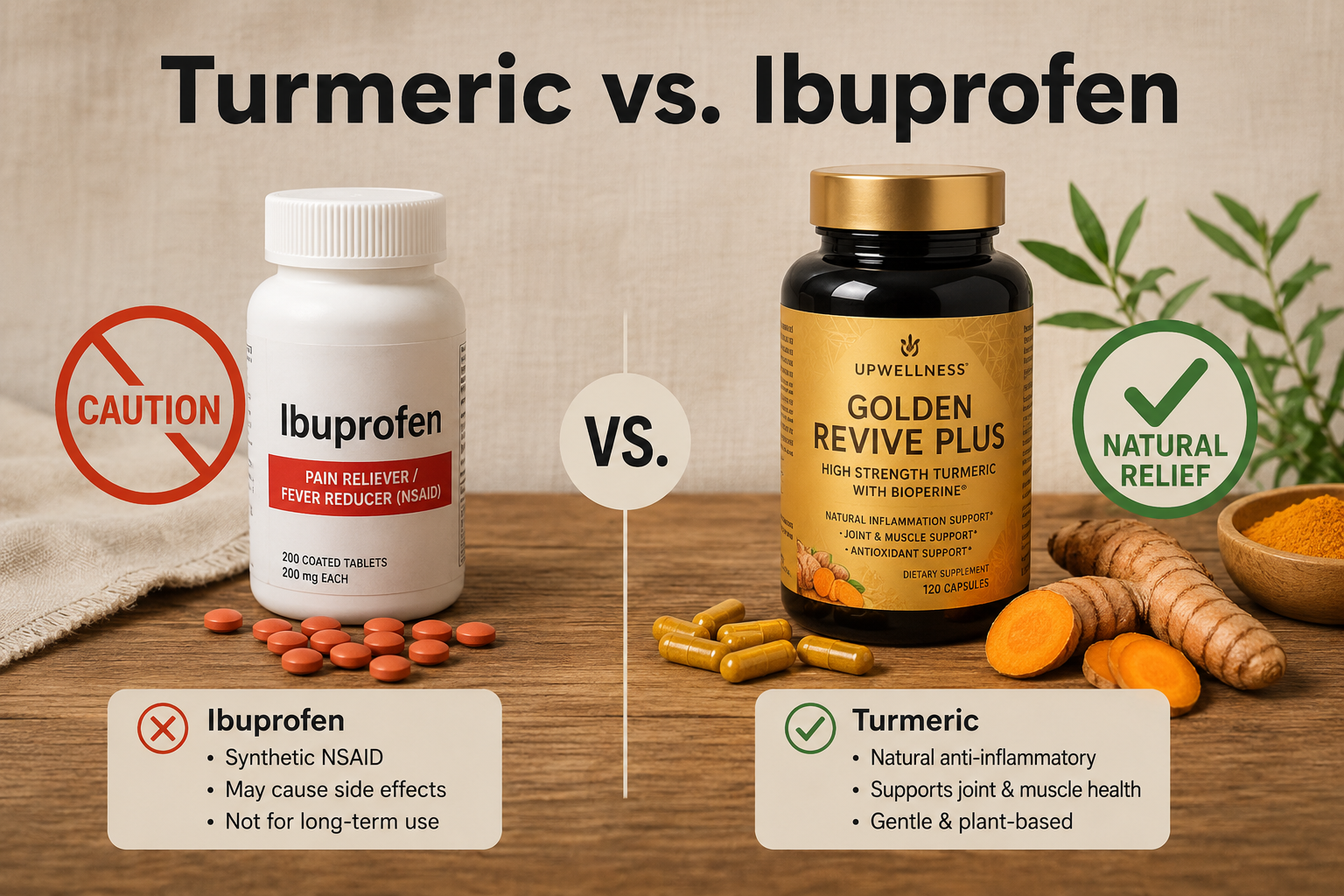
A well-cited study published in the Journal of Alternative and Complementary Medicine found that curcumin extract (standardized to 1,500 mg/day) performed as well as ibuprofen for reducing knee osteoarthritis pain and improving function — with fewer gastrointestinal side effects.
| Feature | Turmeric (Curcumin) | Ibuprofen (NSAID) |
|---|---|---|
| Mechanism | Blocks COX-2, NF-kB, 5-LOX | Blocks COX-1 and COX-2 |
| Pain relief speed | Slower (weeks) | Faster (hours) |
| Long-term joint support | Yes | No |
| Stomach safety | Generally gentle | Can damage stomach lining |
| Kidney/liver risk | Low (at normal doses) | Higher with long-term use |
| Cartilage protection | Yes (antioxidant effect) | No |
| Drug interactions | Some (blood thinners) | Many |
Choose turmeric if: You’re managing chronic, ongoing joint pain and want a long-term natural strategy without the risks of daily NSAID use.
Choose ibuprofen if: You need fast relief for an acute flare-up or injury. It works within hours; turmeric does not.
Many people over 50 use both strategically — turmeric daily for baseline inflammation control, and an NSAID occasionally for acute pain events. Always discuss this approach with your doctor.
Can Turmeric Help With Arthritis Pain?
Yes — turmeric is one of the most studied natural compounds for arthritis, particularly osteoarthritis (the wear-and-tear type most common after 50) and rheumatoid arthritis (the autoimmune type).
For osteoarthritis, multiple clinical trials show curcumin reduces pain scores, improves walking distance, and decreases morning stiffness. For rheumatoid arthritis, curcumin’s ability to suppress NF-kB (a key driver of autoimmune inflammation) makes it a meaningful complementary support.
What type of arthritis responds best:
- ✅ Osteoarthritis of the knee, hip, and spine
- ✅ Rheumatoid arthritis (as a complement to prescribed treatment)
- ✅ Psoriatic arthritis (anti-inflammatory effect)
- ⚠️ Gout (some benefit, but not primary treatment)
If you’re concerned about bone loss alongside arthritis, this guide on how to strengthen bones after 50 pairs well with a turmeric-based joint support plan.
Ready to support your joints naturally? Try Golden Revive Plus — a doctor-formulated blend designed for arthritis comfort and daily mobility 🌿
How Much Turmeric Should I Take Daily for Joint Pain?
The effective daily dose for joint pain is 500–1,000 mg of standardized curcumin extract, not raw turmeric powder. Most clinical studies use curcumin standardized to 95% curcuminoids.
Dosing guidelines:
- Maintenance (mild stiffness): 500 mg curcumin + piperine, once daily
- Active joint pain: 500 mg curcumin + piperine, twice daily
- Raw turmeric powder: Not recommended as a primary strategy — you’d need 20+ grams daily to match a 500 mg curcumin supplement
Critical absorption rule: Always look for piperine (black pepper extract, often listed as BioPerine®) in your supplement. Without it, most curcumin passes through your system unused. Piperine increases curcumin absorption by up to 2,000%, according to research published in Planta Medica.
Common mistake: Buying cheap turmeric capsules that list “turmeric root powder” rather than “curcumin extract standardized to 95% curcuminoids.” These are very different products with very different results.
What Type of Pain Does Turmeric Work Best For?
Turmeric works best for inflammatory pain — the kind that involves swelling, warmth, stiffness, and aching that worsens with inactivity.
Best matches for turmeric:
- Knee osteoarthritis pain and stiffness
- Hip joint inflammation
- Lower back pain with an inflammatory component
- Morning joint stiffness lasting more than 30 minutes
- Tendinitis and bursitis
- Post-exercise muscle soreness
Less effective for:
- Nerve pain (neuropathy) — though some anti-inflammatory benefit exists
- Acute injury pain (sprains, fractures)
- Pain from structural damage requiring surgery
For nerve-related pain that accompanies joint issues, our article on stopping nerve damage before it becomes permanent outlines additional natural strategies.
How Quickly Does Turmeric Start Reducing Pain?
Most people notice meaningful pain relief within 4–8 weeks of consistent daily use. Some individuals with moderate inflammation report improvement in as little as 2 weeks.
Why it takes time: Curcumin works by gradually reducing systemic inflammation rather than blocking pain signals acutely. Think of it as turning down a slow-burning fire rather than spraying it with water.
Timeline expectations:
- Week 1–2: Possible mild reduction in morning stiffness
- Week 3–4: Noticeable decrease in daily aching for many users
- Week 6–8: Significant improvement in mobility and comfort for most
- Week 12+: Maximum benefit — some studies show continued improvement up to 3 months
Edge case: If you see zero improvement after 8 weeks at a proper dose (500–1,000 mg curcumin with piperine), consider whether your pain has a structural cause (like significant cartilage loss) that requires additional support or medical evaluation.
Why Isn’t Turmeric Working for My Chronic Pain?
If turmeric isn’t helping, the most common reasons are poor absorption, insufficient dosing, or the wrong product form.
Most likely causes:
- Wrong product: Using turmeric powder instead of standardized curcumin extract
- No piperine: Without black pepper extract, absorption is minimal
- Too low a dose: Under 400 mg curcumin daily is often insufficient for chronic pain
- Too short a trial: Stopping before 6–8 weeks
- Underlying structural damage: Severe cartilage loss or bone-on-bone arthritis may need additional support beyond anti-inflammatory herbs
Fix it: Switch to a high-quality supplement that combines curcumin (standardized, 500–1,000 mg) with piperine and ideally other synergistic ingredients like Boswellia or magnesium. Golden Revive Plus combines curcumin with Boswellia, magnesium, and quercetin — a doctor-formulated stack designed specifically for this gap.
Don’t give up on your joints. See how Golden Revive Plus targets the root cause of stiffness and pain — naturally 💪
Are There Side Effects of Taking Turmeric Supplements?
Turmeric is well-tolerated by most adults at recommended doses, but side effects are possible, especially at high doses or with certain health conditions.
Common (usually mild):
- Digestive upset, nausea, or loose stools — especially on an empty stomach
- Heartburn in people prone to acid reflux
Less common but important:
- Blood thinning effect: Curcumin has mild anticoagulant properties. If you take warfarin, aspirin, or other blood thinners, consult your doctor before starting
- Gallbladder stimulation: People with gallstones or bile duct obstruction should avoid high-dose curcumin
- Iron absorption: Very high doses may reduce iron absorption — relevant for people with anemia
Is turmeric safe for people with stomach issues?
Generally yes, at moderate doses (500 mg curcumin). In fact, curcumin has shown protective effects on the stomach lining in some research — unlike NSAIDs, which can erode it. However, if you have active ulcers or severe GERD, start with a low dose and take it with food.
For anyone managing digestive health alongside joint support, this resource on the impact of modern diet on digestive enzyme production is worth reading.
Can I Take Turmeric With Other Pain Medications?
Turmeric can generally be taken alongside most common pain medications, but there are important interactions to know.
Generally safe combinations:
- Acetaminophen (Tylenol) — no significant interaction at normal doses
- Topical pain creams
- Most joint supplements (glucosamine, chondroitin, collagen)
Use caution with:
- Blood thinners (warfarin, clopidogrel): Curcumin may amplify their effect, increasing bleeding risk
- NSAIDs (ibuprofen, naproxen): Both have blood-thinning properties; combining them long-term warrants medical supervision
- Diabetes medications: Curcumin may lower blood sugar; monitor levels if you’re on glucose-lowering drugs
- Chemotherapy drugs: Some interactions have been noted — oncology patients should always consult their care team
Rule of thumb: If you’re on any prescription medication, a 5-minute conversation with your pharmacist or doctor before starting curcumin is always worthwhile.
Alternatives to Turmeric for Natural Pain Management
Turmeric is powerful, but it works even better when combined with other evidence-backed natural compounds. These are the most well-researched alternatives and complements.
Top natural pain-relief alternatives:
- Boswellia (Indian frankincense): Blocks 5-LOX inflammation pathway; particularly effective for knee osteoarthritis. Often combined with curcumin for synergistic effect
- Omega-3 fatty acids (fish oil): Reduces systemic inflammation; well-supported for rheumatoid arthritis and general joint comfort
- Magnesium: Supports muscle relaxation and reduces pain sensitivity; many adults over 50 are deficient
- Quercetin: A flavonoid with anti-inflammatory and antioxidant properties; enhances curcumin’s effect
- Collagen peptides: Supports cartilage repair and joint cushioning
- Ginger extract: Similar COX-2 inhibiting mechanism to turmeric; often used together
Golden Revive Plus combines several of these — curcumin, Boswellia, magnesium, and quercetin — in one doctor-formulated formula, which is why it stands out among natural joint supplements in 2026.
If you’re also working on staying active as part of your recovery, our guide on how to stay fit and active at home after age 50 offers practical movement strategies that complement natural supplementation.
Best Turmeric Supplement for Pain Relief: What to Look For
Not all turmeric supplements deliver real results. Here’s what separates effective products from ineffective ones.

Must-have features in any quality turmeric supplement:
| Feature | What to Look For |
|---|---|
| Curcumin standardization | 95% curcuminoids |
| Absorption enhancer | Piperine (BioPerine®) or phospholipid complex |
| Dose per serving | 500–1,000 mg curcumin |
| Complementary ingredients | Boswellia, magnesium, quercetin |
| Third-party tested | USP, NSF, or Informed Sport certified |
| Formulated by | Medical or naturopathic doctor |
Golden Revive Plus checks all of these boxes. It’s doctor-formulated, combines curcumin with Boswellia, magnesium glycinate, and quercetin, and is designed specifically for adults experiencing chronic joint pain, stiffness, and reduced mobility. It targets the root cause of inflammation — not just the symptoms — so you can get back to walking comfortably, sleeping without aching, and moving through your day with confidence.
If stiff joints are stealing your mornings, your independence, or your joy — it’s time to try something that actually works. Start your journey to pain-free movement with Golden Revive Plus today 🌟
Conclusion: Your Path Back to Pain-Free Living Starts Here
Pain relief with turmeric is not a trend or a folk remedy — it’s a well-researched, clinically supported strategy for reducing the inflammation that drives chronic joint pain, arthritis, stiffness, and reduced mobility in adults over 50.
The key points to act on:
- Choose standardized curcumin extract (95% curcuminoids), not raw turmeric powder
- Always pair it with piperine (black pepper extract) for meaningful absorption
- Dose correctly: 500–1,000 mg curcumin daily, consistently, for at least 6–8 weeks
- Combine with complementary ingredients like Boswellia and magnesium for broader relief
- Check interactions with any blood thinners or prescription medications before starting
You deserve to wake up without dreading the first steps out of bed. You deserve to bend down in your garden, walk the neighborhood, travel without wincing, and keep up with your grandchildren. Those things aren’t out of reach — they just require the right support.
Golden Revive Plus was designed with exactly that goal in mind: a doctor-formulated, natural formula that targets inflammation at its root so you can move freely, feel younger, and stay independent.
Your joints have been asking for help. Give them what they need. Click here to try Golden Revive Plus and start moving comfortably again 🌿
Frequently Asked Questions
Is turmeric effective for joint pain in people over 60?
Yes. Turmeric (curcumin) is particularly relevant for adults over 60 because chronic inflammation increases with age. Standardized curcumin at 500–1,000 mg daily, with piperine, has shown meaningful benefits for osteoarthritis pain, morning stiffness, and joint mobility in clinical trials involving older adults.
How long should I take turmeric for chronic pain?
Most experts recommend a minimum 8-week trial to assess effectiveness. For chronic conditions like osteoarthritis, long-term daily use is generally safe and may provide cumulative benefit over months. Unlike NSAIDs, curcumin does not carry significant risks with extended use at recommended doses.
Can I get enough turmeric from food alone?
No — not for therapeutic pain relief. Cooking with turmeric is beneficial for general health, but the curcumin concentration in food is too low and poorly absorbed to match the doses used in clinical studies. Supplementation with standardized curcumin extract is necessary for meaningful joint pain relief.
Does Golden Revive Plus contain only turmeric?
No. Golden Revive Plus is a multi-ingredient, doctor-formulated joint supplement that combines curcumin with Boswellia, magnesium, and quercetin — a synergistic blend designed to address inflammation, stiffness, and joint comfort more comprehensively than turmeric alone.
Is turmeric safe to take every day?
For most healthy adults, yes. Daily use at 500–1,000 mg curcumin is well-tolerated. People taking blood thinners, those with gallbladder conditions, or those on certain medications should consult a doctor before starting daily supplementation.
What’s the difference between turmeric and curcumin?
Turmeric is the spice (from the Curcuma longa plant). Curcumin is the active compound within turmeric responsible for its anti-inflammatory effects. Curcumin makes up only about 2–5% of raw turmeric by weight, which is why standardized curcumin supplements are far more potent than turmeric powder.
Can turmeric replace my arthritis medication?
No — turmeric should not replace prescribed arthritis medications without your doctor’s guidance. It works best as a complementary support alongside your existing treatment plan, potentially reducing your reliance on over-the-counter pain relievers over time.
Does turmeric help with back pain?
Yes, particularly for back pain with an inflammatory component (such as inflammatory arthritis of the spine or muscle inflammation). It’s less effective for purely mechanical back pain caused by structural issues like herniated discs.
References
Kuptniratsaikul V, et al. — Efficacy and safety of Curcuma domestica extracts compared with ibuprofen in patients with knee osteoarthritis — Clinical Interventions in Aging, 2014
Shep D, et al. — Safety and efficacy of curcumin versus diclofenac in knee osteoarthritis — Trials, 2019
Gupta SC, et al. — Therapeutic roles of curcumin: lessons learned from clinical trials — AAPS Journal, 2013
Siddiqui MZ — Boswellia serrata, a potential antiinflammatory agent — Indian Journal of Pharmaceutical Sciences, 2011
Shoba G, et al. — Influence of piperine on the pharmacokinetics of curcumin in animals and human volunteers — Planta Medica, 1998
Tags: pain relief with turmeric, turmeric for joint pain, curcumin for arthritis, natural joint pain relief, turmeric supplement benefits, anti-inflammatory herbs, joint pain after 50, arthritis natural remedies, curcumin vs ibuprofen, Golden Revive Plus, Boswellia for pain, chronic pain relief naturally